Aquatic Plant Encyclopedia
Encyclopedia of popular aquatic plants with care guides, traits, and aquascaping tips.
Showing 34 of 127 species(1–24)
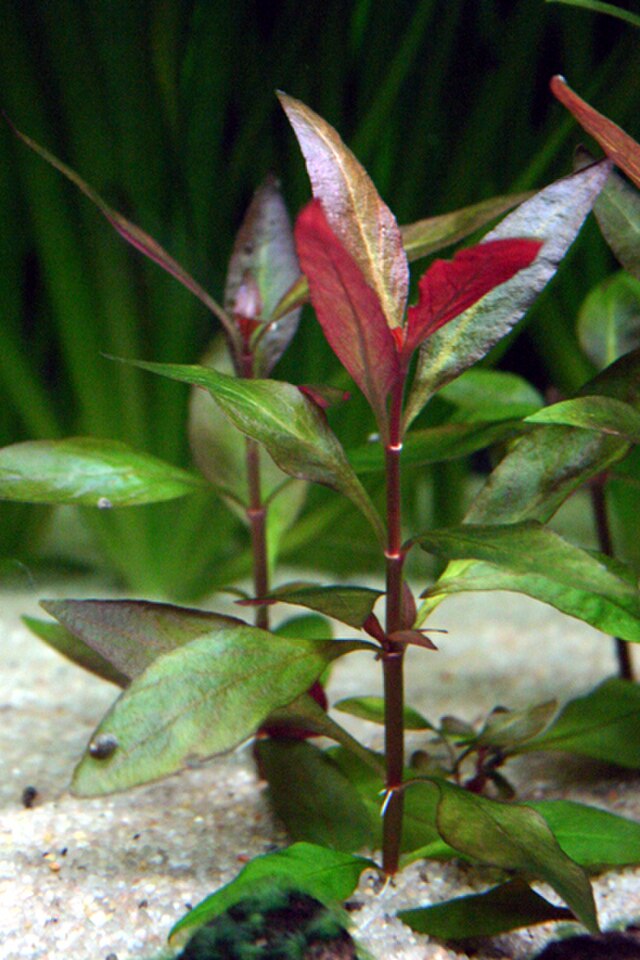 © No machine-readable author provided. Rchampagne assumed (based on copyright claims). / Public domain
Alternanthera Reineckii
Alternanthera reineckii
A stem plant coloring deep red to pink. Creates vivid accent color among green aquatic plants.
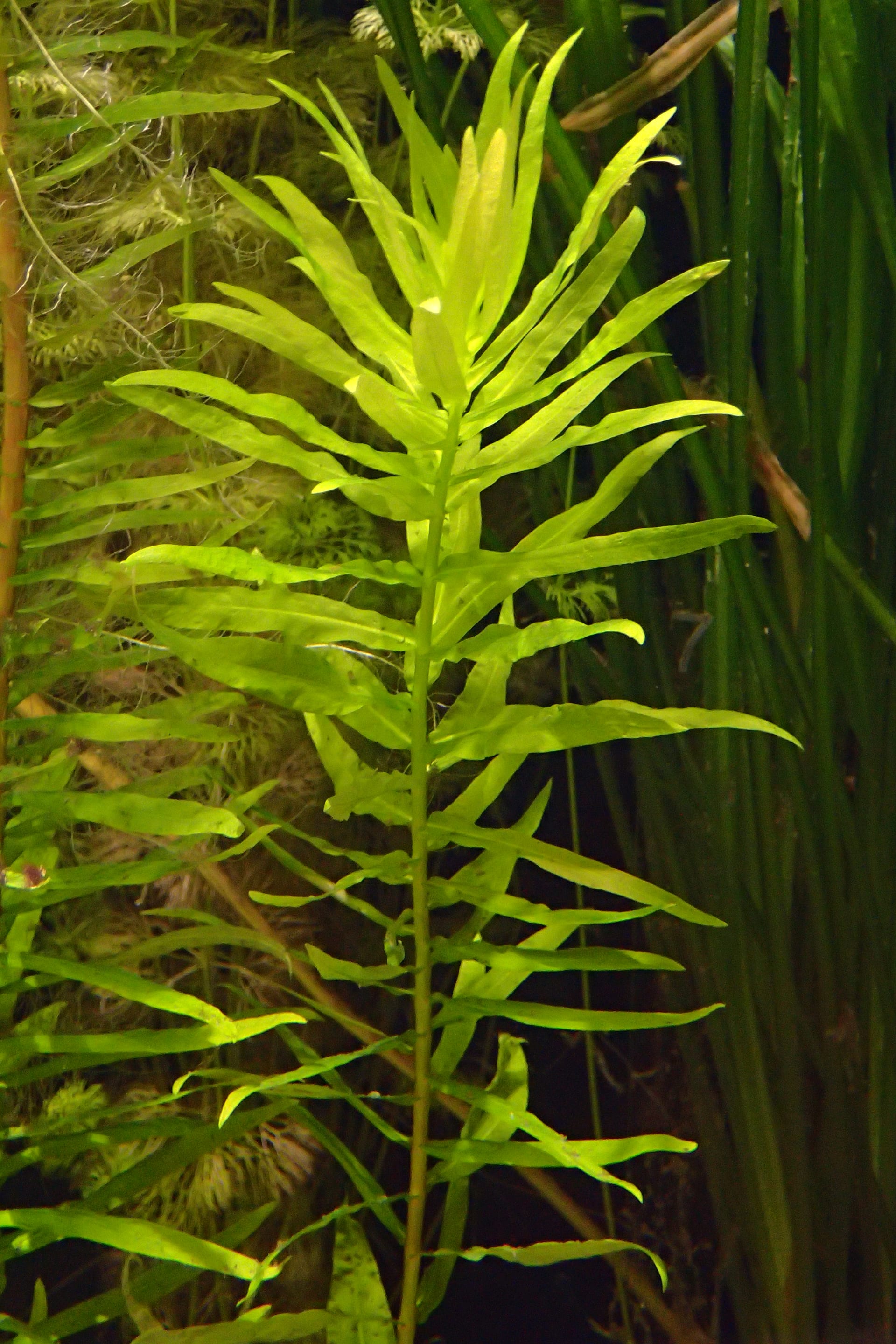 © Krzysztof Ziarnek, Kenraiz / CC BY-SA 4.0
Ammannia gracilis
Ammannia gracilis
A large stem plant with long, narrow opposite leaves that turn a cognac-red in strong light. Reaching 20–50 cm tall and 12–20 cm wide, it makes a bold statement in the mid- or background of tanks of 76 litres or more.
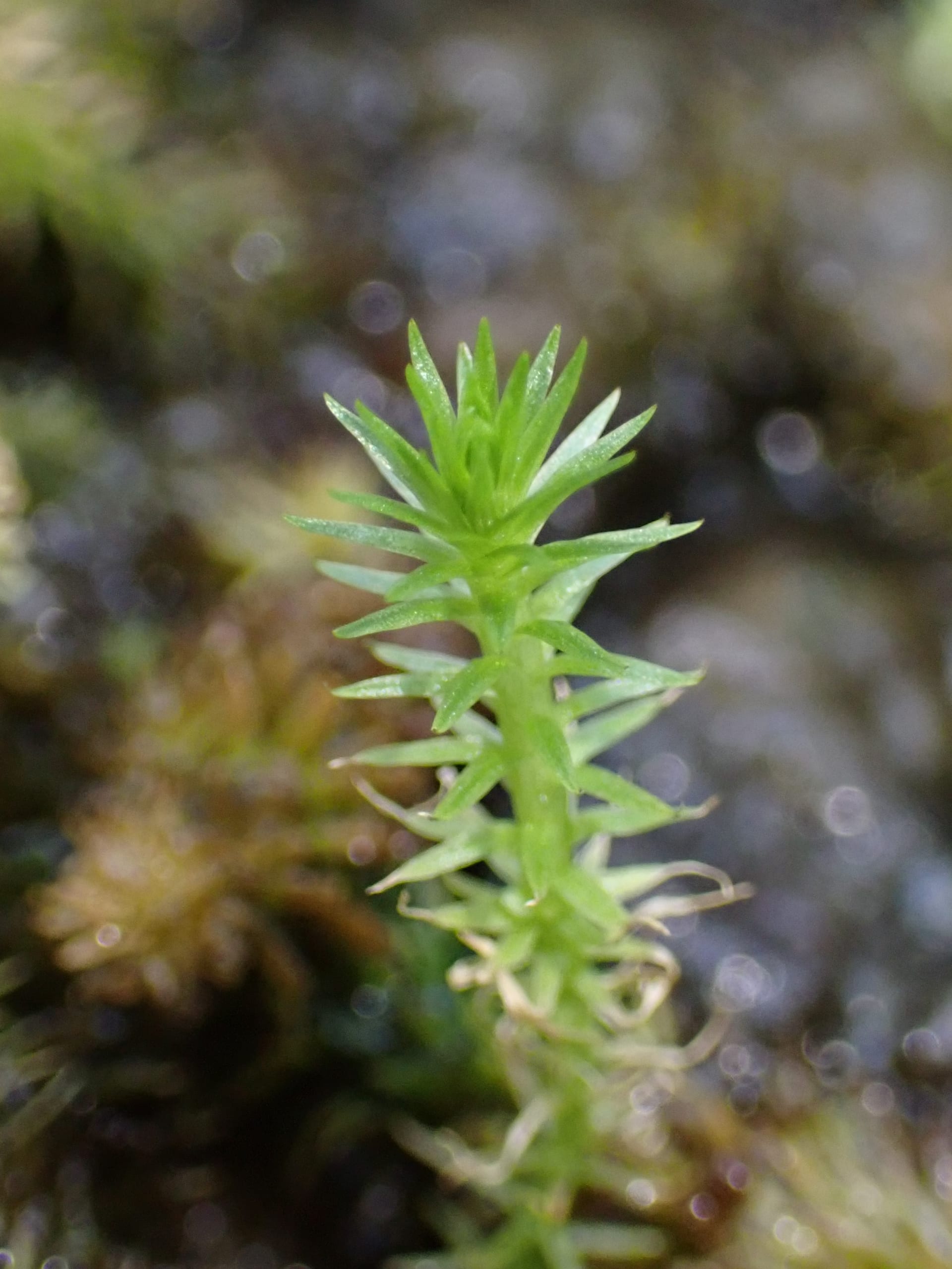 © Krzysztof Ziarnek, Kenraiz / CC BY-SA 4.0
Bog moss
Mayaca fluviatilis
A moss-like stem plant with very narrow, bright green leaves set spirally and densely on soft, pale stems. It ranges from the south-eastern United States to South America, and its tips quickly turn pale when iron runs short.
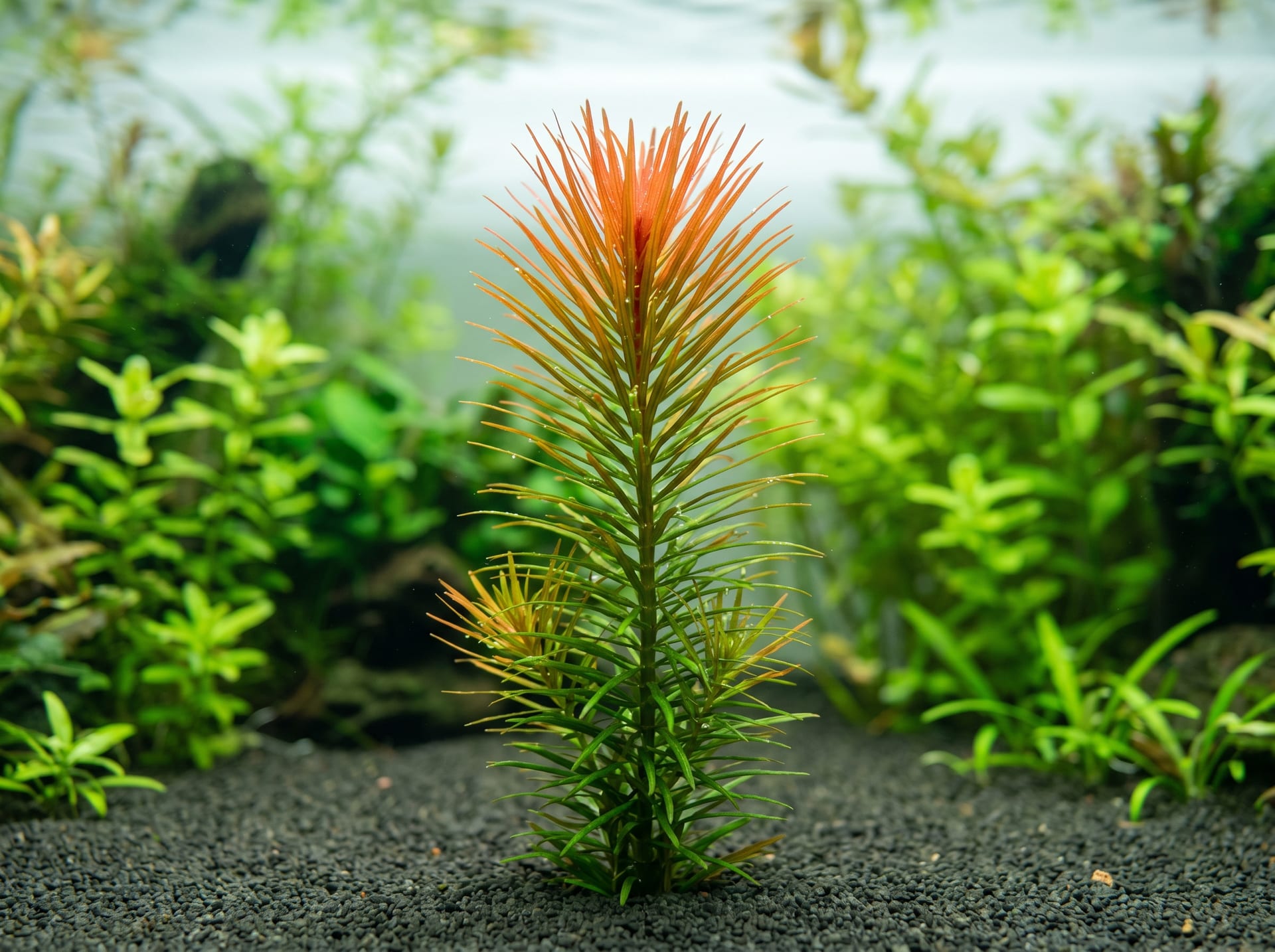
Didiplis diandra
Didiplis diandra
Small North American stem plant. Tiny opposite leaves grow densely, turning red-orange under high light. Somewhat slow growth, ideal for midground. Hardy despite delicate appearance.
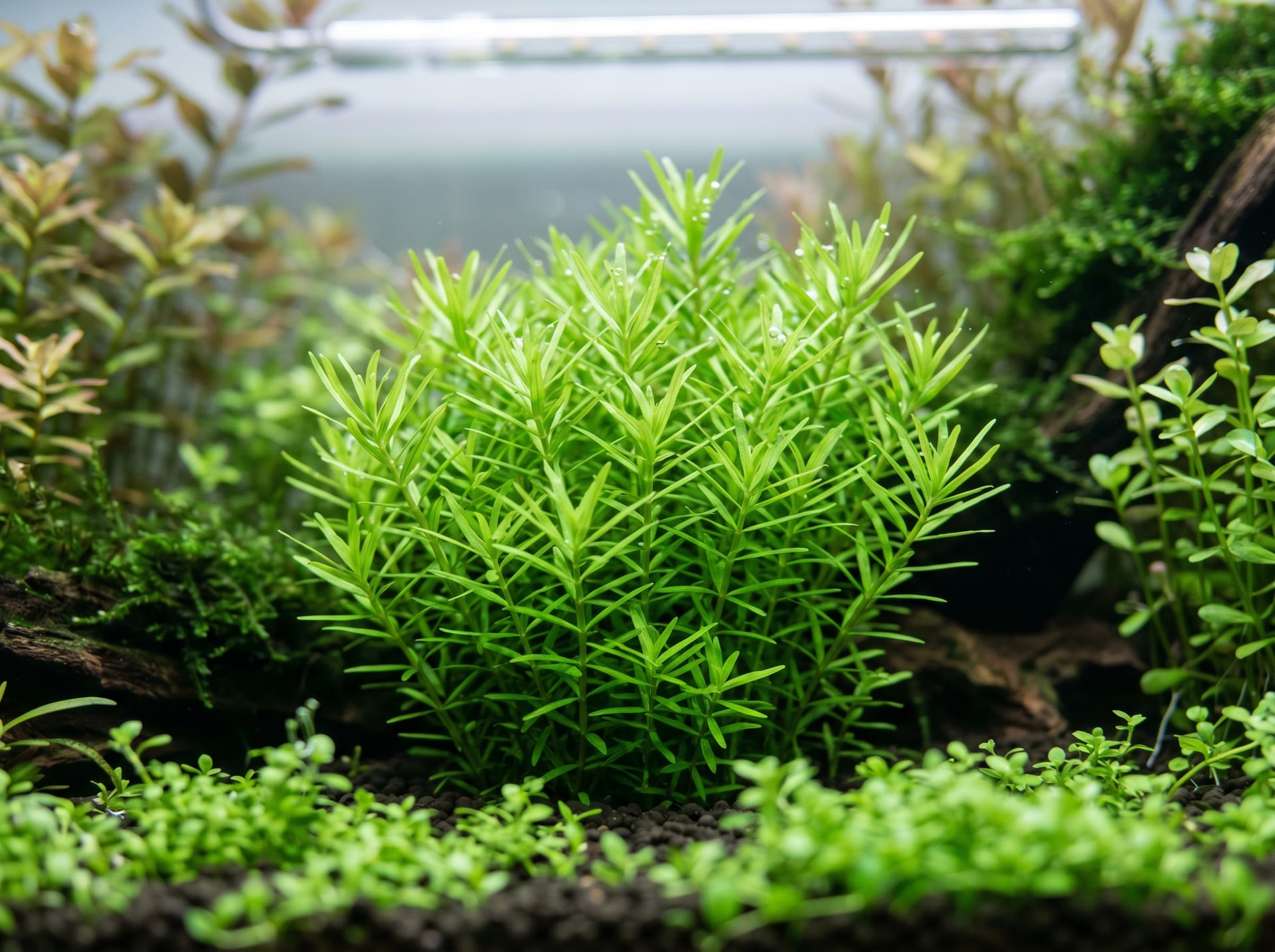
Green Rotala
Rotala rotundifolia 'Green'
A green variety of Rotala rotundifolia. Dense bright green leaves create lush background bushes. Easier than red varieties. Replant trimmings to increase density.
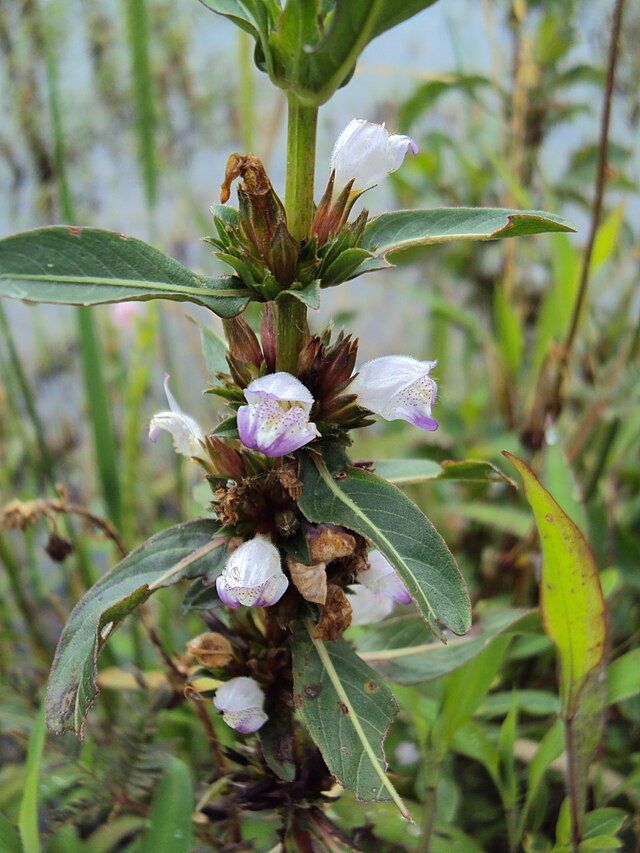 © Vinayaraj / CC BY-SA 4.0
Hygrophila
Hygrophila
Representative fast-growing hardy stem plant. Polysperma is most common. Easily propagated by trimming.
Hygrophila lancea 'Araguaia'
Hygrophila lancea 'Araguaia'
A small Hygrophila with very narrow, linear red-brown leaves and a conspicuous pale midrib. Under strong light it branches into a low, creeping bush. Named after a Brazilian river, it is actually thought to be an Asian species.
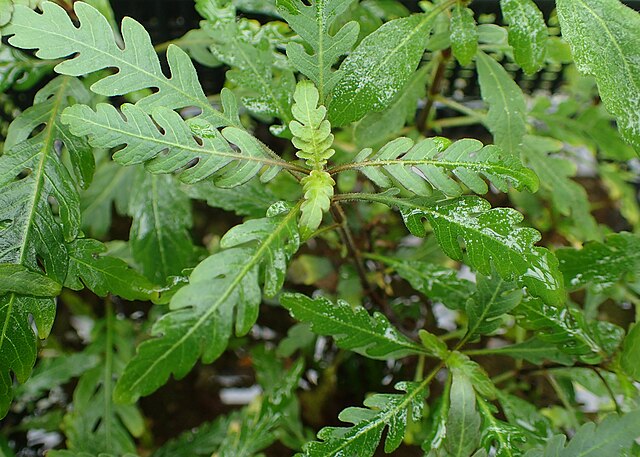
Hygrophila Pinnatifida
Hygrophila pinnatifida
A stem plant with deeply cut unique leaves. Has unusual ability to attach to rocks and driftwood.
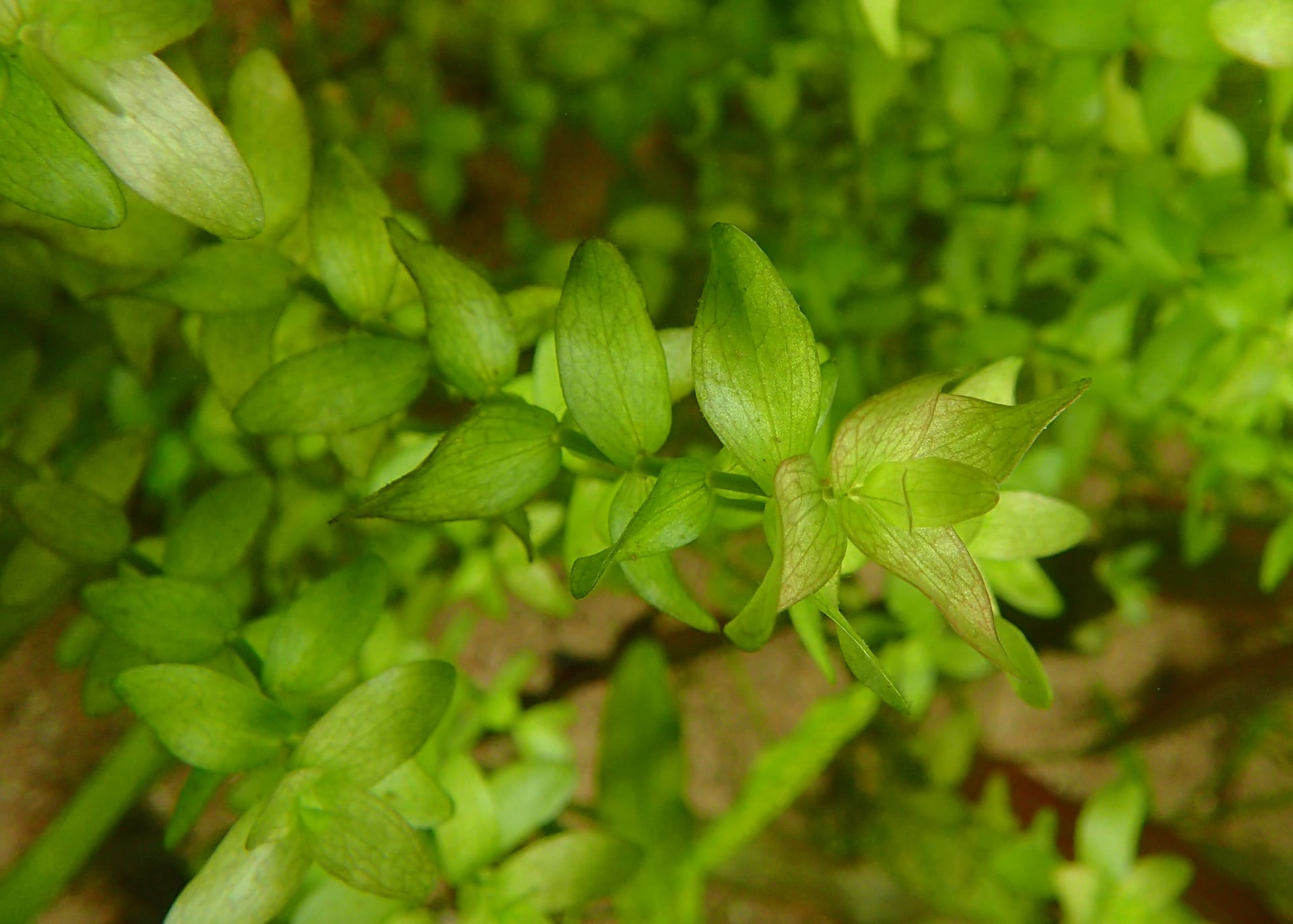 © Krzysztof Ziarnek, Kenraiz / CC BY-SA 4.0
Lemon bacopa
Bacopa caroliniana
A tough, slow-growing stem plant with thick oval leaves in opposite pairs. Crushed leaves smell of lemon, and under strong light the leaves take on a bronze to reddish-brown tint.
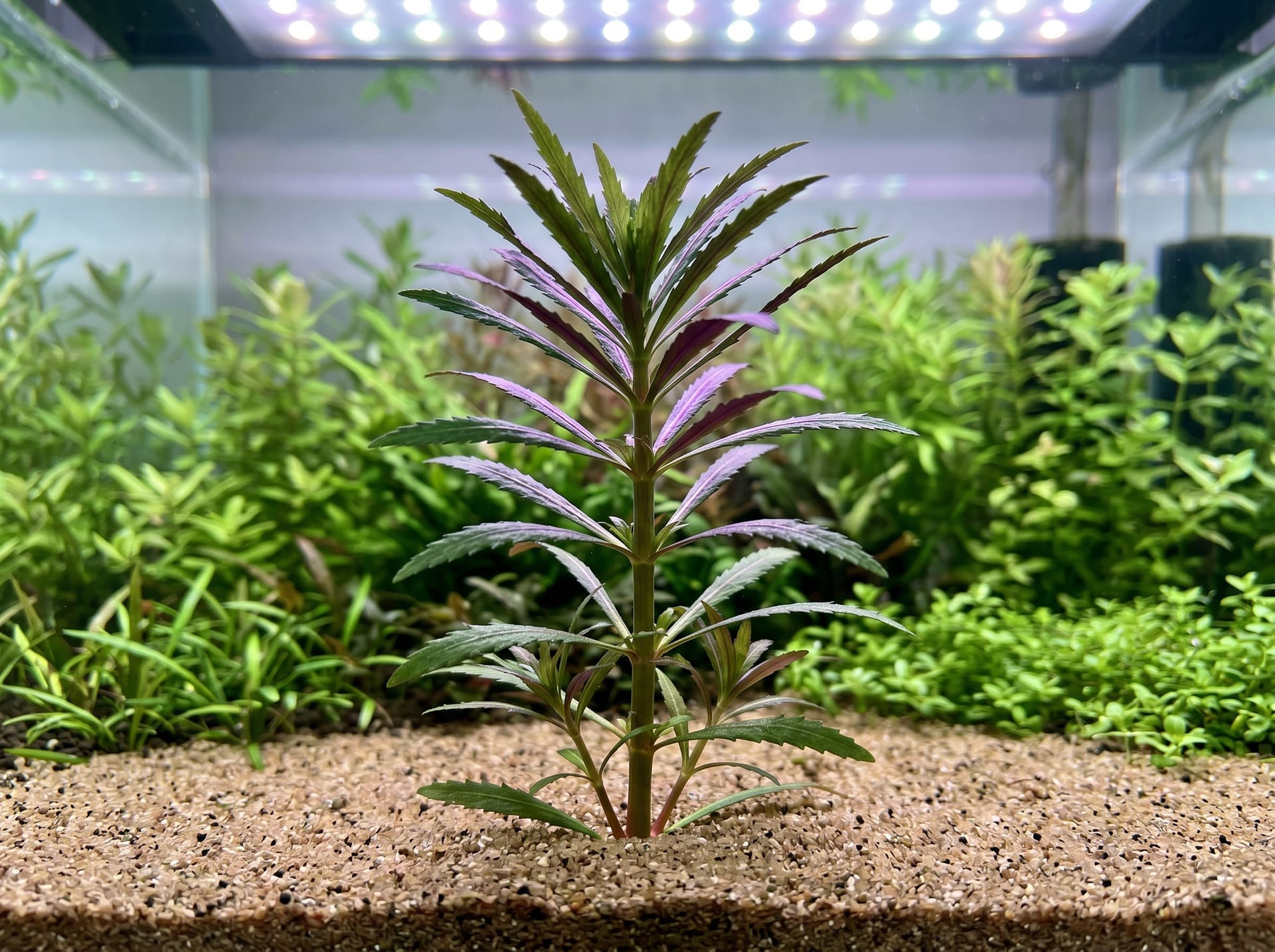
Limnophila Hippuridoides
Limnophila hippuridoides
A beautiful stem plant from Southeast Asia with purple-tinted leaves. CO2 enhances vivid purple coloration.
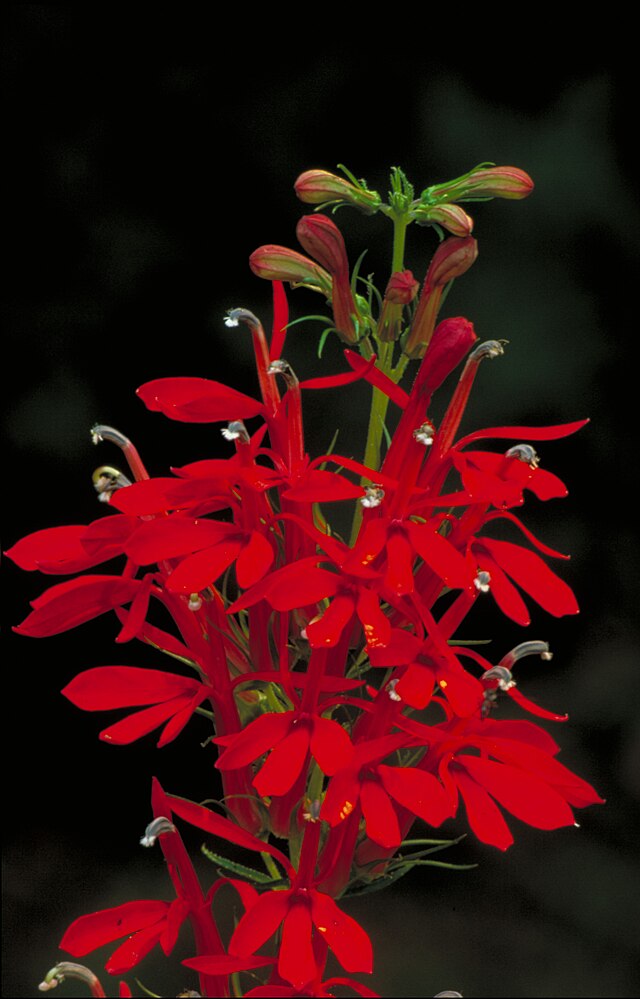 © Barnes, Dr. Thomas G. / Public domain
Lobelia Cardinalis
Lobelia cardinalis
A stem plant with bright green underwater and red flowers above. Interesting difference between submersed and emersed forms.
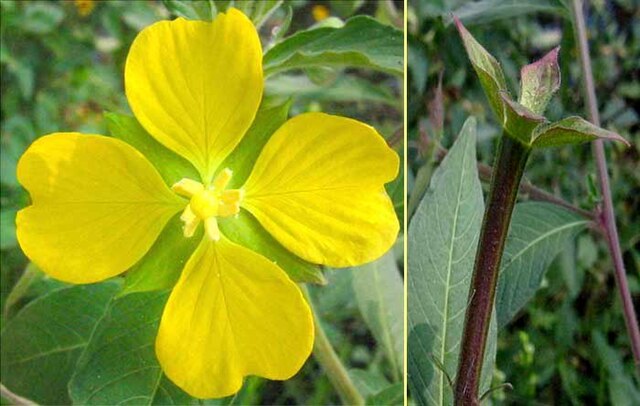 © Jim Conrad / Public domain
Ludwigia
Ludwigia
Entry-level red aquatic plant. Red coloring depends on light and CO2. Repens and Super Red are popular varieties.
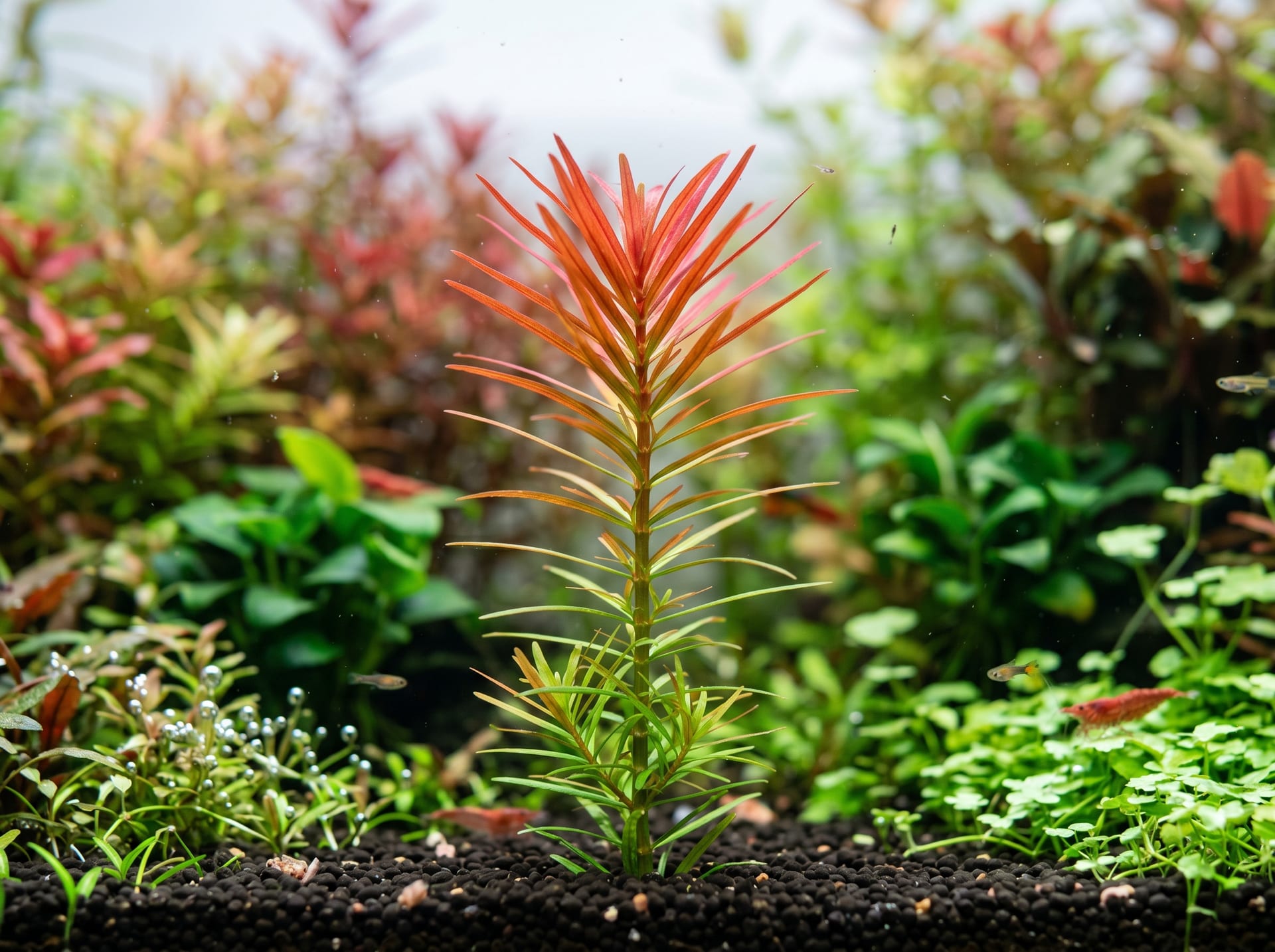
Ludwigia arcuata
Ludwigia arcuata
North American stem plant with distinctive narrow needle-like leaves. Turns vivid orange to red under high light. Delicate appearance but surprisingly hardy.
Ludwigia glandulosa
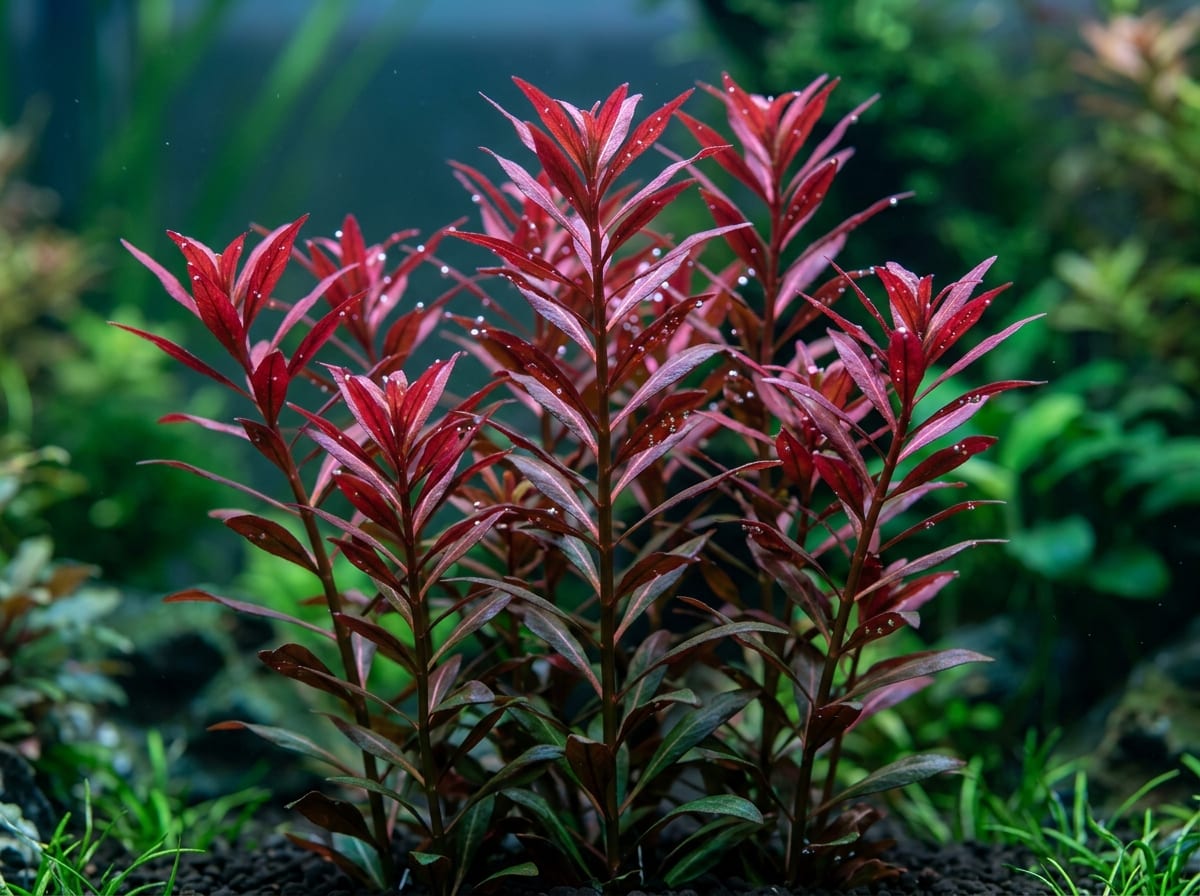
Ludwigia glandulosa
A North American stem plant whose leaves turn vivid wine-red to red-purple under strong light. Submerged stems grow strictly upright with little branching; in insufficient light it turns green and drops its lower leaves.
Ludwigia inclinata var. verticillata 'Cuba'
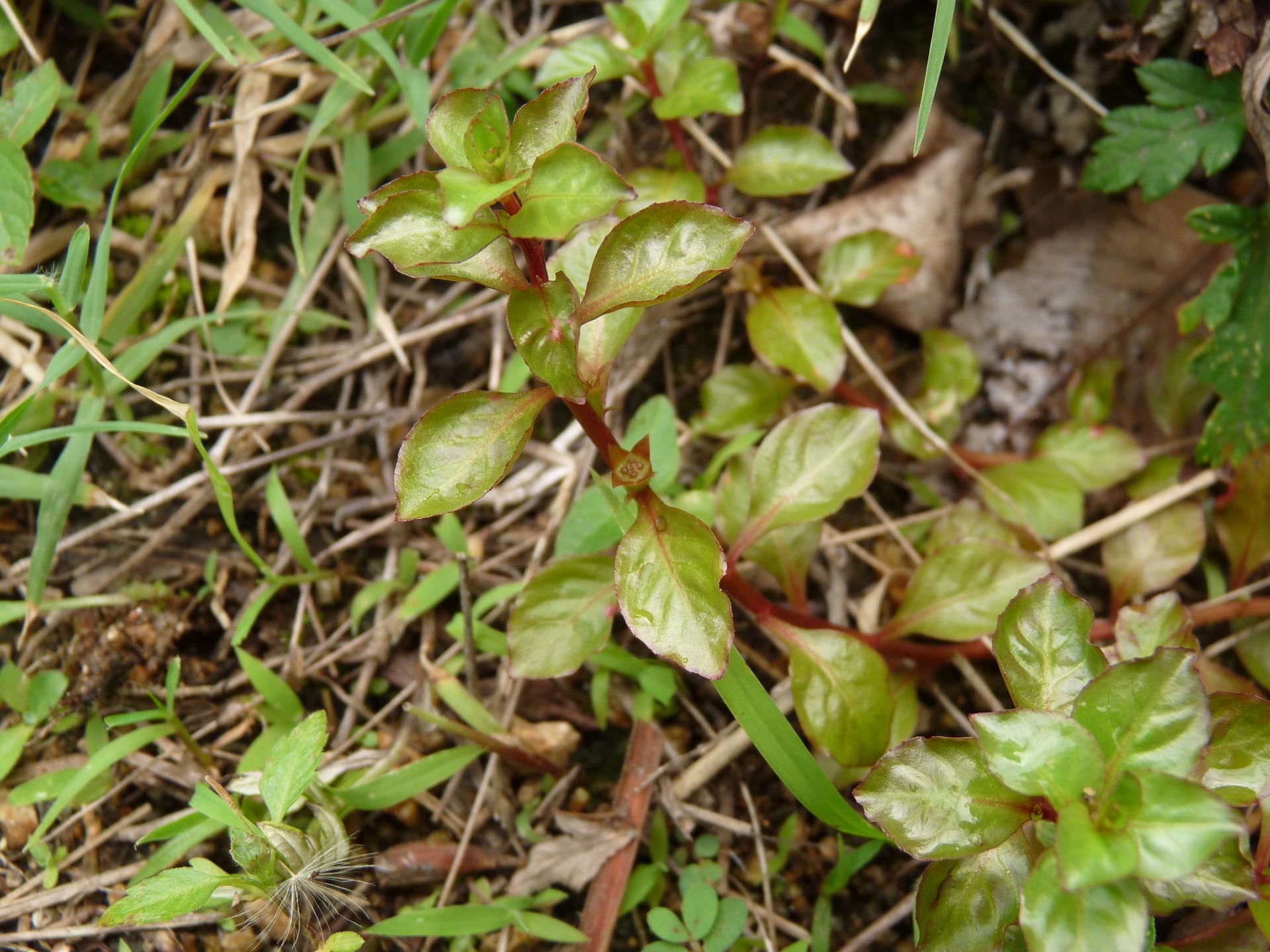
Ludwigia inclinata var. verticillata 'Cuba'
A large stem plant that forms whorls of narrow, linear leaves tinged red and orange under water. It is a locality form found on Cuba's Isla de la Juventud and is regarded as the easiest of the var. verticillata forms. Light and CO2 transform its colour and density.
 © Show ryu / CC BY-SA 3.0
Ludwigia ovalis
Ludwigia ovalis
A stem plant native to Japan (Japanese name Mizuyukinoshita) whose rounded oval leaves turn pink to orange under water. Its leaves are alternate, one per node, which separates it from the similar Ludwigia repens and L. palustris.
Mermaid Weed
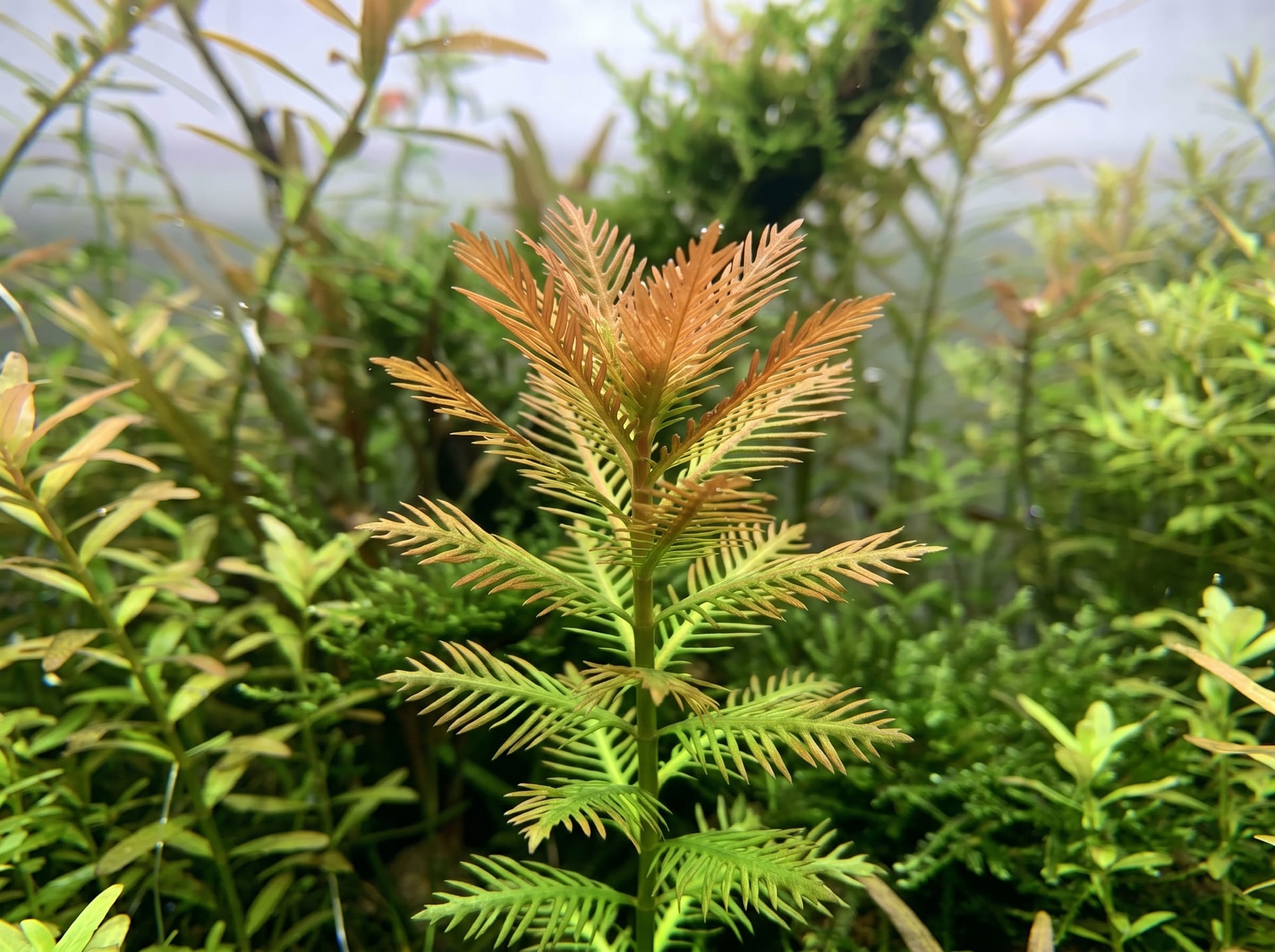
Proserpinaca palustris
North American stem plant with unique serrated leaves. Turns golden to copper-red under strong light. Slow grower but adds unique texture to aquascapes.
Myriophyllum (Water Milfoil)
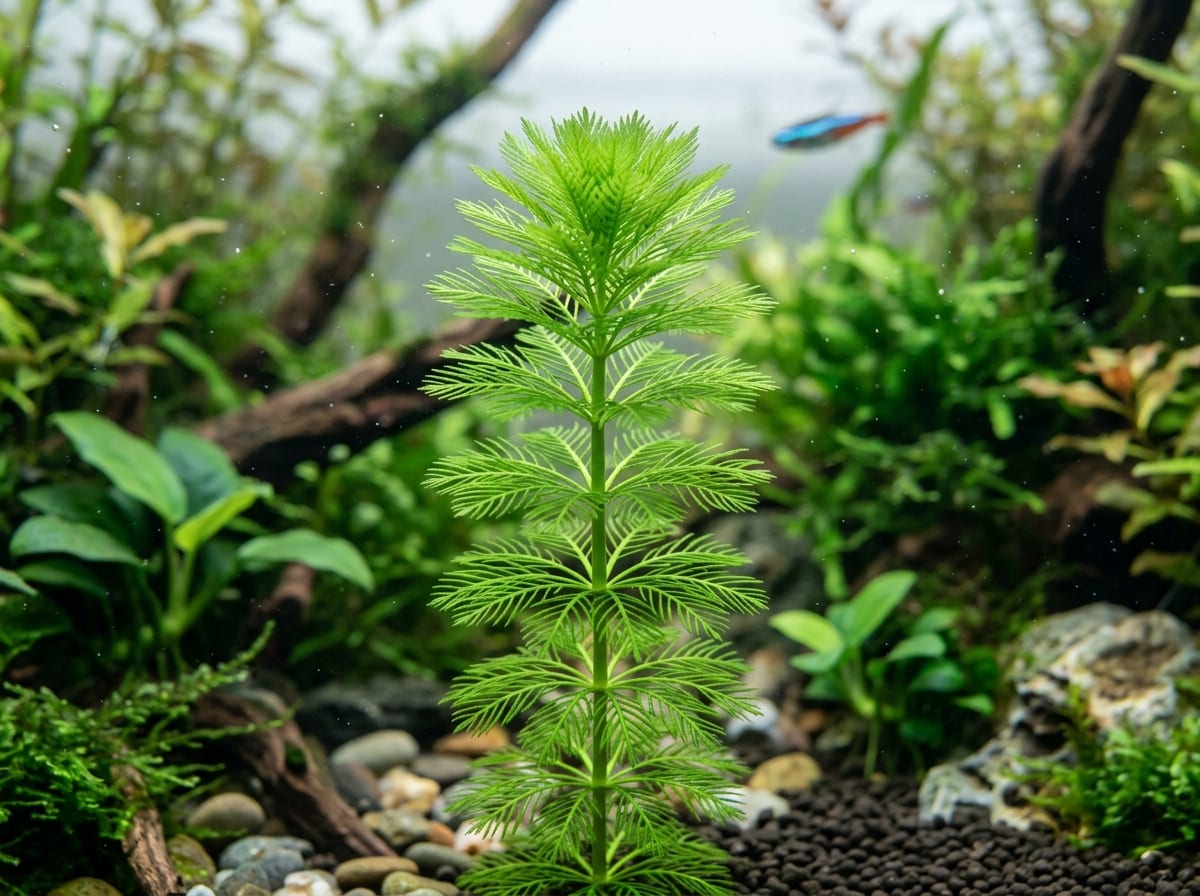
Myriophyllum
Stem aquatic plants of the water-milfoil genus (Haloragaceae), with finely feathered leaves in whorls. Used as background plants; leaf color and difficulty vary by species. The related parrot's feather is a Specified Invasive Alien Species in Japan.
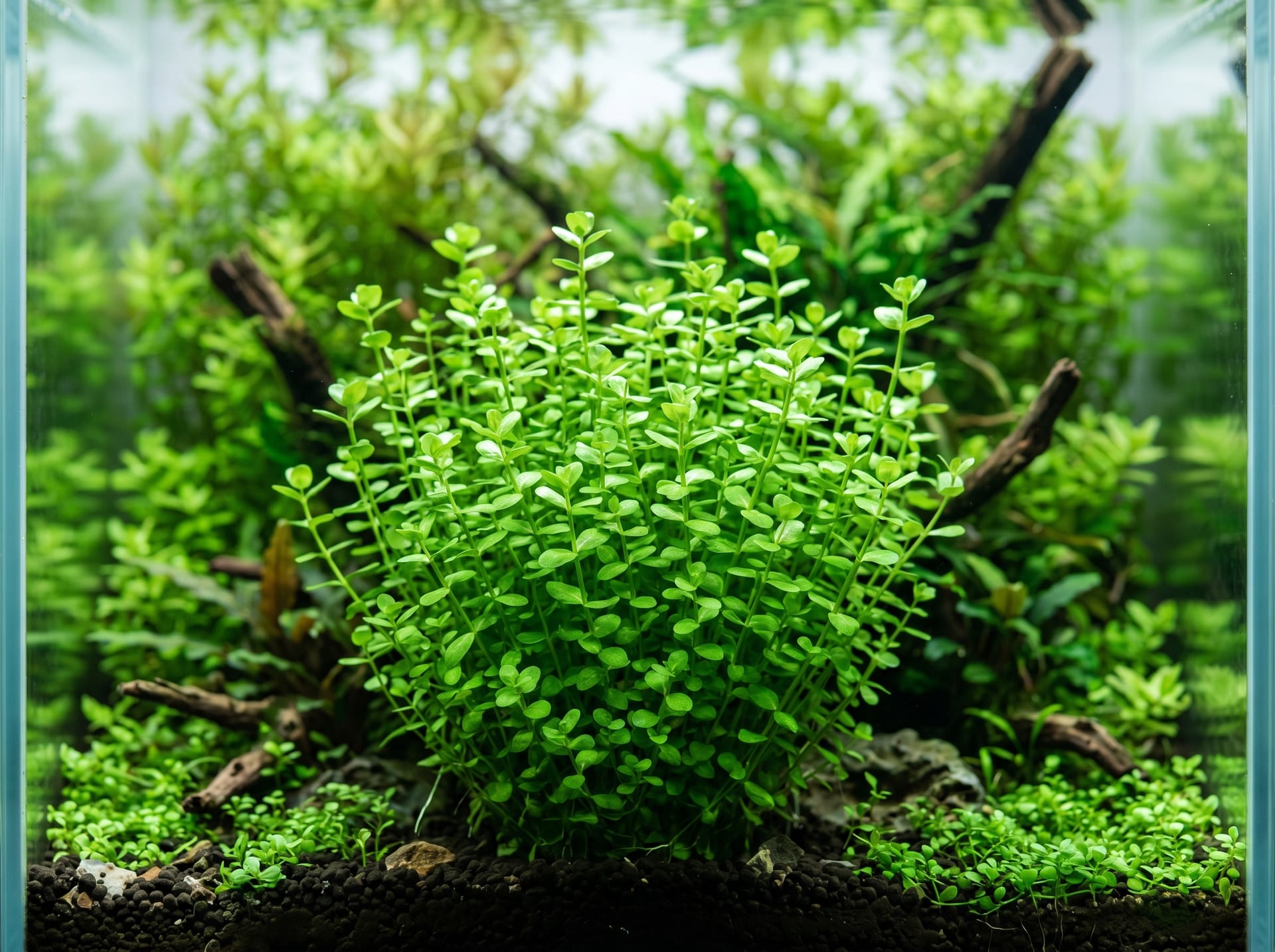
Pearl Grass
Micranthemum umbrosum
A stem plant with small round leaves strung like pearls. Used in mid to background planting. Produces beautiful bubbles in water. CO2 injection encourages lush growth.
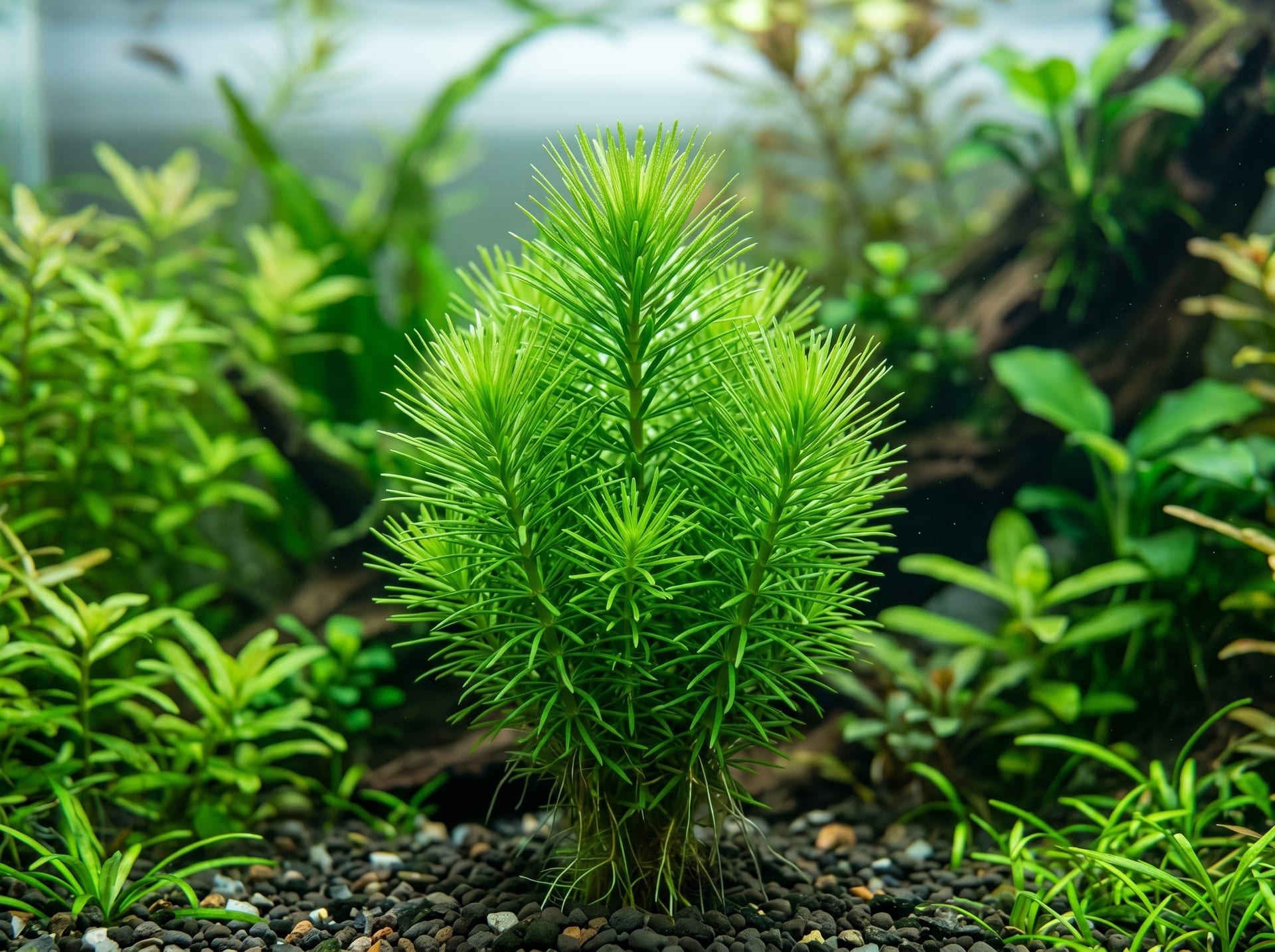
Pogostemon Erectus
Pogostemon erectus
Stem plant with a unique conifer-like silhouette. Beautiful lime-green foliage makes it a popular layout accent. Somewhat slow-growing but hardy.
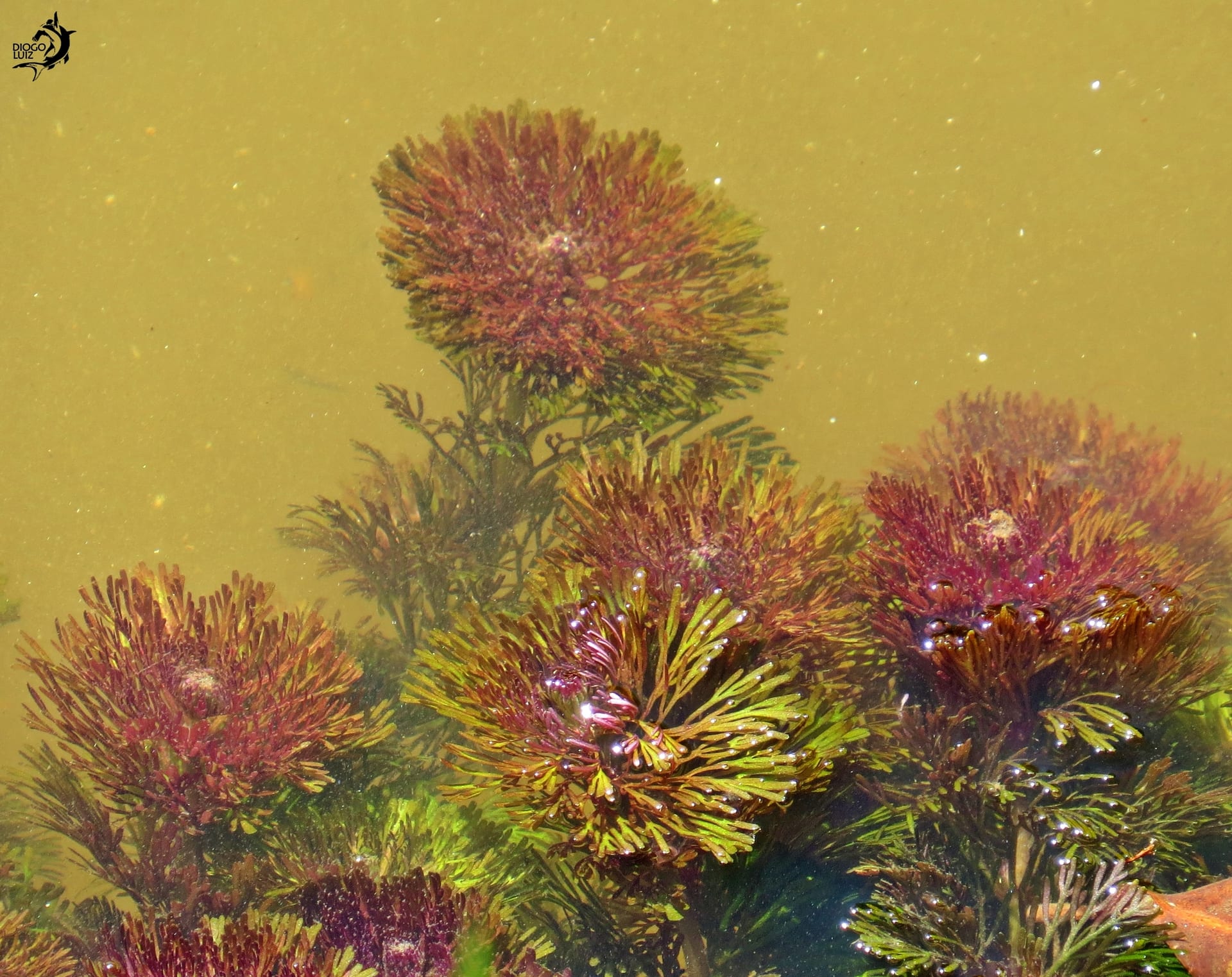 © Diogo Luiz / CC BY-SA 4.0
Red cabomba
Cabomba furcata
A cabomba with finely divided, fan-shaped leaves in threes, coloured red-brown to wine red. It is a different species from green Cabomba caroliniana and is told apart by its whorled leaves. Strong light and soft water are essential, so it suits experienced keepers.
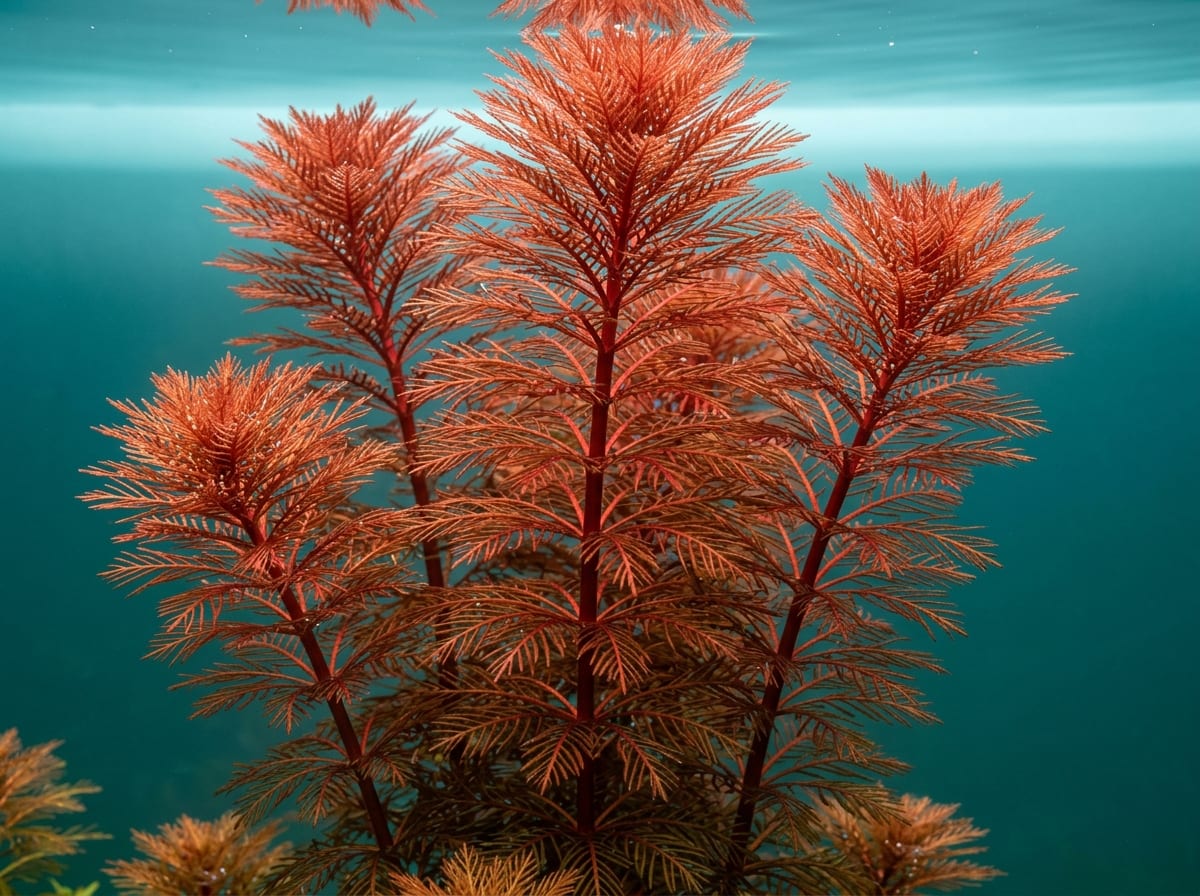
Red myriophyllum
Myriophyllum tuberculatum
An Asian water-milfoil whose finely feathered leaves grow in whorls and turn rusty red in good conditions. For years it was sold under the wrong name Myriophyllum mattogrossense. Strong light, CO2 and trace elements are essential.
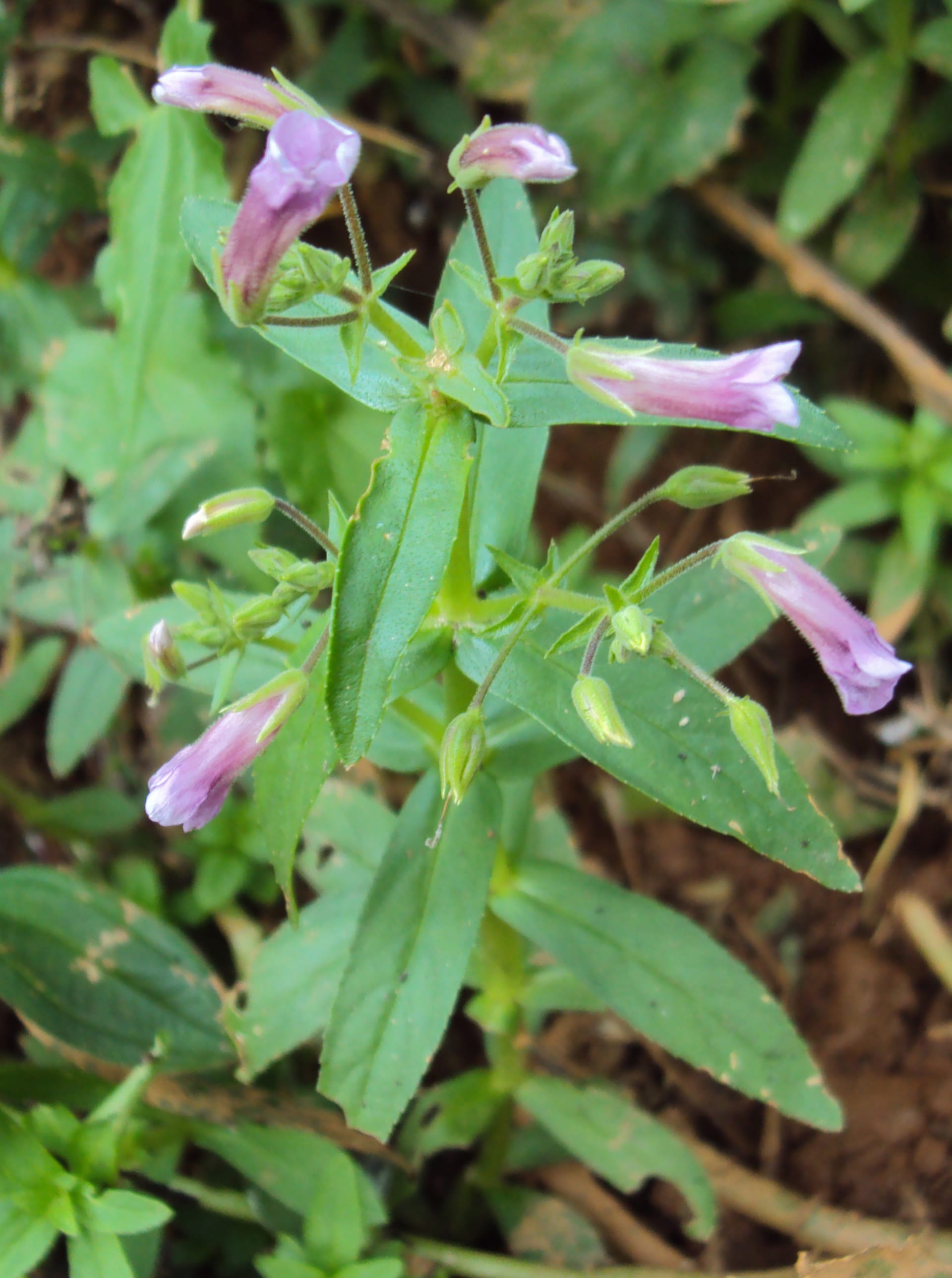 © Vinayaraj / CC BY-SA 3.0
Rice paddy herb
Limnophila aromatica
A stem plant native to Japan (Japanese name Shisokusa) whose crushed leaves smell of citrus. Under water it has two or three leaves per node, in green or reddish forms. A deep red species with more leaves per whorl is often sold under this name.
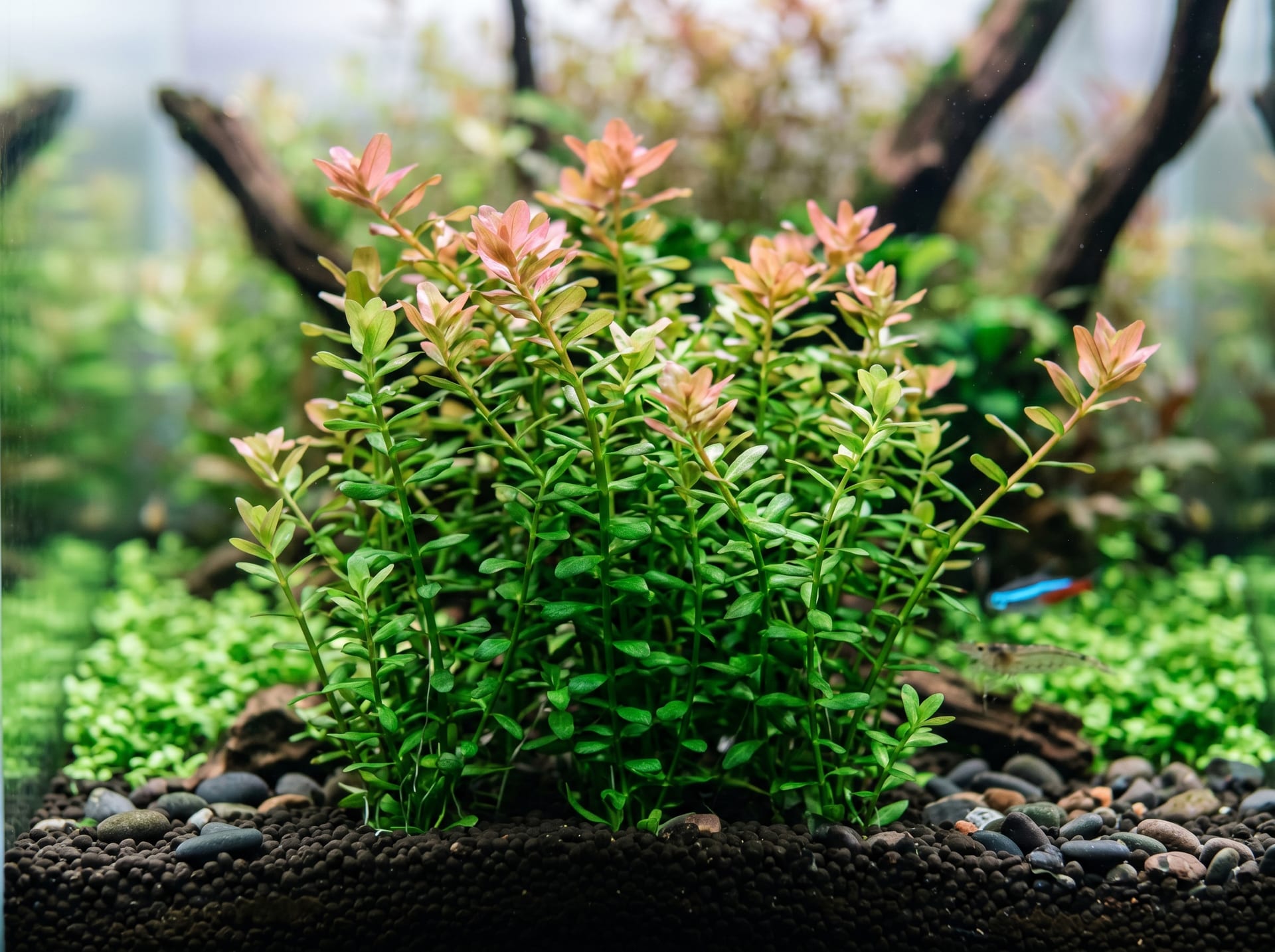
Rotala
Rotala spp.
Essential background stem plant genus. Many species including R. rotundifolia and R. indica. Beautiful red coloration and dense bushes achievable through trimming.
Related Content
Aquatic Plant FAQ
- How much do aquatic plants cost?
- Common Rotala and Anubias cost 300-1,000 yen, Bucephalandra 1,000-5,000 yen, and rare wild-collected specimens 5,000-20,000+ yen depending on species.
- Can beginners grow aquatic plants?
- Anubias Nana and Java Moss require no CO2 injection and grow in low light, making them ideal for beginners. Start with hardy shade-loving plants.
- What equipment is needed for aquatic plants?
- A tank, LED light, filter, and aqua soil are the basics. For advanced layouts, CO2 injection and high-performance lighting significantly improve growth and coloration.
- What should I check when buying aquatic plants?
- Ensure leaves are green and healthy, not melting or dying, and free of snails or pests. Tissue-cultured cups are pest-free and reliable.
- Why do aquatic plants die?
- Insufficient light, CO2, or nutrients are the main causes. Each species has different requirements, so matching the environment to your specific plants is essential.