Aquatic Plant Encyclopedia
Encyclopedia of popular aquatic plants with care guides, traits, and aquascaping tips.
Showing 16 of 127 species
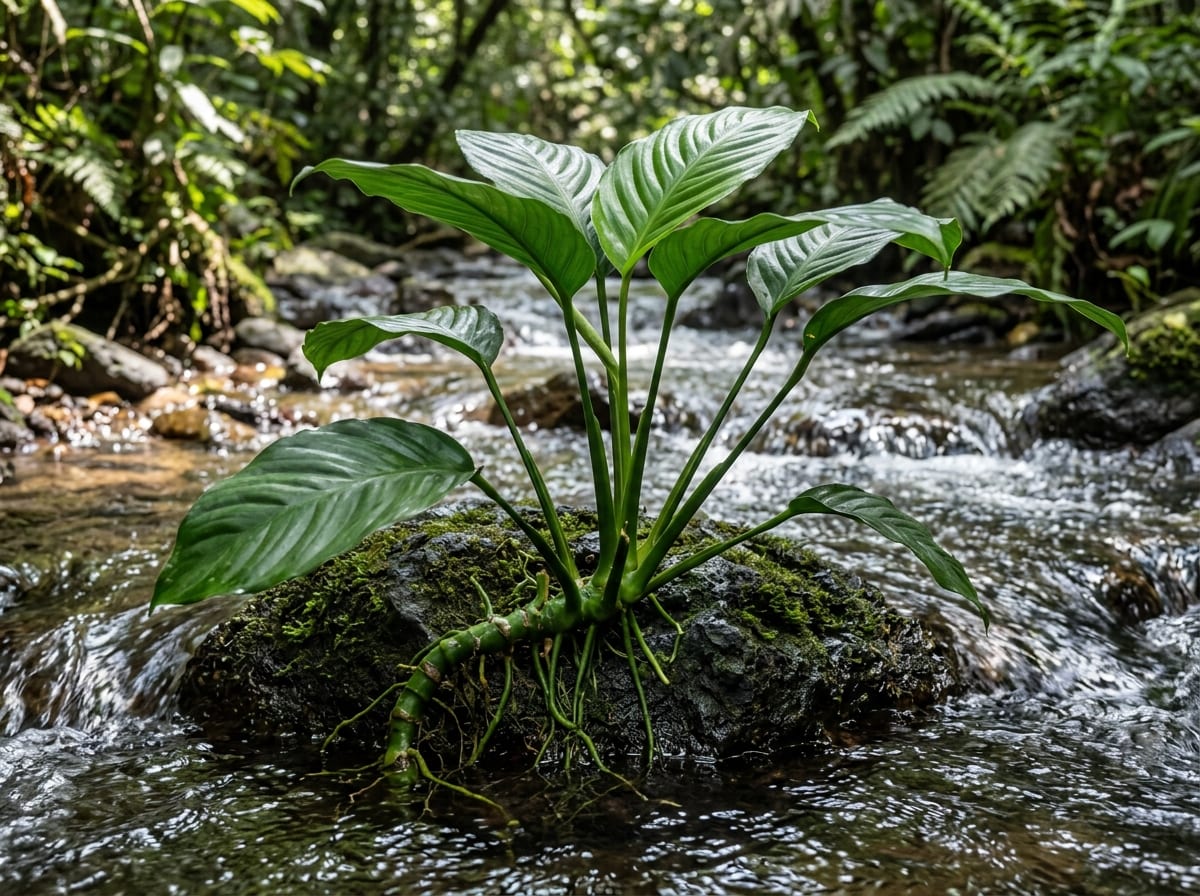
Anubias barteri var. barteri
Anubias barteri var. barteri
The type variety of Anubias barteri, with broad, thick, leathery leaves. It grows larger than var. nana and even young plants can be told apart by their longer petioles. Tough enough to survive herbivorous fish and dim tanks.
 © Krzysztof Ziarnek, Kenraiz / CC BY-SA 4.0
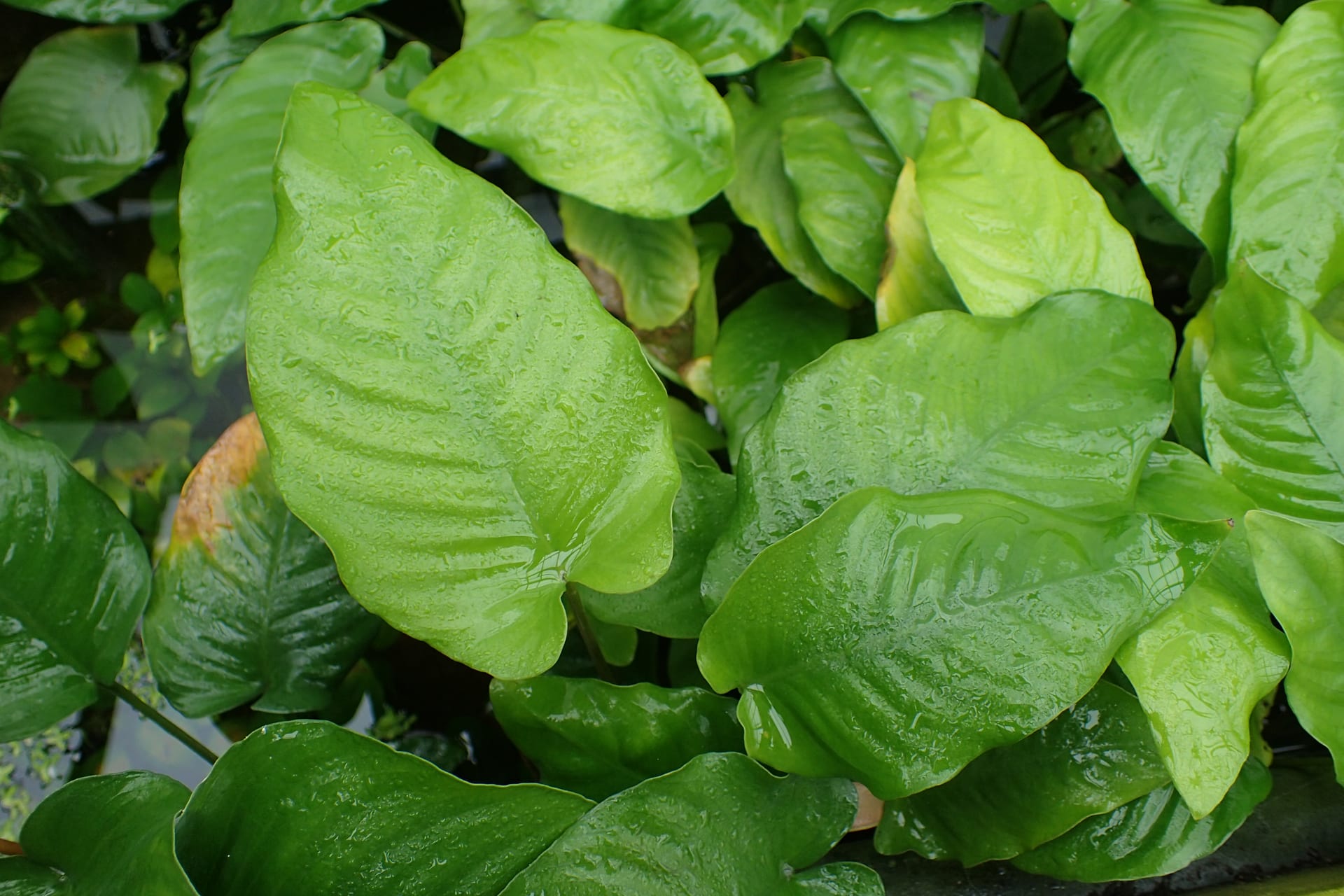
Anubias barteri var. caladiifolia
Anubias barteri var. caladiifolia
The largest variety of Anubias barteri, whose mature leaves have a deeply heart-shaped base. Leaves are paler and softer than var. barteri, and because they live for years a clump can exceed 50 cm across within a few years.
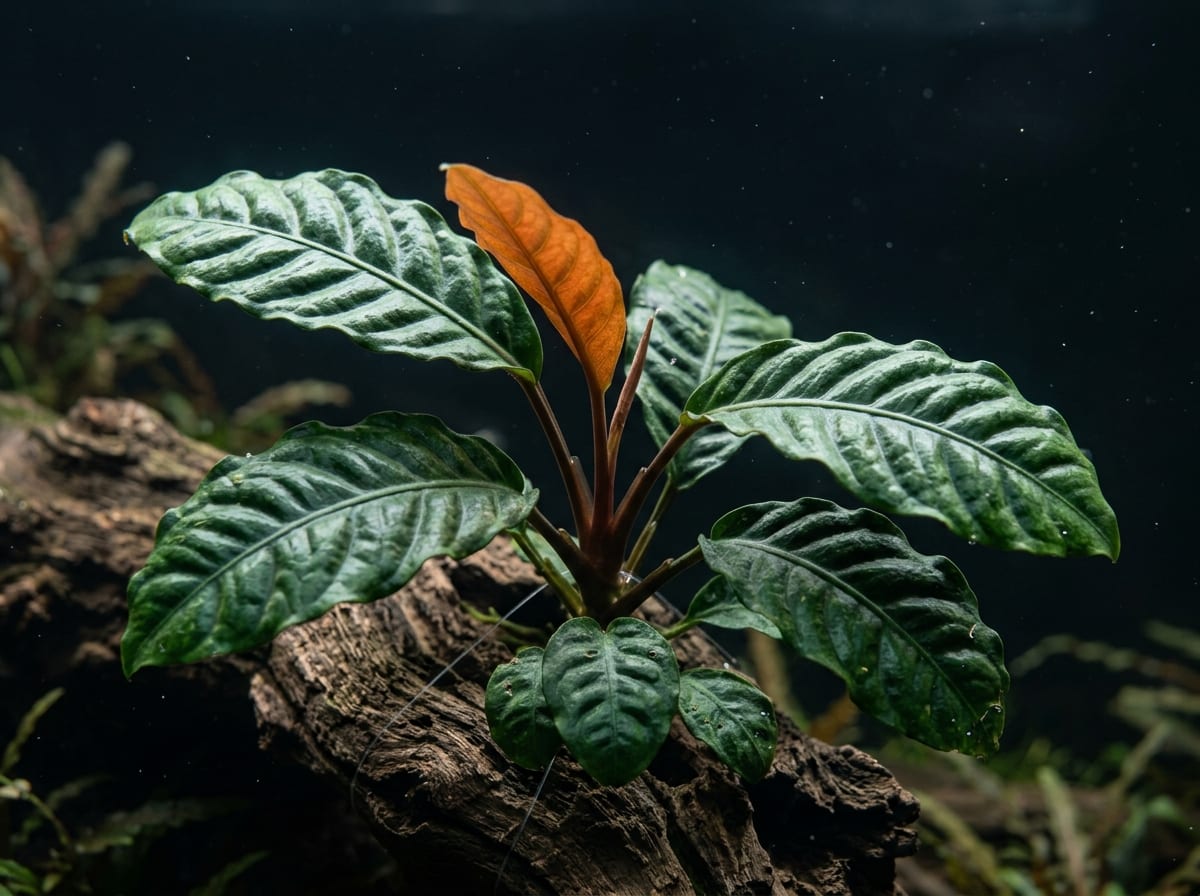
Anubias barteri var. coffeifolia
Anubias barteri var. coffeifolia
An Anubias whose leaf blades bulge strongly between the veins, like coffee leaves. New leaves emerge orange- to red-brown and turn dark green. It often flowers under water.
 © Ji-Elle / CC BY-SA 4.0
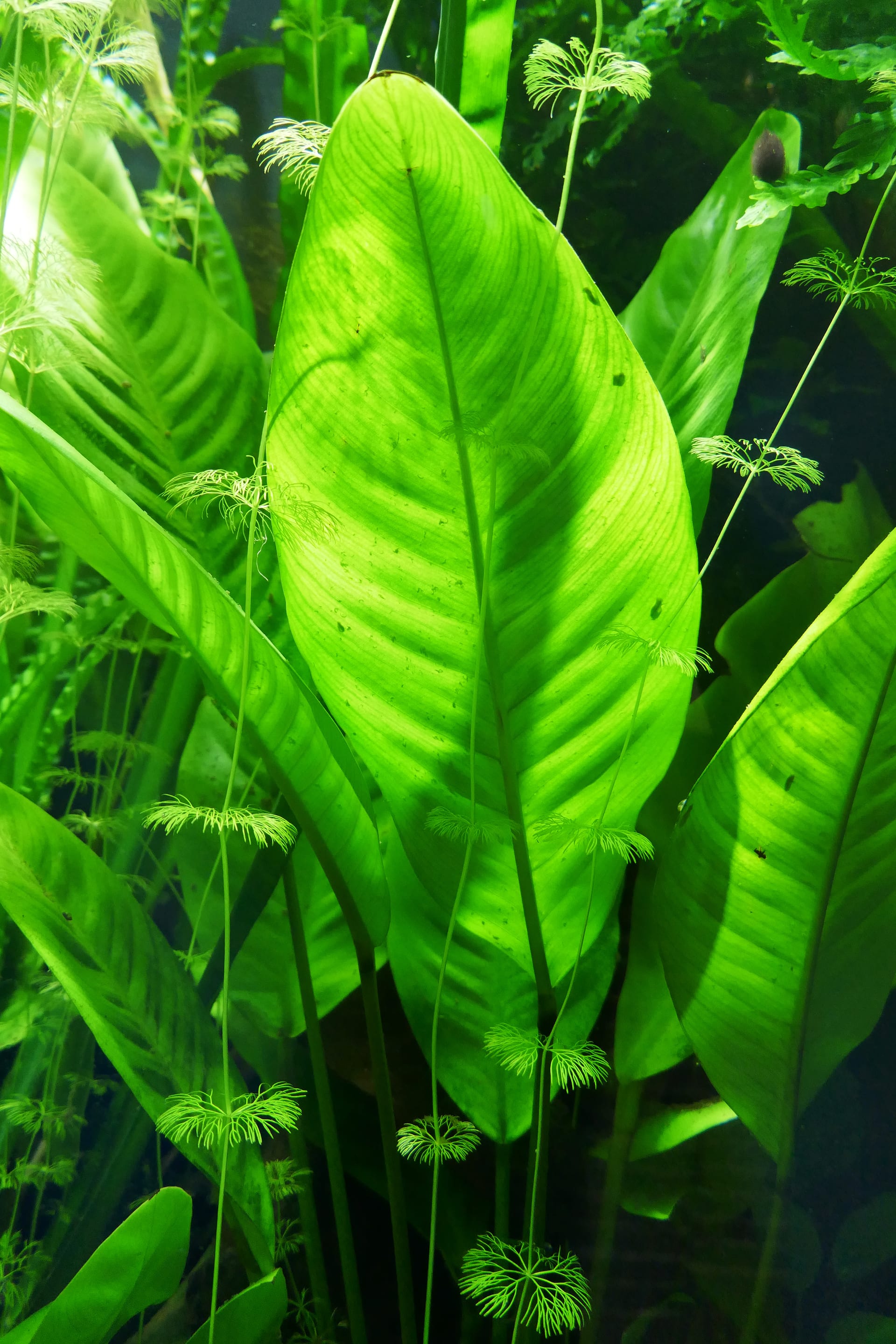
Anubias barteri var. glabra
Anubias barteri var. glabra
A variety of Anubias barteri with elliptic to narrowly lanceolate leaves, slimmer than the rounded nana or var. barteri. Also traded as 'minima' or 'lanceolata'. Very tough and happy in shade.
Anubias barteri var. nana 'Bonsai'
Anubias barteri var. nana 'Bonsai'
A dwarf selection of Anubias nana. At about 5 cm tall its small leaves pack tightly into a compact, bonsai-like mound, suitable for stones and wood even in tanks of around 10 litres.
Anubias barteri var. nana 'Gold'
Anubias barteri var. nana 'Golden'
A selection of Anubias nana whose new leaves emerge light green to golden yellow, clearly unlike the dark green standard form. Leaves darken in weak light. It traces back to a mutant found at a Taiwanese nursery.
Anubias barteri var. nana 'Pangolino'
Anubias barteri var. nana 'Pangolino'
A nana selection with some of the smallest leaves of any Anubias. Narrow dark green leaves overlap like the scales of a pangolin. Selected from 'Bonsai' stock, it suits the hardscape of nano tanks.
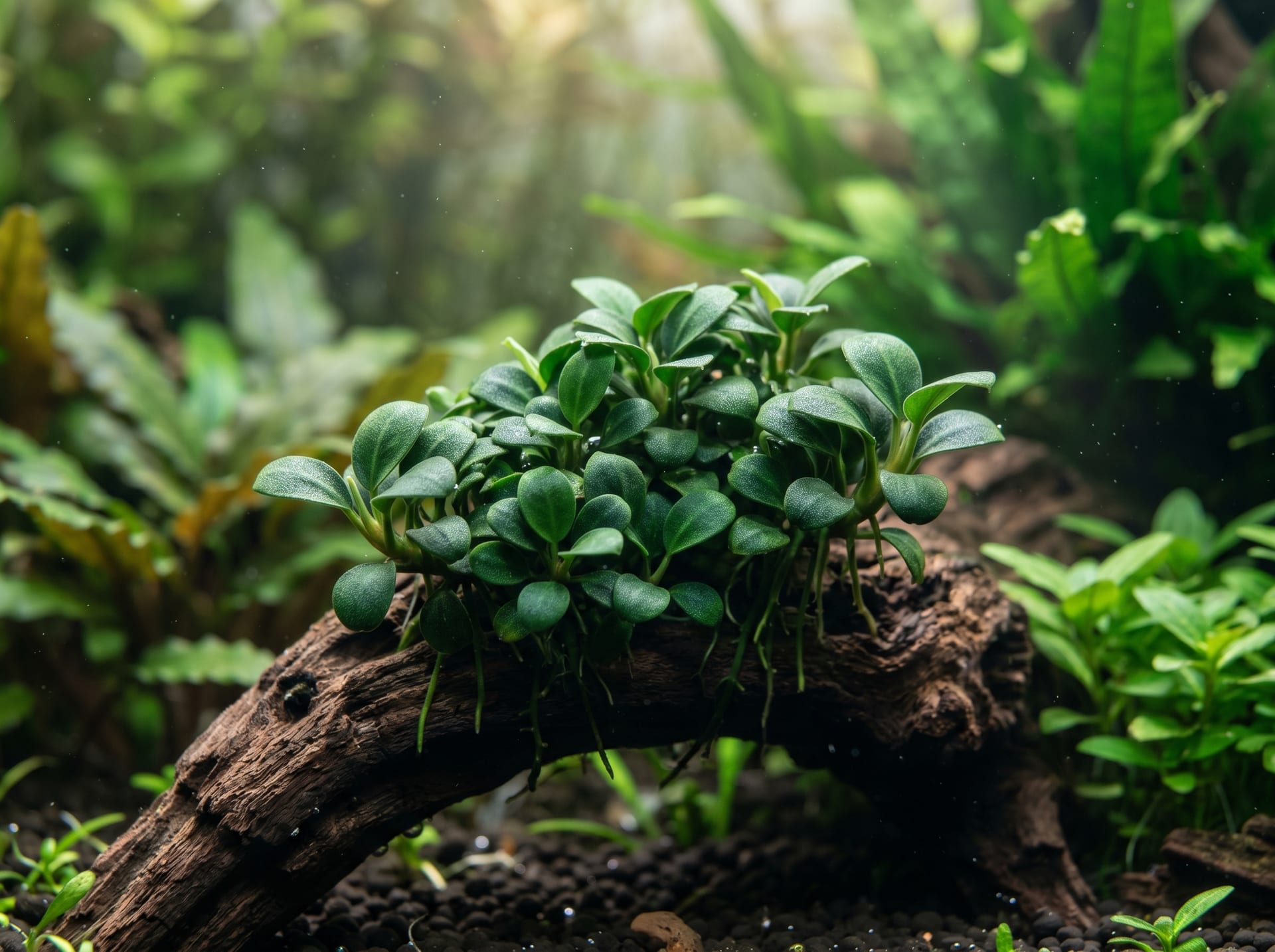
Anubias Nana Petite
Anubias barteri var. nana 'Petite'
An even smaller variety of Anubias Nana. Tiny densely packed leaves, ideal for nano tanks.
Bucephalandra sp. 'Kedagang'
Bucephalandra sp. 'Kedagang'
A Bornean Bucephalandra with narrow, strongly wavy dark leaves sprinkled with silvery dots, wine-red rhizomes and young petioles, and a blue metallic sheen underwater. Relatively vigorous for a Buce.
Bucephalandra sp. 'Theia'
Bucephalandra sp. 'Theia'
A traded Bucephalandra with dense obovate, round-tipped leaves. Submerged leaves are red-brown to purple with a bluish sheen and silvery stomatal dots. It branches into a low, compact clump.
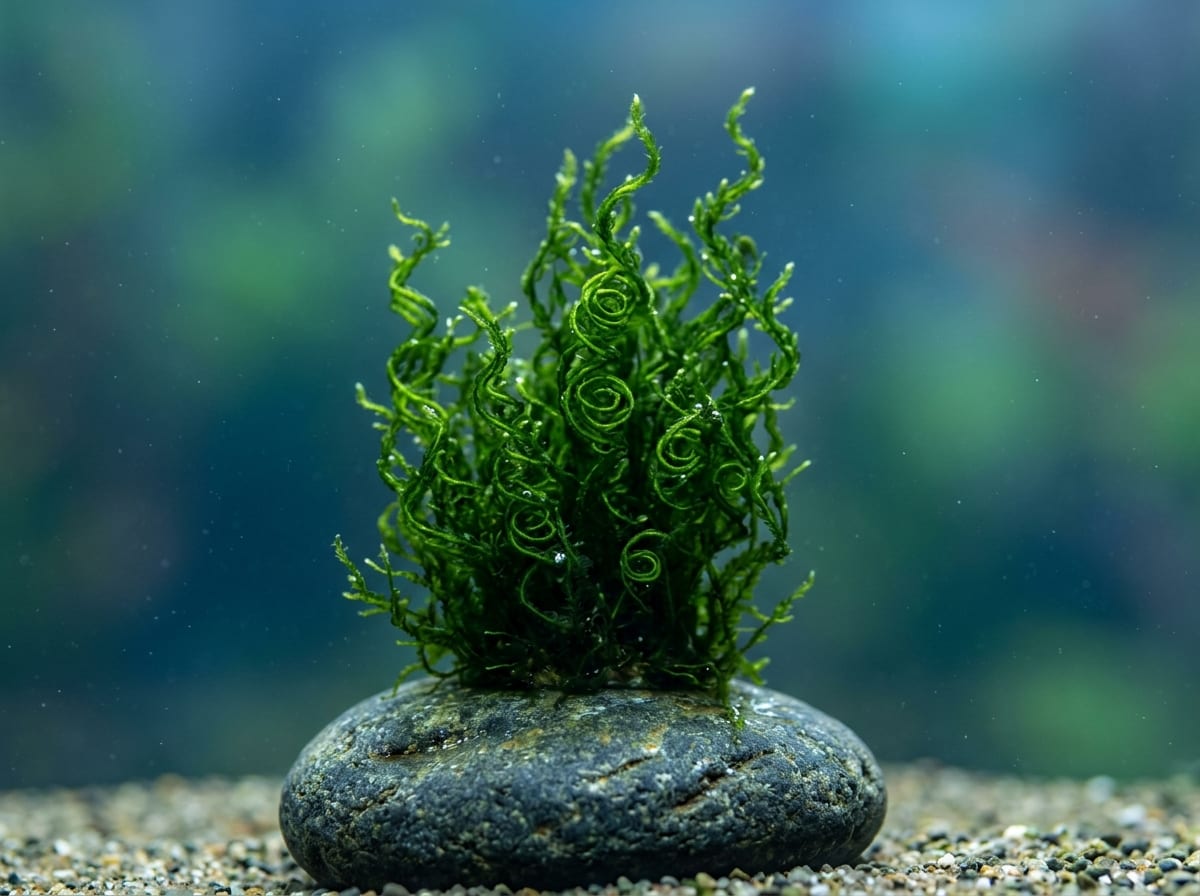
Flame moss
Taxiphyllum sp. 'Flame'
An aquatic moss whose sparsely branched shoots twist upward like rising flames. It spreads little sideways, so it is attached to the tops of wood or stones to add height.
 © Tsunamicarlos at English Wikipedia / Public domain
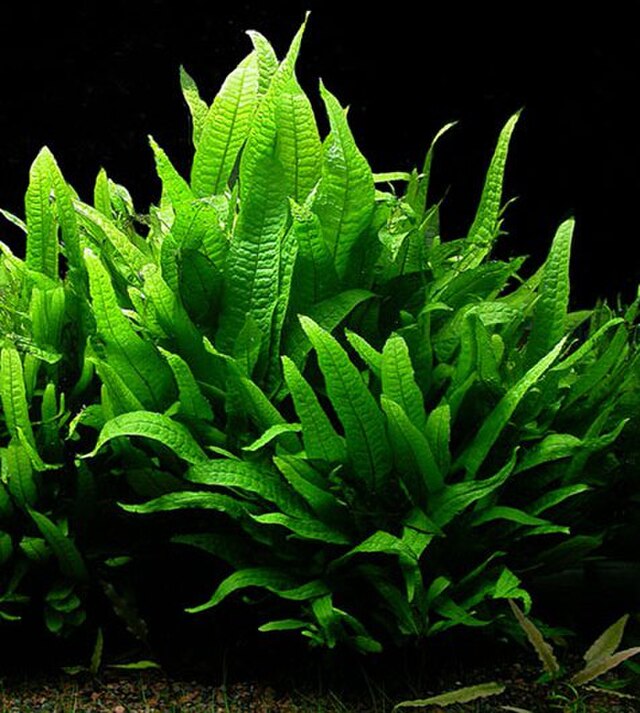
Java Fern
Leptochilus pteropus
A fern aquatic plant from Southeast Asia. Attaches to driftwood and rocks, popular for its unique leaf shape.
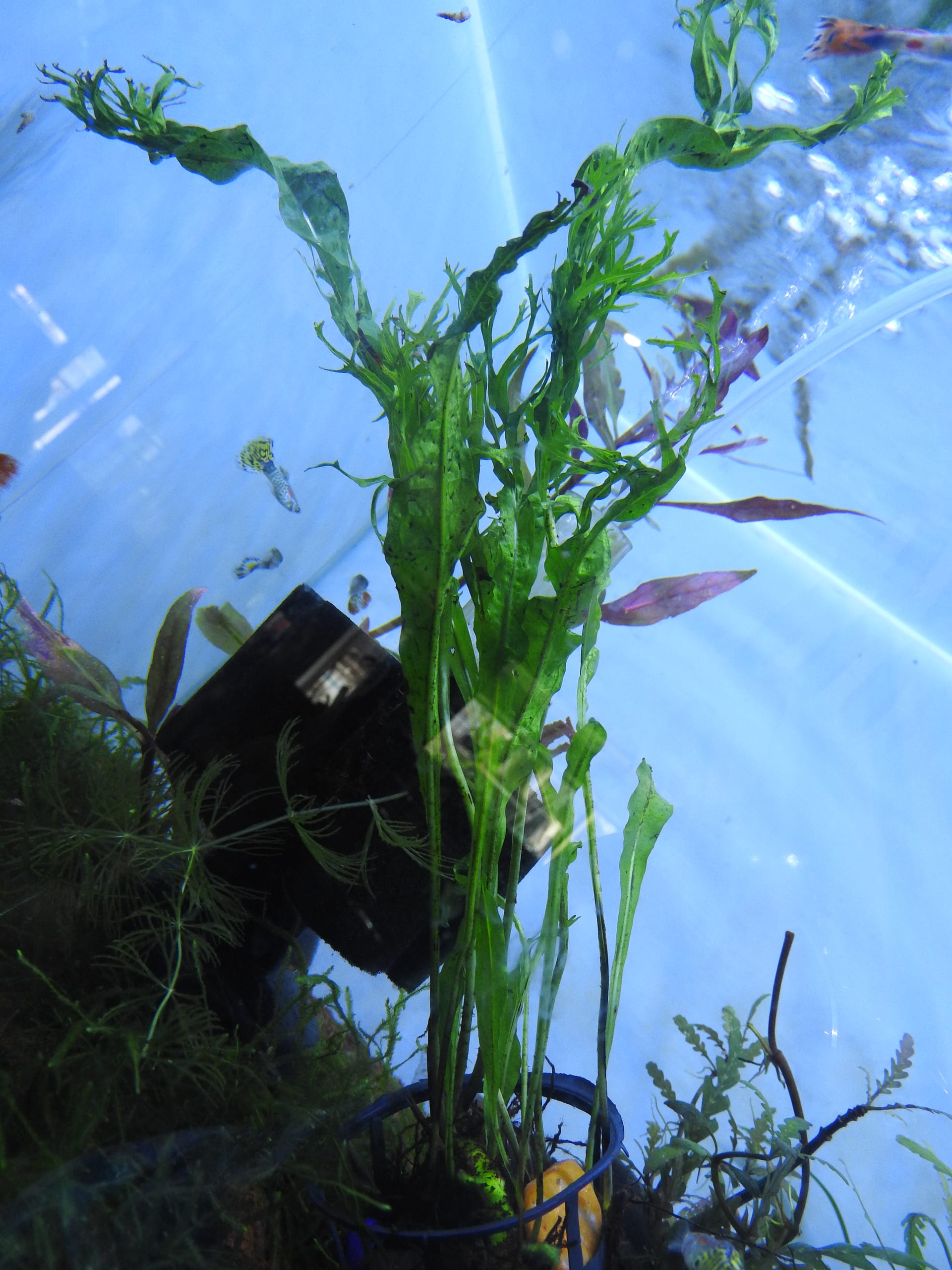
Java fern 'Narrow'
Microsorum pteropus 'Narrow'
A narrow-leaved form of Java fern. Its long leaves, about 1–2 cm wide, spread from the rhizome at a wider angle than the standard plant. Compact and easy to tie onto wood or stone, though differently shaped plants are sold under the same name.
 © Yercaud-elango / CC BY 4.0
Java fern 'Windeløv'
Microsorum pteropus 'Windeløv'
A Java fern cultivar whose leaf tips fork repeatedly into fine tufts. Named after the founder of a Danish aquatic plant nursery, it entered the trade in 1994 and forms bushy clumps about 10–20 cm tall.
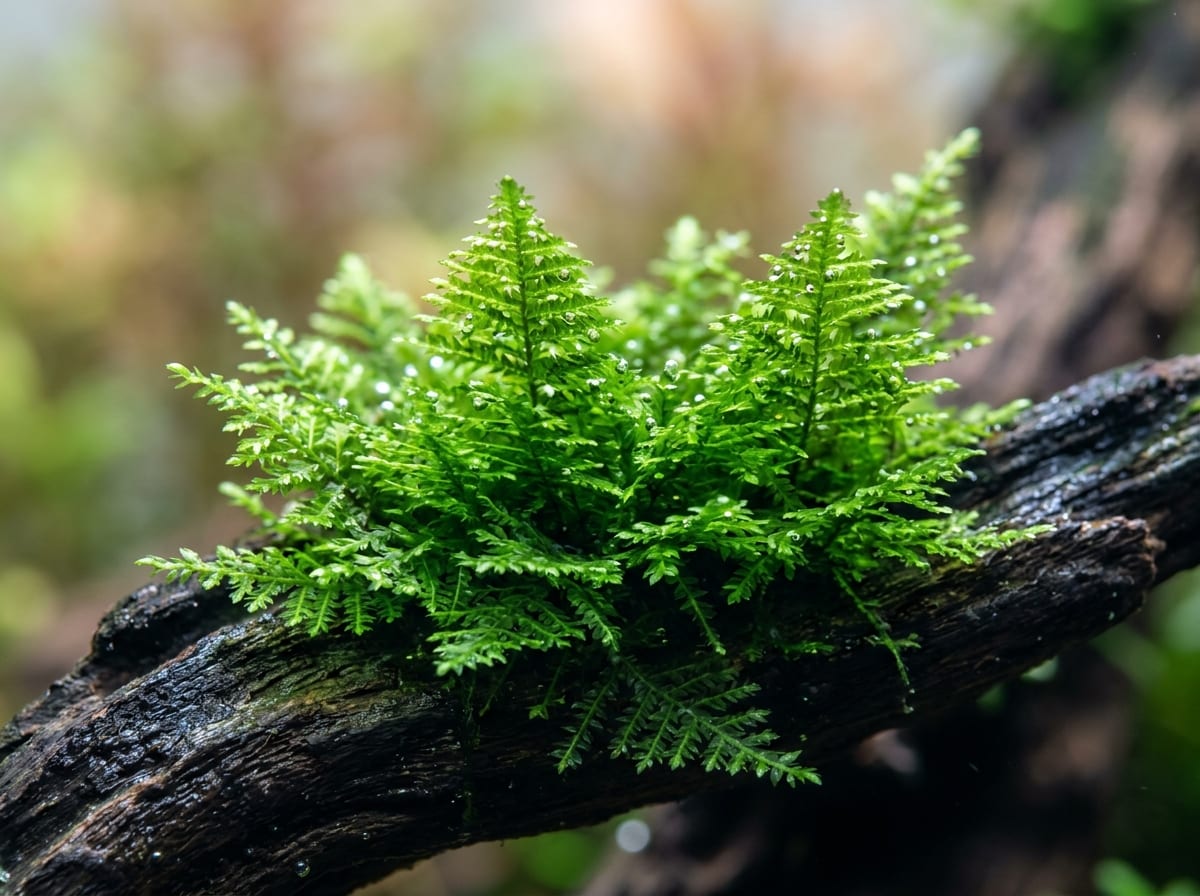
South American moss
Vesicularia sp. (South America)
A full, fairly bright green aquatic moss whose branches spread in neat triangles. Despite the name there is no evidence it comes from South America. It grows in low light without CO2 and is tied onto wood or stone.
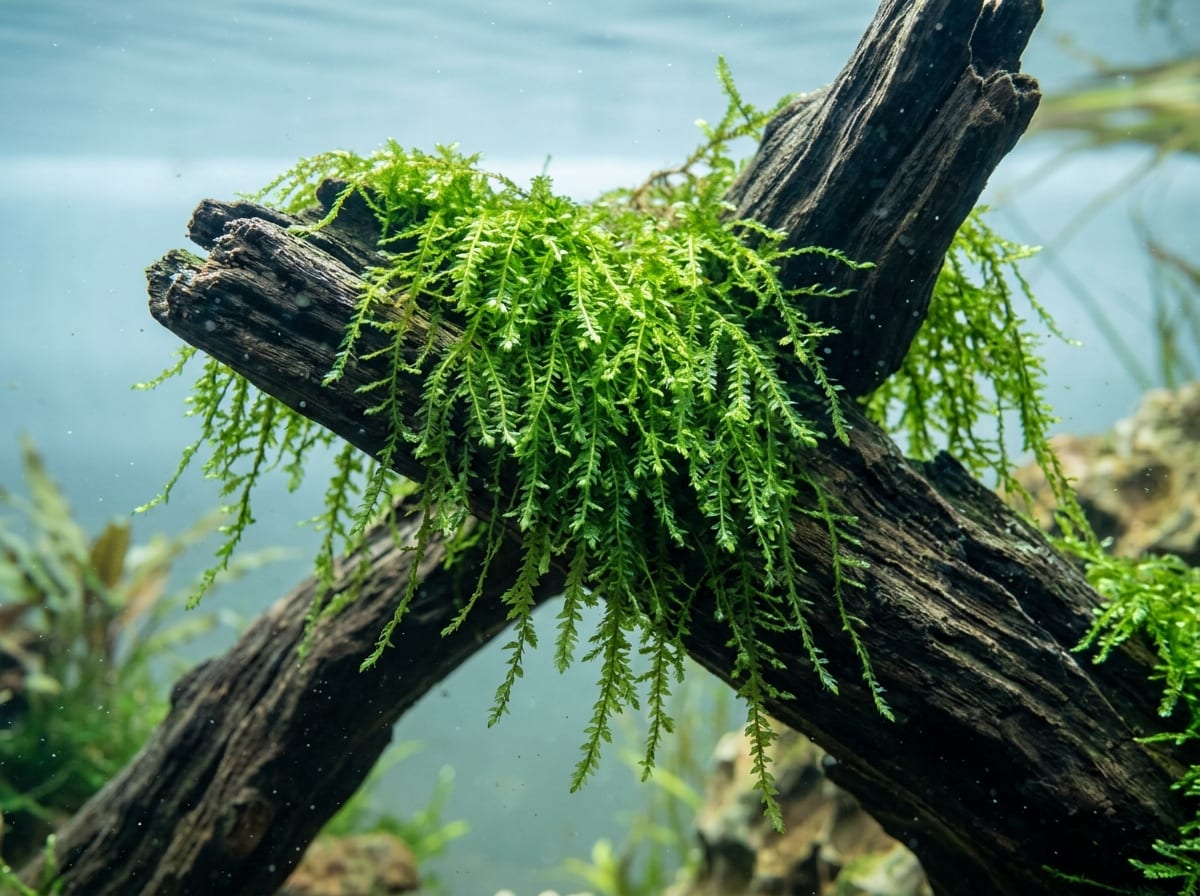
Weeping moss
Vesicularia ferriei
An aquatic moss with bright green, teardrop-shaped shoots that hang downward. Draped from branches of wood it adds depth and shadow to a layout. Undemanding and fairly quick-growing.
Related Content
Aquatic Plant FAQ
- How much do aquatic plants cost?
- Common Rotala and Anubias cost 300-1,000 yen, Bucephalandra 1,000-5,000 yen, and rare wild-collected specimens 5,000-20,000+ yen depending on species.
- Can beginners grow aquatic plants?
- Anubias Nana and Java Moss require no CO2 injection and grow in low light, making them ideal for beginners. Start with hardy shade-loving plants.
- What equipment is needed for aquatic plants?
- A tank, LED light, filter, and aqua soil are the basics. For advanced layouts, CO2 injection and high-performance lighting significantly improve growth and coloration.
- What should I check when buying aquatic plants?
- Ensure leaves are green and healthy, not melting or dying, and free of snails or pests. Tissue-cultured cups are pest-free and reliable.
- Why do aquatic plants die?
- Insufficient light, CO2, or nutrients are the main causes. Each species has different requirements, so matching the environment to your specific plants is essential.