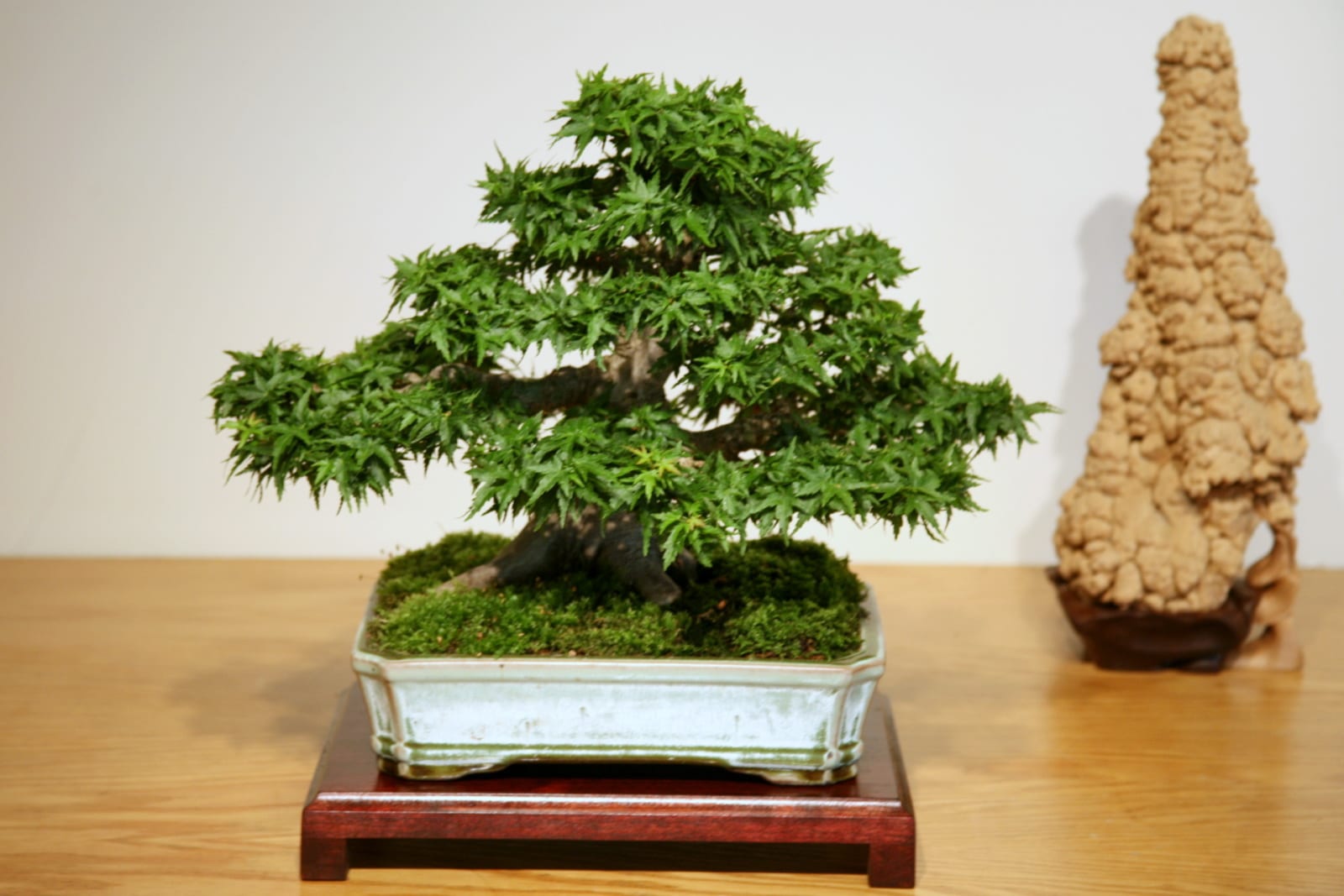
 © Cliff from Arlington, Virginia, USA / CC BY 2.0
琴姫
Kotohime is an extremely dwarf Japanese maple known for its tiny leaves and short internodes. As a leading yatsubusa (many-branching) maple variety, it branches profusely and readily develops a dense, finely twigged silhouette even in a small pot, making it a long-time favorite for mame and shohin bonsai. It's generally considered a variety for intermediate growers, though it becomes manageable once you have the basics of placement and watering down. Because it also propagates readily from cuttings, growers can gradually build up their collection by rooting new plants from an existing tree. Packed into a palm-sized pot, Kotohime offers the delicate branching and seasonal color of a maple in miniature form.
View 琴姫 encyclopedia →成交手续费0%!2026年9月30日前注册,前 2 株免佣金!
生产者 招募中!
在GrowerDirect上销售,直接面向全国客户销售吗?
GrowerDirect的 6 项透明性承诺
在盆景的上架中,生产者公开以下信息。确保树种、产地、光照需求、栽培难度的透明度。
- 树种公开
- 实物照片
- 色彩
- 产地公开
- 光照需求
- 难度公开
查看全部144个品种
已注册的生产者(抢先看)
琴姫的基本数据
- 养护难度
- 适合中级者
- 寿命
- 作为品种的寿命资料较少
- 体型
- 极矮性,易于在豆盆和小品盆栽中维持生长
- 浇水
- 肥料(春季和秋季,适量施用)
- 光照和放置位置
- 光照充足、通风良好的位置。因不耐西日,从梅雨季末至9月上旬需要50~70%的遮阴以防止叶烧
- 浇水
- 小盆干燥速度极快。春季每天浇水2次,夏季2~3次,浇到株根部。夏季缺水会导致叶烧和枝枯
- 温度和越冬
- 耐寒性强(山枫为USDA第5区)。落叶后经过2~3次霜冻后,避免干风和晚霜进行保护
- 用土和植株更新
- 使用排水性好的用土,植株更新在3月左右新芽萌发前进行。每2~3年更新一次,迷你型1~2年更新一次,修整根系以促进细根生长
- 施肥
- 新叶展开在4月中旬施有机肥,5月追肥一次。秋肥在8月中旬至9月完成,促进秋叶变红
- 修剪和造型
- 因节间密集,通过摘除中心芽的程度就能促进枝条增加。避免全叶刈除因为会削弱树势,必要时进行叶片疏开。修剪在落叶前后进行
- 病虫害和注意事项
- 新芽易生蚜虫,梅雨后容易患白粉病。叶片薄容易产生药害,所以药剂要按标签浓度使用
关于琴姫
Kotohime is a leading yatsubusa Japanese maple with tiny leaves and dense branching, ideal for mame and shohin bonsai in small pots. It also propagates easily from cuttings.
开始养护琴姫前需要了解的7件事
1Placement
Kotohime prefers a spot with good sun and airflow, but strong direct summer sun can scorch its leaves. Because its leaves are extremely small, moving it to bright partial shade in the afternoon is safer, especially while it's still in a small pot.
2Watering
Because Kotohime is grown in a small pot as an extremely dwarf variety, the soil surface dries out quickly. Check the soil regularly during the growing season and water thoroughly once it dries.
3Soil
Since roots fill a small pot quickly, a well-draining, well-aerated bonsai soil mix is important. An akadama-based blend is a common choice.
4Repotting
Because mame and shohin-sized pots fill with roots relatively fast, Kotohime tends to need repotting at shorter intervals than larger bonsai. The best time is just before new growth starts, when the roots can be trimmed and refreshed.
5Pruning and Pinching
To make the most of its yatsubusa branching habit, pinch back new shoots regularly to encourage more branches to form. This ongoing care is what builds up the fine, twiggy silhouette Kotohime is known for.
6Seasonal Care
Its tiny leaves are sensitive to heat and drying out, so watch for leaf scorch and dehydration in summer. In winter, the roots in a small pot are more exposed to cold, so some frost protection is worth considering during the coldest stretches.
7Choosing a Good Specimen
Kotohime's character shows in its small leaves and tightly spaced internodes that create fine branching. When choosing a tree, look for even, well-distributed branching and leaves, and check that there's no dead wood.
琴姫的常见问题
- Q.Is Kotohime suitable for beginners?
- A.It's generally considered a variety for intermediate growers, since its tiny leaves and small pot mean basic care like watering needs a bit more attention. Once you're comfortable with bonsai fundamentals, it becomes easier to manage over time.
- Q.How large does Kotohime typically grow?
- A.It's an extremely dwarf variety that's easy to maintain at mame or shohin bonsai size. It can stay in a small pot while keeping a compact form for a long time.
- Q.Can Kotohime be propagated from cuttings?
- A.Yes, Kotohime is known as a variety that roots readily from cuttings. This makes it possible to grow new plants from an existing tree and gradually build up your collection.
- Q.What makes Kotohime different from other Japanese maples?
- A.Kotohime is a leading yatsubusa maple variety, meaning it has unusually small leaves and short internodes. This lets it develop a dense, finely branched silhouette even in a small pot.
- Q.How often does Kotohime need repotting?
- A.Because it's grown in a small pot, its roots fill the space relatively quickly, so it tends to need repotting more often than larger bonsai. It's best done just before new growth starts, checking root condition each time.
琴姫种植的实用工具
在图鉴中详细了解琴姫
查看琴姫的图鉴条目 →
收录栽培难度、尺寸、原产地、日照等基础数据。