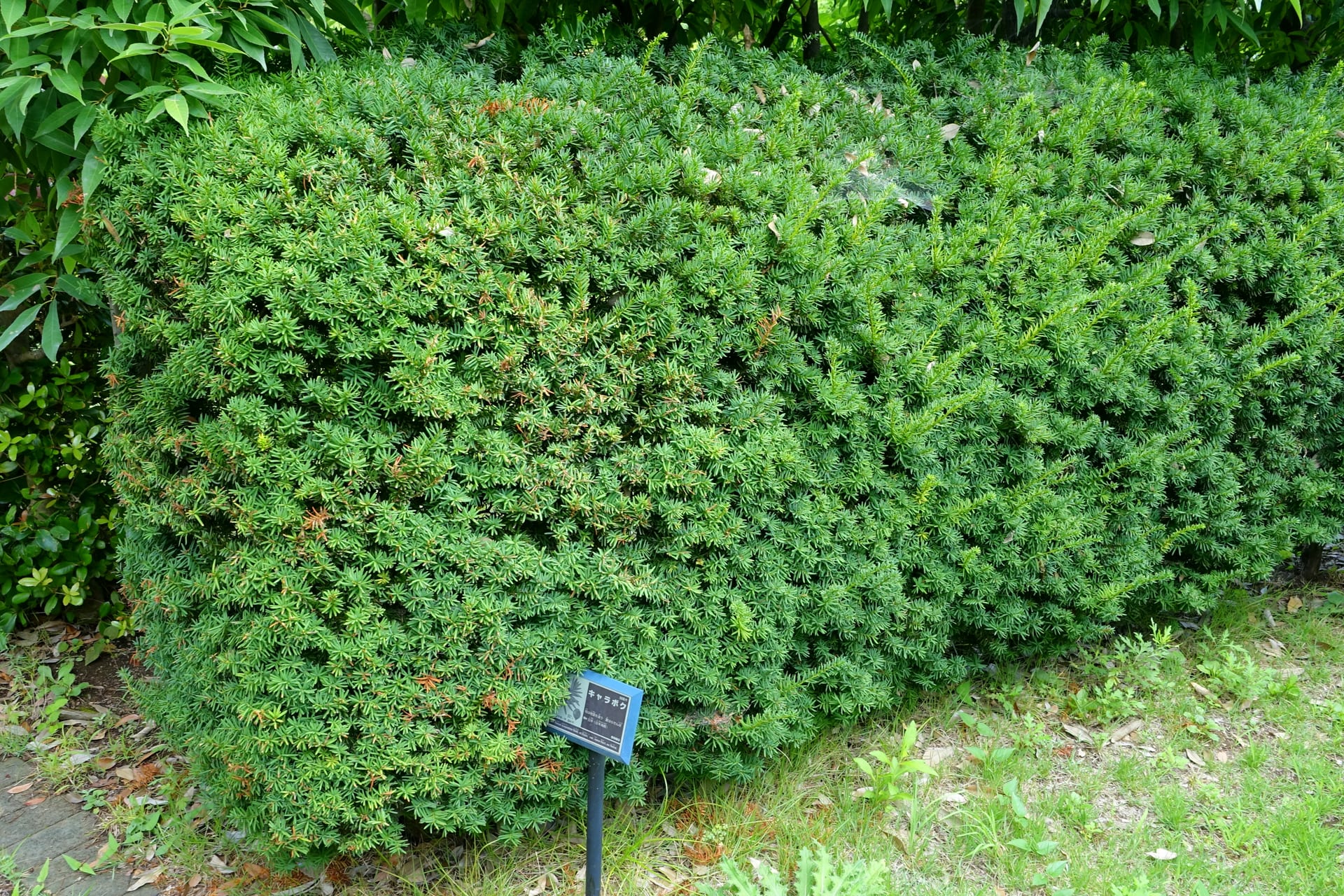
 © Daderot / CC0
矮日本紫杉
Dwarf Japanese yew is a low, spreading variety of Japanese yew native to the snowy mountains along Japan's coast facing the Sea of Japan. Rather than growing a single upright trunk, it branches from the base and fans outward horizontally, and its broader, spirally arranged needles set it apart from ordinary yew. It's a tough, beginner-friendly conifer that tolerates summer heat well, making it a forgiving choice for first-time bonsai growers to practice pruning and shaping. The species is remarkably long-lived: colonies of trees estimated at 600 years old still grow on Mount Daisen, a testament to how well this plant can become a lifelong companion.
View 矮日本紫杉 encyclopedia →成交手续费0%!2026年9月30日前注册,前 2 株免佣金!
生产者 招募中!
在GrowerDirect上销售,直接面向全国客户销售吗?
GrowerDirect的 6 项透明性承诺
在盆景的上架中,生产者公开以下信息。确保树种、产地、光照需求、栽培难度的透明度。
- 树种公开
- 实物照片
- 色彩
- 产地公开
- 光照需求
- 难度公开
查看全部144个品种
已注册的生产者(抢先看)
矮日本紫杉的基本数据
- 养护难度
- 适合新手
- 寿命
- 长寿树种,大山有树龄达600年的老树成片生长。
- 体型
- 高度0.5~2米,横向扩展的灌木(盆景从迷你型至中号)。
- 浇水
- 肥料(4~5月和9~10月)
- 光照与摆放位置
- 喜欢阳光,但也能适应半阴环境。夏季应置于避免强烈日光、明亮且通风良好的地方。
- 浇水
- 害怕干旱。春季每天浇水1~2次,夏季2~3次,秋季1~2次,冬季每2~3天一次。过度潮湿也会导致根腐病。
- 温度与越冬
- 耐寒(日本紫杉为USDA 4区)。在寒冷地区,冬季叶片会变褐色,但次年会恢复绿色。相比日本紫杉更耐热。
- 用土与换盆
- 用土不挑选,可用赤玉土单独使用或混合沙子以确保排水良好。换盆时间为3月中旬至4月中旬,成年树每2年换盆一次。
- 肥料
- 梅雨季和夏季除外,在4~5月和9~10月期间,每月施用有机肥1~2次。
- 修剪与整型
- 4月中旬至6月,新芽柔软时用手指摘除,保留约一半至三分之一。修剪于3~4月和10~11月,缠绕金属丝于10月至3月,去除老叶于10~11月。
- 病害虫与注意事项
- 病虫害较少,但持续干燥会导致蜘蛛螨出现。果实种子有毒。因为是自生种,应选择栽培品而非野采品种。
关于矮日本紫杉
Dwarf Japanese yew, a spreading variety of Japanese yew from the snowy mountains of Japan's coast, is prized for its low, fanning form and broad spiral needles, a heat-tolerant conifer that's easy for beginners to grow as bonsai.
开始养护矮日本紫杉前需要了解的7件事
1Light and Air Circulation
Dwarf Japanese yew tolerates partial shade but keeps its densest, most attractive form in good light. Strong afternoon sun in midsummer can scorch the foliage, so move potted specimens somewhere with afternoon shade and good airflow.
2Watering Basics
Water thoroughly once the soil surface dries out. Because it naturally grows in snowy, moisture-rich mountain terrain, it's less drought-tolerant than some conifers, so summer heat may call for watering both morning and evening.
3Well-Draining Soil
Choose a bonsai soil mix that balances drainage with moisture retention to avoid root rot. A base of akadama with added leaf mold and pumice is a common, reliable combination.
4Repotting Schedule
Growth is relatively slow, but repotting every two to three years prevents the roots from becoming pot-bound. The best windows are just before spring budding or after the autumn equinox.
5Winter Care, Pinching, and Pruning
This tough conifer can overwinter outdoors, though it's best kept out of harsh, dry winds. Pinch new shoots by hand from mid-April to June while they are still soft, leaving a half to a third of each shoot. Do pruning cuts in March to April and October to November to keep the silhouette neat.
6A Naturally Spreading Form
Because the trunk doesn't grow upright and instead branches from the base, bonsai growers often train it into informal upright or windswept-style shapes that emphasize its natural horizontal spread. Wiring is easiest while branches are still young and pliable, before they thicken and stiffen.
7Choosing a Young Plant
Look for glossy, healthy-colored foliage and multiple branches emerging near the base, which makes it easier to develop a natural spreading form. The broad, spirally arranged needles are the key feature that distinguishes it from ordinary yew.
矮日本紫杉的常见问题
- Q.How is Dwarf Japanese yew different from regular yew?
- A.It's a variety of Japanese yew whose trunk doesn't grow upright but instead branches from the base and spreads horizontally. Its needles are also broader and arranged in a spiral, which is the easiest way to tell it apart.
- Q.Is it suitable for beginners?
- A.Yes, it's a hardy, relatively heat-tolerant conifer considered good for beginner bonsai growers. As long as you keep up with basic watering and give it enough light, it's fairly forgiving.
- Q.How large does it grow?
- A.In the wild it forms a low shrub about 0.5 to 2 meters tall, while as bonsai it can be trained from mini to medium sizes. Its slow growth rate also makes the size easier to manage over time.
- Q.Can it stay outdoors through winter?
- A.Yes, it's cold-hardy enough to overwinter outdoors. Just avoid prolonged exposure to dry, cold winds, which can damage the foliage.
- Q.How long can I expect to enjoy this tree?
- A.It's known for being long-lived, with colonies of trees estimated at 600 years old still growing on Mount Daisen. With good care, it's the kind of bonsai that can be passed down and enjoyed for generations.
矮日本紫杉种植的实用工具
在图鉴中详细了解矮日本紫杉
查看矮日本紫杉的图鉴条目 →
收录栽培难度、尺寸、原产地、日照等基础数据。