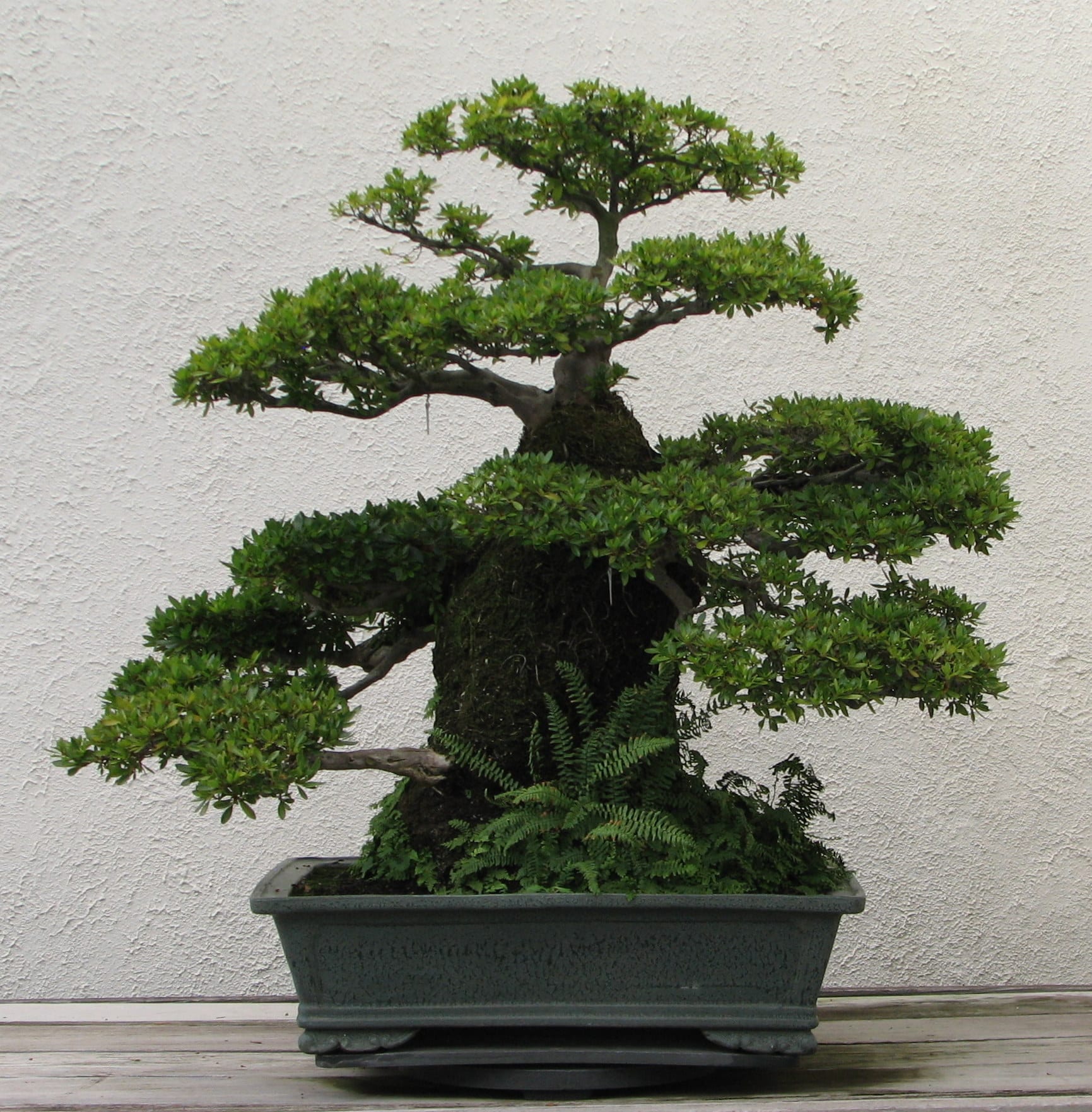
 © Ragesoss / CC BY-SA 3.0
大盏
Osakazuki is one of the most iconic Satsuki azalea varieties, so widely grown that many people picture this very cultivar when they think of 'Satsuki.' Its medium-sized, deep pinkish-purple flowers bloom abundantly, covering the plant in vivid color. The variety is sturdy and tolerates pruning well, making it easy to shape and a great choice for beginners. It is also known for its attractive reddish bark, and many old specimens are in cultivation, making it a rewarding variety to grow over the long term.
View 大盏 encyclopedia →成交手续费0%!2026年9月30日前注册,前 2 株免佣金!
生产者 招募中!
在GrowerDirect上销售,直接面向全国客户销售吗?
GrowerDirect的 6 项透明性承诺
在盆景的上架中,生产者公开以下信息。确保树种、产地、光照需求、栽培难度的透明度。
- 树种公开
- 实物照片
- 色彩
- 产地公开
- 光照需求
- 难度公开
查看全部144个品种
已注册的生产者(抢先看)
大盏的基本数据
- 养护难度
- 适合新手
- 寿命
- 寿命长,栽培有多年生的老树
- 体型
- 庭园树约0.5~1米(盆景作品从小品到大品)
- 浇水
- 肥料(4月、花后6月、9~10月)
- 光照与放置位置
- 喜阳光,但夏季强光会导致叶烧和根部损伤。幼树应充分接受光照,成型阶段可放在半阴环境。保持良好通风
- 浇水
- 喜湿但根系细弱,怕过湿。春季每天1~2次,夏季2~3次,冬季2~3天一次为宜。避免在高温中午浇水
- 温度与越冬
- 耐寒性一般,但不耐冬季寒风。保护盆土不结冰,放在屋檐下等处越冬
- 基质与换盆
- 以鹿沼土为主的酸性粗质基质。换盆时间为花后即时(6月)或秋季(9月下旬~10月上旬)。秋季换盆的植株冬季保护需谨慎
- 肥料
- 新芽成熟期4月、花后6月、9~10月各月施用一次固形肥料。肥料不足会导致枝条枯死
- 修剪与造型
- 易于修剪,在任何地方剪切都能萌芽。观花株在花后6月中旬(关东以西地区至7月初)进行修剪,粗干造型的强烈剪切在开花前4~5月进行
- 病虫害与注意事项
- 病虫害特别多的树种。易发生扁角叶蝉、叶螨、蚜虫、蓟马,生长季需定期防治
关于大盏
Osakazuki is a classic Satsuki azalea with abundant deep pink-purple blooms. Sturdy, prune-tolerant, and beginner-friendly, it's known for reddish bark and long-lived old specimens.
开始养护大盏前需要了解的7件事
1Light & Airflow
Osakazuki thrives in bright, sunny spots outdoors and flowers best with plenty of light. In midsummer, filtering the light with partial shade or a shade cloth helps prevent leaf scorch, and good air circulation helps keep pests and disease at bay.
2Watering Basics
Water thoroughly, letting it run from the drainage holes, once the soil surface has dried out. Satsuki azaleas have fine roots that are sensitive to drying out, so pay extra attention during the flowering season and in midsummer; in winter, the soil dries more slowly, so water less often.
3Choosing Soil
Unlike many other trees, Satsuki azaleas do best in a soil mix formulated specifically for them. Look for a slightly acidic blend that balances drainage and moisture retention, which keeps the roots healthy. A commercial Satsuki-specific potting mix is a reliable, low-risk choice.
4When to Repot
The best time to repot is after flowering, around the start of the rainy season. Repotting into fresh soil, without disturbing the root ball too drastically, helps prevent root-bound growth and keeps the plant healthy; doing this roughly every few years is a good rule of thumb.
5Pruning & Shaping
Osakazuki tolerates pruning well, making it a great choice for shaping. Deadheading and light trimming right after flowering won't interfere with next year's flower buds, and the variety also handles harder pruning reasonably well if timed carefully.
6Seasonal Care
Osakazuki blooms from spring into early summer, then enters a period of new growth. Keep an eye on strong summer sun and dryness, as well as winter frost and cold winds. Adjusting its placement with the seasons helps keep the plant healthy over the long term.
7Choosing a Plant
Because Osakazuki is often grown as a long-lived old tree, individual specimens can develop distinctive trunks and branch shapes. Look for a plant with deep leaf color and healthy foliage all the way to the branch tips, which tends to indicate stable future growth, comparing trunk shape and bark tone is part of the fun of choosing one.
大盏的常见问题
- Q.Is Osakazuki suitable for someone growing Satsuki azaleas for the first time?
- A.Yes, Osakazuki is considered a sturdy, easy-to-grow variety that's well suited to beginners. It also tolerates pruning well, so you can shape it as you go without much worry.
- Q.How large does it grow?
- A.As bonsai, it can be grown at almost any size, from small pieces to large specimens, depending on how it is trained. Its trunk thickens readily and it branches finely, so it suits many styles, from informal upright to cascade.
- Q.What are the flowers like?
- A.It produces medium-sized, deep pinkish-purple flowers with abundant blooms. The way it covers itself in color is part of why it's so widely grown as a representative Satsuki variety.
- Q.What is special about its bark?
- A.Osakazuki is known for its attractive reddish bark, and many old specimens are in cultivation. Enjoying the character of the trunk as the tree is grown over the years is part of its appeal.
- Q.How often does it need repotting or pruning?
- A.Repotting is generally recommended every few years, after flowering around the start of the rainy season. Pruning is mainly light trimming after flowering, and since Osakazuki tolerates pruning well, it's easy to keep its shape in check.
大盏种植的实用工具
在图鉴中详细了解大盏
查看大盏的图鉴条目 →
收录栽培难度、尺寸、原产地、日照等基础数据。