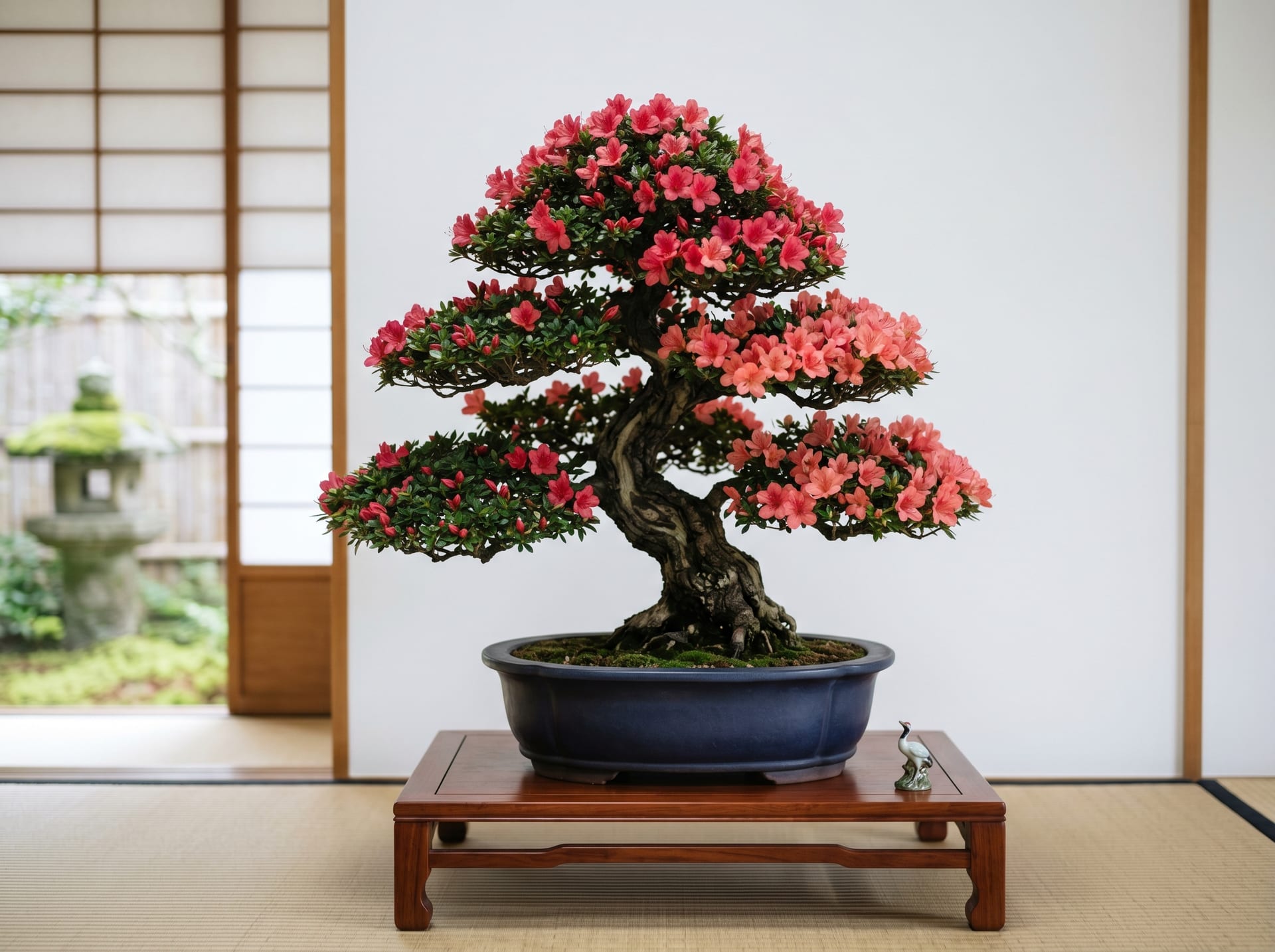
皋月杜鹃
The iconic flowering bonsai of Japanese culture. Blooms in May-June with thousands of cultivars. Huge variety in flower color and form. Star of exhibitions.
View 皋月杜鹃 encyclopedia →前3笔销售免佣金!在2026年8月31日前注册生产者账户 → 前3笔成交的手续费免费!
栽培者 招募中!
在BoTachoku上销售,直接面向全国客户销售吗?
ボタちょく的 6 项透明性承诺
在盆景的上架中,栽培者公开以下信息。确保树种、产地、光照需求、栽培难度的透明度。
- 树种公开
- 实物照片
- 色彩
- 产地公开
- 光照需求
- 难度公开
已注册的栽培者(抢先看)
皋月杜鹃的基本数据
- 养护难度
- 适合新手
- 寿命
- 100+ years
- 体型
- 10-60cm (bonsai size)
- 浇水
- −
- Placement
- Partial shade to full sun. Avoid afternoon sun in summer
- Watering
- Acidic soft water ideal. Never let it dry out
- Styling
- Trim right after bloom. Critical for next years flower buds
- Notes
- Plant in acidic soil (Kanuma). Sensitive to alkaline conditions
关于皋月杜鹃
Satsuki azalea (Rhododendron indicum) is a semi-evergreen shrub native to Japan, its name derived from the old lunar calendar term for May—the month of its spectacular bloom. Cherished since the Edo period by samurai and commoners alike, centuries of selective breeding have produced thousands of cultivars displaying an unparalleled spectrum of flower colors and forms, from pure white and deep crimson to intricate striped and picotee patterns. The finely fissured bark develops rich character with age, allowing the tree to express everything from delicate shohin compositions to commanding larger specimens. Naturally robust, Satsuki prefers slightly acidic, well-draining soil and ample sunlight. Following a consistent post-bloom pruning and fertilizing routine rewards the grower with reliable annual flowering, while the species' forgiving response to shaping makes it equally appealing to first-time bonsai enthusiasts and seasoned exhibitors pursuing show-quality trees.
开始养护皋月杜鹃前需要了解的7件事
1Blooms in May–June
Satsuki azalea typically blooms from late May through June, slightly later than common azaleas. Flowering times vary by cultivar, so checking this before purchase helps with planning care. Promptly removing spent flowers after blooming encourages better flowering the following year.
2Sunlight and Placement
Place satsuki in a sunny outdoor spot from spring through autumn; ample direct sunlight encourages flower bud formation. Protect it from intense midsummer sun and harsh afternoon rays by moving it to partial shade or using shade cloth. In winter, shelter it under eaves or in a cold frame to prevent freezing.
3Watering: Balance Is Key
Satsuki is relatively sensitive to drought; water thoroughly whenever the soil dries out, especially during hot summers. To prevent root rot, use well-draining soil and a pot with adequate drainage holes. During flowering, water at the base of the plant to avoid wetting the petals, which can cause damage.
4Pruning After Blooming
Pruning promptly after flowering is fundamental to satsuki care. Delayed pruning interferes with flower bud differentiation for the following year, so aim to finish by late June to early July. While shaping the bonsai form, remove crowded or elongated shoots to ensure good air circulation.
5Soil and Repotting Timing
Satsuki thrives in Kanuma pumice or a mix of Kanuma and Akadama, which balances drainage with moisture retention. The ideal time to repot is immediately after flowering, by mid-June. Trim the roots, then replant in a slightly larger pot or the same pot. Keep the tree in partial shade for a while afterward to allow root recovery.
6Fertilizing: Post-Bloom and Autumn
Apply slow-release solid fertilizer after flowering (June–July) and again in autumn (September–October). Excess nitrogen during flowering or flower bud formation (around August) can reduce blooming, so choose fertilizers and quantities carefully. Combining slow-release top dressing with occasional liquid fertilizer makes management straightforward.
7Pests and Disease Prevention
Satsuki is susceptible to lace bugs and spider mites, which cause leaf discoloration and damage, particularly during hot, dry periods. Inspect the undersides of leaves regularly and address infestations early with appropriate sprays or rinsing with water. During the rainy season, maintain airflow through pruning to reduce the risk of gray mold and other fungal diseases.
皋月杜鹃的常见问题
- Q.Can beginners successfully grow Satsuki bonsai?
- A.Yes, Satsuki is considered one of the more beginner-friendly flowering bonsai species. As long as you maintain appropriate watering and sunlight, and time post-bloom pruning and fertilizing correctly, it will reward you with reliable annual blooms. Its natural resilience means it can recover well from minor mistakes.
- Q.Why might my Satsuki fail to bloom?
- A.The most common cause is pruning too late after flowering, which removes the next season's developing buds. Insufficient sunlight and lack of fertilizer after bloom also reduce flowering. Repotted trees may produce fewer flowers in the year immediately following the repot.
- Q.How should Satsuki be cared for during winter?
- A.Satsuki is moderately cold-hardy, but potted trees are more vulnerable to root freeze than in-ground plants. Sheltering under eaves or using a simple frost cover on the coldest nights is advisable. Reduce watering frequency and apply water only when the soil has dried; no fertilizer is needed during dormancy.
- Q.Which cultivar is recommended for a first Satsuki bonsai?
- A.Vigorous, reliable-blooming cultivars such as "Osakazuki" are well suited to beginners. They are widely available, respond predictably to training, and produce abundant flowers while you learn the fundamentals. Many growers later add rarer or more specialized cultivars once they are comfortable with the basics.
- Q.What is the difference between Satsuki and regular azalea (Tsutsuji)?
- A.The primary difference is bloom time: common azalea (Tsutsuji) flowers around April, while Satsuki blooms roughly a month later in May and June. Satsuki has smaller, glossier leaves and branches more finely, making it better suited to detailed bonsai styling. It also offers a far greater number of cultivars and flower variations.
皋月杜鹃种植的实用工具
Learn more about 皋月杜鹃 in the encyclopedia
View 皋月杜鹃 encyclopedia entry →
Care difficulty, size, origin and light needs — all basics covered.