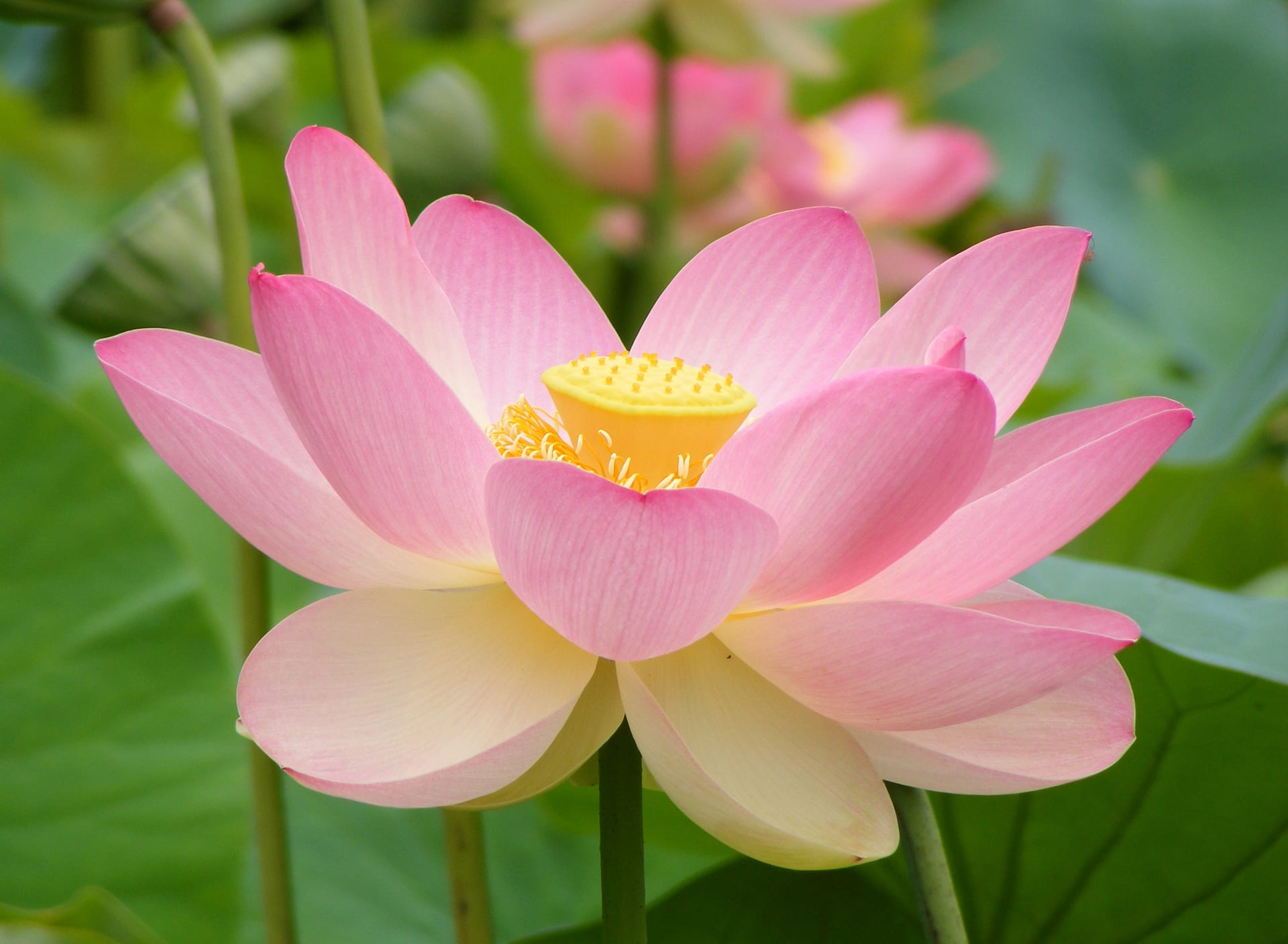
 © Peripitus / CC BY-SA 4.0
Sacred lotus
The sacred lotus is an aquatic plant that lifts its round, water-repellent leaves above the surface and produces large white or pink blooms in summer. Water beads roll playfully across the leaves, adding to its appeal, and its underground rhizome is the same lotus root used in cooking. As a perennial, it can be divided and repotted to keep flowering year after year. Plants typically reach 50-100cm in height with leaves 40-50cm across, though compact varieties exist that fit in a bowl-sized container, making them suitable for growing in a pot or tub even without a garden. It takes a bit of know-how to grow well, but once you learn its seasonal care, it rewards you with blooms every year.
View Sacred lotus encyclopedia →0% commission on your first sales!Register by September 30, 2026 and your first 2 plants are commission-free!
Grower Wanted!
List your plants on GrowerDirect and sell directly to customers nationwide!
6 Transparency Commitments from GrowerDirect
Grower provide complete information for all Aquatic Plants listings. We guarantee transparency in variety, origin, light requirements, and difficulty level.
- Variety Clarity
- Live Photos
- Color Details
- Origin Transparency
- Light Requirements
- Difficulty Level
Browse all 134 varieties
Difficulty Level
No listings match your filters
Adjust your filters, or get notified when new listings arrive.
Getting alerts is free with a member account. When new listings match your saved search, we'll notify you by email and in-app.
Browse other categories
Are you growing aquatic plants?
Register as a grower and connect with buyers directly.
Apply as a growerSacred lotus key facts
- Growing Difficulty
- Intermediate
- Lifespan
- Perennial; maintained for years by repotting
- Size
- 50–100 cm tall, leaves 40–50 cm across (dwarf cultivars smaller)
- Watering
- Slow-release base fertiliser, then feed about monthly from April to September
- Lighting
- Grow in full sun all day; in poor light it flowers little.
- CO2 & Fertilizer
- Mix slow-release fertiliser into the soil and top-dress about once a month from April to September.
- Water Temperature & Quality
- Keep water standing at all times. Heat-tolerant and moderately cold-hardy; keep it watered in winter and do not let the rhizome freeze.
- Substrate & Attachment
- Use rich clay soil – paddy soil is ideal, or akadama with 10–20% leaf mould – in a jar, tub or pot. Repot in March as growth begins.
- Trimming & Propagation
- Divide in March by cutting tubers with new shoots into three- to four-node pieces. Sow seeds in April–May.
- Cautions
- Some Nelumbo varieties are registered; registered varieties may not be propagated for sale or transfer without permission, so check MAFF's variety database when trading named cultivars. Rot is common in June–August. Never dump or plant it in natural waters.
About Sacred lotus
Sacred lotus is a perennial aquatic plant that raises water-repellent leaves above the surface and produces large white or pink flowers in summer. Its rhizome is the lotus root used in cooking, and compact varieties can be grown in a bowl or small pot.
7 things to know before growing Sacred lotus
1Sunny Spot Matters
Lotus plants love sun, so keep them outdoors in a spot that gets good sun all day. With too little light, they flower poorly. A balcony works fine as long as it gets plenty of sun.
2Never Let It Dry Out
Since lotus is grown submerged in a pot or tub of water, check the water level often and top it up as needed. Evaporation speeds up in summer, so daily checks are important during the hottest months.
3Use Heavy Clay Soil
Lotus prefers heavy, clay-based paddy soil rather than fast-draining potting mix. Light soil tends to cloud the water and makes it harder for the roots to stay anchored.
4Repot During Dormancy
Because the rhizomes fill a container quickly, repotting and dividing during the dormant season keeps growth healthy. Doing this every few years helps maintain good flowering.
5Summer Is Bloom Season
Flowers appear mainly in summer, with large white or pink blooms opening and closing over several days. Each individual flower lasts only a few days, but the plant keeps producing new blooms throughout the season.
6Leaves Die Back in Winter
In winter the above-ground leaves die back and the plant goes dormant, though the rhizome stays alive underground. Keeping the water a bit deeper helps protect it from freezing.
7Choosing a Healthy Rhizome and Checking the Variety
When choosing a plant, look for a thick, firm rhizome without damage or dried-out patches, which establishes more reliably. It also helps to check that the growing tip looks healthy and alive. Some lotus cultivars are registered under Japan's Plant Variety Protection and Seed Act, and registered varieties may not be propagated for sale or transfer without the breeder's permission. If you buy or sell by variety name, or plan to give away divisions, check the Ministry of Agriculture, Forestry and Fisheries' plant variety registration database first. Also, never plant or dump lotus in ponds, rivers or waterways; dry out unwanted plants before disposing of them with household waste.
Frequently asked questions about Sacred lotus
- Q.Can beginners grow sacred lotus?
- A.Lotus is considered better suited to growers with some experience, since it requires learning water-level management and proper soil selection. That said, once you grasp the basics, it can flower reliably every year. Starting with a compact variety is a good way to begin.
- Q.Can I grow it without a garden?
- A.Compact varieties that fit in a bowl-sized container make it possible to grow lotus on a balcony in a pot or tub, even without a garden. As long as you can provide plenty of sunlight, it can still thrive.
- Q.How long do the flowers last?
- A.Each individual flower lasts only a few days before its petals fall, but the plant keeps producing new blooms throughout summer. This means you can enjoy flowers across the whole season rather than just once.
- Q.How often does it need repotting?
- A.Because the rhizomes grow vigorously, repotting during the dormant season every few years is generally needed. If the container becomes too full of rhizome, flowering tends to decline.
- Q.Is the rhizome (lotus root) edible?
- A.The rhizome of sacred lotus is the same part known as lotus root. However, if you're considering eating a plant grown for ornamental purposes, you should check how it was fertilized and cared for before doing so.
Handy Growing Tools for Sacred lotus
Learn more about Sacred lotus in the encyclopedia
View Sacred lotus encyclopedia entry →
Care difficulty, size, origin and light needs — all basics covered.
More in this category
Can't find the plant you're looking for?
Post your wishes for free and growers with matching plants will contact you with introductions.