10 Aquatic Plants That Grow Without CO2 | Create a Beautiful Tank on a Budget
We introduce 10 carefully selected aquatic plants that thrive without CO2 supplementation. Learn how to cultivate aquatic plants like Anubias, Microsorum, and Vallisneria, and create beautiful layouts even with low light and low costs.
Key Takeaways
We introduce 10 carefully selected aquatic plants that thrive without CO2 supplementation. Learn how to cultivate aquatic plants like Anubias, Microsorum, and Vallisneria, and create beautiful layouts even with low light and low costs.
Related Species
Anubias Nana
View species detailsAnubias Nana Petite
View species details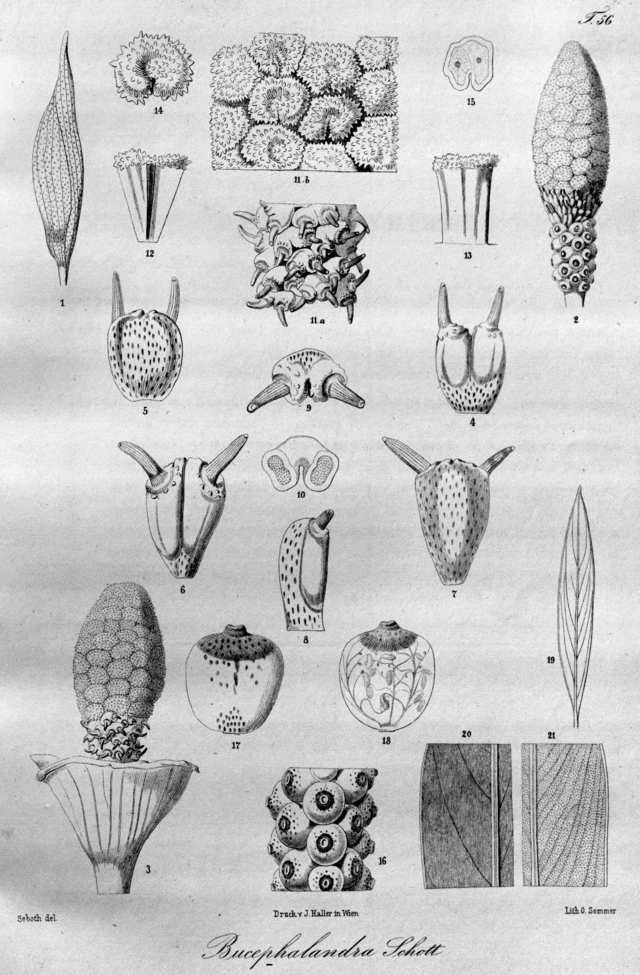
Bucephalandra
View species details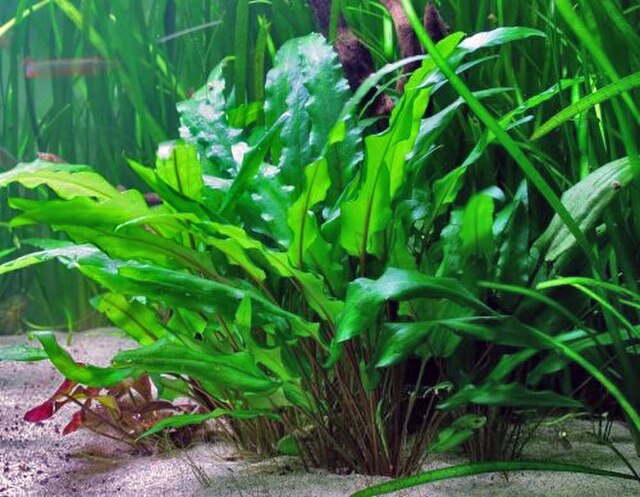
Cryptocoryne
View species details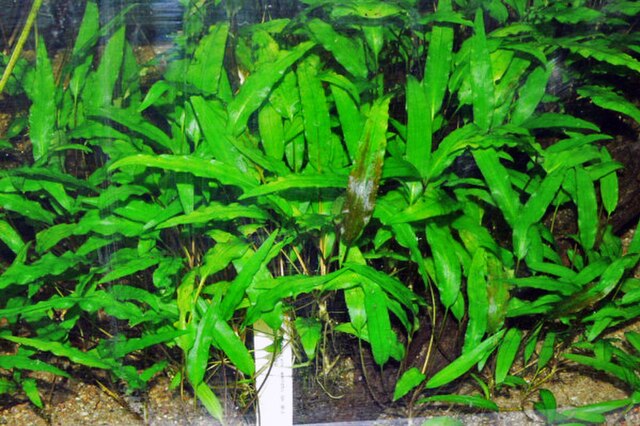
Cryptocoryne Wendtii
View species details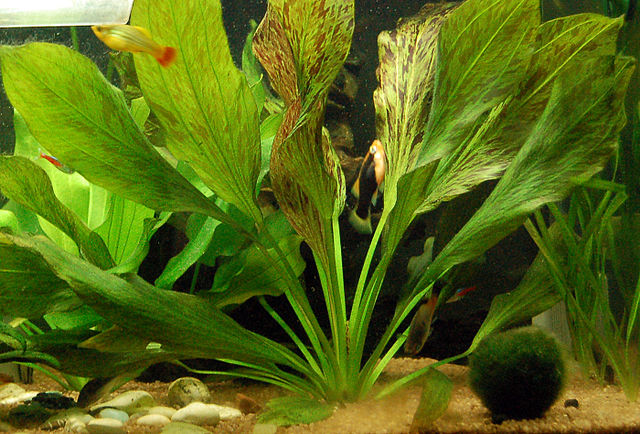
Echinodorus (Amazon Sword)
View species detailsAmazon Sword
View species details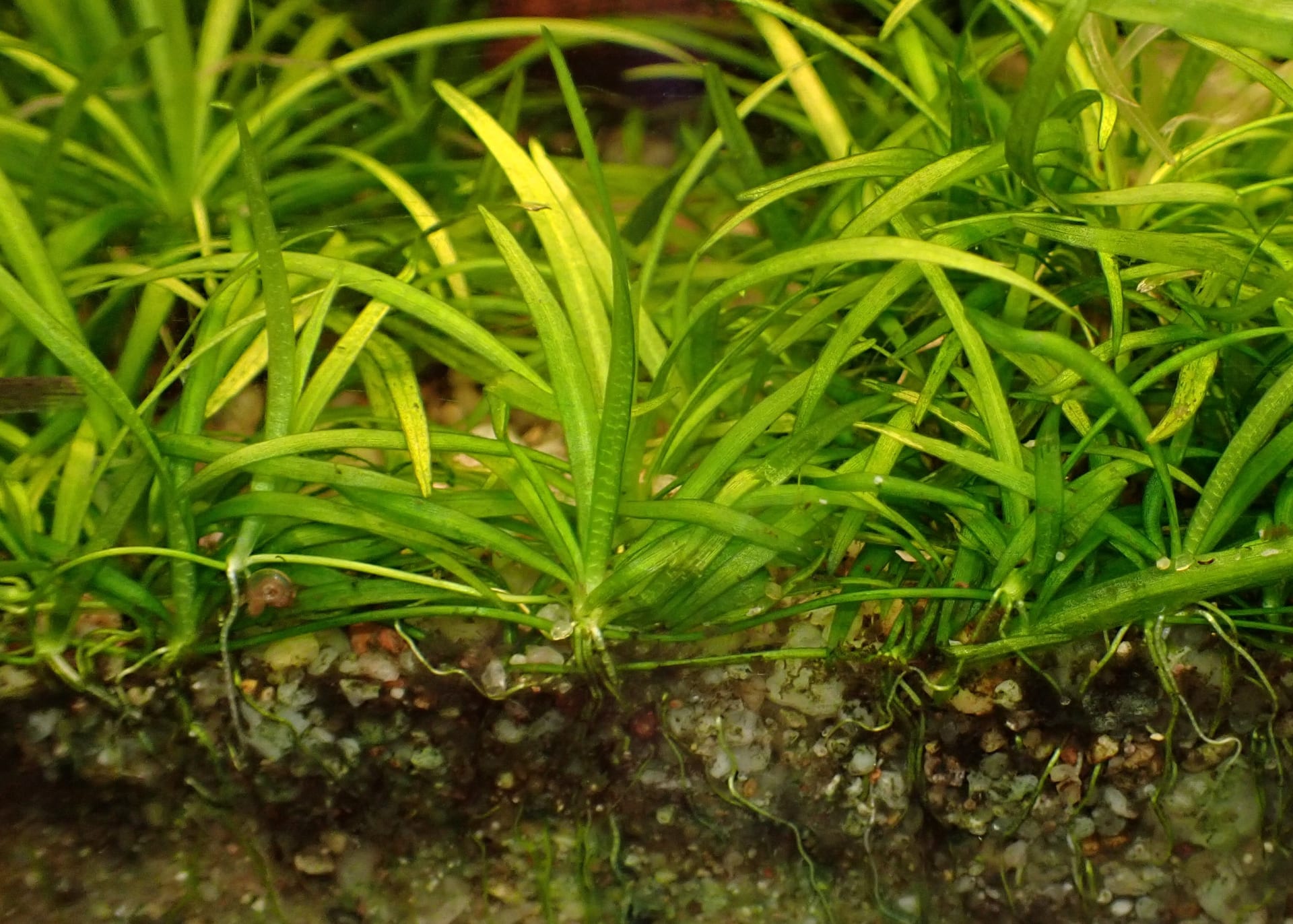
Pygmy chain sword (Helanthium tenellum)
View species detailsMany people think CO2 supplementation is essential for planted aquariums, but in fact, you can create a beautiful tank without CO2. Since you can reduce the initial investment and running costs of CO2 equipment, it's ideal for beginners and those who want to start on a low budget. In this article, we introduce 10 carefully selected aquatic plants that thrive without CO2 supplementation.
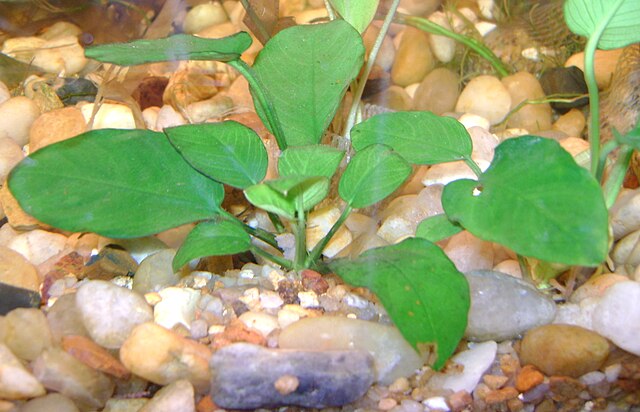
1. Anubias Nana
- Characteristics: Hardy and rot-resistant, a classic beginner plant. Features thick, deep green leaves that are beautiful
- Ease of Care: ★★★★★ (easiest)
- Layout Tips: The basic method is to attach it to driftwood or rocks. If planting directly in substrate, be careful not to bury the rhizome. Placing it as an accent in the midground gives it presence
2. Microsorum (Java Fern)
- Characteristics: A fern-type aquatic plant with uniquely shaped leaves that create a natural look. Many varieties available, including Pteropus, Windelov, and Narrow Leaf
- Ease of Care: ★★★★★
- Layout Tips: It looks most striking when attached to driftwood. Place it in the background or midground, and allow plenty of space as it grows large
3. Vallisneria
- Characteristics: Ribbon-like long leaves wave beautifully in the current. It multiplies via runners and will increase even if left alone
- Ease of Care: ★★★★☆
- Layout Tips: Creating a dense stand in the background gives a natural layout that shows water flow. It grows quickly, so regular trimming is necessary
4. Willow Moss
- Characteristics: An attaching moss plant that naturally spreads on driftwood and rocks. Also excellent as a hiding place for fry and shrimp
- Ease of Care: ★★★★★
- Layout Tips: Attach it to driftwood by wrapping with fishing line or glue. It grows well even in low light, so it can be used in shaded areas
5. Amazon Sword
- Characteristics: A large rosette-type aquatic plant that makes a striking centerpiece for the tank. Hardy and beginner-friendly
- Ease of Care: ★★★★☆
- Layout Tips: Place one plant as the main focus slightly back center. Best suited for tanks 60 cm or larger as it grows large. Strong rooting makes substrate nutrition important
6. Cryptocoryne Wendtii
- Characteristics: Reddish-brown leaves with subtle appeal. Grows very hardy once conditions stabilize
- Ease of Care: ★★★★☆
- Layout Tips: Plant several together in the midground for a natural look. Leaves may melt shortly after introduction (called "Cryptocoryne melt"), but they'll recover if the roots survive
7. Water Sprite
- Characteristics: A rootless floating aquatic plant. Grows very quickly and has strong water purification ability
- Ease of Care: ★★★★★
- Layout Tips: Weigh it down to sink in the background or let it float at the surface. Grows quickly, so trim regularly to maintain balance
8. Bucephalandra
- Characteristics: An attaching aquatic plant native to Borneo. Features beautiful metallic-sheen leaves with high collectibility
- Ease of Care: ★★★★☆
- Layout Tips: Attach to rocks or driftwood and place as a focal point in the mid- to foreground. Growth is slow, but this makes care easier. Leaf color and shape vary significantly by variety
9. Hygrophila Polysperma
- Characteristics: One of the hardiest stem plants. Bright green leaves give a fresh impression
- Ease of Care: ★★★★★
- Layout Tips: Plant together in the background to create a lush bush. Growth is fast, so maintain shape with regular trimming. Easily propagated by replanting cut stems
10. Spiral Vallisneria
- Characteristics: A vallisneria species with leaves twisted in a spiral shape. Its unique form adds movement to the tank
- Ease of Care: ★★★★☆
- Layout Tips: Plant it off to one side in the background to create a natural flow. Interesting when combined with standard Vallisneria
Tips for Success with CO2-Free Tanks
When not adding CO2, paying attention to the following points increases your success rate.
- Keep lighting moderate: High light is not necessary. 7-8 hours per day is sufficient
- Use liquid fertilizer: Since there's no CO2, supplement nutrition with liquid fertilizers containing potassium and trace elements
- Use aqua soil: Nutrient-rich aqua soil helps plants absorb nutrients through their roots
- Perform regular water changes: Maintain water quality with approximately 1/3 water changes once per week
- Keep an appropriate number of fish: The CO2 produced by fish respiration also serves as nutrition for plants
At GrowerDirect, you can purchase aquatic plants that grow easily without CO2 directly from growers. Growers are happy to help with questions like "Is it okay if I don't add CO2?" Why not start your first planted tank with GrowerDirect?
Layout Examples for CO2-Free Tanks
Beautiful layouts are achievable even without CO2 supplementation. For example, in a driftwood-focused layout, simply wrapping willow moss around driftwood, attaching Anubias nana at its base, and placing several Cryptocoryne plants in the midground creates a natural aquascape. Densely planting Vallisneria in the background creates a green wall waving in the current, adding depth. In rock arrangement layouts, attaching Microsorum to rocks and carpeting the foreground with Echinodorus tenellus is popular. The key is to focus on shade-loving plants and build around attaching species. If you want to use stem plants, choose relatively hardy varieties like Hygrophila polysperma or Rotala rotundifolia. Even without CO2, you can maintain a beautiful aquascape for years by continuing weekly water changes and liquid fertilizer applications. For small tanks, equipment is also compact, so a 20-30 cm cube is recommended as an entry point to CO2-free planted tanks.
Frequently Asked Questions About CO2-Free Tanks
Q. Can I create a foreground plant carpet without CO2? A. With New Large Pearl Grass, you can gradually create a carpet even without CO2. However, be prepared for it to take 2-3 months to complete. Glossostigma and Cuban Pearl Grass are difficult without CO2. For detailed guidance on cultivating foreground plants and carpet-building tips, see Tips for Creating a Foreground Plant Carpet.
Foreground Plants That Grow Without CO2
| Foreground Plant | Without CO2 | Notes |
|---|---|---|
| New Large Pearl Grass | △ | Gradually carpets (2-3 months) |
| Echinodorus tenellus | ○ | Small rosette, suitable for foreground |
| Willow Moss (mat form) | ◎ | Attaching / Low light OK |
| Anubias nana 'Petite' | ◎ | Small attaching species, hardy |
| Glossostigma | × | Requires CO2 |
| Cuban Pearl Grass | × | Requires CO2 |
For selecting shade-loving and attaching species in general, see also Top 10 Recommended Aquatic Plants That Grow Without CO2 (this article focuses on foreground plants and budget-friendly layouts).
Q. Is algae more likely to grow without CO2? A. Even without CO2, algae can be controlled with appropriate lighting duration (7-8 hours) and regular water changes. In fact, without CO2, plant growth is more gradual, which has the advantage of making it less likely to disrupt nutrient balance. You can add extra peace of mind by introducing algae-eating organisms like Yamato shrimp or Otocinclus.