Feeding Guide for Carnivorous Plants | Necessity, Types, and Precautions
Explaining the necessity and methods of feeding carnivorous plants. Introducing proper food types, frequency, and precautions for feeding Venus flytraps, Nepenthes, and Sundews.
Key Takeaways
Explaining the necessity and methods of feeding carnivorous plants. Introducing proper food types, frequency, and precautions for feeding Venus flytraps, Nepenthes, and Sundews.
Related Species
Carnivorous plants have a unique ecology of catching insects and absorbing nutrients. Due to their distinctive appearance, they are increasing in popularity as ornamental plants, but many people wonder: "Is feeding necessary?" and "What should I feed them?" This article explains in detail from the necessity of feeding carnivorous plants to specific methods and precautions. If you are just starting to grow them, first checking the basic cultivation environment at Carnivorous Plant Care Beginner's Guide will deepen your understanding.
Do Carnivorous Plants Need to Be Fed?
To answer directly, feeding carnivorous plants is not essential. Like other plants, carnivorous plants produce basic energy through photosynthesis, and the purpose of catching insects is not to supply energy but to supply minerals such as nitrogen, phosphorus, and potassium.
The environments where carnivorous plants naturally grow—such as wetlands and rocky areas—are places with very poor soil nutrients. To survive there, they have evolved the ability to supplement nutrients from insects. In other words, if you manage them with nutrient-poor substrate (such as Kanuma soil and sphagnum moss) and provide proper light and moisture, they can grow healthily even without feeding.
Benefits of Feeding
However, feeding can provide the following benefits:
- Improved growth speed: Providing the appropriate amount, especially during the growth period (spring to fall), tends to help leaves and pitchers develop larger
- Enhanced carnivorous leaves: Stable nutrition helps carnivorous leaves and pitchers grow strong
- Support for small seedlings: Helps seedlings shortly after germination and weakened plants recover after division
- Supplementary aid for indoor cultivation: Unlike outdoors where insects naturally arrive, in an indoor environment without natural insects, supplementing nutrition by hand is effective
When cultivating outdoors, small flies and insects are naturally caught, so most plants grow sufficiently without feeding.
Feeding Methods by Species
Although they are all carnivorous plants, different species have different trapping mechanisms, so the feeding method varies. I will introduce the appropriate method for each representative species.
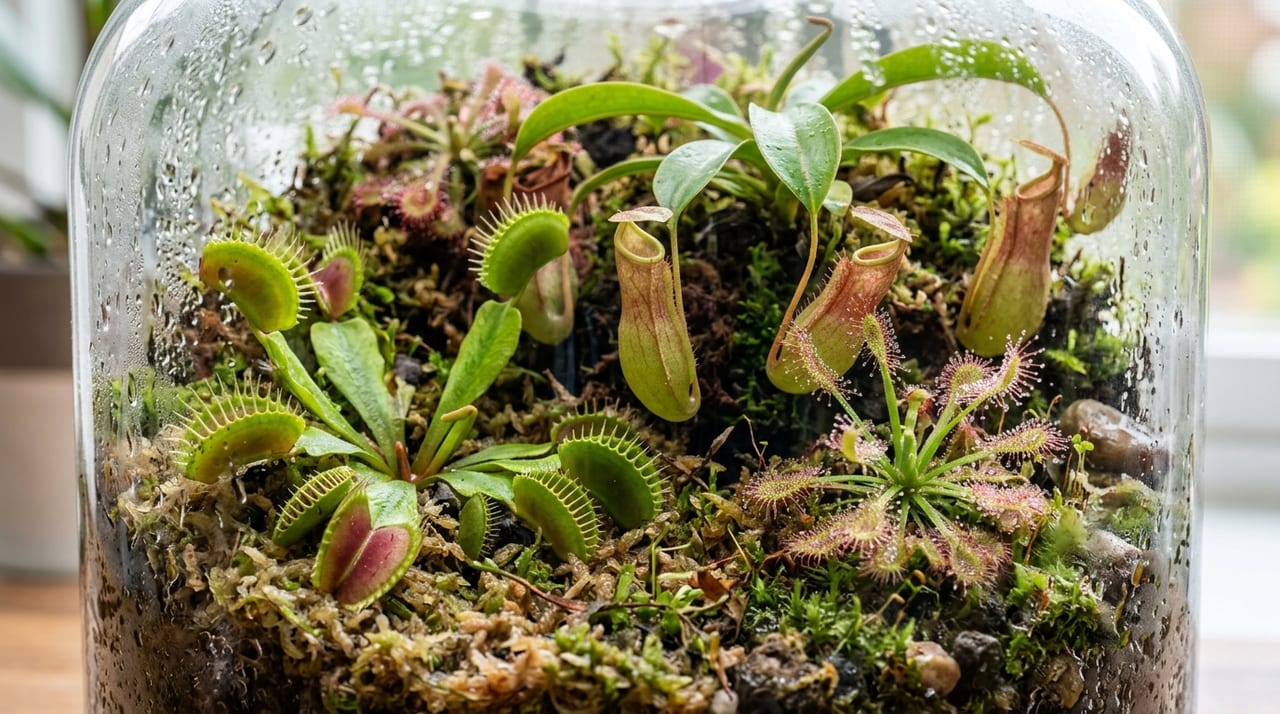
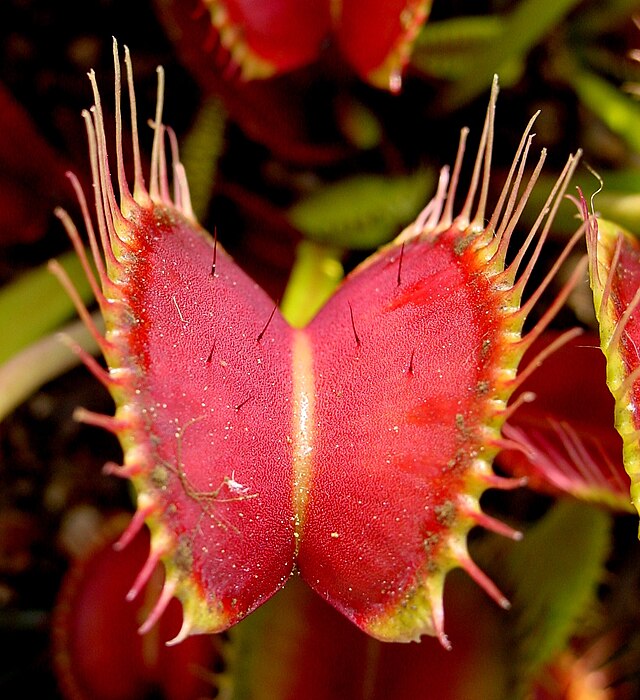
Venus Flytrap (Dionaea)
The Venus flytrap is a snap-trap type carnivorous plant that quickly closes two leaves to catch prey. The leaves close when the trigger hairs (sensor hairs) on the inner surface are touched twice within a short period.
- What to feed: Small fruit flies, ants, dried blood worms (available at fishing supply shops), small mealworms
- Frequency: Once or twice a month; one insect per leaf is a good guideline
- Method: Either touch the sensor hairs with a live insect, or use tweezers to place a dead insect on the leaf, then gently close the leaf to promote digestion
Precautions: It is strictly forbidden to repeatedly touch and play with the leaves using your fingers. Repeated opening and closing without digestion will weaken the leaves and eventually cause them to die. Also, avoid insects larger than the leaf size, as they can cause indigestion. For general daily care, also refer to Venus Flytrap Care Complete Guide.
Nepenthes (Tropical Pitcher Plant)
Nepenthes is a pitfall-trap type carnivorous plant that accumulates liquid in pitchers (traps) and drowns insects to digest them.
- What to feed: Dried blood worms, ornamental fish food (pellet type), small crickets
- Frequency: Once or twice a month
- Method: Drop directly into the pitcher opening. Aim for approximately 1/4 of the liquid volume inside the pitcher
Precautions: Overfeeding causes organic matter that has not been fully digested to decompose, which can kill the pitcher. If the liquid level is low, add a small amount of distilled water or rainwater before feeding. Tips for growing large pitchers are explained in detail in Nepenthes Care Guide.
Sundew (Drosera)
Sundew is a adhesive-trap type carnivorous plant that secretes sticky fluid from glandular hairs on the leaf surface to trap insects and digest them.
- What to feed: Small fruit flies, dried blood worms, aphids
- Frequency: Once or twice a month
- Method: Use tweezers to gently place a very small insect on the sticky fluid. It will be naturally trapped when it touches the fluid
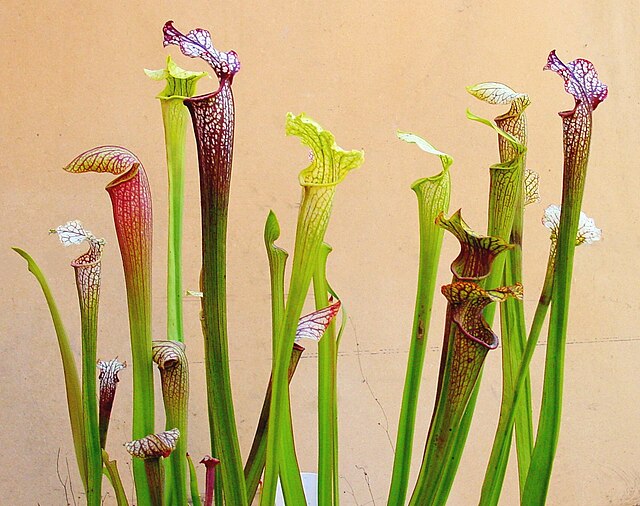
Sarracenia
Sarracenia is a pitfall-trap carnivorous plant that catches insects in tubular pitchers, but when managed outdoors, insects naturally enter, so feeding is basically not necessary. When growing indoors, it is sufficient to add just a small amount of dried blood worms or similar to the pitcher. From variety selection to outdoor cultivation and overwintering, everything is covered in Sarracenia Care Complete Guide.
Foods to Avoid and Dangerous Practices
It is equally important to know what should not be fed to carnivorous plants as it is to know what can be fed.
- Raw meat, ham, sausage, cheese: Though seemingly high in protein and attractive at first glance, they decompose very quickly and become breeding grounds for mold and harmful bacteria
- Insects that are too large: They cannot be fully digested and can cause leaves or pitchers to die. Use insects that are less than half the leaf size as a guideline
- Liquid or solid fertilizer: Carnivorous plants cannot tolerate high nutrient levels and may have damaged roots or trap leaves that die
- Foods containing salt or oil: Human food contains salt and oil that can damage plant tissue
- Excessive amounts of food: Avoid giving large quantities at once or feeding all leaves. The basic rule is to keep feeding to no more than 1/3 of the total leaves
Seasonal Feeding Tips
It is important to adjust your feeding approach depending on the season. Water quality for watering is another point to reconsider alongside feeding, and Carnivorous Plant Watering Guide summarizes frequency by species.
Spring to Summer (Active Growth Period)
This is the period of most active growth. When new pitchers and trap leaves are continuously unfurling, feeding once or twice a month can support growth. Because temperatures are high and plant metabolism is active, digestion proceeds smoothly.
Fall (Transition Period)
This is when growth slows. Reduce feeding frequency to about once a month and manage the plant to gradually reduce activity in preparation for winter dormancy.
Winter (Dormant Period)
Many carnivorous plants are dormant in winter. During this period, metabolism drops significantly, so refrain from feeding. Organic matter that cannot be digested and decays will damage the leaves. Venus flytraps and Sarracenias need dormancy in cold environments for healthy growth in the coming year.
Find Carnivorous Plants on GrowerDirect
Since the care methods and feeding approaches vary depending on the species of carnivorous plant, it is ideal to have an environment where you can receive direct advice from the seller at the time of purchase.
GrowerDirect allows you to purchase directly from growers who specialize in growing carnivorous plants. Since the plants are delivered directly from the grower without going through retail shops, the plants are in good condition, and a key feature is that you can ask growers directly about cultivation methods.
- You can check grower profiles and cultivation environments before purchasing
- You can easily ask questions and get advice via chat
- Rare and uncommon varieties are also available
- Many beginner-friendly, easy-to-grow varieties are in stock
If you fall in love with carnivorous plants, please search for the perfect plant for you in the Carnivorous Plant category. Through interaction with growers, enjoy your life with plants while learning cultivation tips thoroughly.