How to Grow Sundews (Drosera) | Cultivation Guide to Enjoy the Beauty of Glistening Droplets
Detailed guide to growing Sundews (Drosera). Covers differences between Japanese native and overseas species, causes and solutions for inadequate mucus production, key points for water tray management, leaf propagation methods, and winter bud (hibernacula) care.
Key Takeaways
Detailed guide to growing Sundews (Drosera). Covers differences between Japanese native and overseas species, causes and solutions for inadequate mucus production, key points for water tray management, leaf propagation methods, and winter bud (hibernacula) care.
Related Species
What are Sundews?
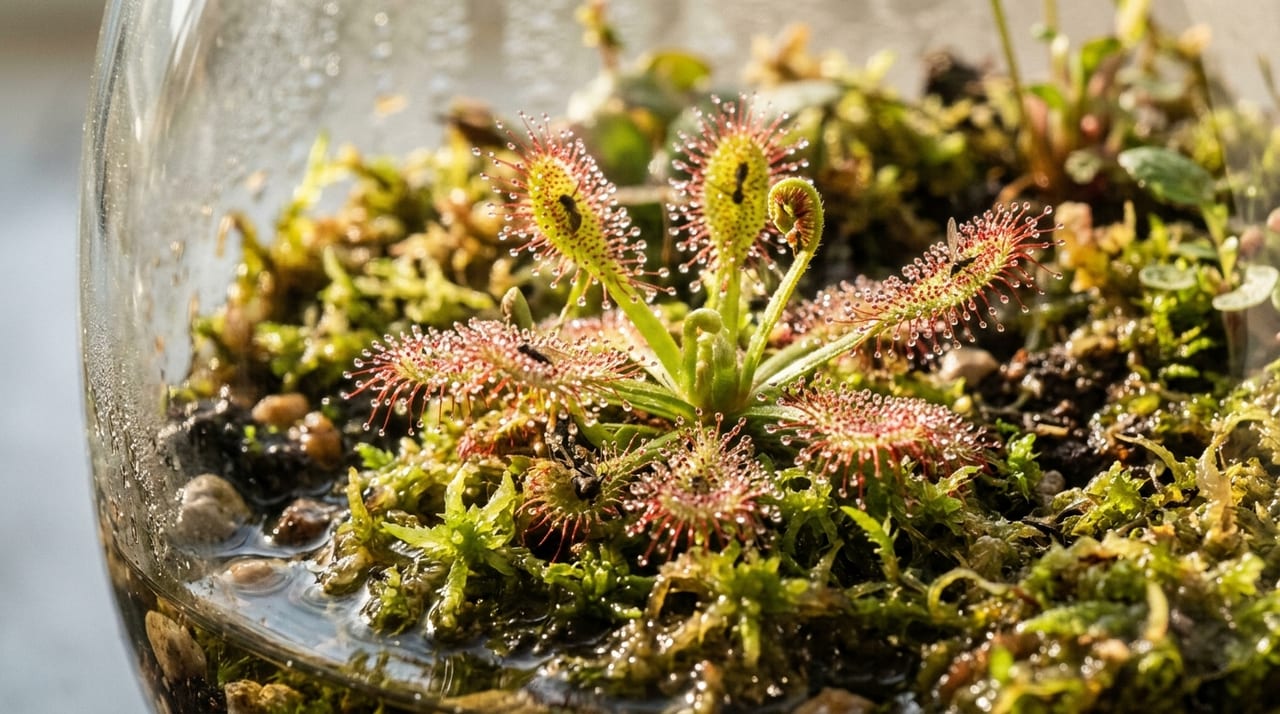
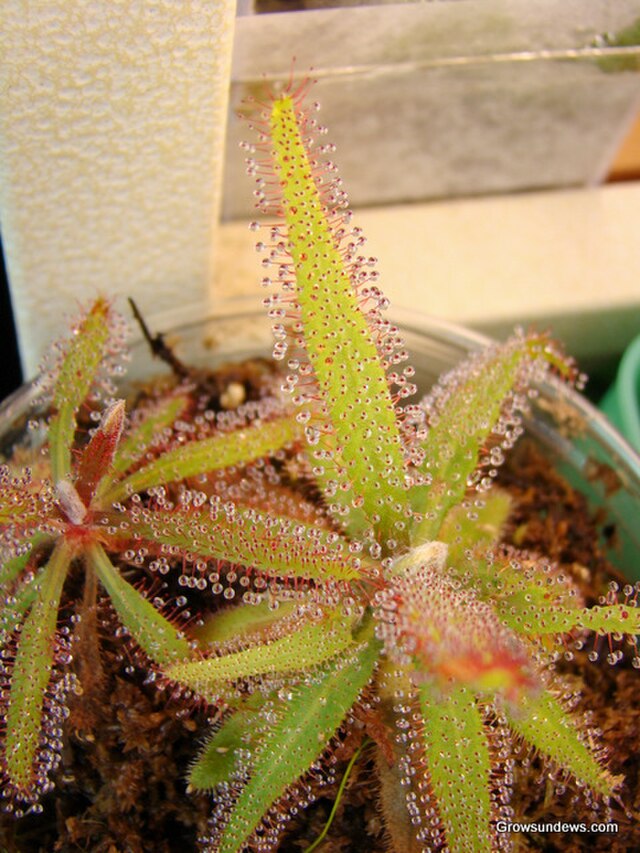
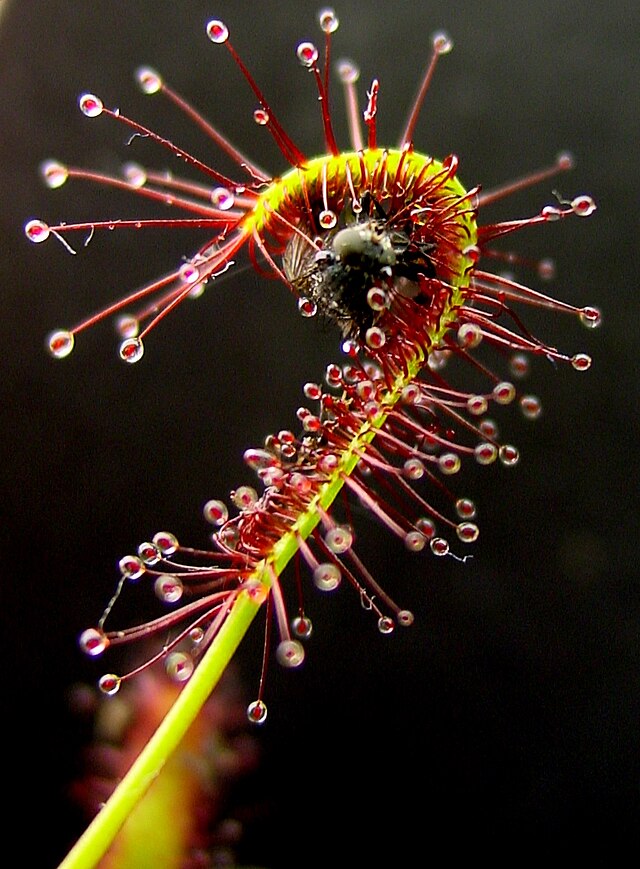
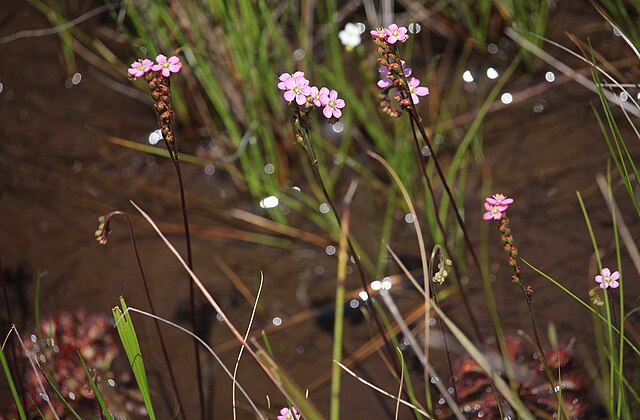
Sundews (genus Drosera) are carnivorous plants, with over 200 species native to wetlands around the world. Countless glandular hairs grow on the leaf surface, and from their tips they secrete a glistening, viscous liquid. This sticky droplet traps insects, which are then digested and absorbed to provide nutrients.
Domestically, native species are found in raised peat bogs from Hokkaido to Kyushu, but cultivated varieties from Africa and South America are more commonly available in commerce. They come in many varieties with high ornamental value—some with leaves that turn entirely red, imposing large species, and beautiful rosette-forming types. Among carnivorous plants, sundews are relatively easy to grow, making them popular with beginners. Before starting cultivation, consulting the carnivorous plant encyclopedia to understand the differences between species will help you select the plant that best suits your needs.
Basic Cultivation: Light, Water, and Soil
Light
Sundews prefer strong light. When exposed to direct sunlight outdoors from spring through autumn, the leaves turn a vivid red and mucus secretion becomes more active. Indoors, a south-facing windowsill is ideal, and they can be grown successfully under LED grow lights. Insufficient light causes the leaves to pale and reduces mucus production, so care must be taken. For more detailed guidance on light conditions, the carnivorous plant light and lighting guide is also helpful.
Watering
The fundamental technique for carnivorous plants is the "water tray method." Keep the saucer constantly filled with 2–3 cm of water, maintaining the soil in a consistently moist state. Minerals like calcium and magnesium in tap water accumulate and damage roots, so rainwater, distilled water, or RO water (reverse osmosis treated water) is recommended. Collecting rainwater is the most cost-effective option compared to using water stored in bottles. Detailed criteria for water quality management are summarized in the carnivorous plant water quality management | distinguishing between distilled water, rainwater, and tap water guide.
Soil
Sundews require soil low in nutrients. Standard potting mixes and leaf mold contain too much fertilizer and damage roots. Sphagnum moss alone, or an equal mixture of sphagnum moss and perlite, is the standard combination. Akadama soil alone or a 1:1 mix of peat moss and perlite are also widely used. In all cases, the soil must be completely free of fertilizer. Dried sphagnum should be soaked overnight, then lightly wrung out before use. Repot in the first half of the growing season (spring), replacing all old moss to prevent rot.
Temperature Management and Seasonal Care
Growing Season (Spring–Autumn)
The ideal temperature range is 15–30°C, and growth is most vigorous during this period. While summer heat and humidity promote vigorous growth, beware of excessive moisture and poor air circulation. Avoid sealed containers; ensure adequate air circulation. In midsummer when temperatures exceed 35°C, it's wise to provide some shade to prevent leaf scald.
Dormancy Period (Late Autumn–Winter)
Temperate species (such as the native Japanese Drosera rotundifolia and D. longifolia) die back in winter and form winter buds (hibernacula) at the center to enter dormancy. During this period, reduce watering and store in a refrigerator (around 5°C) or an outdoor location protected from frost. Winter buds only need the moss kept slightly moist and, provided they don't freeze, can overwinter outdoors. As temperatures rise in spring, new shoots unfold and active growth resumes. Guidance on watering and placement during dormancy is covered in the carnivorous plant dormancy management guide.
Tropical species (such as Drosera capensis and D. adelae) do not require dormancy and can be maintained indoors year-round. These tropical varieties are easier for beginners to manage.
Representative Species and Characteristics
| Variety | Characteristics | Care Points |
|---|---|---|
| Drosera capensis (Cape Sundew) | Native to South Africa. Narrow leaves spread radially, with reddish mucus that photographs beautifully. Extremely hardy with vigorous reproduction. Self-fertile and often spreads from self-seeded specimens. | Ideal as a first specimen (encyclopedia page). |
| Drosera binata (Fork-leaf Sundew) | Distinctive Y-shaped or multi-forked leaves; grows large. Produces powerful sticky liquid capable of trapping large insects. | Pots become cramped quickly, so a deeper pot makes management easier. |
| Drosera tokaiensis (Tokai Sundew) | Subtropical hybrid (D. tokaiensis) derived from D. rotundifolia × D. intermedia. Does not fully enter dormancy in winter and overwinters as an evergreen. Tolerates light frost, but management with temperatures above 5°C for year-round growth is ideal. | From a native species protection perspective, confirm at purchase that specimens are cultivated and not wild-collected. |
| Drosera adelae | A small Australian native species with pale white-to-light green leaves and beautifully translucent mucus. | Relatively easy to grow even in lower light and suitable for terrarium cultivation. |
Propagation: Leaf Cuttings, Division, and Seed Sowing
Leaf Cuttings
This is the easiest propagation method. Gently remove a healthy leaf at its base and lay it horizontally on moist sphagnum or soil. Within a few weeks, small plantlets emerge from the leaf base. Species like Drosera capensis have high success rates and are suited to first attempts. For detailed step-by-step instructions by species, see the carnivorous plant propagation guide.
Division
Vigorous plants may have multiple growth points. At repotting time, divide them by growth point and plant each in its own pot.
Seed Sowing
Many species self-pollinate readily, and seeds sown on moist sphagnum will germinate. While it takes time from germination to maturity, you can obtain many plants at once. Seeds are sensitive to drying, so they should be sown immediately after collection or stored in a refrigerator.
Troubleshooting and Important Notes
No Viscous Liquid Production
Mucus appears on newly emerging leaves and does not return to older leaves once it is gone. After addressing the cause, assess the condition by observing newly emerging leaves.
| Cause | Identification | Solution |
|---|---|---|
| Insufficient light | Leaves are pale green and etiolated; new leaves lack mucus | Move to a brighter location. Indoors, add a grow light. |
| Water quality (mineral accumulation from tap water) | White crystals on soil or pot rim; older leaves deteriorate | Switch to rainwater, distilled water, or RO water, and replace the water in the tray. |
| Dry air | Mucus droplets are small or disappear during the day | Never let the water tray dry out. Avoid locations where air conditioner vents blow directly. |
| Environmental change after repotting or purchase | The plant itself is healthy and producing new leaves | Wait 1–2 weeks without intervention. Mucus will return on new leaves. |
| Dormancy (temperate species) | After late autumn, leaves become smaller and the center becomes firm | This is normal. Await spring growth. |
| Fertilizer or plant tonic applied | Leaves blacken soon after fertilization | Stop fertilizing and replace the water tray with fresh water. |
Fertilizer is unnecessary and in fact harmful.
Yellowing or Rotting Leaves
Poor air circulation or overwatering is usually the cause. Improve air circulation and replace the water in the tray if it has become stale. If root rot has begun, remove damaged roots and leaves, and repot in fresh soil.
Pest Management
Aphids and spider mites may infest the plant. Strong pesticides cannot be used on carnivorous plants, so first remove pests by hand, and if that doesn't work, use a low-concentration botanical pesticide spray formulated for aphids. However, pesticide sensitivity varies by species, so test on a small area before treating the entire plant.
With proper water and light, sundews can be enjoyed for their delicate beauty for many years. Simply observing the glistening mucus-covered leaves provides unique relaxation and wonder. Start with easy-to-grow tropical varieties, and as you gain experience, expand your collection to native Japanese species and rare varieties.
Find Sundews on GrowerDirect
On GrowerDirect, you can purchase various sundew varieties directly from growers who specialize in carnivorous plants. The advantage of direct sales is being able to check the plant's condition and growing environment on the product listing page as you select. If you're looking for easy-to-grow varieties, check the listing on the carnivorous plant category page.