Caudex Plants Fertilizer Guide | Species-Specific Fertilizing Schedules and Precautions
Explains the types of fertilizers suited to caudex plants and fertilizing timing. Introduces species-specific recommended fertilizers for Pachypodium, Adenium, and Operculicarya, how to use liquid and slow-release fertilizers, and how to prevent fertilizer burn.
Key Takeaways
Explains the types of fertilizers suited to caudex plants and fertilizing timing. Introduces species-specific recommended fertilizers for Pachypodium, Adenium, and Operculicarya, how to use liquid and slow-release fertilizers, and how to prevent fertilizer burn.
Related Species

Caudex Plants and Fertilizer Fundamentals
Caudex plants are a general term for plants with succulent roots and stems native to arid and semi-arid regions. They range from Adenium (desert rose), Pachypodium, and Euphorbia to esoteric Operculicarya and caudex varieties—the range is extremely broad. What these plants have in common is that they possess "water and nutrient storage functions." Because of this trait, applying fertilizer with the same approach as common houseplants can lead to root rot, excessive growth, and in the worst case, plant death.
The cardinal rule of fertilizing caudex plants is "sparingly, diluted, concentrated during the growth period." Fertilizer should be applied only during active growth phases, and withholding fertilizer during dormancy is essential. Additionally, attention must be paid to the balance of nitrogen, phosphorus, and potassium. In particular, excess nitrogen promotes excessive stem and leaf growth, which can compromise the beautiful silhouette of the plant. Since this is closely related to soil drainage, reviewing the caudex plant soil mix guide will deepen your understanding.
Types of Fertilizers and How to Choose Them
Fertilizers for caudex plants are broadly divided into "synthetic fertilizers" and "organic fertilizers."
Synthetic Fertilizers (Liquid and Solid)
They are fast-acting and have clear compositions, making them easy for beginners to handle. Liquid fertilizers should be diluted to about half or one-third of the recommended amount and applied once every 2-4 weeks during the growth period. Hyponex solution (6-10-5) and Liqudus-type products are well-suited to succulents and caudex plants, and applying them in sync with watering timing is simplest. Solid slow-release fertilizers (such as Magamp K or tablet types) can be mixed into the soil during repotting or used as top dressing around the base of the plant. Because they dissolve slowly over 3-4 months, management is easier, but caution is needed against over-application.
Organic Fertilizers
Representative examples include oil cake, bone meal, and fish meal. Because nutrients are supplied as they decompose slowly, they are compatible with caudex plants. However, since indoor cultivation can lead to pest and mold infestations, fermented pellet-type fertilizers are recommended.
Recommended N-P-K Ratios for Fertilizers
- Early growth / promoting leaf spread: High nitrogen (e.g., 8-4-4)
- Root and caudex enlargement: High phosphorus and potassium (e.g., 5-10-8)
- Hardening period (autumn): Emphasize potassium (e.g., 4-6-10)
Seasonal Fertilizing Schedule
Most caudex plants follow a summer-growing cycle, while some (such as African tortoise-shell vine) follow a winter-growing cycle. Below is a typical fertilizing calendar for summer-growing types.
March–April (Growth Initiation Period)
Begin fertilizing when temperatures stabilize above 15°C. For the first 1-2 applications, use diluted liquid fertilizer (about 1/3 of the recommended amount) to observe the plant's response and confirm that roots are becoming active before increasing the amount.
May–August (Peak Growth Period)
This is the period when you can fertilize most actively. Apply liquid fertilizer once every two weeks (about half the recommended amount), or add slow-release solid fertilizer every two months as a guide. Since Pachypodium and Adenium develop their caudex significantly during this period, selecting a fertilizer formulation with a focus on phosphorus and potassium is effective. Since watering frequency also affects fertilizer effectiveness, adjust based on the complete guide to caudex plant watering frequency.
September (Late Growth / Hardening Period)
Gradually reduce fertilizer applications. Apply thin liquid fertilizer about once a month to supply potassium and strengthen the plant. Continuing to apply nitrogen during this period can lead to soft, leggy growth that is more prone to damage in winter, so caution is needed.
October–February (Dormancy Period)
Stop fertilizing completely. If fertilizer is applied during this period, roots cannot absorb it fully, leading to fertilizer burn or unnecessary growth that can cause winter survival failure. Manage with either no water or only minimal watering. The specific approach to dormancy management is detailed in the caudex plant dormancy management guide.
Species-Specific Precautions
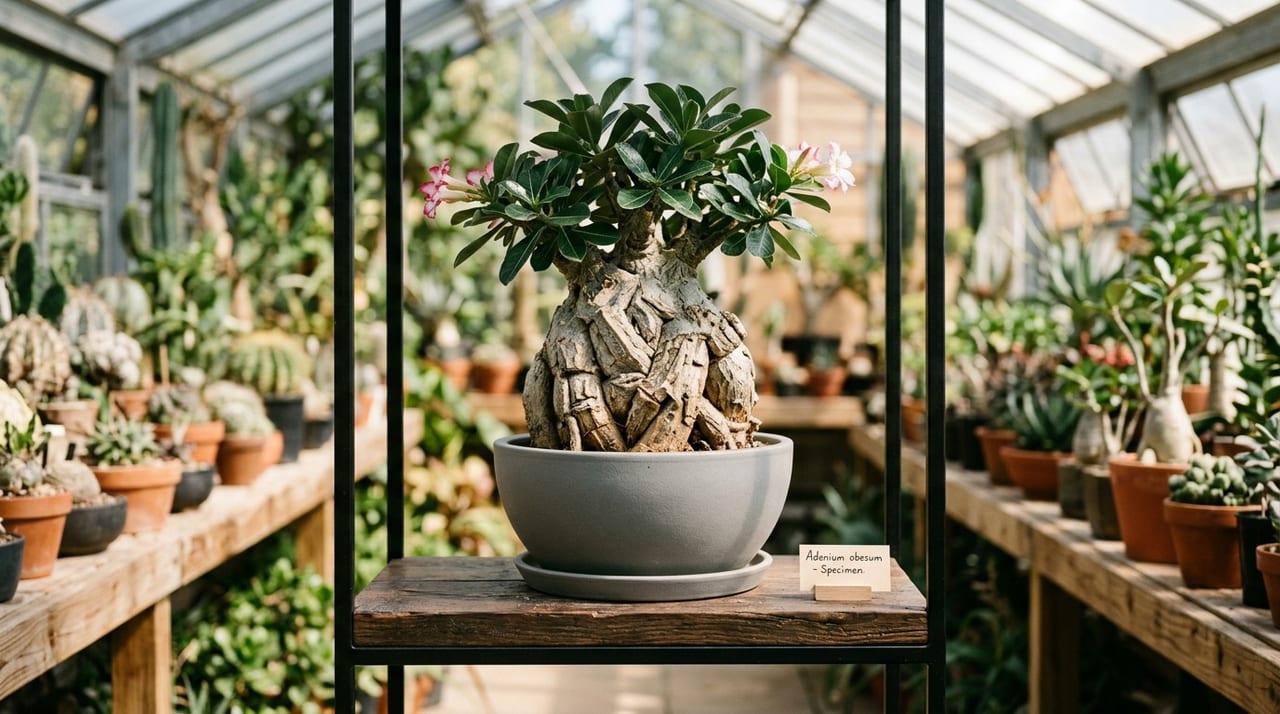
Adenium (Desert Rose)
Adenium grows quickly and responds readily to fertilizer. Applying liquid fertilizer at half strength 2-3 times per month will yield beautiful caudex and abundant flowers. Phosphorus-rich fertilizers are also effective in promoting flowering.
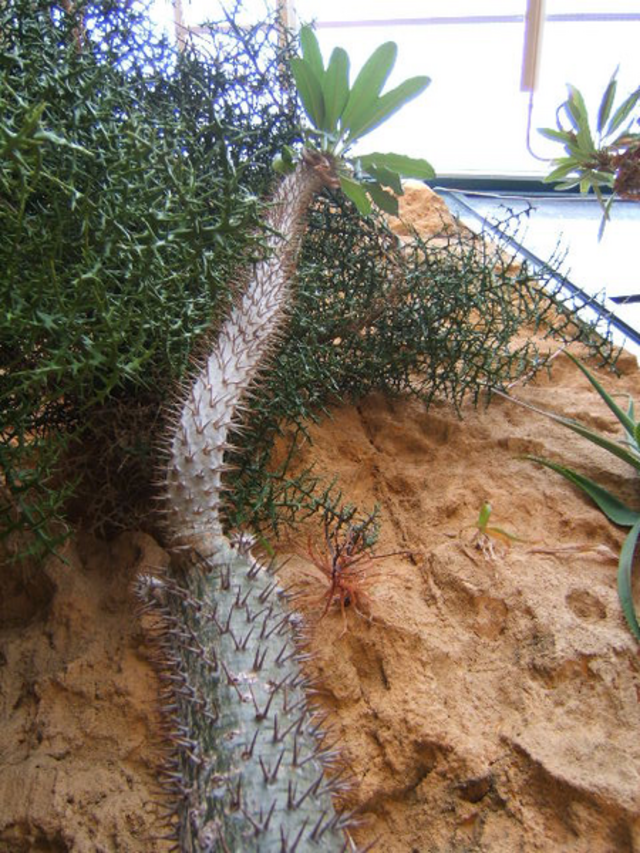
Pachypodium Species
Pachypodium roots are delicate and prone to fertilizer burn, so starting with diluted concentrations is especially important. Madagascar species (such as Gracilius) tend to show more damage from over-fertilization than from nutrient deficiency. A conservative approach where the plant seems slightly undernourished is ideal. Species-specific differences are detailed in the Pachypodium species guide.
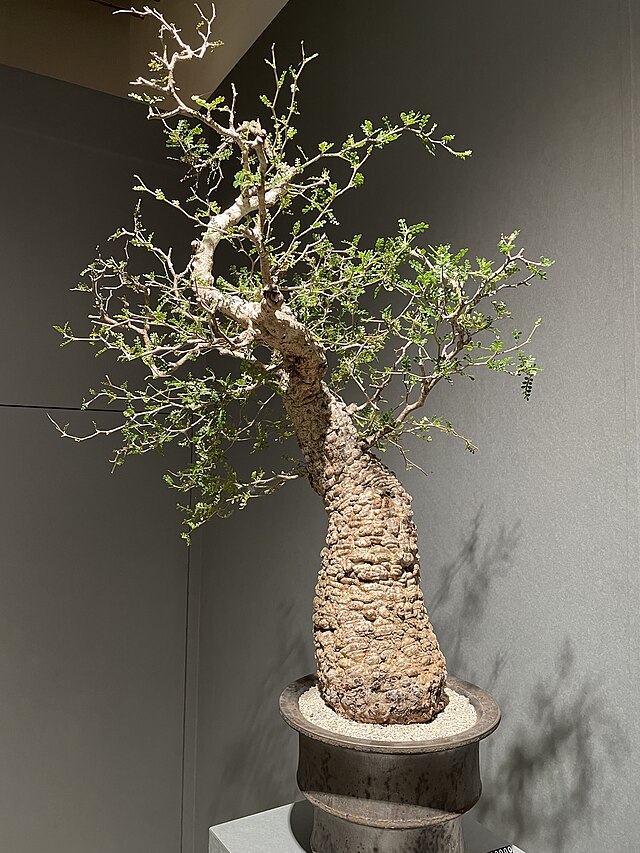
Operculicarya Pachyps
It exhibits relatively vigorous growth and has moderate tolerance for fertilizer. However, excessive nitrogen can disrupt the balance between trunk and branches.
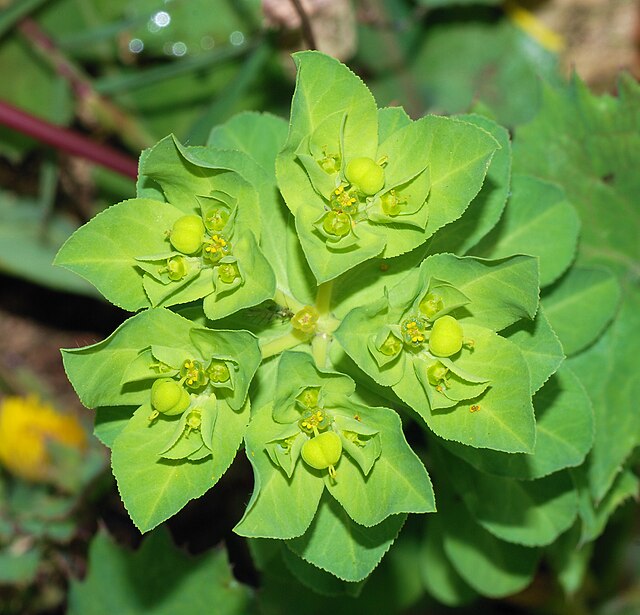
Euphorbia Species (such as Cooperi)
Many species have latex, and roots take time to recover if damaged. Be sure to wait 2-3 weeks after repotting, allowing roots to settle before resuming fertilization.
Dealing with Fertilizer Burn and Over-Fertilization
It is important to detect signs of fertilizer mishaps early. If the following symptoms appear, suspect over-fertilization.
- Leaf tips and edges turn brown and die (salt damage)
- Rotting begins from the base of roots (root burn)
- Leaves become abnormally large, and stems are soft and leggy
- The entire plant loses vigor and does not recover even with watering
To address this, immediately stop applying fertilizer and move the pot to a shaded area with good air circulation. For mild cases, flushing away salts can be done by running large amounts of clean water through the bottom of the pot (flushing). For severe cases, repot the plant, removing damaged roots before transferring to fresh soil. After this, withhold fertilizer for at least one month to allow roots to recover.
The Relationship Between Fertilizer, Soil, and Watering
Fertilizer effectiveness is inseparable from soil drainage and the watering cycle. Using a soil mix formulated for caudex plants (with good drainage, centered on Kanuma soil, akadama soil, and perlite) allows liquid fertilizer to flow through moderately and reduces accumulation. Conversely, soils with high water retention and abundant leaf mold retain nutrients easily, increasing the risk of over-fertilization.
Additionally, applying fertilizer (especially liquid fertilizer) when the soil is dry before watering can make roots more receptive to absorption but also increases the risk of concentration-related damage. It is safest to apply liquid fertilizer simultaneously with watering or after lightly watering, when the soil is slightly moist.
Fertilizer management for caudex plants could be called "the aesthetics of subtraction." Do not over-apply, and completely withhold during dormancy. This restraint leads to tight, beautiful form and long-term plant health. Management conscious of each species' native environment (the alternation of wet and dry seasons) yields maximum results even in domestic cultivation.
Find Caudex Plants on GrowerDirect
Once you understand how to use different fertilizers, the next step is selecting your plants. On GrowerDirect, you can purchase a variety of caudex plants—from seedlings to wild-collected specimens—directly from growers who specialize in caudex plants, and you can also consult with sellers about daily care. If you're interested, try searching the caudex category.