Master Guide to Water Management for Caudex Plants | Optimizing Watering by Humidity, Drought, and Season
This guide scientifically and practically explains water management, the most challenging aspect of growing caudex plants. It introduces how to determine optimal watering based on plant condition, season, and growing environment, and how to promote growth while avoiding rot risk.
Key Takeaways
This guide scientifically and practically explains water management, the most challenging aspect of growing caudex plants. It introduces how to determine optimal watering based on plant condition, season, and growing environment, and how to promote growth while avoiding rot risk.
Related Species
Why Watering Caudex Plants Is Difficult
The most common failure in growing caudex plants is "watering mistakes." Whether it's death from root rot or stunted growth from water shortage — both ultimately stem from water management errors.
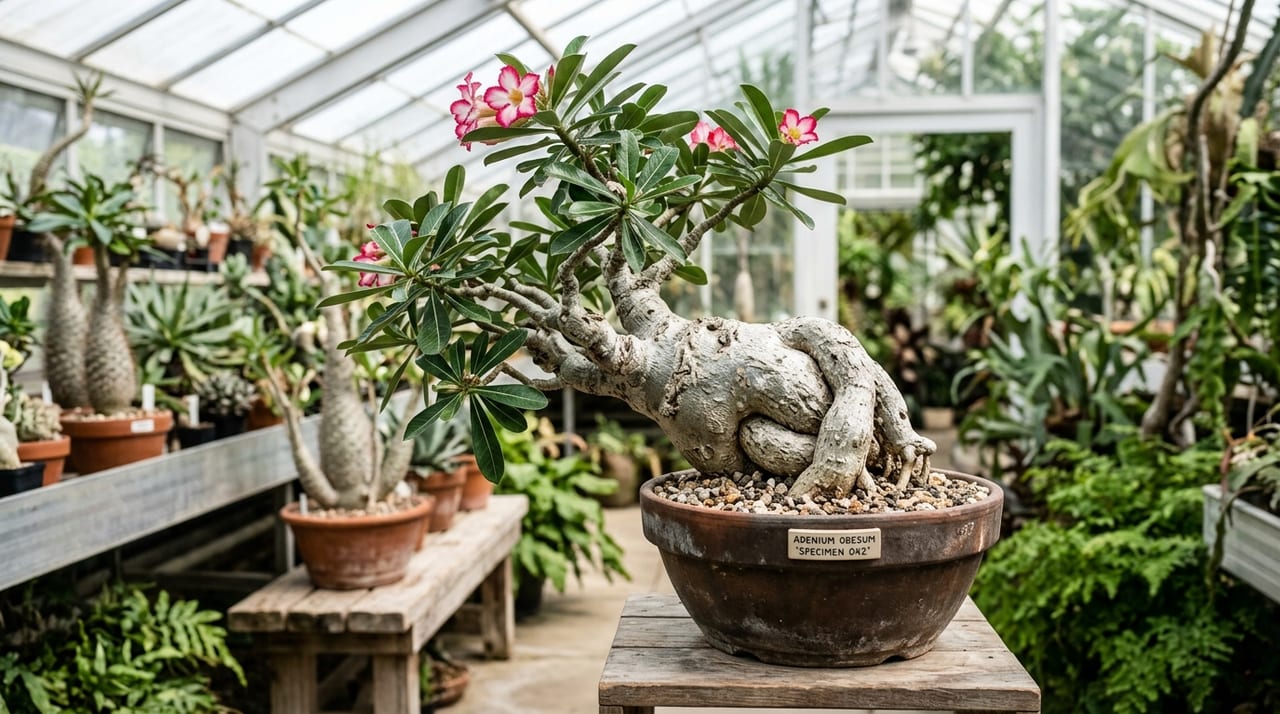
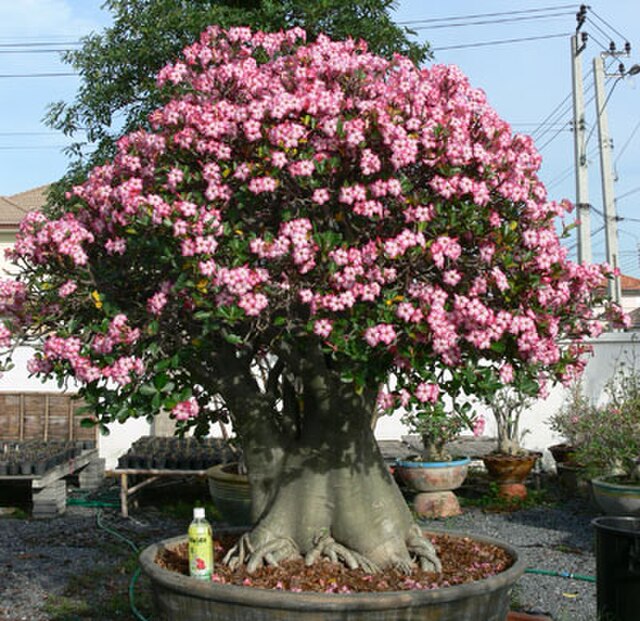
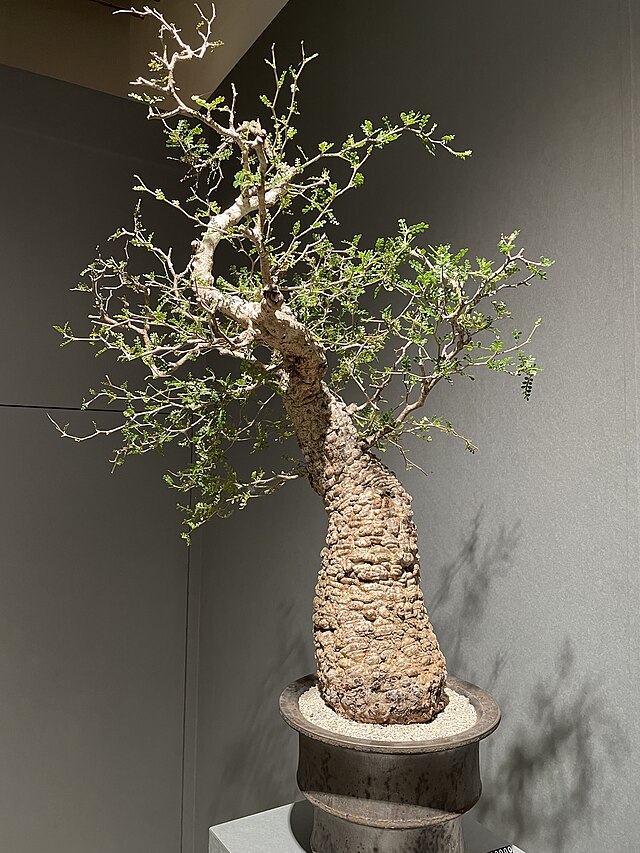
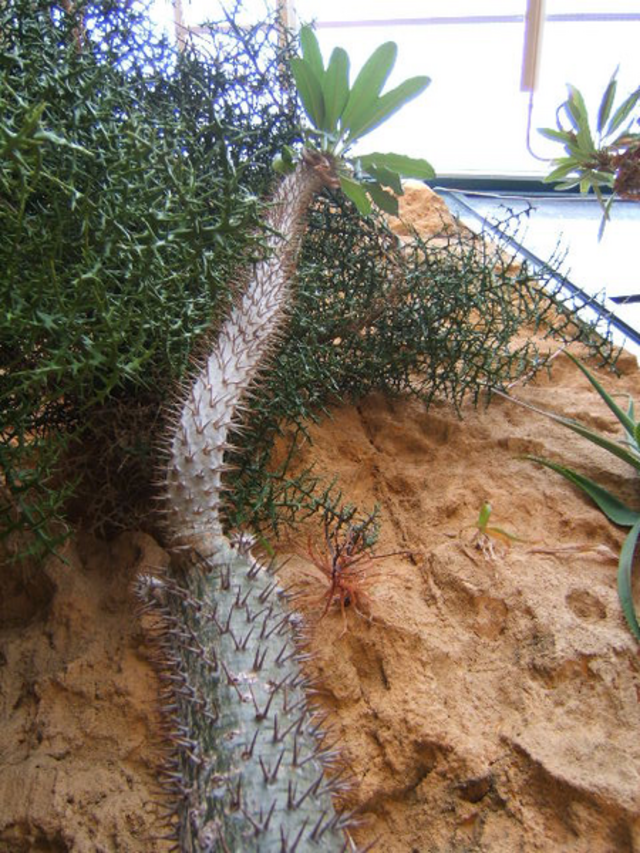
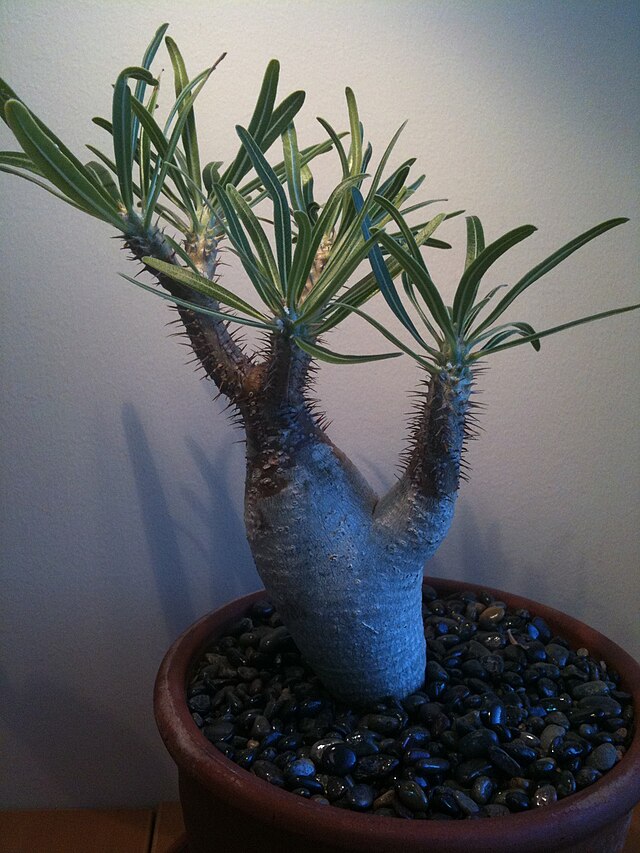
What makes caudex plants difficult is that, unlike standard succulents, "the water requirement changes dramatically between dormancy and growth periods." Summer-type species such as Adenium arabicum and Pachypodium gracilius prefer almost no watering during winter dormancy. On the other hand, species like Operculicarya pachypus require surprisingly more water from spring through autumn. Those who want to know more about the differences between varieties might also find the Pachypodium Species Comparison Guide helpful.
The general succulent rule of "water when soil dries" often does not apply to caudex plants. Understanding the habits of each species and recognizing which seasonal cycle the plant is currently in is the first step to mastering watering.
Seasonal Watering Cycles
Spring (March–May): Awakening Watering
When caudex plants awaken from dormancy in spring, do not give them large amounts of water all at once. The basic approach is to water sparingly at first, observe new growth, and then gradually increase water quantity — this is called "priming." The guideline is when ambient temperature consistently exceeds 15°C. Since flowering often coincides with this timing, consulting Caudex Flowering Times and Seasonal Signs can make management planning easier.
- First watering: Water until a small amount seeps from the pot's drainage hole
- After new growth is confirmed: Move to normal amount (water until it flows from the pot's drainage hole)
- Frequency: 2–3 days after the soil surface dries
Summer (June–August): Vigorous Growth Period Watering
This is when most caudex plants need the most water. In environments with good temperature, sunlight, and airflow, watering once or twice weekly may be appropriate. However, Japan's hot and humid summers are hostile to these plants — moisture stress is the main enemy. Evening watering and ensuring that pot moisture dries by the next morning are critical.
Fall (September–November): Time to Reduce Watering
When temperature begins to drop below 20°C, gradually reduce watering. If you rush this transition, growth stops; if you prolong it, root rot risk rises. When leaves begin to yellow, treat it as a sign to transition to dormancy — this is an easy way to know when to stop watering.
Winter (December–February): Dormancy Watering Management
Summer-type species (Adenium, Pachypodium gracilius, and others) should follow a no-watering rule. Once per month, give only a minimal amount (roughly 5% of pot capacity) as "moisture maintenance." Even near-complete drought, plants survive on water stored in the caudex.
Humidity and Drought — Adapting to Japan's Climate
Japan's climate differs significantly from the plants' native regions (Madagascar, Africa, Central and South America, etc.). Particularly problematic are "high humidity during the rainy season" and "summer heat and humidity."
Rainy Season Countermeasures
During the rainy season (June–July), avoid leaving plants in rain and switch to eaves or indoor management. More problematic than direct rain exposure is "prolonged high humidity," which increases the risk of watering again before soil has dried.
Rainy season guidelines:
- Do not water until the pot feels "light" when lifted
- Judge dryness by the weight of the entire pot, not just the soil surface
- On clear days, use a fan to promote drying inside the pot
Adjusting Humidity for Indoor Management
When overwintering indoors, heating-induced low humidity (below 30%) can cause the caudex to wrinkle and wilt. Even during complete drought, you can manage this with minimal monthly watering, or place a damp towel near the pot to locally supplement humidity.
Soil and Pots — The "Foundation" That Determines Water Management
Soil and pot selection is equally as important as watering technique. No matter how perfect your timing, poorly draining soil cannot prevent root rot.
Recommended Blend (Basic Mix)
- Kanuma soil (fine grain): 40%
- Hyuga soil: 30%
- Akadama (small grain): 20%
- Perlite: 10%
Keep organic matter (leaf mold, vermiculite) to a minimum. The more organic matter, the higher the water retention and the greater the root rot risk.
Choosing Pot Material
| Material | Drying Speed | Suited to Species/Situations |
|---|---|---|
| Terracotta pot | Fast | When emphasizing drainage; rainy season |
| Plastic pot | Slow | Dry environments; hot summer periods |
| Slotted pot | Fast | Ensuring root aeration; preventing root rot |
Terracotta or slotted pots are strongly recommended for beginners. They structurally prevent failures from overwatering.
Early Detection and Treatment of Root Rot
Root rot is the greatest risk from watering mistakes. Early detection allows for recovery, but often by the time you notice, it is too late.
Don't Miss Signs of Root Rot
- The caudex becomes mushy and soft
- The plant wobbles when you shake the pot (roots are not functioning)
- Leaves wilt despite moist soil
- Blackening or foul odor around the base
Treatment Steps
- Immediately remove the plant and trim rotted roots with clean shears
- Apply fungicide (diluted Daconil, for example) to cut surfaces
- After 1–2 days of drying, repot in fresh, clean soil
- Withhold water for a week and keep in a bright location away from direct sun
The key is "speed of detection." Checking the base and leaves once weekly allows early intervention. If you're unsure about root development itself, the Adenium Rooting Management Complete Manual is also helpful.
Master "Timing" Over "Amount" in Watering
The key to improving your watering skill is raising the precision of timing over adjusting quantity. "Water thoroughly when watering; then let it dry completely before the next time" is the basic principle. The worst pattern is giving small amounts frequently, which causes roots to stay shallow and leads to legginess or root rot.
3-Step Watering Decision Process
- Pot weight: Record the pot's weight after watering at purchase, then consider watering when it drops to half that weight or less
- Soil condition: Insert a bamboo stick about 5 cm deep; if soil does not cling when pulled out, it is dry
- Plant condition: When leaves show slight wrinkling, the plant is asking for water (wait this long only during growth periods)
By combining these three, you can accurately determine whether your plant truly needs water right now. As season, weather, and environment change yearly, the ability to read the plant's own signals — not a calendar — is the true joy of growing caudex plants. To find a plant that suits you, it's also recommended to compare grower-propagated and imported caudex plants in the Caudex Category.