Succulent Watering Tools and Handy Gadgets | From Fine-Spout Watering Cans to Syringes
We introduce tools for convenient watering of succulents. Explains how to use fine-spout watering cans, syringes, and spray bottles effectively, how to utilize bottom-watering trays, watering solutions for travel, and how to use soil moisture meters.
Key Takeaways
We introduce tools for convenient watering of succulents. Explains how to use fine-spout watering cans, syringes, and spray bottles effectively, how to utilize bottom-watering trays, watering solutions for travel, and how to use soil moisture meters.
Related Species
Why Succulent Watering Is Difficult and the Importance of Proper Tools
The number one cause of succulent death is "overwatering." Succulents have a structure that stores water in their leaves and stems, and they are prone to root rot from excess moisture, making "manage with dry conditions" the golden rule. However, neglecting proper watering can cause growth to stop or leaves to shrivel and wilt. Specific examples of overwatering problems are also introduced in "Succulent Overwatering Troubles: Real Examples and Solutions for Watering Frequency."
What matters is precision in "quantity" and "aim." Delivering water precisely to the soil around the base of the plant while keeping water off the leaves and growing points—proper watering tools make this action possible. Simply changing your tool can dramatically improve management precision. Beginners especially should pay attention to tool selection, and understanding common failure patterns is deepened by also reading "Seven Common Beginner Mistakes with Succulents | Solutions Explained."
Fine-Spout Watering Can: The Basic Tool for Succulent Care
The fine-spout watering can is the most widely used tool for watering succulents. Its narrow, elongated nozzle allows you to part the gaps between crowded plants and pour water directly onto the soil.
Key points when choosing are as follows:
- Nozzle thinness and angle: A type with a tip as thin as a pencil and slightly curved upward is easiest to use. It fits easily into the backs of shelves and edges of pots.
- Capacity: For indoor collections, 500ml to 1L is appropriate. Too large and it becomes heavy with reduced operability; too small requires repeated refilling.
- Material: Stainless steel is highly durable and resistant to mold, but somewhat heavy. Plastic is lightweight and easy to handle, but degrades easily in sunlight. If appearance as décor is a priority, vintage-style brass watering cans are also an option.
As popular products, "fine-spout types without lotus-head (shower-head) attachments" have become standard for succulents. Choosing a removable lotus-head (shower head) type allows you to switch between uses depending on your needs.
Droppers and Syringes: Essential for Small Pots and Root Development Management
For small pots around 3–5cm in diameter or for plants undergoing root development after leaf propagation or cutting, there are situations where even a fine-spout watering can makes it difficult to control water volume. This is where droppers (pipettes) and syringes come into play.
- Dropper (large pipette): 30ml to 50ml types, available even at 100-yen shops, are easy to use. They're suited for precise work like diluting rooting stimulants or just dampening the soil surface.
- Syringe (100ml–200ml): With a fine nozzle and the ability to apply pressure when dispensing water, it's convenient when you want water to reach the pot bottom. It can also be used as an air blower to remove dust accumulated at leaf bases and in crevices (pushing out air only, without water). Among succulent experts, this dust removal technique using syringe blowing has become a standard method for maintaining plant condition.
Spray Bottle: Use Correctly with Limited Applications
Some say spray bottles are unnecessary for succulents, but there are useful applications when used correctly.
- Moisture after leaf propagation and seed sowing: Leaves separated from soil and freshly sown seeds can be blown away by a strong water stream. Light misting to dampen the surface is the appropriate amount of water.
- Summer leaf cooling (for outdoor plants): On very hot days when temperatures exceed 40°C in direct midsummer sun, leaf surface temperature can rise excessively, causing cell damage. Light misting of leaves in early morning or evening can lower leaf temperature through evaporative cooling. However, avoid use during hot, humid periods or on varieties prone to moisture stress (such as Echeveria).
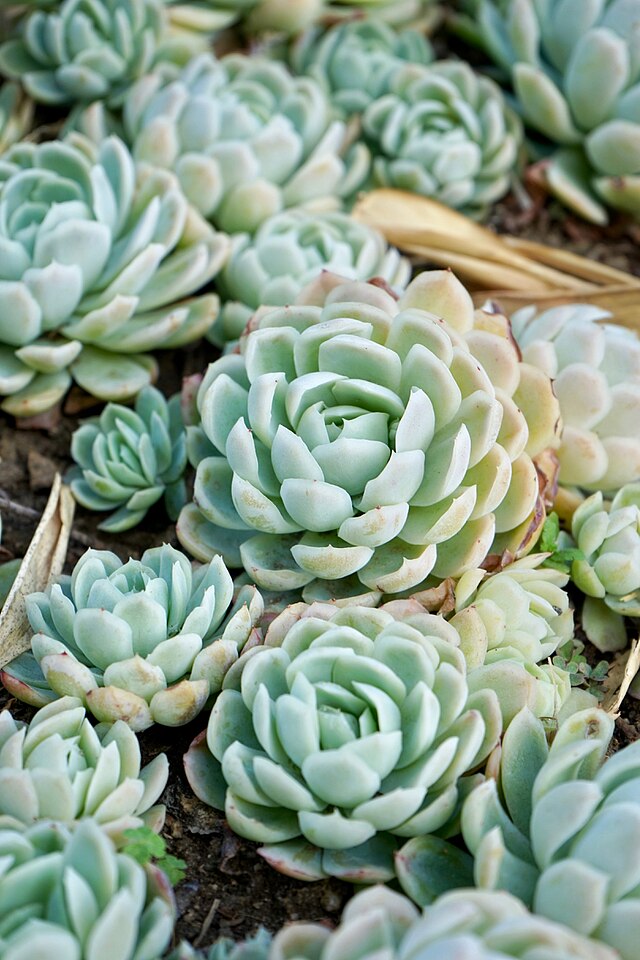
- Caution: Rosette-form varieties (such as Echeveria 'Black Prince' and Graptopetalum) can rot if water accumulates at the growing point. When using a spray bottle, mist from a distance with fine spray, and thorough drying afterward is essential.
Streamline Management with Soil Moisture Meters and Handy Gadgets
Tools aren't just for "delivering water." Adding gadgets to help you judge watering timing accurately further increases management precision.
- Soil moisture meter (Sustee or soil moisture checker): A sensor that shows soil moisture level by color just by inserting it into the pot. "Sustee" is especially popular with beginners because the indicator changes from white to blue to signal watering time. Since you can visually confirm dryness in the root zone, you can move beyond guessing-based management and stop relying on "it should be dry by now, so I'll water."
- Pot saucers and bottom-watering systems: Bottom watering is also effective for varieties preferring partial shade, such as Haworthia obtusa, or for plants with strong root systems. Fill the tray with water and let it absorb through capillary action from the pot bottom. However, this method is unsuitable for cacti and varieties sensitive to moisture stress.
- Drain bottle cap (fine-spout nozzle cap): An adapter that turns a plastic bottle into a fine-spout watering can. Attach it to a 500ml bottle for a lightweight, disposable-feeling tool. It's handy for temporary care during travel or business trips.
Tool Selection by Season and Management Environment
It's important not just to have tools, but to choose the right one based on season and environment.
- Growing season (spring and autumn): A time when water demand increases. Use a fine-spout watering can and water generously until it drains from the pot bottom. A general guideline is 2–3 days after the soil moisture meter shows white (dry).
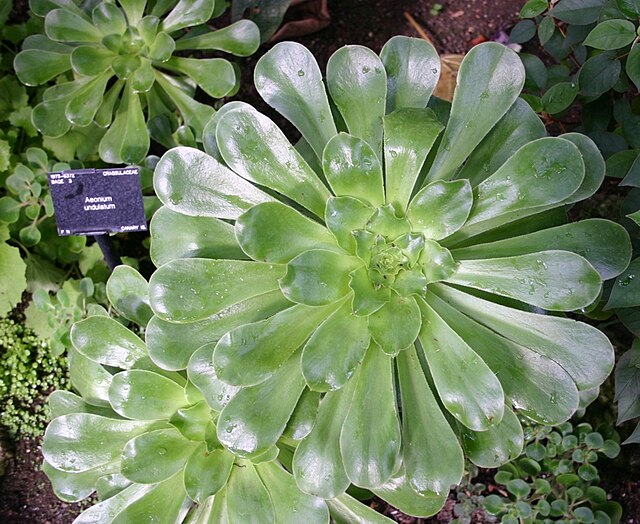
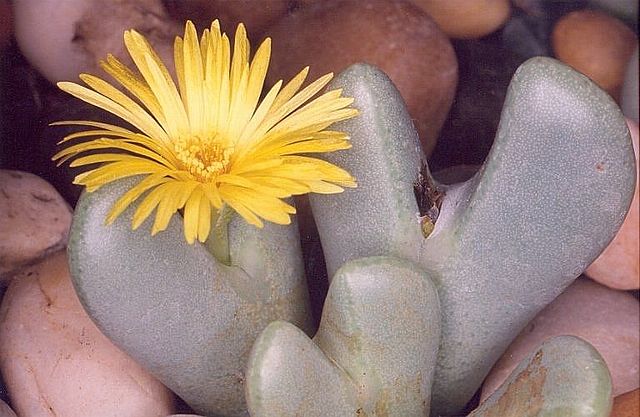
- Dormancy (summer and winter): Drastically reduce watering frequency. Summer-growing types (such as Agave and Kalanchoe) are managed normally since summer is their growing season, but winter-growing types (such as Aeonium and Conophytum) should be watered sparingly in summer, about once or twice per month or withheld entirely. During this period, light misting or dropper use to dampen the surface is the safest approach.
- Indoor management: Syringes and droppers prevent water splashing. Using a plant saucer and removing standing water about 30 minutes after watering prevents moisture stress.
Choosing the right tools and varying your approach by season and plant condition—this is the foundation for growing succulents long-term and healthy. A small investment in tools can greatly extend the life of your plants.