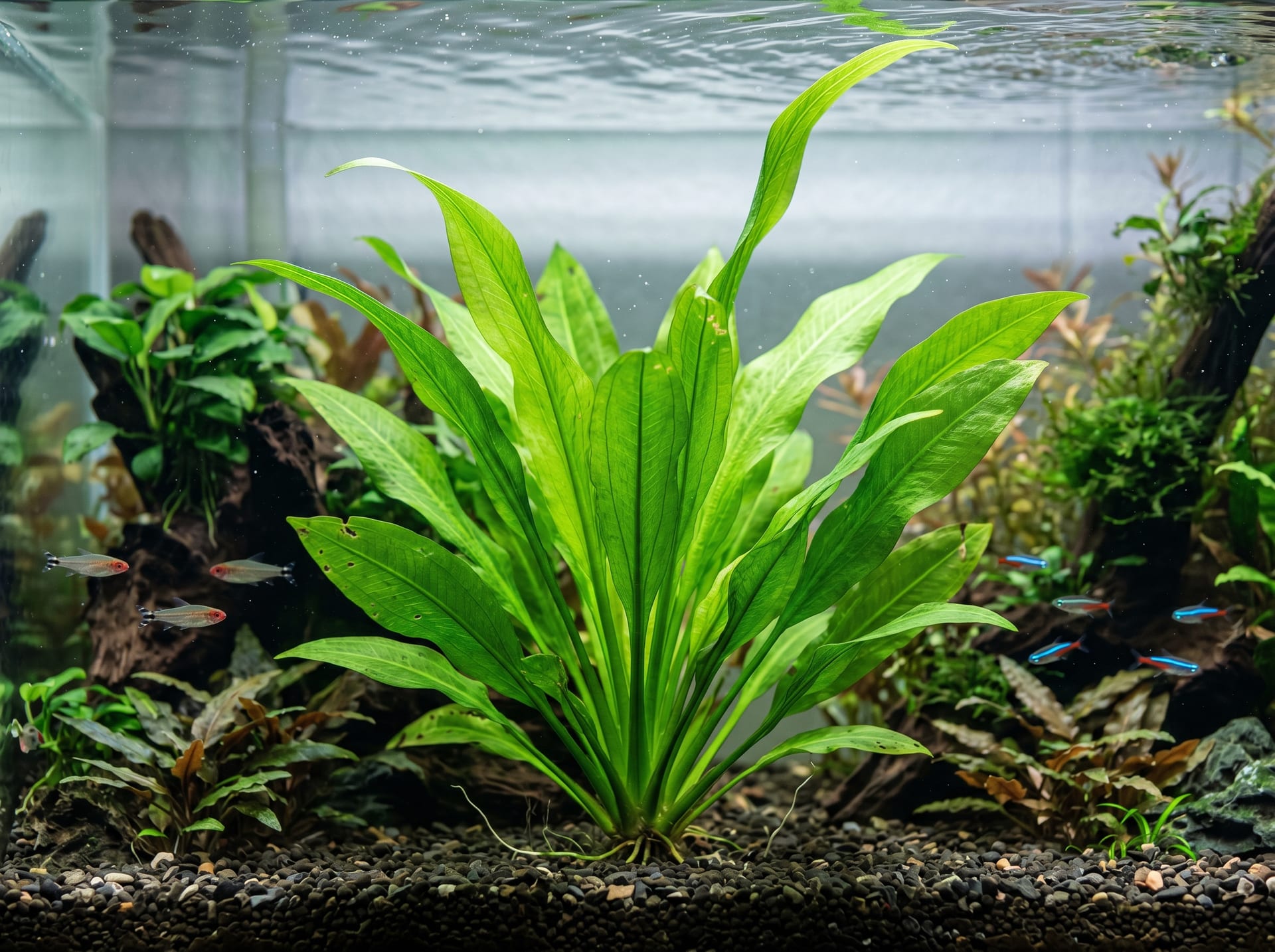
Echinodorus
Representative large aquatic plant also called Amazon Sword. Ideal for mid to background. Propagates by runners, easy for beginners.
View Echinodorus encyclopedia →Grower Wanted!
List your plants on GrowerDirect and sell directly to customers nationwide!
6 Transparency Commitments from GrowerDirect
Grower provide complete information for all Aquatic Plants listings. We guarantee transparency in variety, origin, light requirements, and difficulty level.
- Variety Clarity
- Live Photos
- Color Details
- Origin Transparency
- Light Requirements
- Difficulty Level
Browse all 134 varieties
Difficulty Level
No listings match your filters
Adjust your filters, or get notified when new listings arrive.
Getting alerts is free with a member account. When new listings match your saved search, we'll notify you by email and in-app.
Browse other categories
Are you growing aquatic plants?
Register as a grower and connect with buyers directly.
Apply as a growerEchinodorus key facts
- Growing Difficulty
- Beginner-friendly
- Size
- 20-50cm
- Temperature
- 22〜28℃
- Lighting
- Medium or stronger lighting is recommended. Its large leaves shade the surroundings, so position it where it will not block light from other plants.
- CO2 & Fertilizer
- Grows without CO2 but gets larger with injection. It absorbs actively through the roots, so solid fertiliser at the base is especially effective.
- Water Temperature & Quality
- A water temperature of 22-28°C is suitable. Beginners rarely fail with it, and it grows in the water conditions of a typical tropical tank.
- Substrate
- Nutrient-rich soil best. Strong root system
- Trimming & Propagation
- It sends out runners that form plantlets and multiplies vigorously. Once a plantlet has roots, cut it off and plant it.
- Cautions
- Species range from compact forms to ones exceeding 1 m, so choose one that fits the size of your tank.
About Echinodorus
Echinodorus is an aquatic plant in the family Alismataceae, widely distributed in wetlands and rivers across North and South America, and beloved worldwide under the common name "Amazon Sword." The genus name derives from the Greek for "spiny bag," referring to the shape of its seed clusters. Depending on the species, sizes range from compact plants to those exceeding 1 m, and their broad, glossy green foliage creates a rich sense of depth in any aquarium. The plant is a vigorous root feeder, thriving in nutrient-rich substrates or with root fertilizer tabs. It can be grown without CO2 injection and propagates readily through runners, earning it a reputation as an ideal beginner plant. Combining visual impact with ease of care, Echinodorus is a true centerpiece species for freshwater aquascapes.
7 things to know before growing Echinodorus
1Tank Size: 60cm+
Many Echinodorus varieties grow leaves 30–50 cm long, which can quickly overwhelm a small tank. A 60 cm or larger aquarium allows roots to spread and leaves to develop properly. Some species do best when planned for a 90 cm setup from the start.
2Use Nutrient-Rich Substrate
Echinodorus is a heavy root feeder that thrives when planted in nutrient-rich soil substrate or gravel supplemented with root tabs. Because its roots are strong, provide a substrate deep enough for them to anchor and spread.
3Light Over CO2
Echinodorus can grow without CO₂ injection, but insufficient light causes etiolated, spindly leaves. Medium or stronger lighting is ideal. Its large leaves cover the surroundings, so place it where it will not shade other plants.
4Propagates via Runners
Echinodorus sends out runners—horizontal stems—along the surface or mid-water, with daughter plants forming at the tips. Once a daughter plant develops a few roots, detach and replant it as an independent specimen. Regular trimming prevents runners from taking over the tank.
5Ideal Temp: 22–28°C
Originating from warm waters of the Americas, Echinodorus prefers temperatures of 22–28°C. Growth slows and leaves may yellow when the water falls below this range. Using a reliable aquarium heater to maintain stable water temperature is essential for healthy growth.
6Yellowing Old Leaves Is Normal
It is normal for Echinodorus to yellow and shed outer older leaves as new growth emerges from the center. Simply trim yellowing leaves at the base to keep the tank clean. If yellowing spreads across the whole plant or leaves shrink, check for nutrient deficiency or inadequate lighting.
7Tolerates a Range of Water Params
Echinodorus grows well in the water quality of a typical tropical fish tank, and beginners rarely fail with it. Extremely soft or very hard water may cause leaf damage, but standard tap water in most regions is generally suitable. Consistent partial water changes are the key to stable water quality.
Frequently asked questions about Echinodorus
- Q.Can Echinodorus grow without CO2 injection?
- A.Yes, Echinodorus grows well without CO2 injection. However, supplementing CO2 noticeably improves leaf color and accelerates growth. Beginners are encouraged to start without it and add CO2 later if desired.
- Q.How large does Echinodorus get?
- A.Size varies by species, from compact types to some exceeding 1 m; typically around 20–50 cm. A 60cm or larger aquarium is recommended for most types. Choosing a compact species lets you enjoy it in a smaller tank.
- Q.My plant's leaves are turning yellow — is that normal?
- A.Yellowing of older outer leaves is a natural aging process and not a cause for concern — simply trim them at the base. As long as new leaves continue to emerge, the plant is healthy. If yellowing affects the whole plant, consider checking nutrient levels and lighting.
- Q.Can it be kept alongside tropical fish?
- A.Yes, Echinodorus pairs well with most tropical fish since their preferred water temperatures overlap. The broad leaves provide excellent hiding spots and spawning sites. However, be cautious with large plecos or goldfish, which may nibble or uproot the plant.
- Q.How do I propagate Echinodorus?
- A.The parent plant sends out runners with daughter plants forming at the tips. Once a daughter plant has developed several roots, cut the runner and replant it in the substrate. No special tools or treatments are needed — propagation happens naturally with minimal intervention.
Handy Growing Tools for Echinodorus
Learn more about Echinodorus in the encyclopedia
View Echinodorus encyclopedia entry →
Care difficulty, size, origin and light needs — all basics covered.
Echinodorus related articles
See more Echinodorus articles →More in this category
Can't find the plant you're looking for?
Post your wishes for free and growers with matching plants will contact you with introductions.