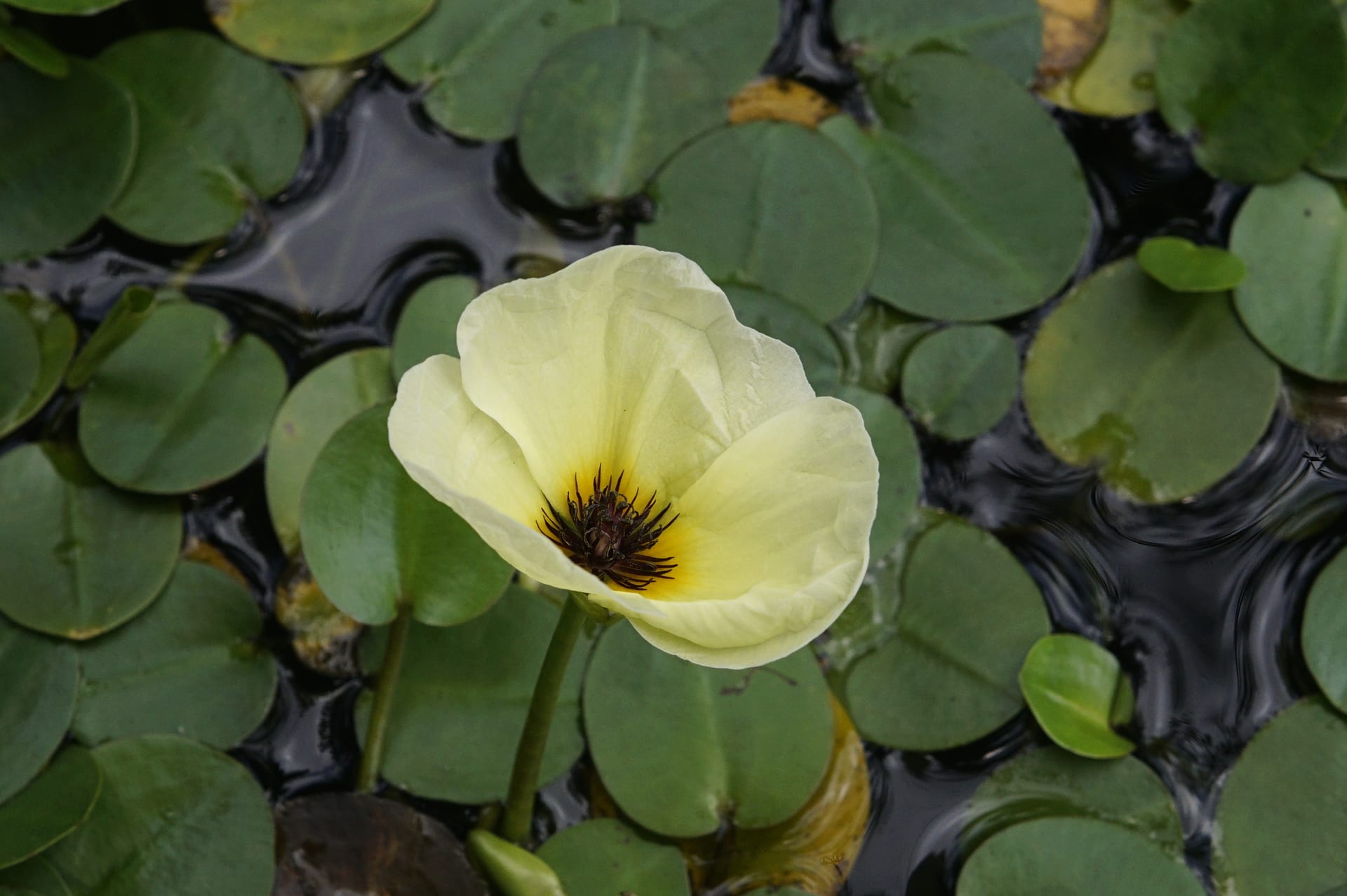
 © Vengolis / CC BY-SA 4.0
Water poppy
Water poppy is a floating-leaf aquatic plant native to South America. Its round, soft leaves spread across the water's surface, while cheerful yellow flowers, each resembling a poppy blossom, open one after another. Known in Japanese as mizu-hinageshi, a single plant can spread to roughly 1.5 meters across, making it a real showpiece in a water garden or pond. It prefers shallow water around 15cm deep and is sturdy enough for beginners to grow with confidence, though it is somewhat cold-sensitive and can be damaged by low winter temperatures. Watching its blooms open day after day brings a relaxed, breezy charm to any water feature.
View Water poppy encyclopedia →0% commission on your first sales!Register by September 30, 2026 and your first 2 plants are commission-free!
Grower Wanted!
List your plants on GrowerDirect and sell directly to customers nationwide!
6 Transparency Commitments from GrowerDirect
Grower provide complete information for all Aquatic Plants listings. We guarantee transparency in variety, origin, light requirements, and difficulty level.
- Variety Clarity
- Live Photos
- Color Details
- Origin Transparency
- Light Requirements
- Difficulty Level
Browse all 134 varieties
Difficulty Level
No listings match your filters
Adjust your filters, or get notified when new listings arrive.
Getting alerts is free with a member account. When new listings match your saved search, we'll notify you by email and in-app.
Browse other categories
Are you growing aquatic plants?
Register as a grower and connect with buyers directly.
Apply as a growerWater poppy key facts
- Growing Difficulty
- Beginner-friendly
- Lifespan
- Perennial; easily killed by cold
- Size
- One plant can spread about 1.5 m across; prefers water about 15 cm deep
- Watering
- Feeds through roots in the soil
- Lighting
- Grow outdoors in a sunny spot.
- CO2 & Fertilizer
- No CO2 needed; plant in a pot sunk under water so it feeds from the soil.
- Water Temperature & Quality
- Flowers once water reaches about 21°C. Cold-sensitive: overwinter indoors in a shallow tub, kept moist and bright.
- Substrate & Attachment
- Best in about 15 cm of water and tolerates up to 30–38 cm; suits water-lily bowls and shallow biotope areas.
- Trimming & Propagation
- Plantlets form at the nodes of creeping stems; separate rooted ones to propagate and thin out as needed.
- Cautions
- Listed as an alien species under consideration for control. Where water connects to natural waterways, stop fragments from washing out; never release it.
About Water poppy
Water poppy, a South American floating-leaf plant, blooms yellow poppy-like flowers in succession. Beginner-friendly, it thrives in about 15cm of water, perfect for a water garden or pond.
7 things to know before growing Water poppy
1Loves Full Sun
Water poppy is a floating-leaf plant that thrives in bright light, blooming its yellow, poppy-like flowers best when kept outdoors in full sun. If light is insufficient, flowering slows down, so an outdoor water garden or pond is ideal.
2Best in About 15cm of Water
This plant grows with its leaves floating on the surface and prefers a water depth of around 15cm. In containers that are too deep, the stems may struggle to reach the surface, so adjust the pot height or water level accordingly.
3Use Aquatic Planting Soil
Plant it in aquatic soil or river sand, then submerge the potted plant in a water-filled container. Mixing a slow-release fertilizer into the soil helps keep the water clean while feeding the plant.
4Thin It Out and Dispose of It Properly
Water poppy grows vigorously, and a single plant can spread to about 1.5 meters across. Plantlets form at the nodes of stems creeping across the surface and can be cut away once they've rooted. Thin the plant when it gets crowded. Water poppy is listed as a "control consideration" invasive species on Japan's Ministry of the Environment list of alien species harmful to ecosystems. Don't dump thinned plants or stem and leaf fragments outdoors — dry them out and throw them away — and if you grow it anywhere connected to natural waterways, take care that no fragments wash out.
5Watch Out for Cold Winters
It is a perennial, but it is sensitive to cold and can be damaged by low winter temperatures. Depending on your climate, moving it to a bright indoor spot for winter is worth considering.
6Check Leaves and Roots
When choosing a plant, look for leaves without discoloration or dark spots and roots that are well established. A plant with active new growth will settle in and grow more smoothly.
7Leave Room for Other Plants
Because it spreads outward, give it plenty of space if you are growing it alongside other aquatic plants in the same container. Trimming the leaves regularly helps keep the balance in your water garden.
Frequently asked questions about Water poppy
- Q.Is water poppy suitable for beginners?
- A.Yes, it is considered a beginner-friendly plant. Keep it outdoors in a sunny spot and manage the water depth, and it should be easy to grow, rewarding you with a steady succession of yellow flowers.
- Q.How long do the flowers last?
- A.Each individual flower is a one-day bloom that closes after a single day, but new buds keep opening in succession, so you can enjoy flowers throughout the blooming season.
- Q.Can it stay outdoors through winter?
- A.Water poppy is sensitive to cold and can be damaged by low winter temperatures. If overwintering it outdoors, consider cold protection or moving it indoors depending on your local climate.
- Q.How large does it grow?
- A.It is a vigorous grower, and a single plant can spread to about 1.5 meters across. It is best to give it plenty of room in your container or pond.
- Q.What water depth or container works best?
- A.Water poppy prefers shallow water around 15cm deep, making it well suited to water gardens or ponds with a shallow shelf. In deeper containers, adjust the pot height so the leaves can reach the surface.
Handy Growing Tools for Water poppy
Learn more about Water poppy in the encyclopedia
View Water poppy encyclopedia entry →
Care difficulty, size, origin and light needs — all basics covered.
More in this category
Can't find the plant you're looking for?
Post your wishes for free and growers with matching plants will contact you with introductions.