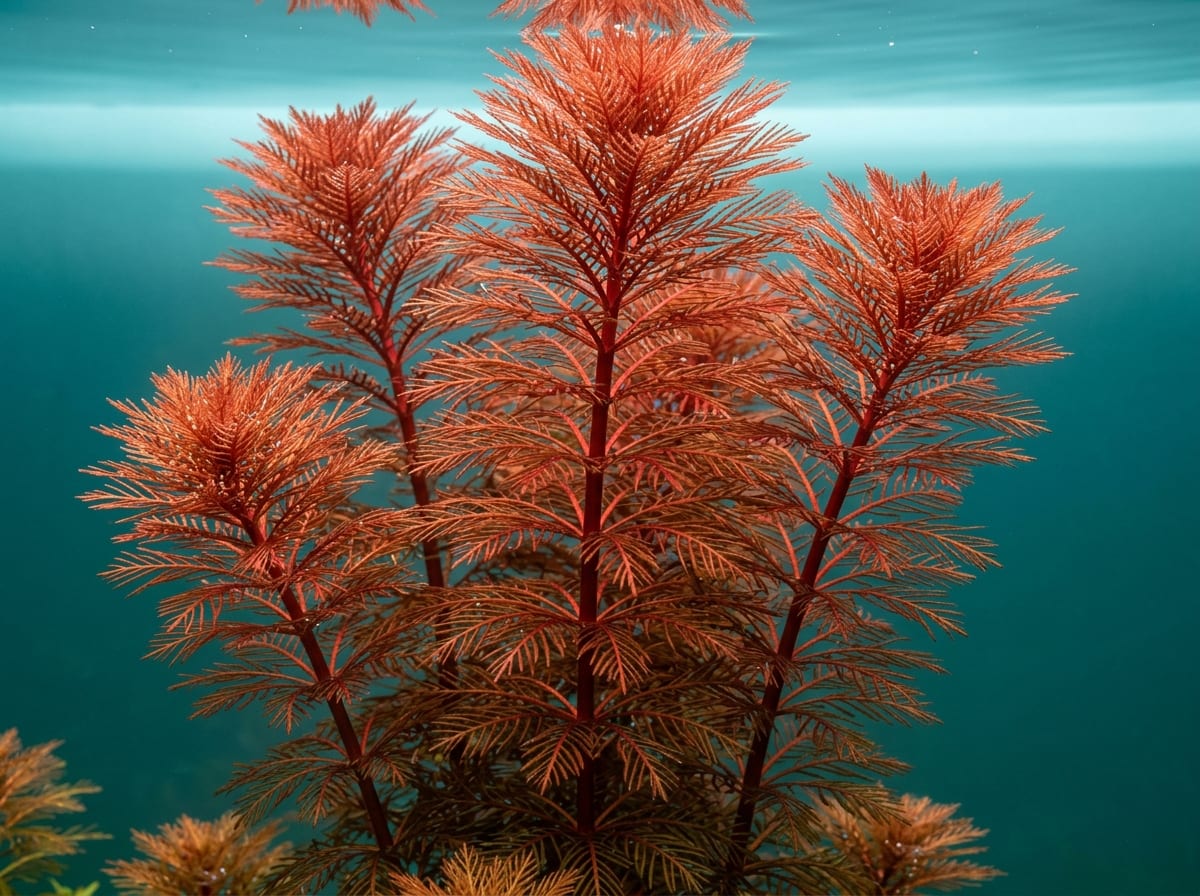
Red myriophyllum
Red myriophyllum is an aquatic plant in the Myriophyllum genus, prized for its finely divided, feathery whorled leaves. Native to Asia, its foliage can take on a rusty red hue under strong light, CO2, and trace elements, adding a striking splash of color to planted aquariums. It was long sold under the incorrect name Myriophyllum mattogrossense, and it is still sometimes offered under names such as "Mattogrossense Red." As a perennial, it can be maintained indefinitely by trimming stems and replanting the cuttings. Because it demands strong lighting, CO2 injection, and trace elements, it is generally considered a plant for experienced aquascapers.
View Red myriophyllum encyclopedia →0% commission on your first sales!Register by September 30, 2026 and your first 2 plants are commission-free!
Grower Wanted!
List your plants on GrowerDirect and sell directly to customers nationwide!
6 Transparency Commitments from GrowerDirect
Grower provide complete information for all Aquatic Plants listings. We guarantee transparency in variety, origin, light requirements, and difficulty level.
- Variety Clarity
- Live Photos
- Color Details
- Origin Transparency
- Light Requirements
- Difficulty Level
Browse all 134 varieties
Difficulty Level
No listings match your filters
Adjust your filters, or get notified when new listings arrive.
Getting alerts is free with a member account. When new listings match your saved search, we'll notify you by email and in-app.
Browse other categories
Are you growing aquatic plants?
Register as a grower and connect with buyers directly.
Apply as a growerRed myriophyllum key facts
- Growing Difficulty
- Advanced
- Lifespan
- Perennial; maintained by replanting cuttings
- Size
- Leaf whorls up to about 10 cm across; grows to the surface
- Temperature
- 18〜24℃
- Watering
- Needs CO2 and generous iron and trace elements
- Lighting
- Intense light is essential.
- CO2 & Fertilizer
- CO2 is required. Never let nitrate or phosphate hit zero, and dose extra iron and trace elements; shortages make stems dark and stunted.
- Water Temperature & Quality
- Optimum 18–24°C in soft (KH 0–8°dKH) water at pH 5–7.
- Substrate & Attachment
- Plant in the substrate as a red accent in the back- or midground.
- Trimming & Propagation
- Cut bases resprout slowly, so pull stems and replant the tops; pinched side shoots root readily.
- Cautions
- The related parrot's feather is a banned Specified Invasive Alien Species; confirm the species name of any Myriophyllum. Never release plants into the wild.
About Red myriophyllum
A red-tinted, finely divided aquarium plant from Asia that needs strong light, CO2, and trace elements to color up, generally recommended for experienced aquascapers.
7 things to know before growing Red myriophyllum
1Give It Strong Light
Red myriophyllum favors strong lighting, and insufficient light often causes the foliage to stay greenish rather than take on its signature red tint. Position your lighting so it reaches all parts of the plant.
2CO2 Injection Is Essential
One reason this plant is considered advanced-level is its need for CO2 injection. Without a stable, consistent CO2 supply, growth suffers and leaf development becomes irregular.
3Use a Nutrient-Rich Substrate
Since it also absorbs nutrients through its roots, substrate quality, such as a nutrient-rich aquasoil, matters for healthy growth. Plant it deep enough for the roots to establish firmly.
4Do Not Skimp on Trace Elements
Trace elements are essential for good coloration and healthy leaf development. Dose a liquid fertilizer containing trace elements regularly to keep the plant supplied.
5Trim and Replant Regularly
Trim stems as they grow and replant the cut tips into the substrate, a technique known as cutting and replanting, to keep renewing the plant. Repeating this process lets you enjoy this perennial for a long time.
6Manage Growth Near the Surface
Under good conditions, stems will grow all the way to the water's surface. Trim promptly once they reach it so they do not shade out other plants and to keep the tank's overall balance in check.
7Choose Healthy Stock
When selecting a specimen, look for one with densely whorled leaves and sturdy stems for an easier start. Since the whorled leaf clusters reach roughly 10 cm across at most, avoid stems that look overly leggy or sparse.
Frequently asked questions about Red myriophyllum
- Q.Is this plant suitable for beginners?
- A.Red myriophyllum requires managing strong lighting, CO2, and trace elements, making it better suited to experienced aquascapers. It's best attempted once you're already comfortable growing aquarium plants.
- Q.Why isn't my plant turning red?
- A.If lighting, CO2, or trace elements aren't sufficient, the plant may stay greenish rather than develop its red coloration. Reviewing and adjusting these growing conditions can often improve the color.
- Q.How large does it grow?
- A.The whorled leaf clusters reach up to about 10 cm across, and under good conditions the stems will grow all the way to the water's surface. Trim as needed to fit your tank size.
- Q.What does "cutting and replanting" involve?
- A.It means cutting the tip of a grown stem and replanting it in the substrate to grow as a new plant. Repeating this process takes advantage of its perennial nature to maintain it over the long term.
- Q.Is it different from "Myriophyllum mattogrossense"?
- A.For years it was sold under the name Myriophyllum mattogrossense, but that was a mislabeling, and it is still sometimes sold under names like "Mattogrossense Red." Note that parrot's feather (M. aquaticum), another member of the same genus, is a designated invasive alien species in Japan whose keeping, cultivation and transfer are prohibited. When buying any Myriophyllum, confirm the species by its scientific name (M. tuberculatum).
Handy Growing Tools for Red myriophyllum
Learn more about Red myriophyllum in the encyclopedia
View Red myriophyllum encyclopedia entry →
Care difficulty, size, origin and light needs — all basics covered.
More in this category
Can't find the plant you're looking for?
Post your wishes for free and growers with matching plants will contact you with introductions.