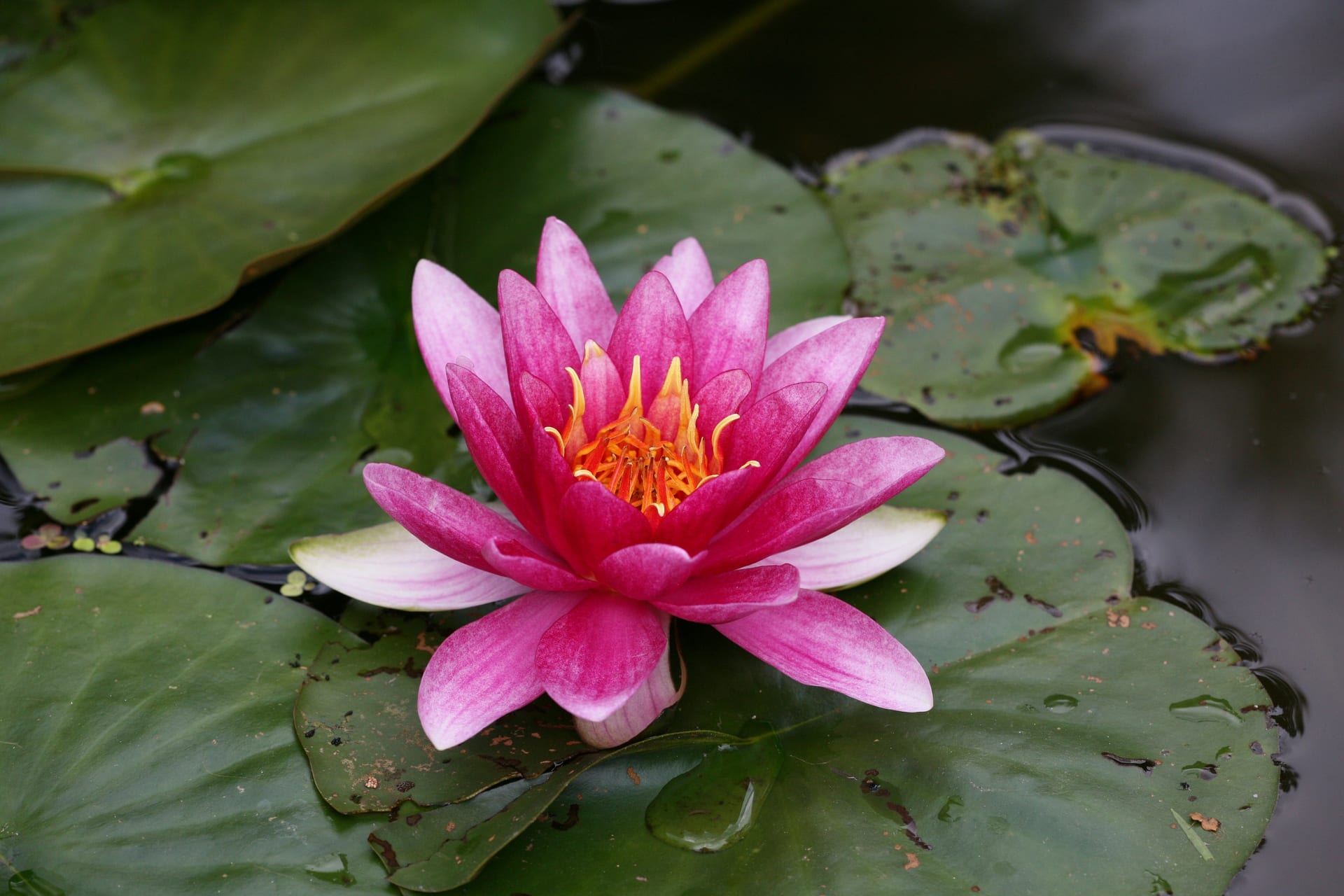
 © Daniel Schwen / CC BY-SA 3.0
Water lily
Water lilies float round, notched leaves on the water's surface and produce large, showy blooms, making them a striking centerpiece for any water garden. They fall into two main types: hardy water lilies, which survive winter outdoors and bloom year after year, and tropical water lilies, prized for vivid blue and purple flowers held above the water, with countless hybrids crossing the two. As perennials, they can be grown for years through periodic dividing and repotting. Because success depends on managing water quality and sunlight, they're generally considered a plant for intermediate growers, but once you have the basics down, they reward you with long-lasting blooms in a tub or garden pond. Since varieties range widely in leaf and flower size, there's one to suit almost any space.
View Water lily encyclopedia →0% commission on your first sales!Register by September 30, 2026 and your first 2 plants are commission-free!
Grower Wanted!
List your plants on GrowerDirect and sell directly to customers nationwide!
6 Transparency Commitments from GrowerDirect
Grower provide complete information for all Aquatic Plants listings. We guarantee transparency in variety, origin, light requirements, and difficulty level.
- Variety Clarity
- Live Photos
- Color Details
- Origin Transparency
- Light Requirements
- Difficulty Level
Browse all 134 varieties
Difficulty Level
No listings match your filters
Adjust your filters, or get notified when new listings arrive.
Getting alerts is free with a member account. When new listings match your saved search, we'll notify you by email and in-app.
Browse other categories
Are you growing aquatic plants?
Register as a grower and connect with buyers directly.
Apply as a growerWater lily key facts
- Growing Difficulty
- Intermediate
- Lifespan
- Perennial; maintained for years by repotting
- Size
- Floating-leaved plants varying greatly by cultivar
- Watering
- Push slow-release fertiliser tablets into the soil during the growing season
- Lighting
- Give at least half a day, ideally a full day, of direct sun reaching the crown.
- CO2 & Fertilizer
- Bury slow-release or organic fertiliser tablets ahead of the roots. Feed hardy lilies until September except in midsummer, and tropical lilies every 4–6 weeks from June to September.
- Water Temperature & Quality
- Hardy lilies overwinter in standing water as long as the rhizome does not freeze. Tropical lilies need water above 25°C and decline below 15°C, so heat them or store them dormant indoors in winter.
- Substrate & Attachment
- Plant in paddy soil, or kneaded arakida or fine akadama, with about 10 cm of water above the crown.
- Trimming & Propagation
- Divide hardy lilies from late March to late April by cutting 10 cm lengths of rhizome; tropical lilies are divided by their tubers.
- Cautions
- Garden water lilies are a Priority Control Alien Species; never plant or dump them in ponds or rivers. Some Nymphaea varieties are registered and may not be propagated for sale or transfer without permission, so check MAFF's database when trading named cultivars.
About Water lily
Water lilies float broad, notched leaves and bloom in striking colors. Hardy and tropical types differ widely, and as perennials suited to intermediate growers, they can be enjoyed for years with regular repotting.
7 things to know before growing Water lily
1Light Matters Most
Water lilies need plenty of direct sunlight to bloom well. Choose a spot that gets sun for most of the day.
2Keep Water Topped Up
Keep the pot's water level topped up so the leaves stay afloat. Add water as it evaporates to prevent the roots from drying out.
3Use Rich, Heavy Soil
Heavy, nutrient-rich aquatic plant soil, such as pond clay, helps water lilies establish well. Avoid light potting soil, since it tends to float loose in water.
4Repotting, Dividing and Keeping It Contained
Water lilies are perennials and can be grown for many years, but they eventually need repotting as the plant fills its container. Dividing and repotting roughly every one to two years helps keep it flowering well. Hybrid garden water lilies are listed as a "priority control" alien species on Japan's Ministry of the Environment invasive species list, so never plant or dump them in ponds, rivers or reservoirs; dry out surplus plants and dispose of them with household waste. Some water lily cultivars are also registered under Japan's Plant Variety Protection and Seed Act, and registered varieties may not be propagated for sale or transfer without permission. If you buy or sell by variety name, or plan to give away divisions, check the Ministry of Agriculture, Forestry and Fisheries' plant variety registration database first.
5Overwintering Varies by Type
Hardy water lilies can stay outdoors through winter, while tropical water lilies are sensitive to cold and need extra protection. It helps to know which type you have before winter arrives.
6Check the Rhizome's Condition
Choose a plant with a firm, healthy rhizome free of soft spots or rot. Checking the condition of the leaves and buds as well gives a good sense of overall health.
7Size Depends on the Variety
Water lily varieties differ greatly in leaf and flower size. Pick a variety sized to match the space you have available, from compact types to larger ones.
Frequently asked questions about Water lily
- Q.Can beginners grow water lilies?
- A.Water lilies are considered a plant for intermediate growers, since they require attention to water quality and sunlight. With the basics in place, most people can learn to grow them successfully over time.
- Q.What's the difference between hardy and tropical water lilies?
- A.Hardy water lilies tolerate cold and can overwinter outdoors, while tropical water lilies bloom in vivid colors like blue and purple held above the water but are sensitive to cold. Choose the type that suits your climate and growing conditions.
- Q.How often do water lilies need repotting?
- A.As perennials, they can be grown for many years, but flowering can decline once the plant fills its pot. Repotting or dividing roughly every one to two years is generally recommended. If you give away divisions under a variety name, check that it isn't a registered variety, and never dump surplus plants in ponds or rivers; dry them out and dispose of them with household waste.
- Q.Does pot size depend on the variety?
- A.Yes, water lily varieties differ greatly in leaf and flower size. It's important to choose a variety that matches the size of the space and container you have.
- Q.Can I grow water lilies without a garden pond?
- A.Yes, they can be grown in a water lily tub or a plastic container. Since size varies a lot by variety, choose one that fits the container you plan to use.
Handy Growing Tools for Water lily
Learn more about Water lily in the encyclopedia
View Water lily encyclopedia entry →
Care difficulty, size, origin and light needs — all basics covered.
More in this category
Can't find the plant you're looking for?
Post your wishes for free and growers with matching plants will contact you with introductions.