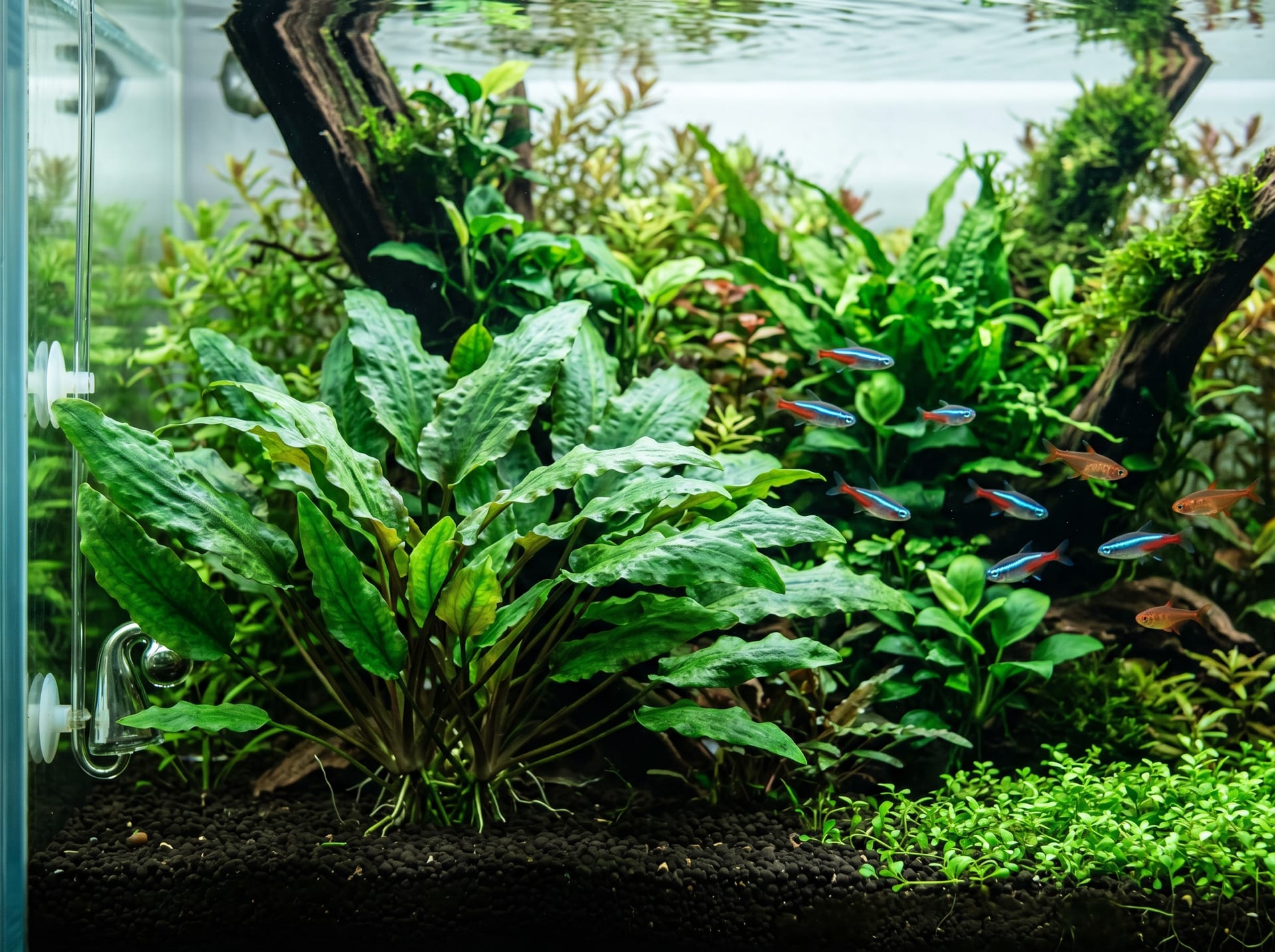
Cryptocoryne
Root-dwelling plant from Southeast Asia. Many varieties with subtle beauty. May melt with environmental changes but recovers. Mature size is 5–30 cm depending on the variety.
View Cryptocoryne encyclopedia →Grower Wanted!
List your plants on GrowerDirect and sell directly to customers nationwide!
6 Transparency Commitments from GrowerDirect
Grower provide complete information for all Aquatic Plants listings. We guarantee transparency in variety, origin, light requirements, and difficulty level.
- Variety Clarity
- Live Photos
- Color Details
- Origin Transparency
- Light Requirements
- Difficulty Level
Browse all 134 varieties
Difficulty Level
No listings match your filters
Adjust your filters, or get notified when new listings arrive.
Getting alerts is free with a member account. When new listings match your saved search, we'll notify you by email and in-app.
Browse other categories
Are you growing aquatic plants?
Register as a grower and connect with buyers directly.
Apply as a growerCryptocoryne key facts
- Growing Difficulty
- Beginner-friendly
- Size
- 5-30cm (varies by variety)
- Temperature
- 22〜28℃
- Lighting
- Shade-tolerant and grows under low to medium light. Strong lighting is unnecessary, making it easy to add to a wide range of tanks.
- CO2 & Fertilizer
- CO2 is not needed. It feeds through its roots, so a nutrient-rich substrate or root fertiliser improves growth.
- Water Temperature & Quality
- A water temperature of 22-28°C is suitable. After introduction, not changing conditions suddenly is the surest way to prevent leaf melt.
- Substrate & Attachment
- Suits aquarium soil and nutrient-rich substrates and is grown planted in the substrate. Once established it becomes very hardy.
- Trimming & Propagation
- Growth is slow but spreads steadily. Planting several species together in the midground creates a varied layout.
- Notes
- Crypt melt is normal — recovers if roots are alive
About Cryptocoryne
Cryptocoryne is an aquatic plant from the Araceae family, native to rivers and wetlands across India, Southeast Asia, and New Guinea. It has long been cherished by aquarists worldwide for its quiet, sophisticated beauty. Its appeal lies in remarkable diversity — from broad-leaved C. wendtii to the slender, flow-dancing leaves of C. balansae, and the tiny C. parva. Leaf colors span green, brown, and reddish tones, lending tanks a distinctive depth and character difficult to achieve with other plants. Growth is slow, but plants firmly rooted in a stable substrate can maintain their beauty for years. Although leaves may temporarily melt in response to environmental shifts, the plant regrows as long as the roots survive. Whether you're a beginner or an experienced aquascaper, Cryptocoryne offers a rewarding, long-term growing experience.
7 things to know before growing Cryptocoryne
1Prepare for Crypt Melt
When first introduced or after sudden water changes, leaves may melt and disintegrate — a phenomenon known as "crypt melt." If the roots are intact, new shoots typically emerge within a few weeks, so avoid pulling the plant out. Remove melted leaves promptly to keep the water clean.
2Minimize Water Quality Changes
Cryptocoryne grows well at water temperatures of 22–28°C, but reacts poorly to sudden changes in its environment. Change water in small amounts rather than replacing a large volume at once, which is the basis of stable cultivation. Avoiding abrupt changes after planting is the most reliable way to prevent melt.
3Thrives in Low Light
Classified as a low-light plant, Cryptocoryne grows well without intense illumination. Low to moderate light is enough, and strong light such as direct sunlight is best avoided. CO2 injection is not required, making it accessible for beginners without specialized equipment.
4Substrate Matters for Roots
Cryptocoryne draws nutrients primarily through its roots, so a nutrient-rich substrate such as aqua soil or gravel mixed with fertilizer works best. Plant it firmly in the substrate so it can root well, and supplement with root tabs when using inert gravel.
5Size Varies by Species
Mature size varies by species — from compact varieties like parva (around 5 cm) to large ones like aponogetifolia (up to about 30 cm). Choose species based on tank size and intended placement: foreground, midground, or background.
6Fertilize Conservatively
Cryptocoryne generally prefers root-zone nutrition over liquid fertilizers. If using liquid fertilizers, start at half the recommended dose and adjust based on leaf color. Iron deficiency can cause yellowing, so occasional addition of iron-containing fertilizer helps maintain healthy leaf coloration.
7Compatible Tank Mates
Cryptocoryne's soft leaves are vulnerable to goldfish, cichlids, and other herbivorous or aggressive species. It pairs well with peaceful small fish such as tetras and rasboras, as well as bee shrimp. Amano shrimp are effective at controlling algae that tends to accumulate on the broad leaves.
Frequently asked questions about Cryptocoryne
- Q.My leaves melted — is the plant dead?
- A.In most cases the plant is not dead — this is a temporary phenomenon known as "crypt melt." As long as the roots survive, stabilizing water conditions will prompt new growth. Remove the melted leaves, but never pull out the roots.
- Q.Can I grow Cryptocoryne without CO2?
- A.Yes, Cryptocoryne grows well without CO2 injection. It is one of the more adaptable aquatic plants, tolerating low light and low CO2 levels. Instead of CO2, a nutrient-rich substrate or root fertilizer that feeds the roots will improve its growth.
- Q.It's been weeks and mine hasn't spread — is that normal?
- A.Cryptocoryne is a naturally slow grower. After introduction, it may spend the first few weeks to a month establishing its root system before any visible spread occurs. Once rooted, it will gradually multiply by sending out runners through the substrate.
- Q.Is it safe to plant with goldfish or cichlids?
- A.Goldfish and cichlids tend to uproot or consume aquatic plants, making them poor tank mates for Cryptocoryne, which relies on stable root anchorage. Small tetras or Corydoras, which are less herbivorous, are much more compatible companions.
- Q.Which species is best for beginners?
- A.Cryptocoryne wendtii is the most widely recommended species for beginners due to its hardiness and wide availability. It comes in green, brown, and red color variants to suit different tastes. It is widely distributed, so choose a plant with healthy roots and it makes an ideal first Cryptocoryne to try.
Handy Growing Tools for Cryptocoryne
Learn more about Cryptocoryne in the encyclopedia
View Cryptocoryne encyclopedia entry →
Care difficulty, size, origin and light needs — all basics covered.
Cryptocoryne related articles
Complete Guide to Low-Tech Aquatic Plant Tanks Without CO2|Recommended Aquatic Plants and Setup Methods
Introduces 10 aquatic plant species that thrive without CO2 and under weak lighting. Covers selection of shade-loving species like Willow Moss, Anubias, and Cryptocoryne, species to avoid that demand high light, substrate and equipment selection, setup procedures, and algae control strategies.
Cryptocoryne Care Guide | Understanding Why Plants Melt and Exploring Diverse Varieties
Detailed guide to Cryptocoryne aquatic plant care. Learn why plants melt due to environmental changes and how to prevent it, choose the right substrate for root nutrient absorption, and discover the characteristics of many varieties.
Rare Cryptocoryne Types and Care Guide | The Appeal of Rare Species and Cultivation Tips
Explanation of rare Cryptocoryne types and cultivation methods. Introduction of characteristics by origin, water quality requirements, and countermeasures for the leaf-melting phenomenon.
Aquatic Plant Guide: Characteristics and Cultivation of Popular Species
Featuring popular aquatic plant species including Anubias, Bucephalandra, Rotala, Cryptocoryne, and Willow Moss. This guide explains the characteristics, cultivation difficulty, CO2 requirements, and layout examples for each species in detail.
More in this category
Can't find the plant you're looking for?
Post your wishes for free and growers with matching plants will contact you with introductions.