Succulent Encyclopedia
Encyclopedia of popular succulents with care guides, traits, and propagation methods.
Featured Succulent
Showing 92 of 129 species(25–48)
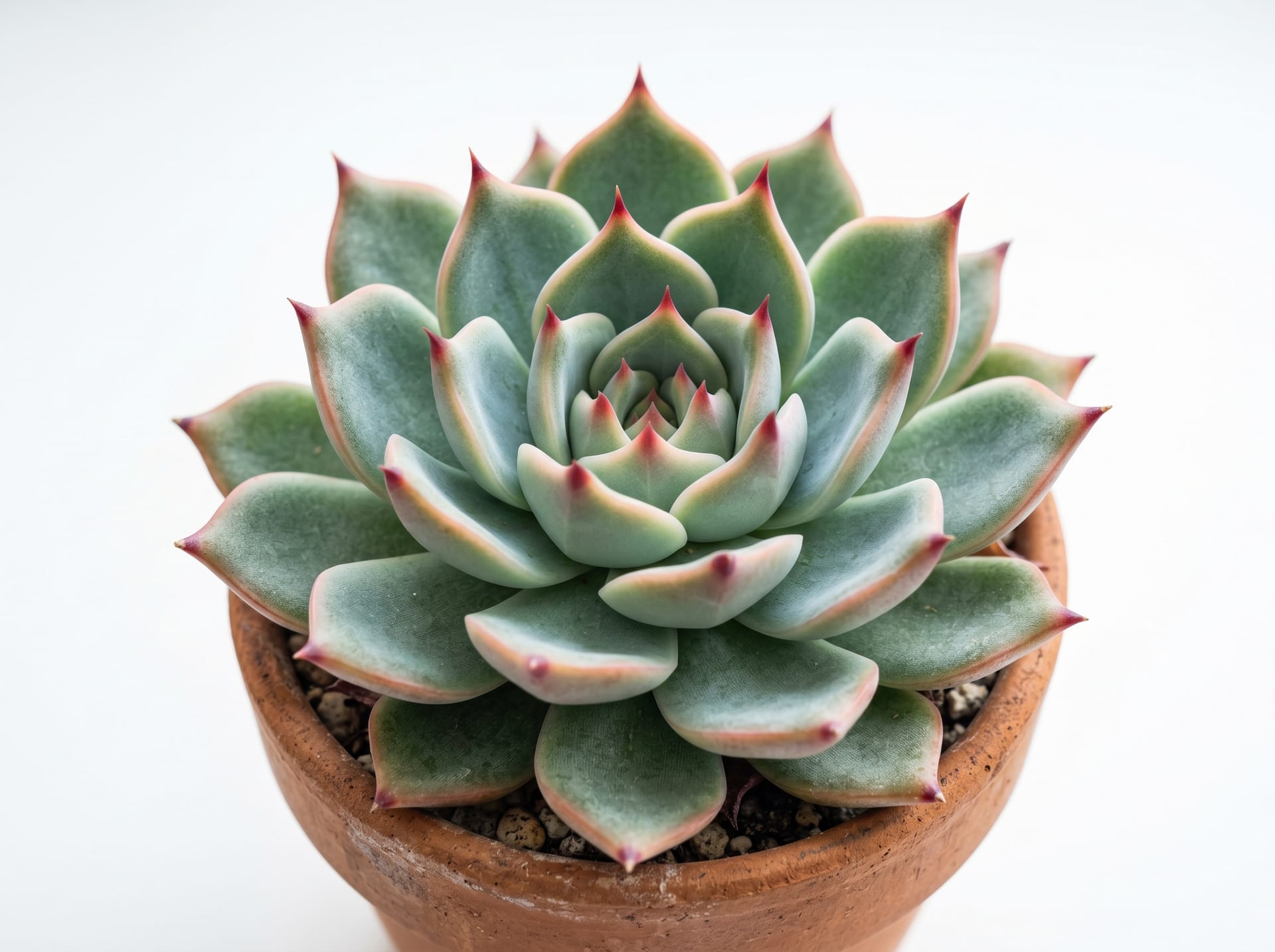
Echeveria ‘Momotaro’
Echeveria ‘Momotaro’
A popular Japanese echeveria cultivar with beautiful peach-tipped leaves and neat rosette. Bred domestically, it displays stunning seasonal color changes.
Echeveria 'Tippy'
Echeveria 'Tippy'
A small Echeveria with triangular leaves, each tipped with a small red 'claw'. Likened to a long-clawed E. derenbergii, and popular for mixed plantings.
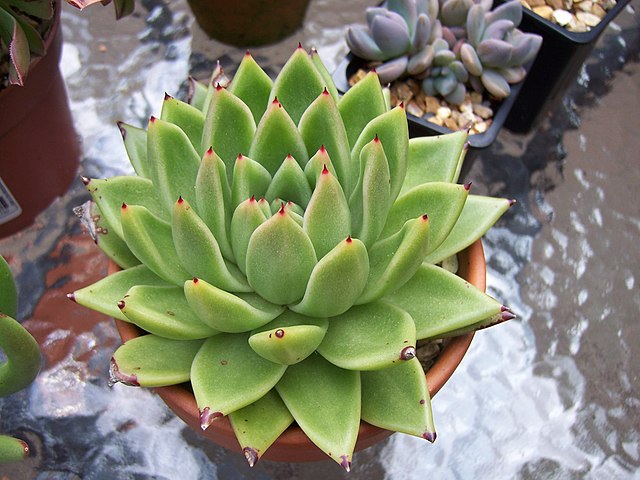 © stephen boisvert from Chicago, United States / CC BY 2.0
Echeveria Agavoides
Echeveria agavoides
An echeveria with agave-like pointed leaves. Beautiful with red leaf tip accents.
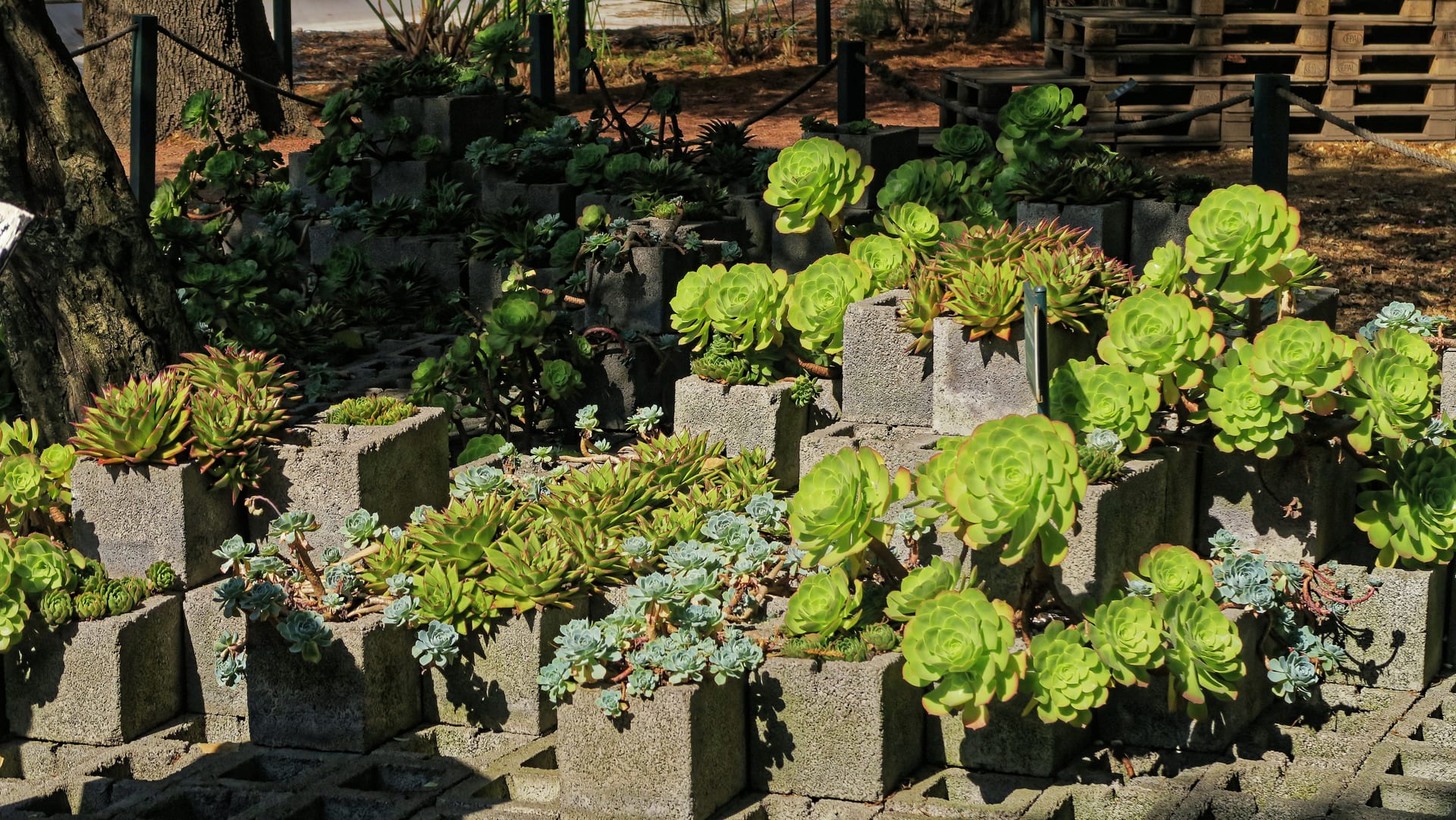 © Burkhard Mücke / CC BY-SA 4.0
Echeveria agavoides 'Romeo'
Echeveria agavoides 'Romeo'
A red selection of Echeveria agavoides with thick, pointed triangular leaves in grey-purple to red-purple, edged deeper red. Its overall leaf colour separates it from the green species.
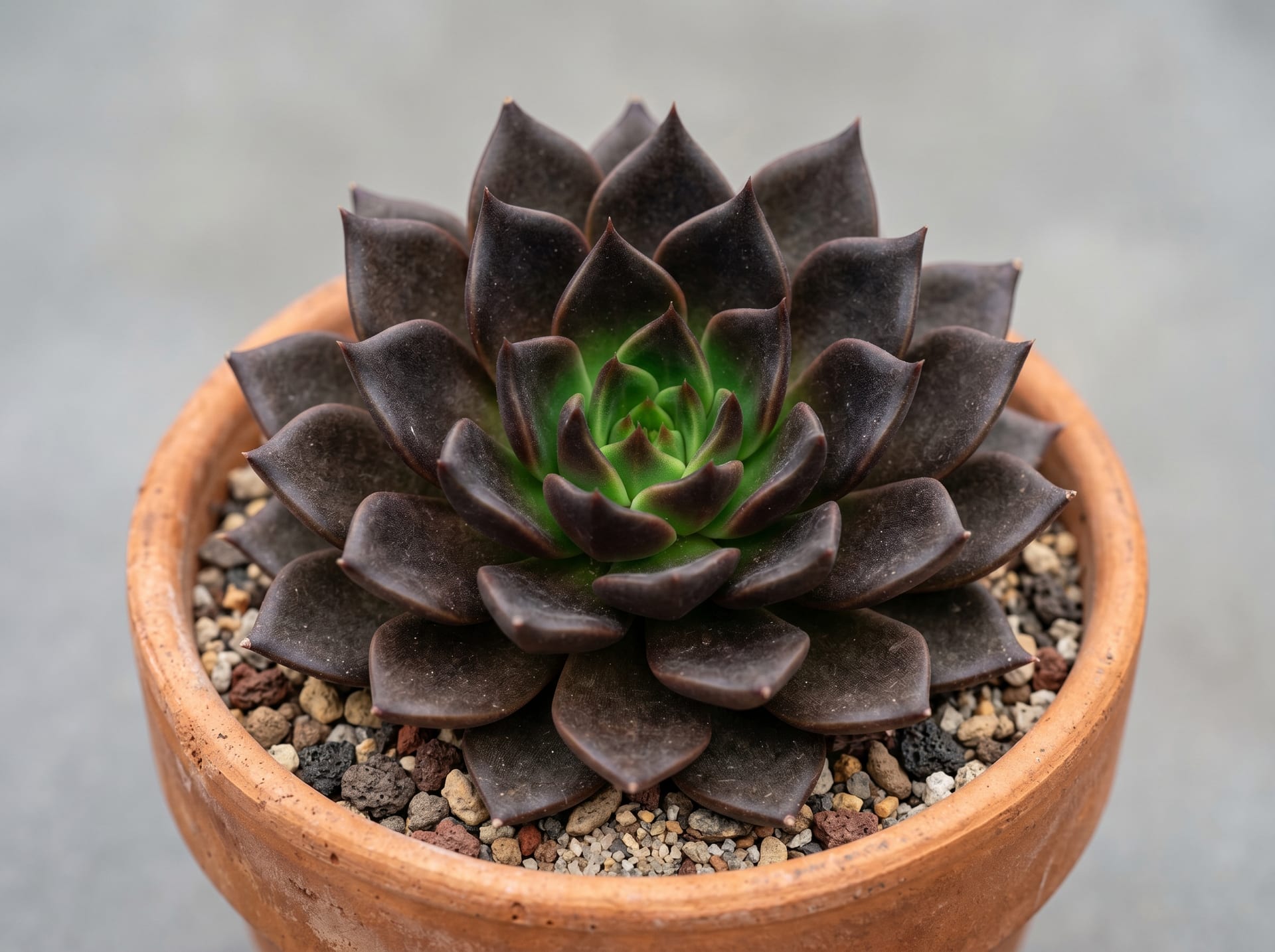
Echeveria Black Prince
Echeveria ‘Black Prince’
An echeveria with mystical nearly-black deep purple rosette. Outstanding presence among succulents.
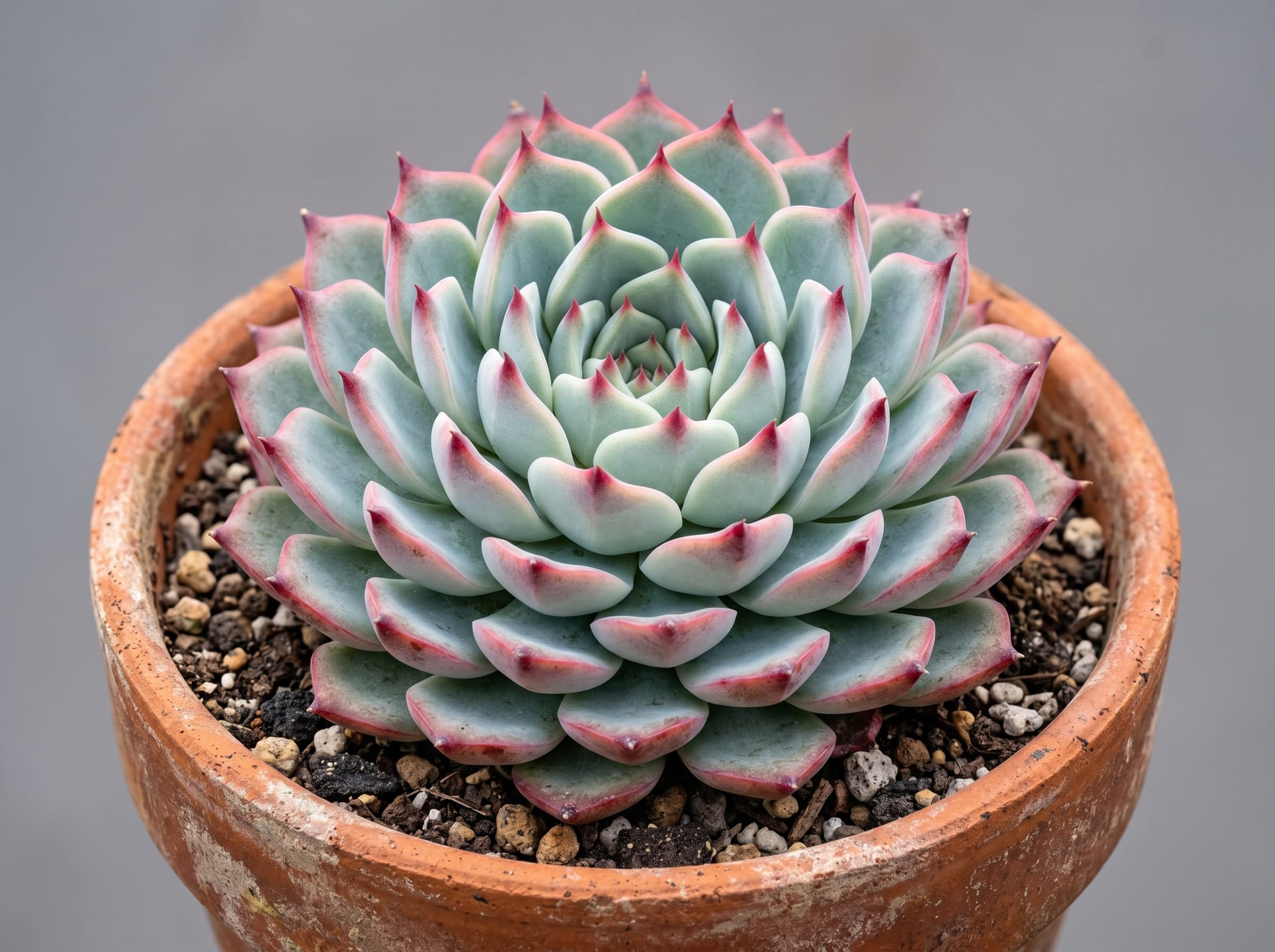
Echeveria chihuahuaensis
Echeveria chihuahuaensis
A native echeveria species from Chihuahua, Mexico. Powdery blue-green leaves with red tips form a beautifully compact rosette, highly popular among collectors.
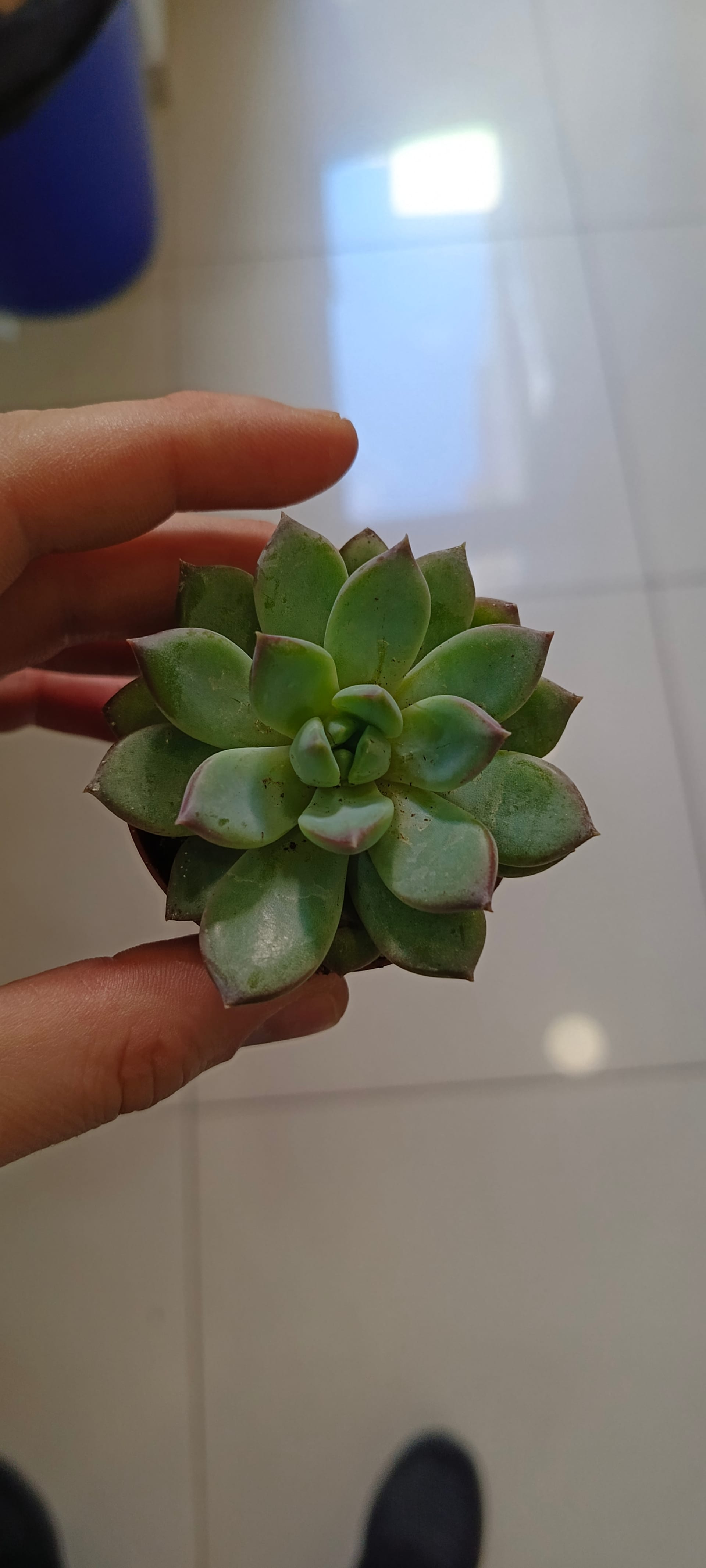 © Satirdan kahraman / CC BY-SA 4.0
Echeveria colorata
Echeveria colorata
A Mexican species forming large rosettes up to 40 cm across of thick, pale green, powdery leaves that flush pink in winter. Tough and easy to grow.
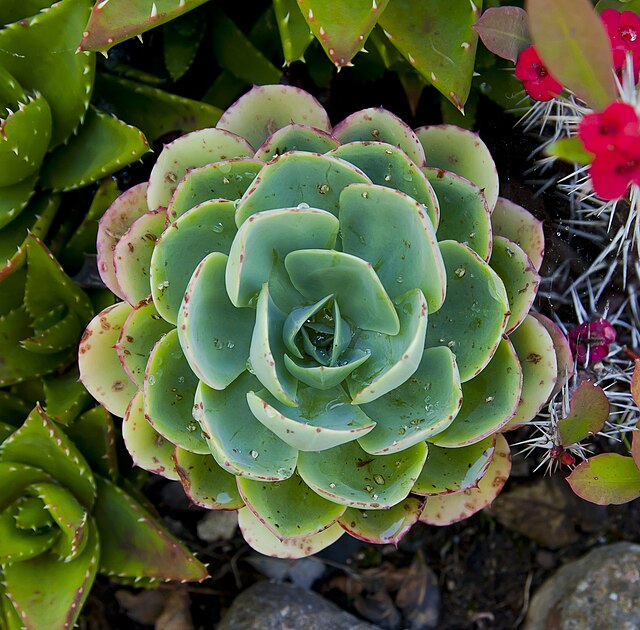 © Diego Delso / CC BY-SA 3.0
Echeveria Elegans
Echeveria elegans
An echeveria called 'Moonlight' with beautiful powdery coating. Classic species with most easily formed rosette.
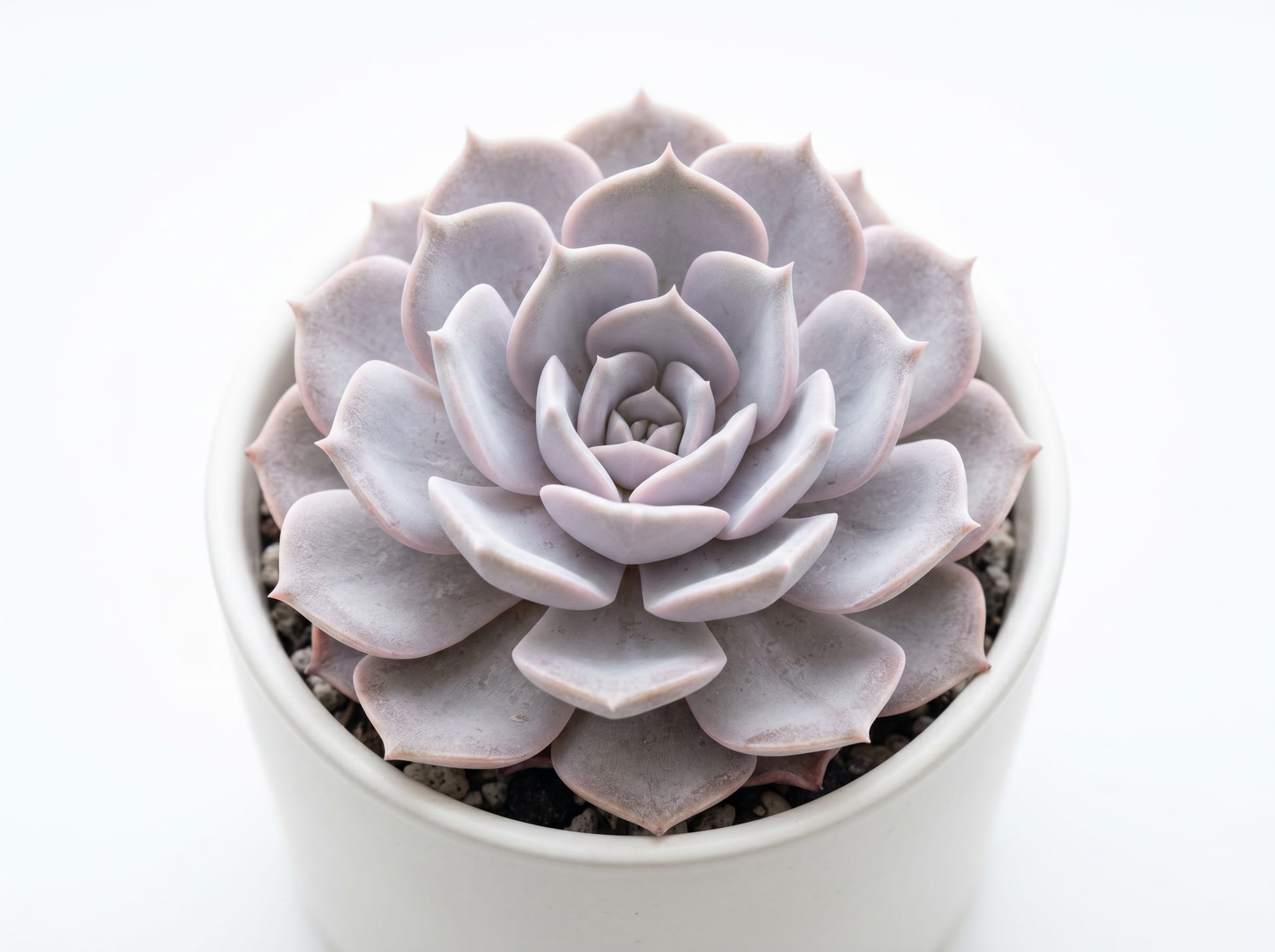
Echeveria lilacina
Echeveria lilacina
A Mexican native echeveria with an elegant overall lilac hue. White powdery leaves have earned it the nickname ‘Ghost Echeveria’.
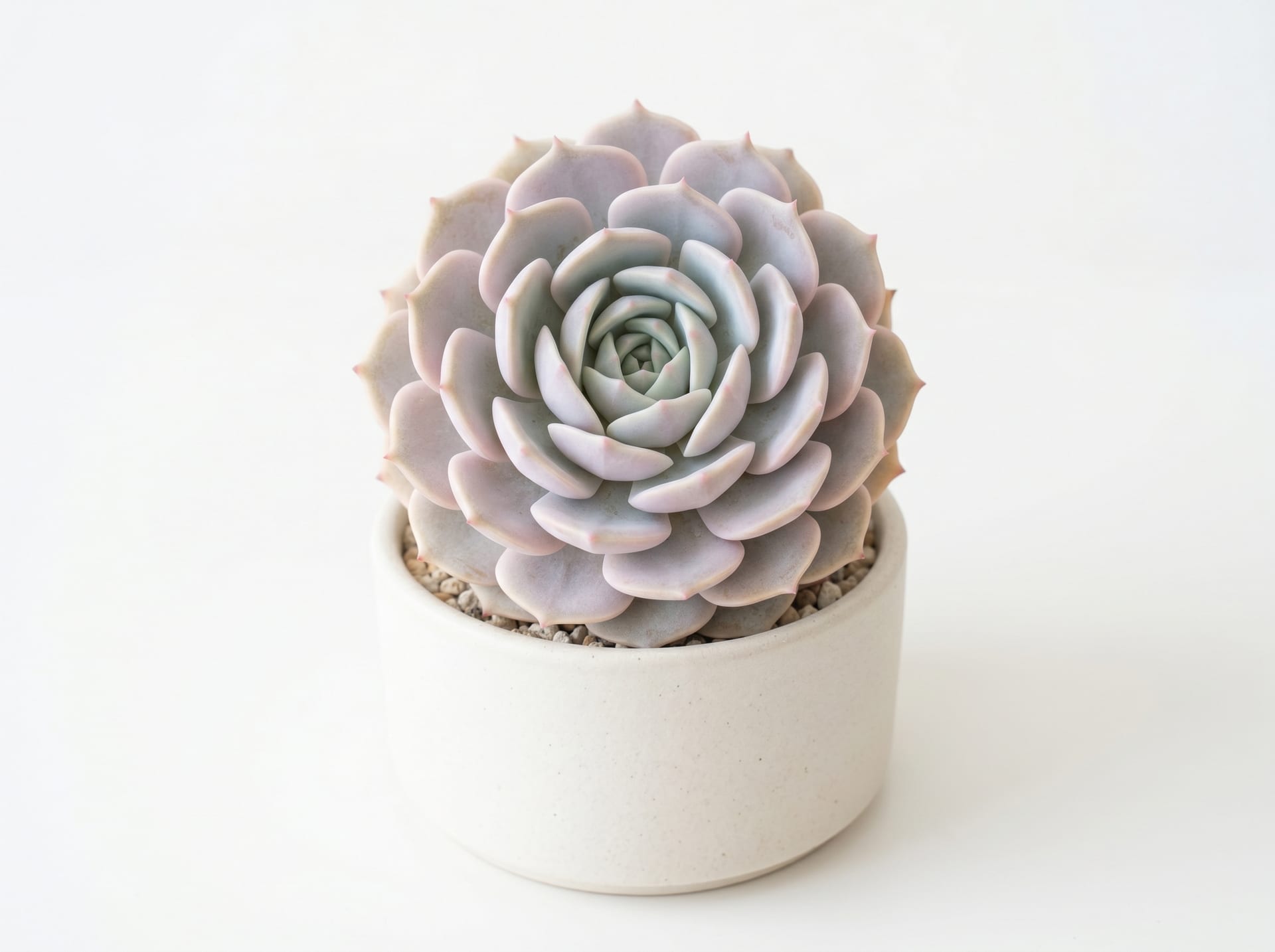
Echeveria Lola
Echeveria 'Lola'
An echeveria with beautiful pastel pink-purple gradient. Small with easily formed rosette.
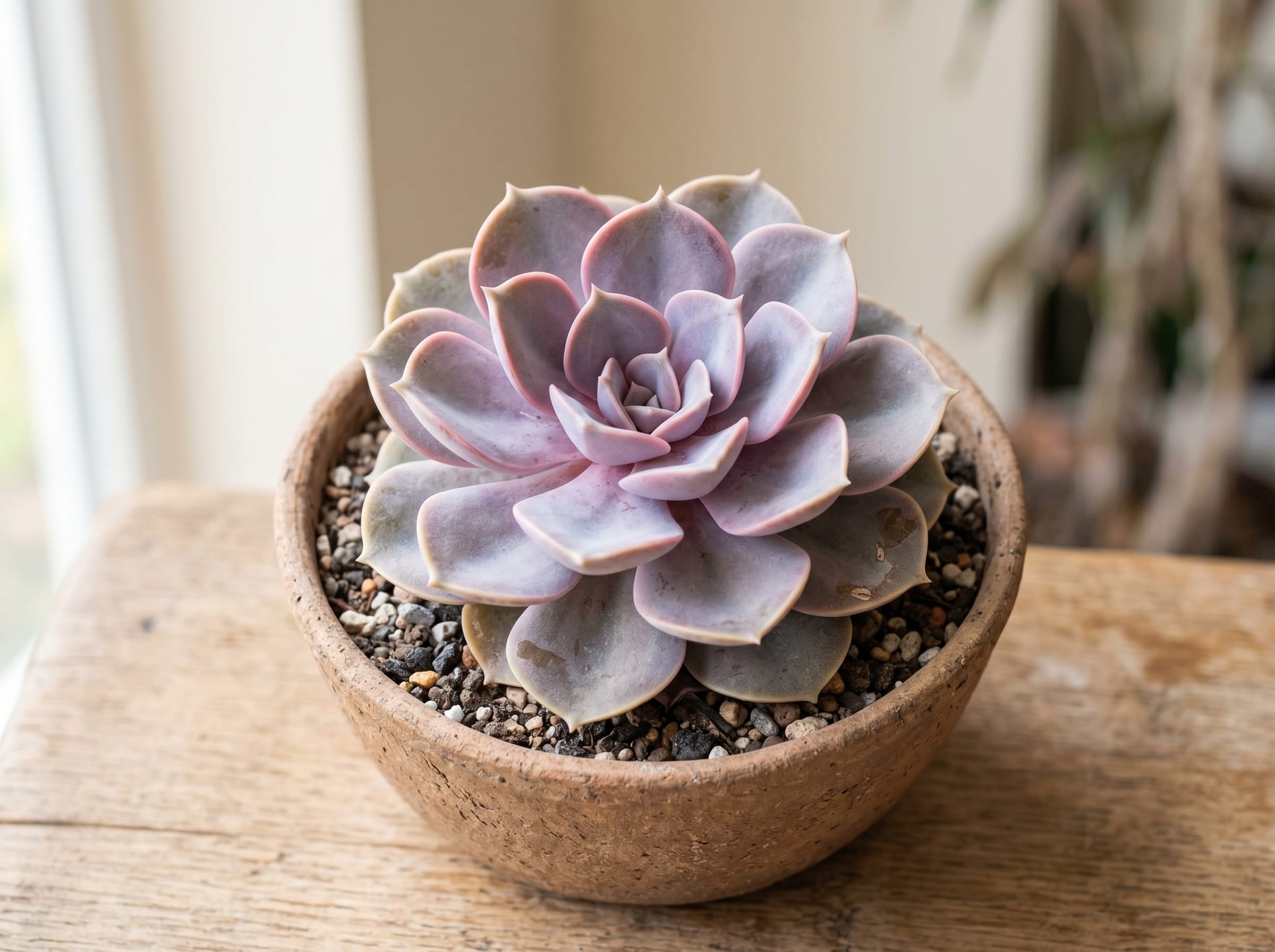
Echeveria Perle von Nurnberg
Echeveria 'Perle von Nürnberg'
A renowned echeveria cultivar with beautiful purple-pink rosette. Classic loved worldwide.
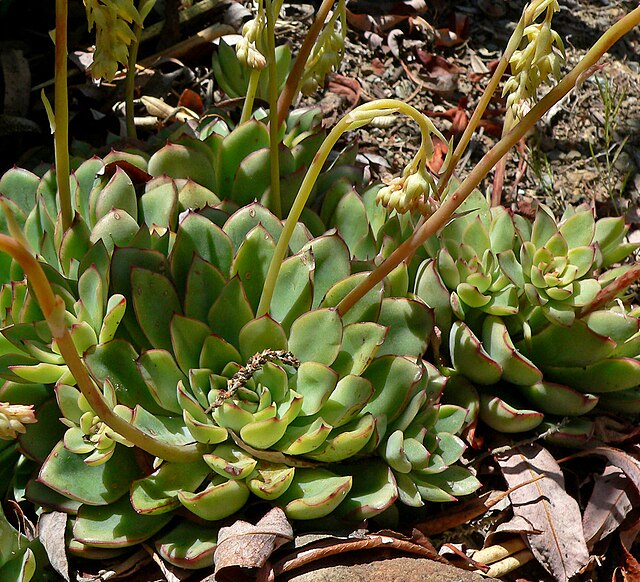 © Stan Shebs / CC BY-SA 3.0
Echeveria Pulidonis
Echeveria pulidonis
An elegant echeveria with pale blue leaves and red margins. Breed with beautifully formed rosette.
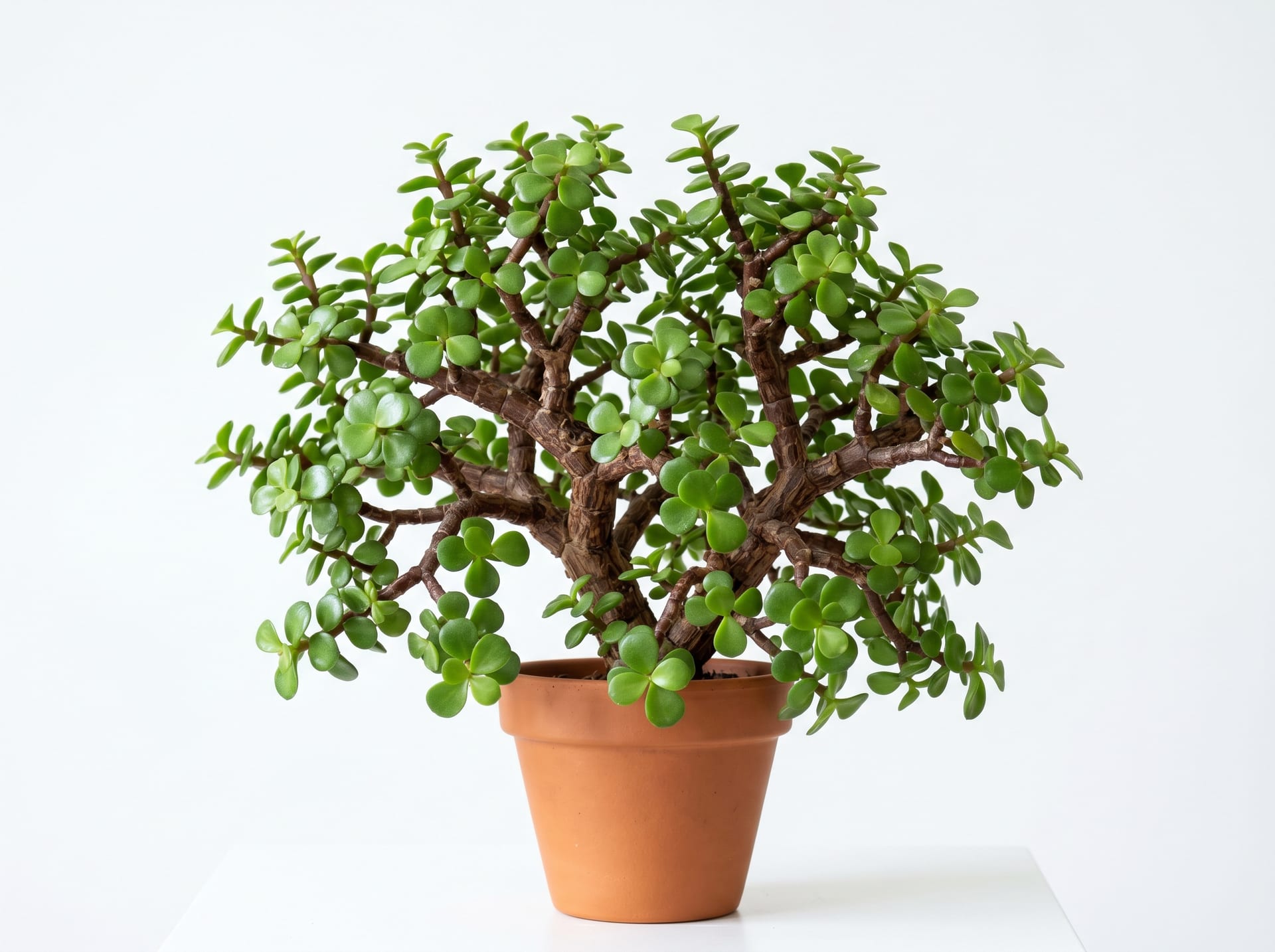
Elephant Bush
Portulacaria afra
A succulent with densely packed small round leaves. Can be trained as bonsai, eco-friendly with high CO2 absorption.
 © Daderot / CC BY-SA 4.0
Fairy washboard
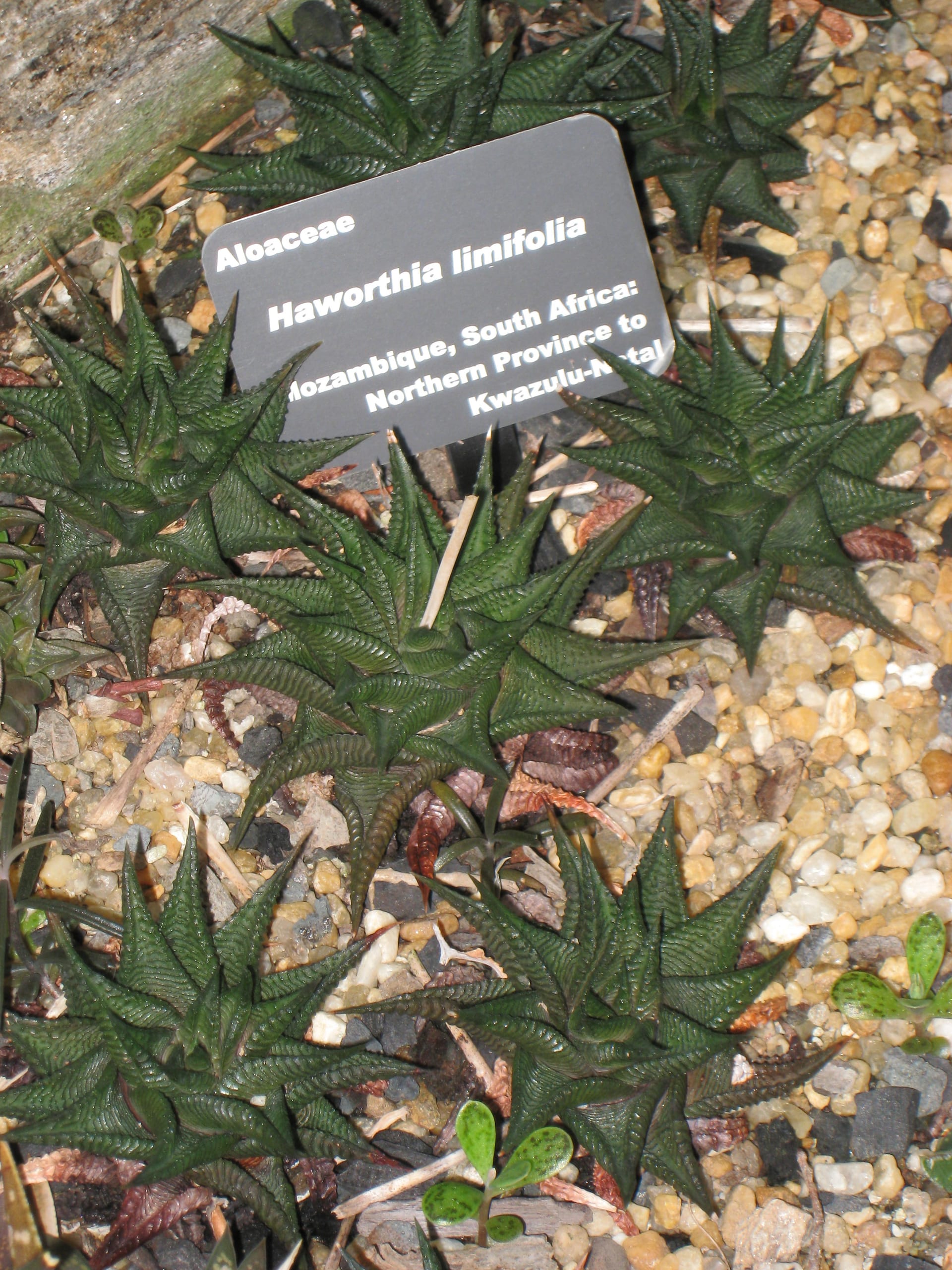
Haworthiopsis limifolia
A hard-leaved Haworthia with broad, dark brownish-green triangular leaves ridged crosswise with white tubercles like a file, forming a pinwheel-like rosette.
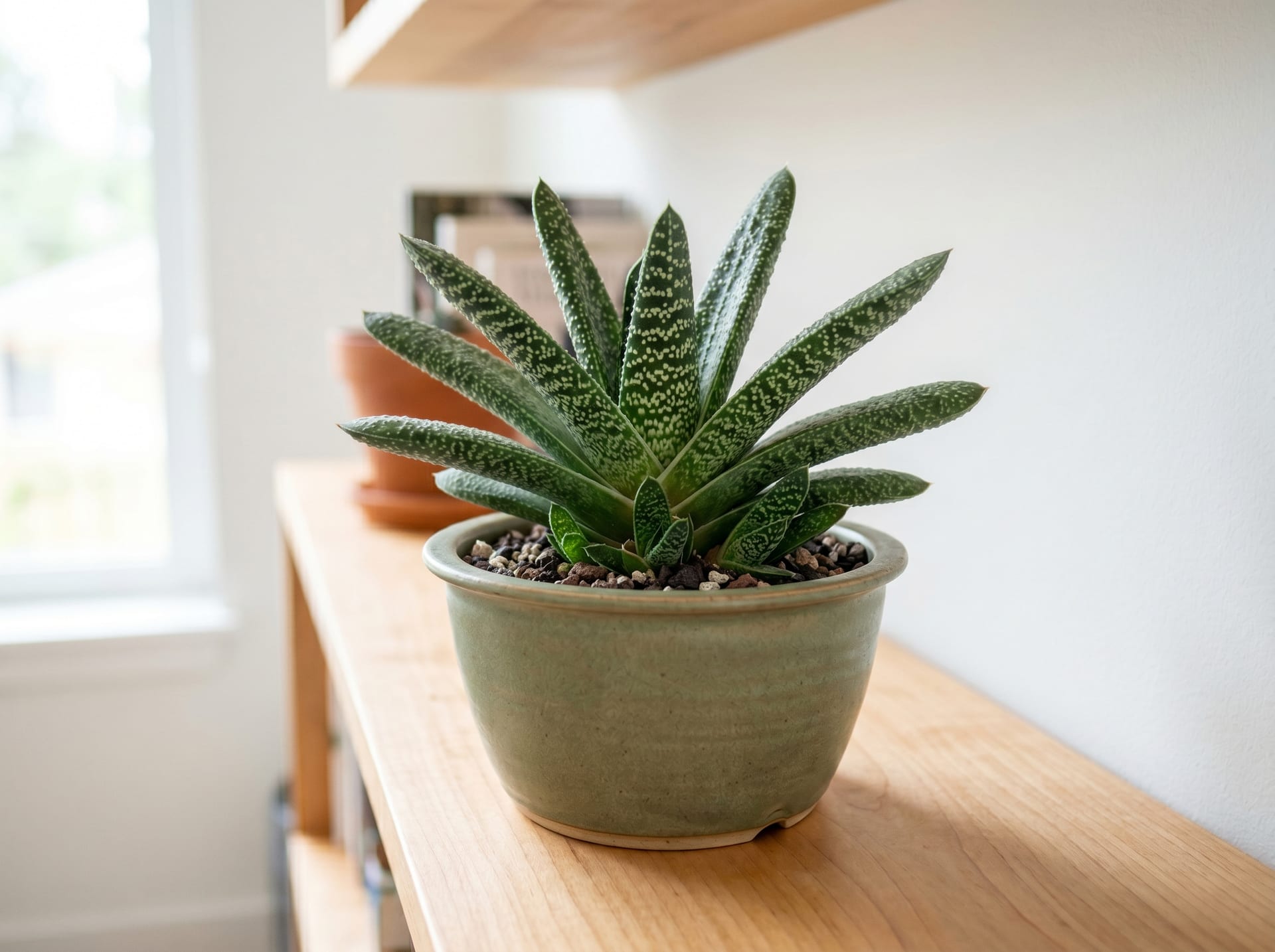
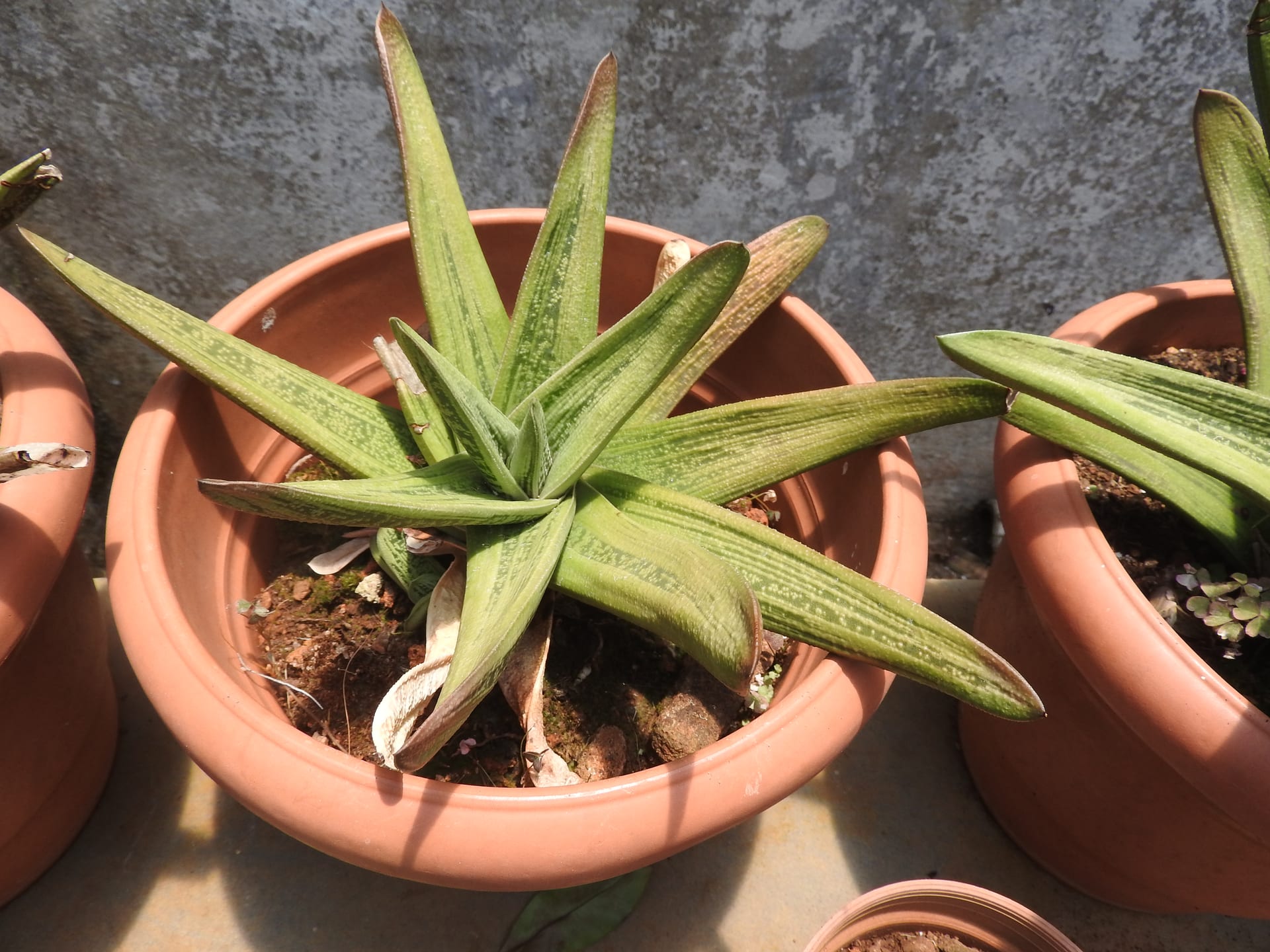
Gasteria
A hardy succulent with thick tongue-like leaves. High shade tolerance makes it ideal for indoor growing.
 © Yercaud-elango / CC BY 4.0
Gasteria 'Little Warty'
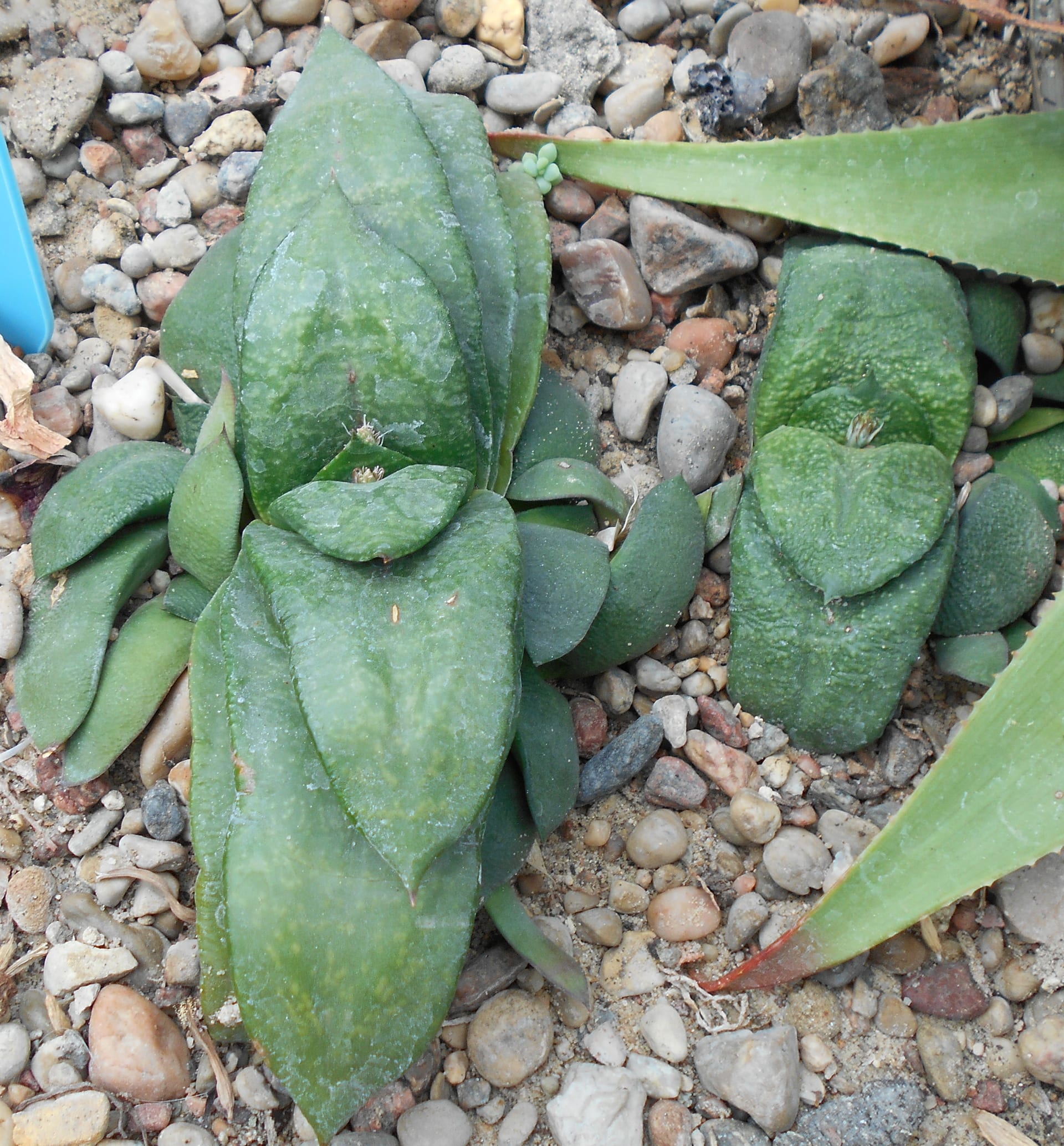
Gasteria 'Little Warty'
A hybrid Gasteria with firm, tongue-shaped leaves marked with silvery-green stripes and pearly white warts. Bred in Australia, and plants differ slightly in how the pattern shows.
 © Salicyna / CC BY-SA 4.0
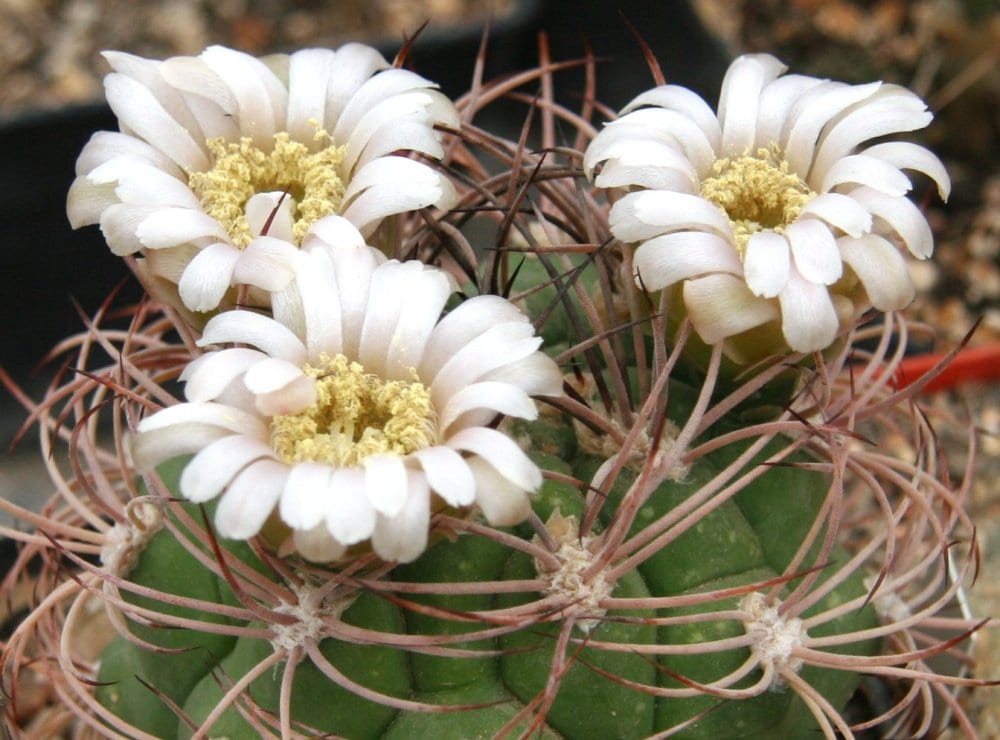
Gasteria armstrongii
Gasteria nitida var. armstrongii
A dwarf Gasteria whose thick, rough, dark green tongue-shaped leaves stack in two opposite rows close to the ground, with bands of white tubercles. The Japanese name likens it to a reclining ox.
 © Michael Wolf / CC BY 2.5
Giant chin cactus
Gymnocalycium saglionis
A Gymnocalycium with a flattened grey-green body and stout, recurved brown to black spines. It is the largest in the genus, growing solitary to over 30 cm across.
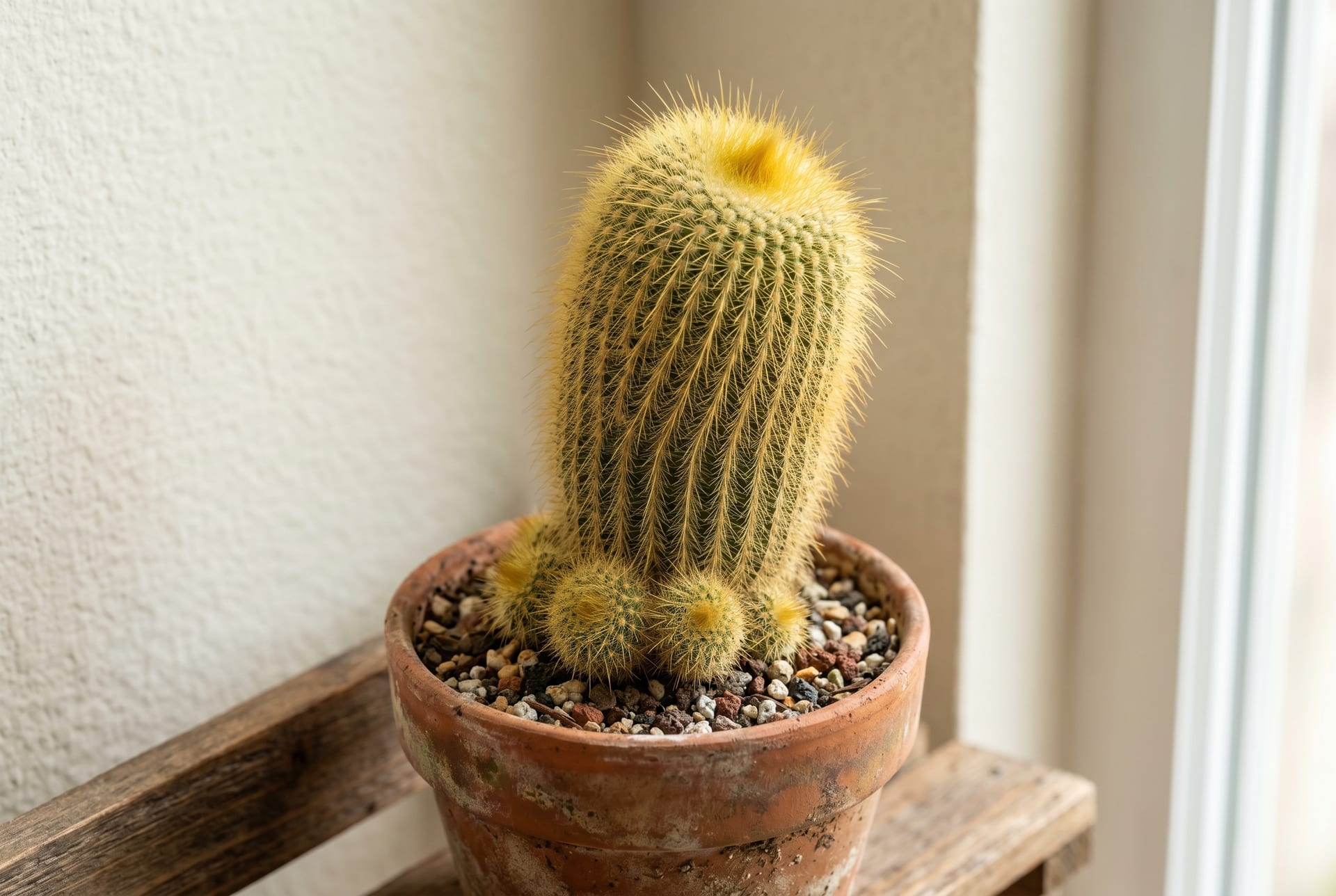
Golden Ball Cactus
Parodia leninghausii
A cylindrical cactus glowing golden under a coat of soft golden bristles. Hardy, easy, and clustering with offsets, it is a popular beginner cactus.
 © Dryas / CC BY-SA 3.0
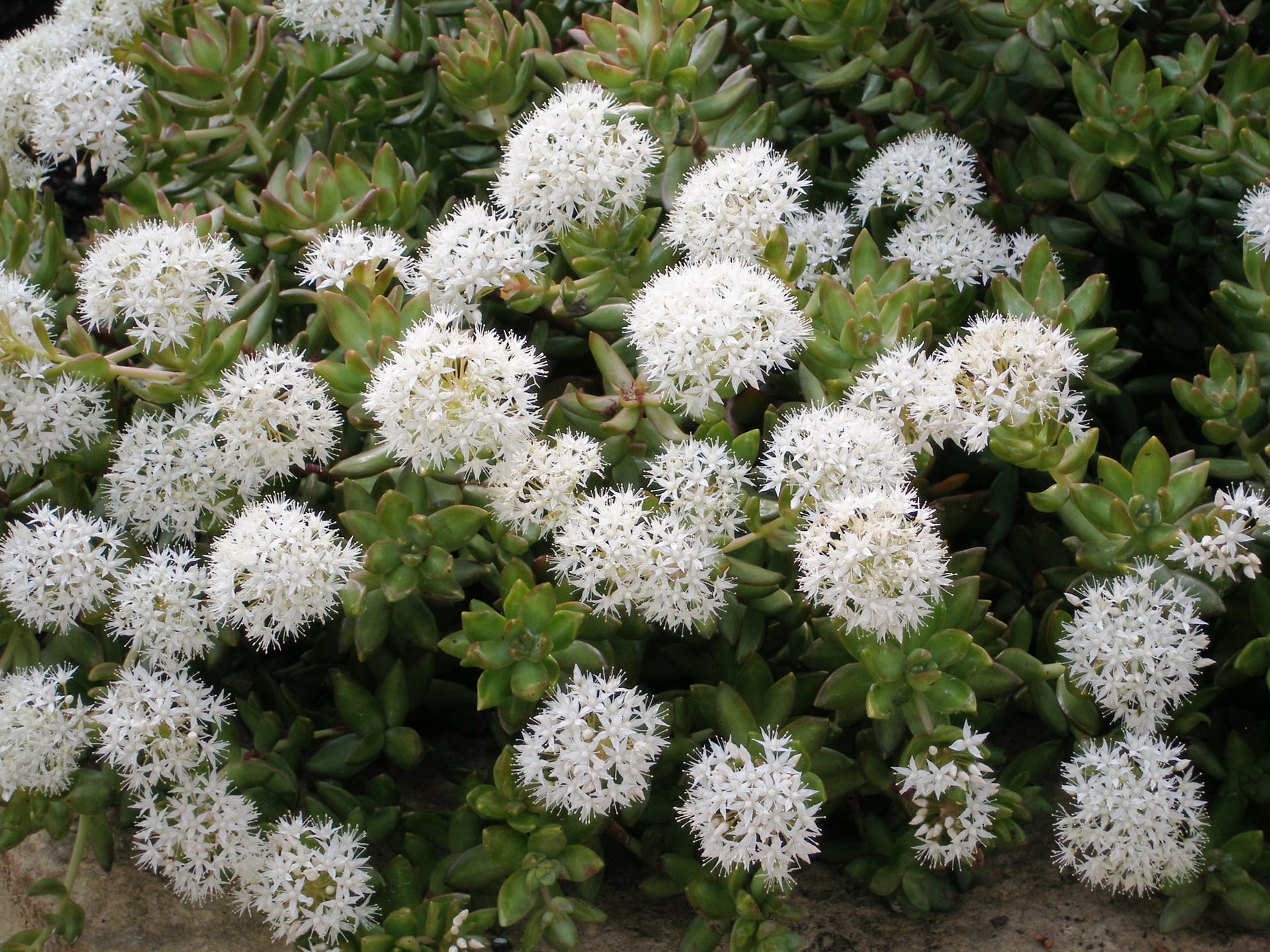
Golden sedum
Sedum adolphi
A Mexican Sedum with thick, pointed leaves crowded at the stem tips. In good sun the leaf edges turn red or orange, and white starry flowers appear in spring.
 © Stan Shebs / CC BY-SA 3.0
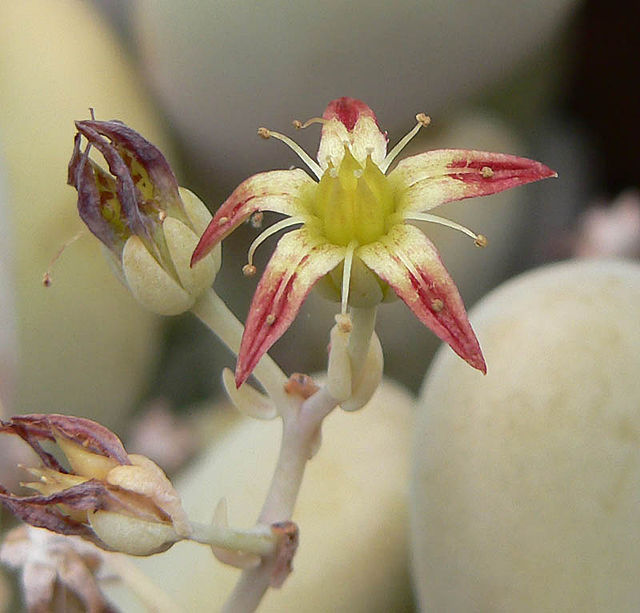
Graptopetalum
Hardy succulent with Oborozuki as representative. Beautiful silver-grey leaves. Easy leaf propagation. Perfect for beginners.
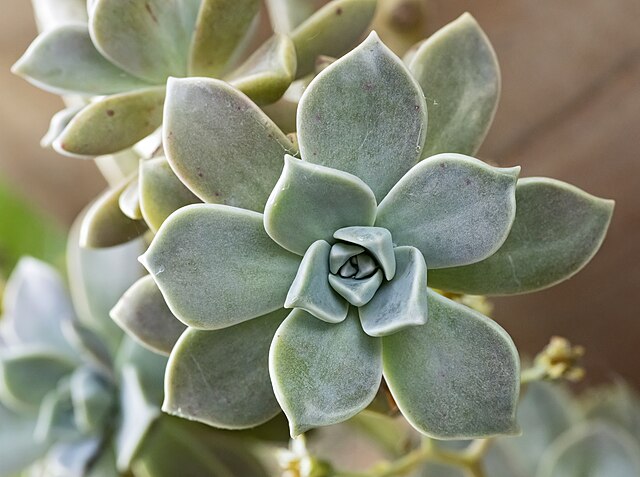 © Didier Descouens / CC BY-SA 4.0
Graptopetalum Paraguayense
Graptopetalum paraguayense
A beautiful succulent with calm silver-gray rosettes. Very hardy and easy to propagate.
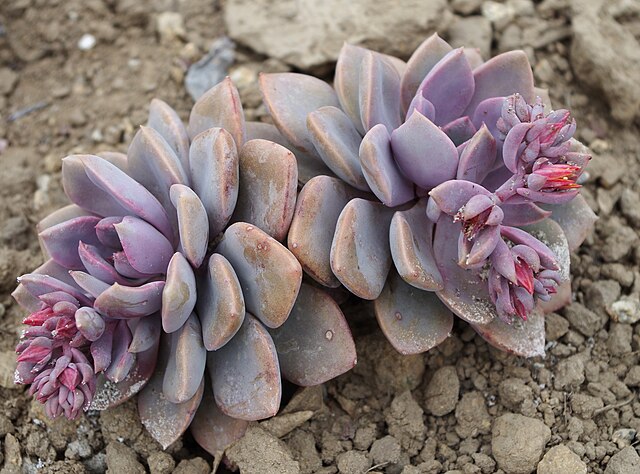 © Dinkum / CC BY-SA 3.0
Graptoveria
×Graptoveria
An intergeneric hybrid of Graptopetalum and Echeveria. Inherits the best of both parents - hardy and beautiful.
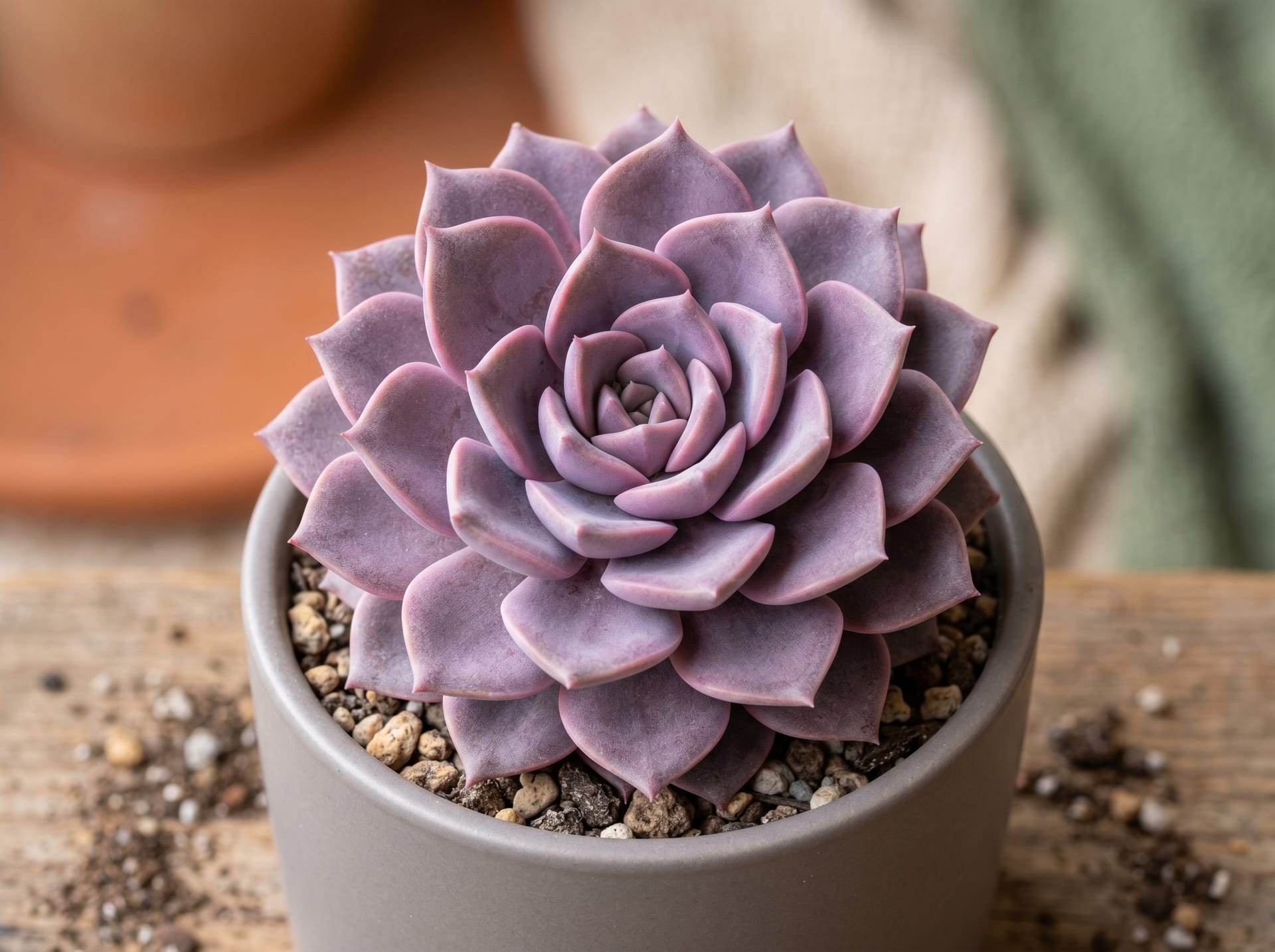
Graptoveria Debbie
×Graptoveria 'Debbie'
A beautiful intergeneric hybrid with pale purple rosette. Easy to grow, especially beautiful pink-purple when stressed.
Related Content
Succulent FAQ
- How much do succulents cost?
- Common Echeveria cost 300-2,000 yen, popular Haworthia obtusa 1,000-10,000 yen, and rare hybrids or large specimens can exceed tens of thousands of yen.
- Can beginners grow succulents?
- Echeveria, Sedum, and Graptopetalum are hardy and beginner-friendly. Place in a sunny spot and water only when the soil is completely dry.
- What are the key tips for growing succulents?
- Place in a sunny spot with good airflow and water sparingly. Many species go dormant in summer and winter, so adjusting care to their growing season is key to beautiful growth.
- What should I check when buying succulents?
- Check that leaves are plump and firm, the base isn't rotting, and there are no pests (like mealybugs). For bare-root plants, root condition is also important.
- How long do succulents live?
- With proper care, succulents can thrive for 10+ years depending on species. They're easily propagated through leaf cuttings and division, allowing enjoyment across generations.