Succulent Encyclopedia
Encyclopedia of popular succulents with care guides, traits, and propagation methods.
Featured Succulent
Showing 92 of 129 species(1–24)
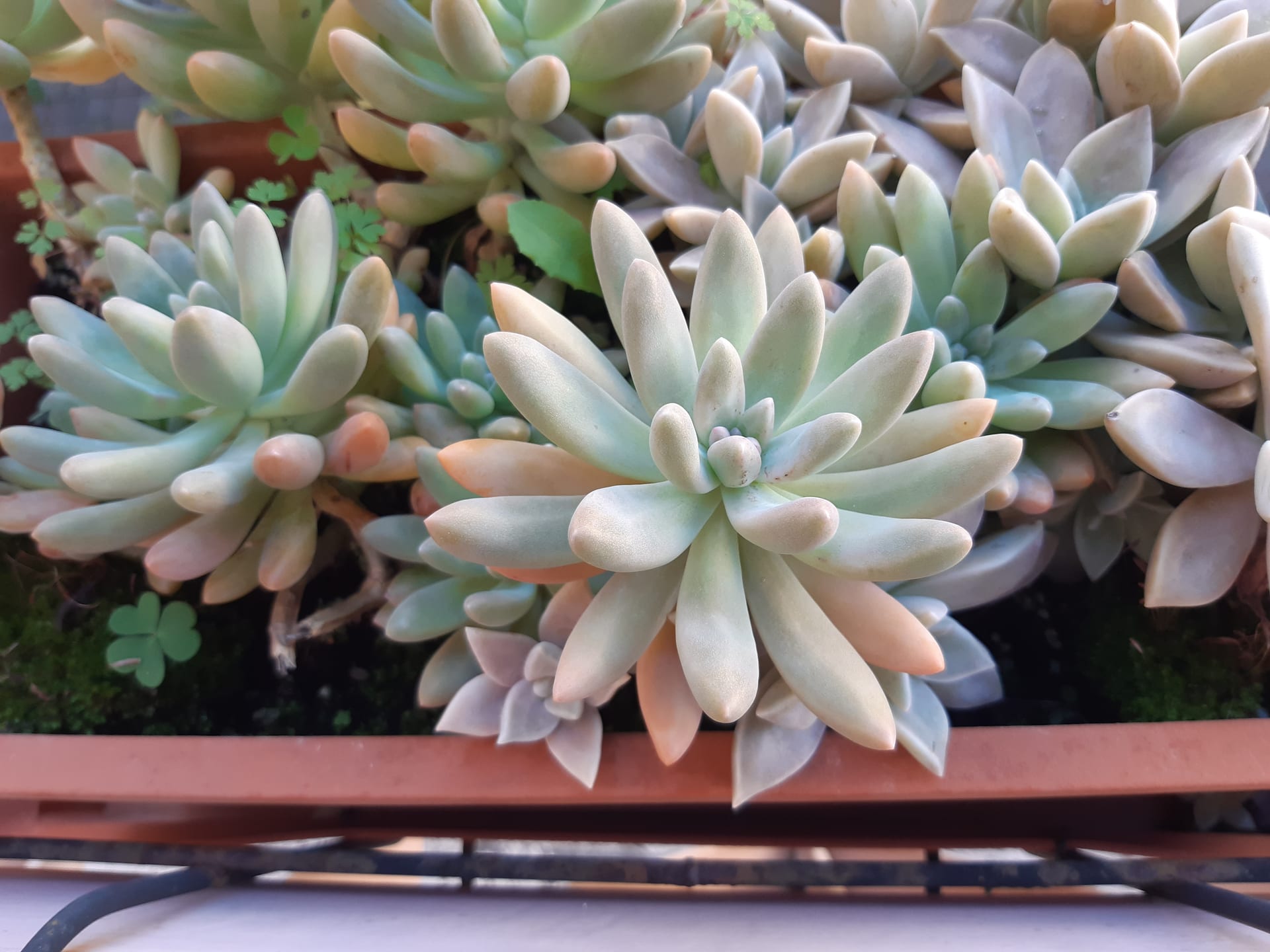 © Harlock81 / CC BY-SA 4.0
×Graptosedum 'Francesco Baldi'
×Graptosedum 'Francesco Baldi'
An intergeneric hybrid of Graptopetalum paraguayense and Sedum pachyphyllum. Its thick, lance-shaped leaves shift from blue-grey in part shade to pinkish grey in sun and purplish brown in winter.
×Graptoveria 'Opalina'
×Graptoveria 'Opalina'
A hybrid with an opalescent look: pale blue-green, powdery leaves held rather upright in the rosette. With plenty of sun the leaf edges blush pink.
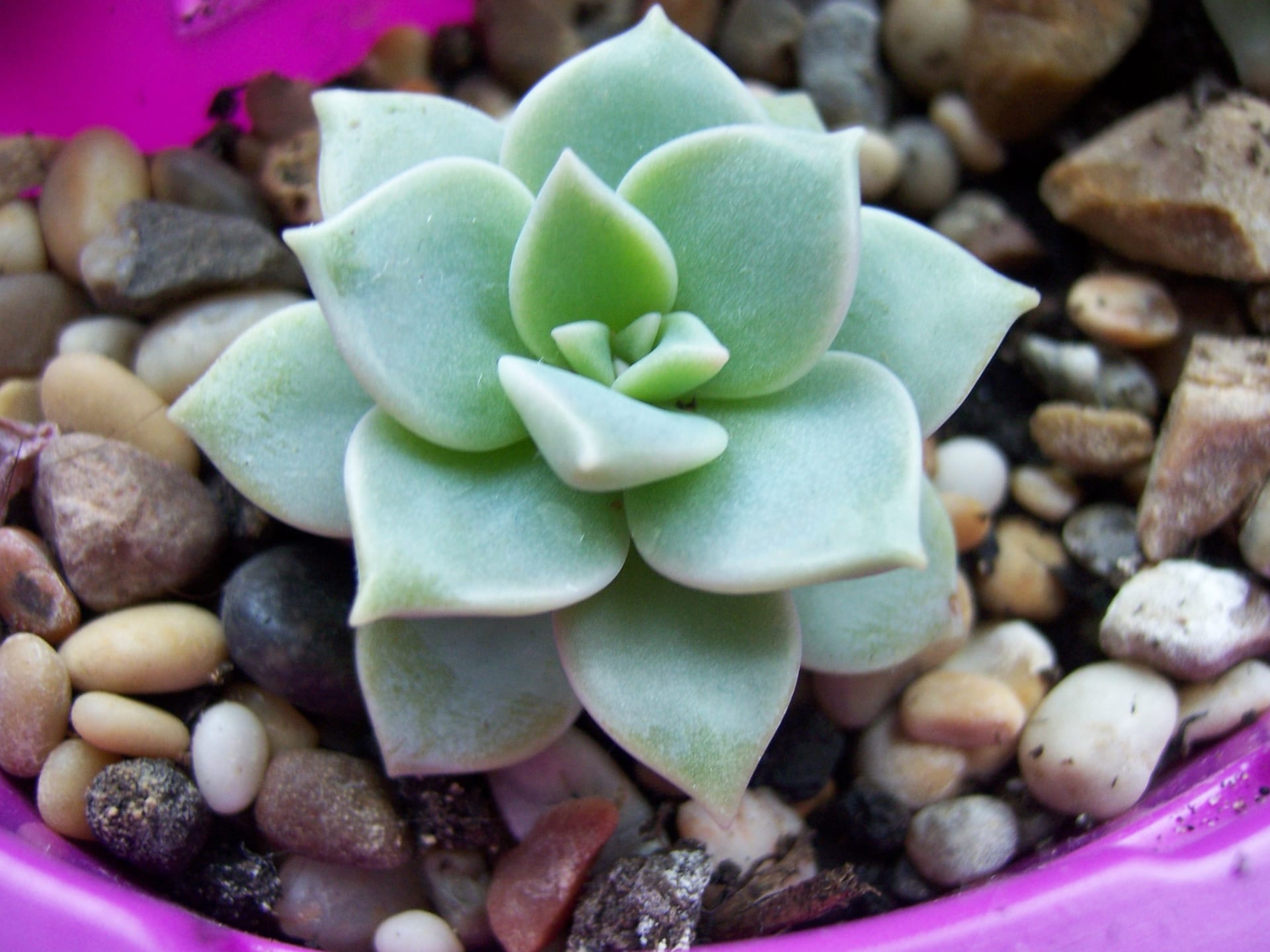 © stephen boisvert from Chicago, United States / CC BY 2.0
×Graptoveria 'Titubans'
×Graptoveria 'Titubans'
An intergeneric hybrid forming rosettes about 5-7 cm across of thick, pale blue-green leaves with a waxy bloom. In cool weather the leaf tips turn pink or apricot.
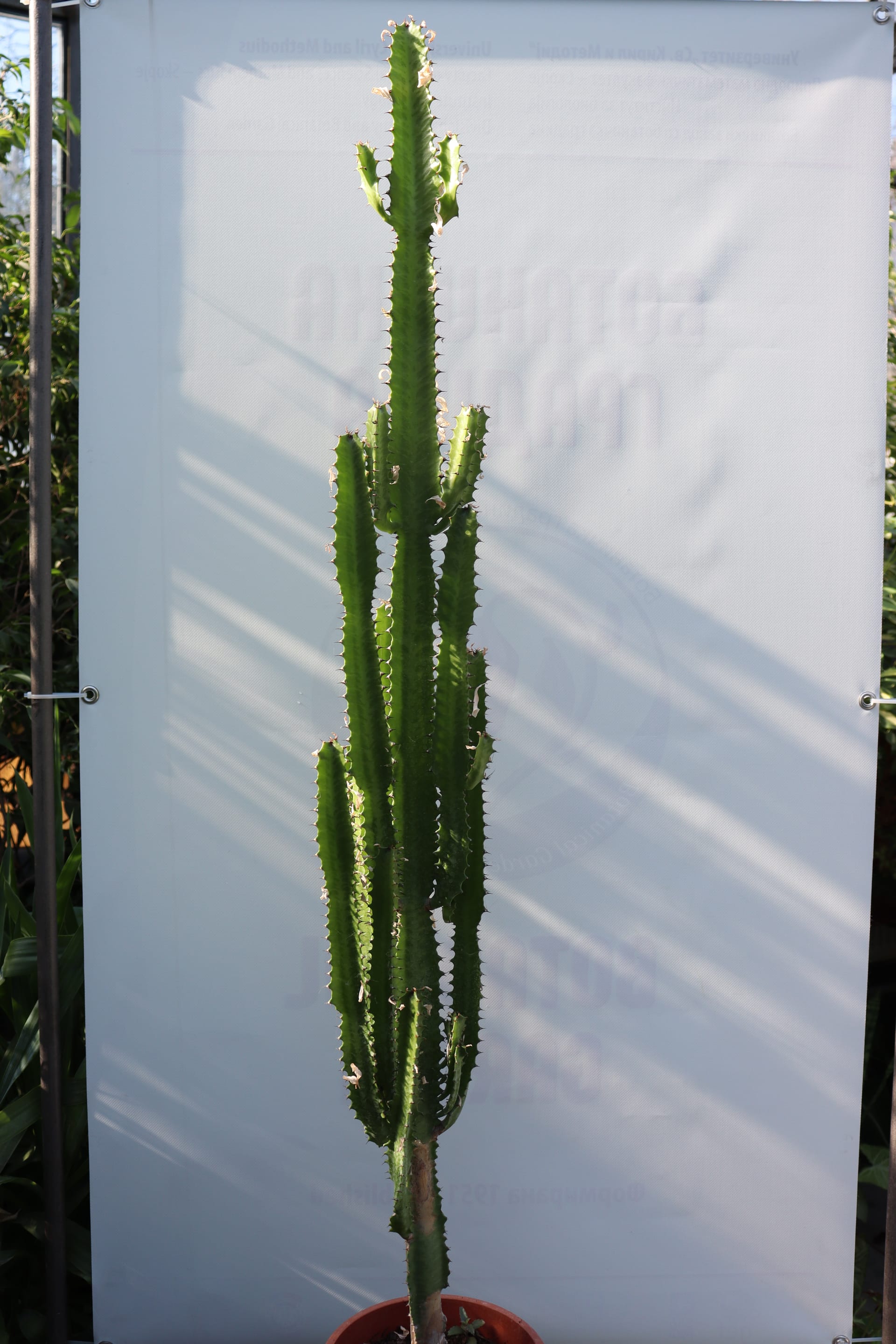 © Dandarmkd / CC BY-SA 4.0
African milk tree
Euphorbia trigona
A columnar Euphorbia with upright, three-angled stems branching like a candelabrum, dark green with pale V-shaped markings, paired spines and teardrop leaves along the ridges. It is not known to flower.
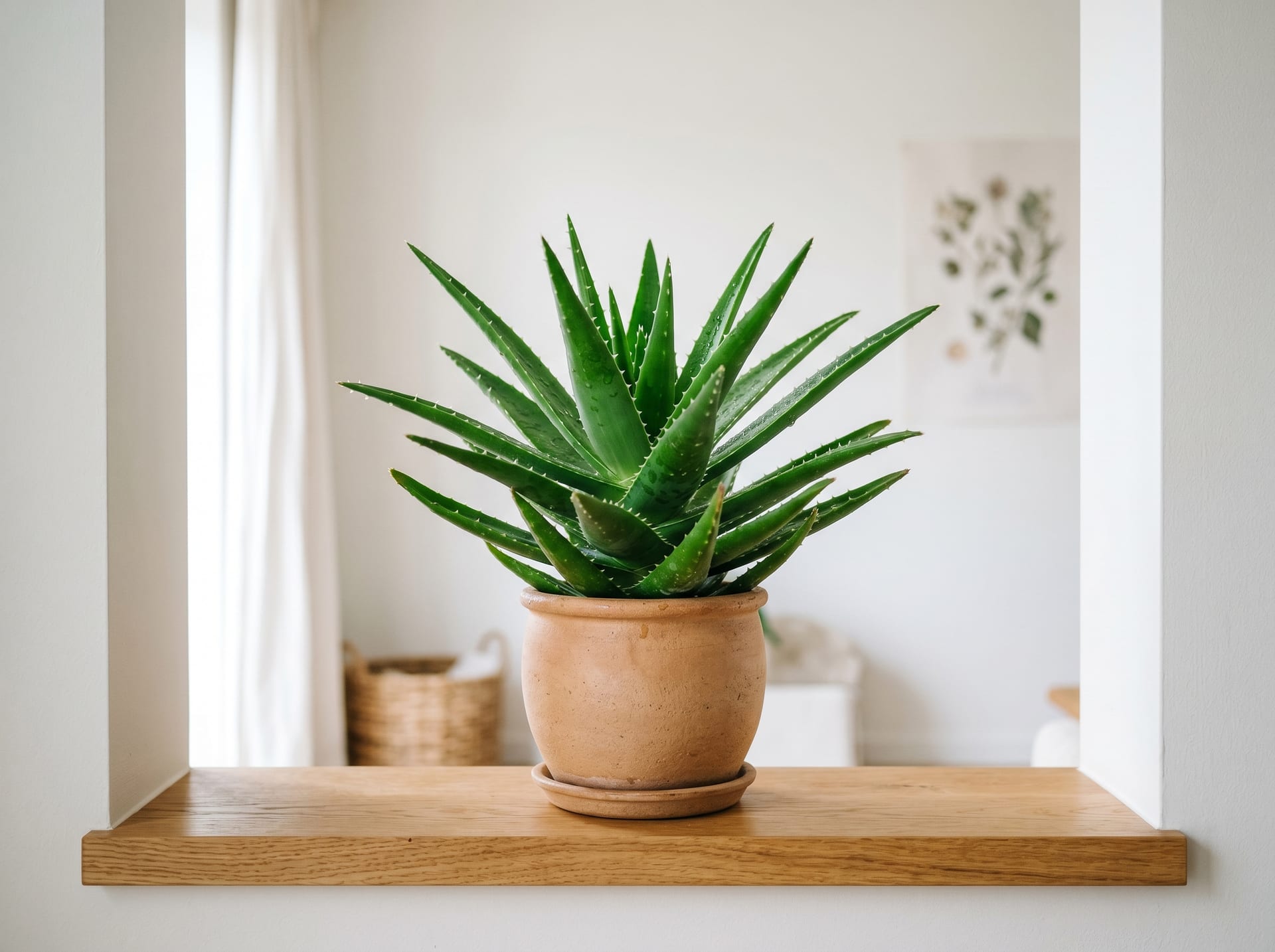
Aloe
Succulent known for medicinal and edible uses. Aloe vera most famous. Hardy, fast-growing, recommended for beginners.
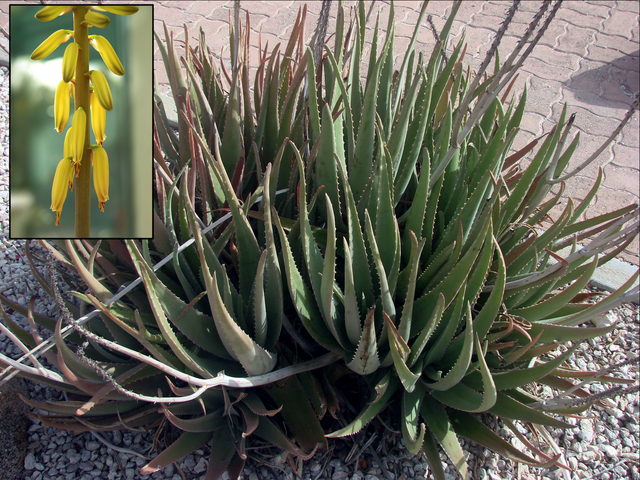 © Collage by en:User:MidgleyDJ , original images from Wikimedia commons ( Image:Aloe_vera_offsets.jpg and Image:Aloe_vera_C.jpg ) / CC BY-SA 3.0
Aloe Vera
Aloe vera
World-famous succulent for medicinal and beauty uses. Thick leaves contain gel-like compounds.
 © Abu Shawka / CC BY-SA 3.0
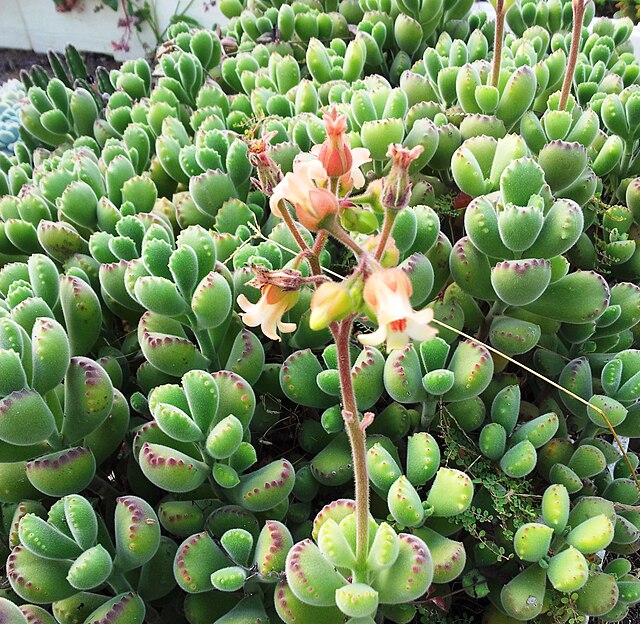
Bear's Paw
Cotyledon tomentosa
A cute succulent with bear paw-shaped leaves. Characterized by claw-like protrusions at leaf tips.
 © Diego Delso / CC BY-SA 3.0
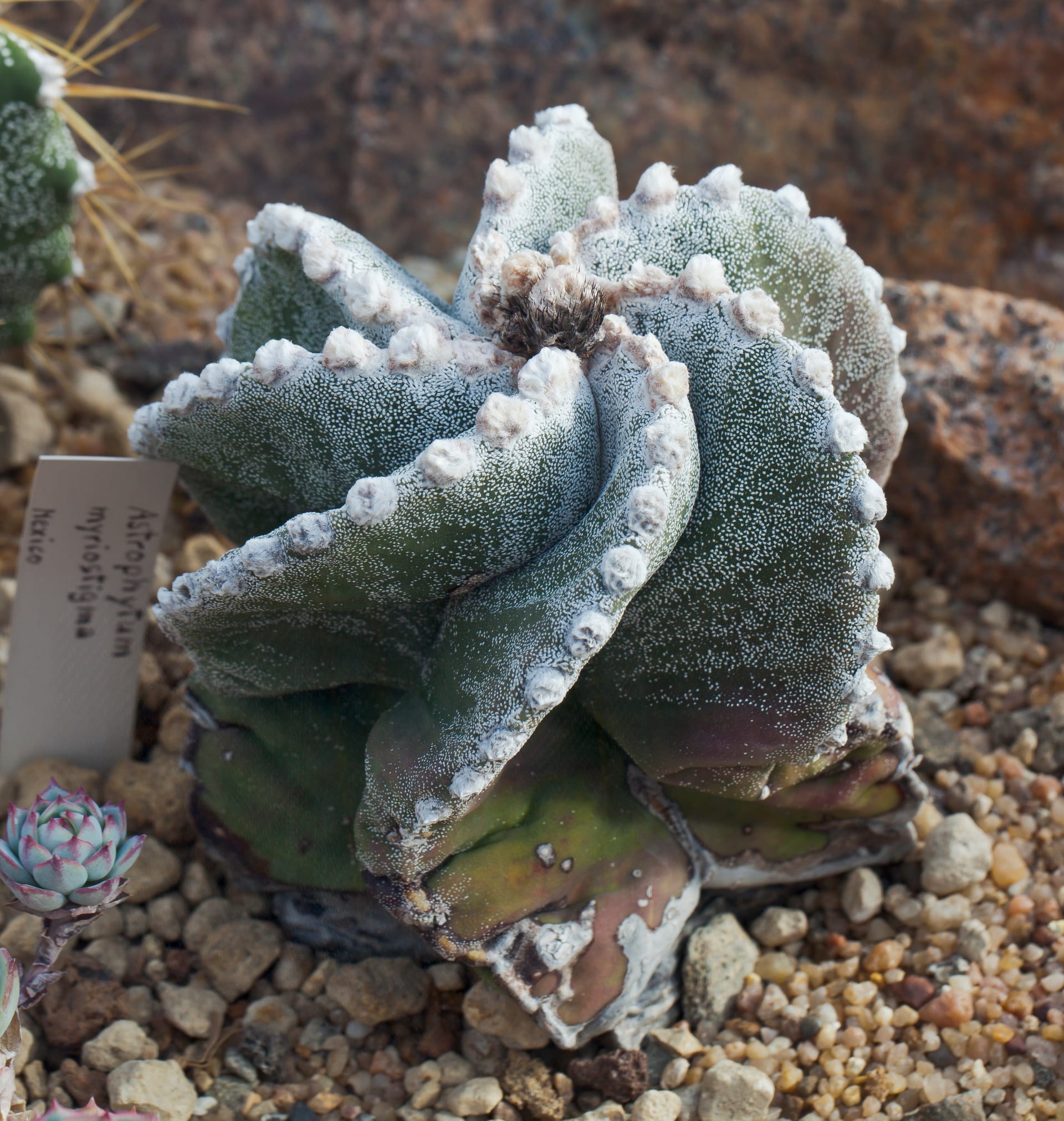
Bishop's cap
Astrophytum myriostigma
A spineless cactus, usually with five ribs that make a star shape from above, dusted with white flecks. Many forms differ in rib number and flecking; tough and an ideal first star cactus.
 © Paradise Chronicle / CC BY-SA 4.0
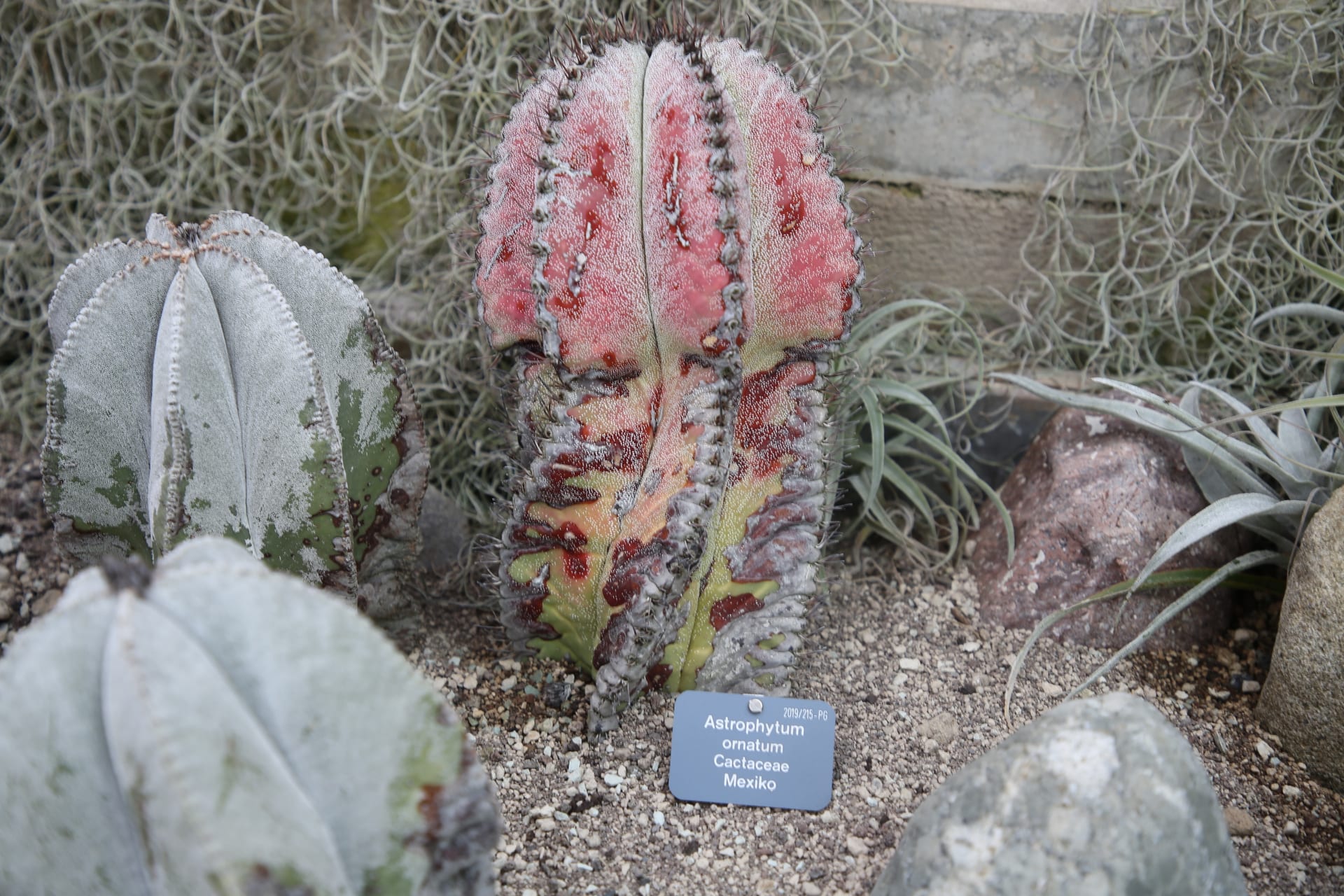
Bishop's cap / Star cactus
Astrophytum ornatum
The largest Astrophytum, becoming columnar and up to 2 m tall in habitat. Sharp ribs carry stout spines, and white woolly flecks pattern the dark green skin. Yellow flowers in summer.
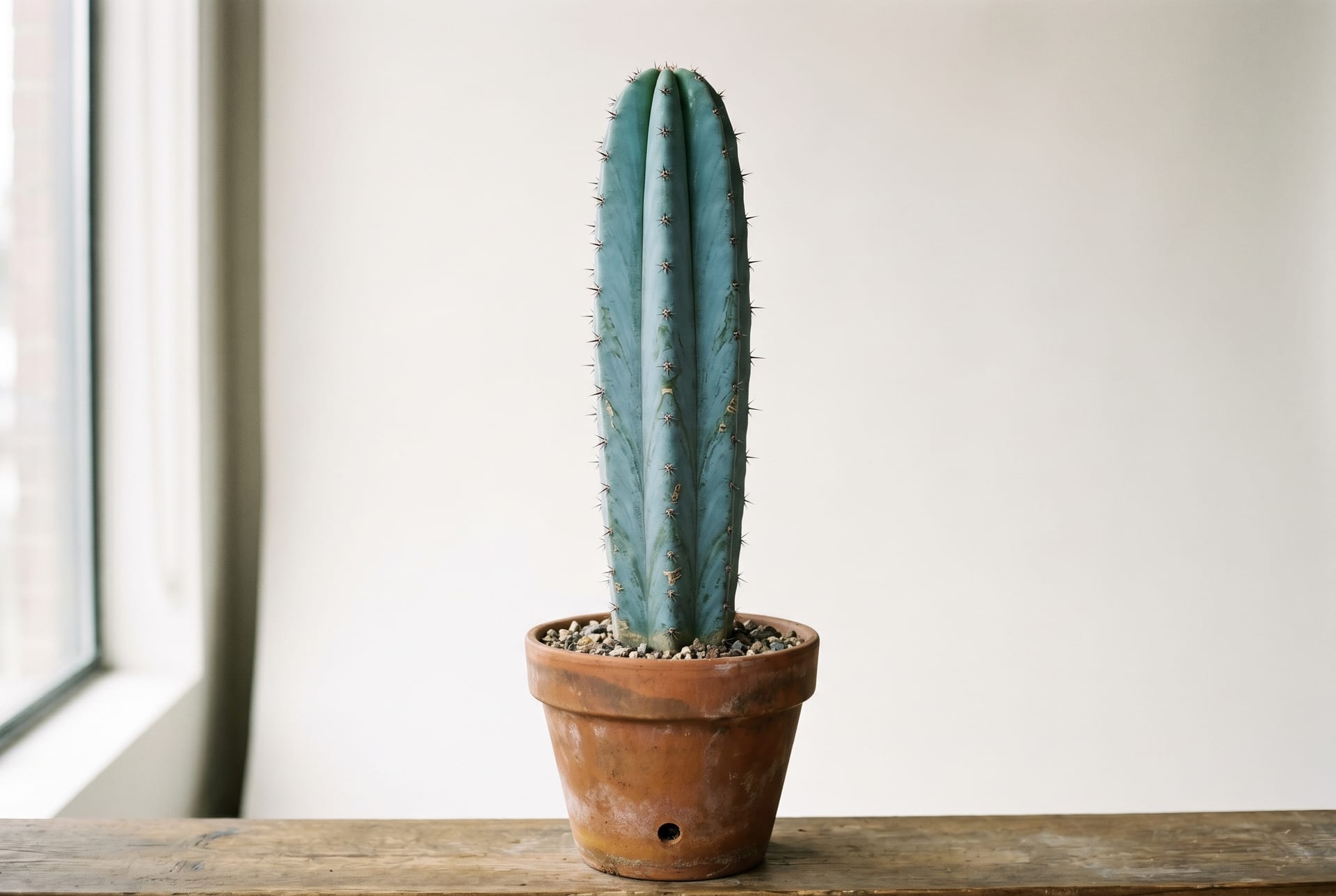
Blue Candelabra Cactus
Myrtillocactus geometrizans
A columnar cactus prized for powdery blue-green stems. Hardy and fast-growing, it is a standard grafting rootstock and a striking garden specimen.
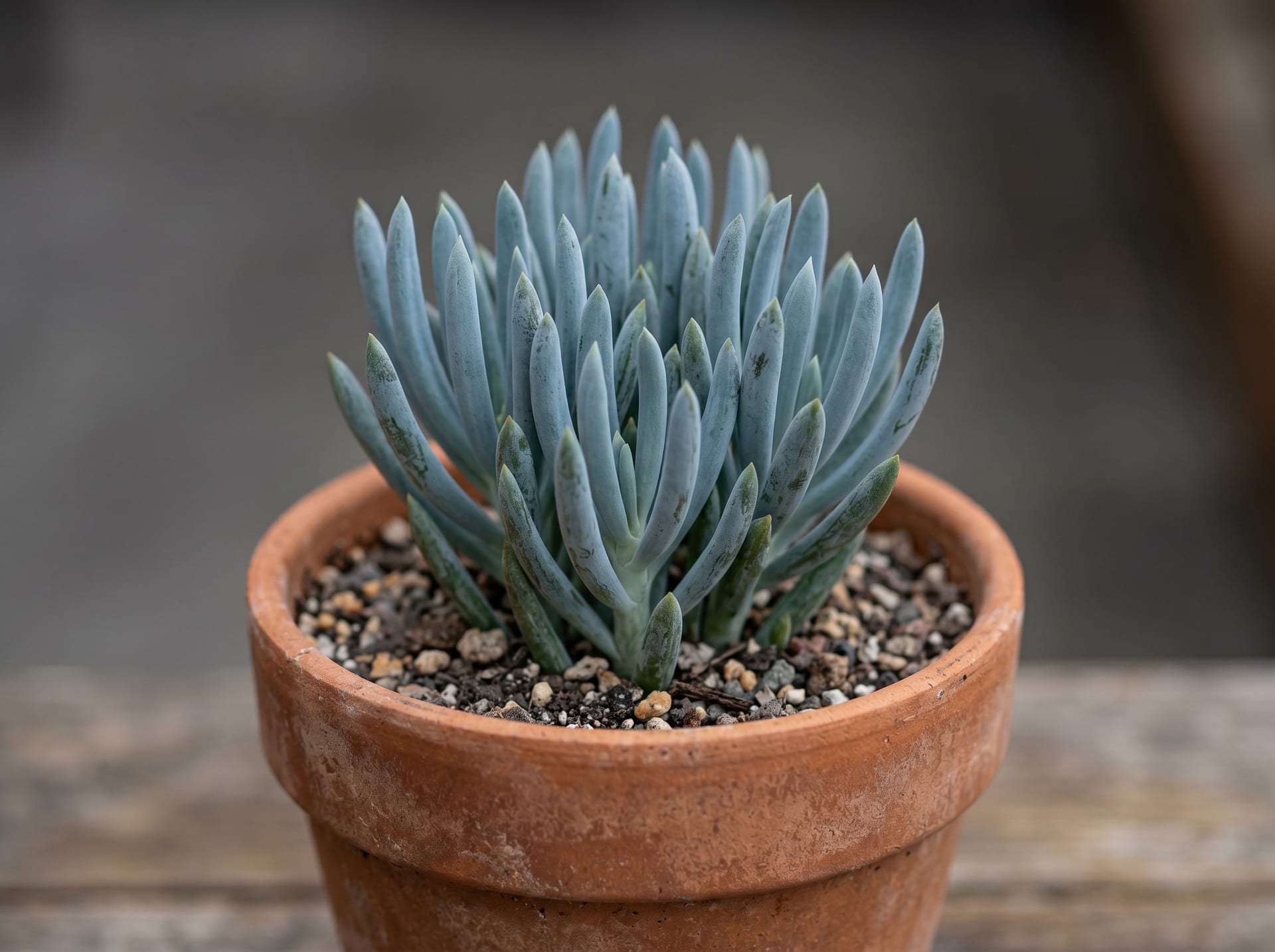
Blue Chalksticks
Curio repens
A succulent with densely packed blue-white stick-like leaves. A blue variety also usable as ground cover.
 © Diego Delso / CC BY-SA 3.0
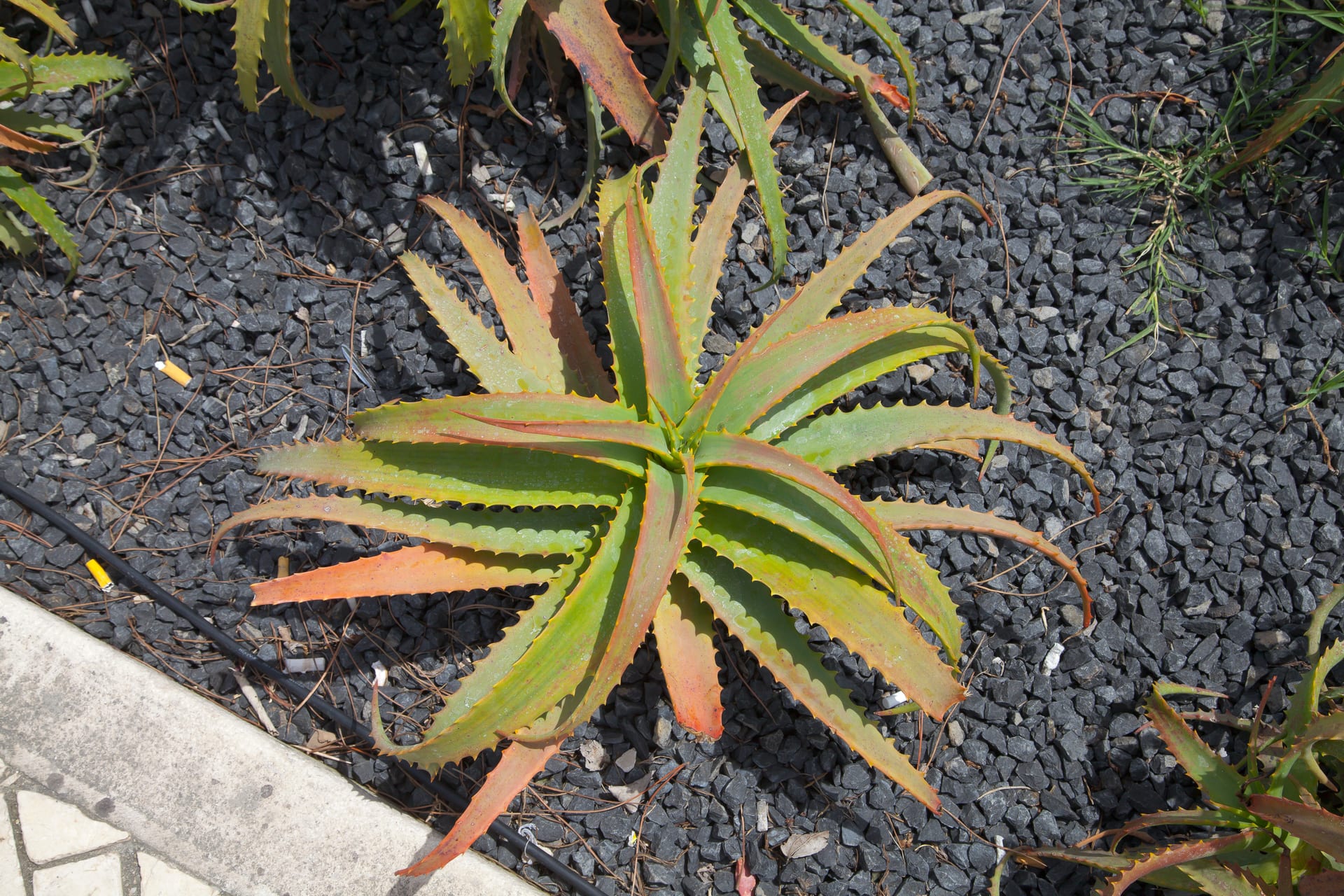
Candelabra aloe
Aloe arborescens
A large, branching aloe that forms clumps 2–3 m tall, with grey-green leaves edged in pale teeth and red-orange flower spikes in winter. Long grown in Japanese gardens under the folk name isha-irazu.
 © Schnobby / CC BY-SA 3.0
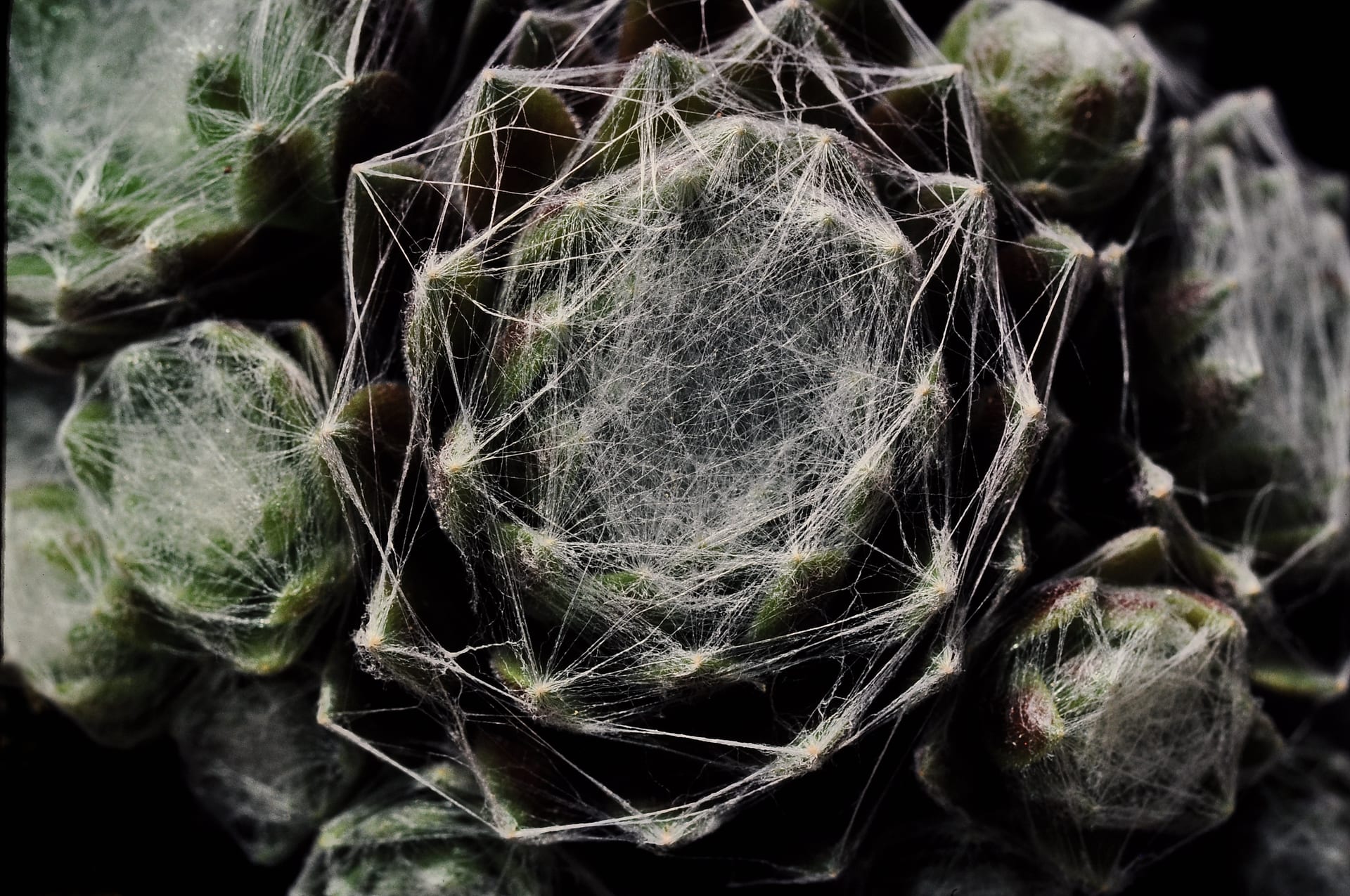
Cobweb houseleek
Sempervivum arachnoideum
A houseleek whose small rosettes have leaf tips linked by white threads like cobwebs. Native to European mountains and extremely cold-hardy.
 © Photo by David J. Stang / CC BY-SA 4.0
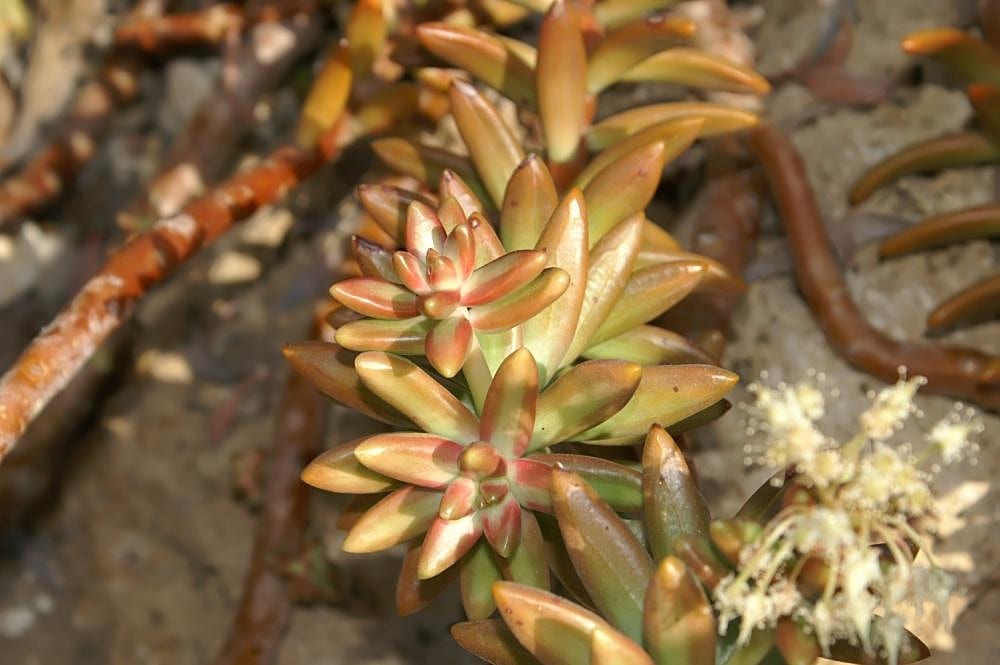
Coppertone stonecrop
Sedum nussbaumerianum
A Sedum with pointed, fleshy leaves crowded at the stem tips that glow yellow-orange to copper in full sun. Fragrant white starry flowers appear in spring.
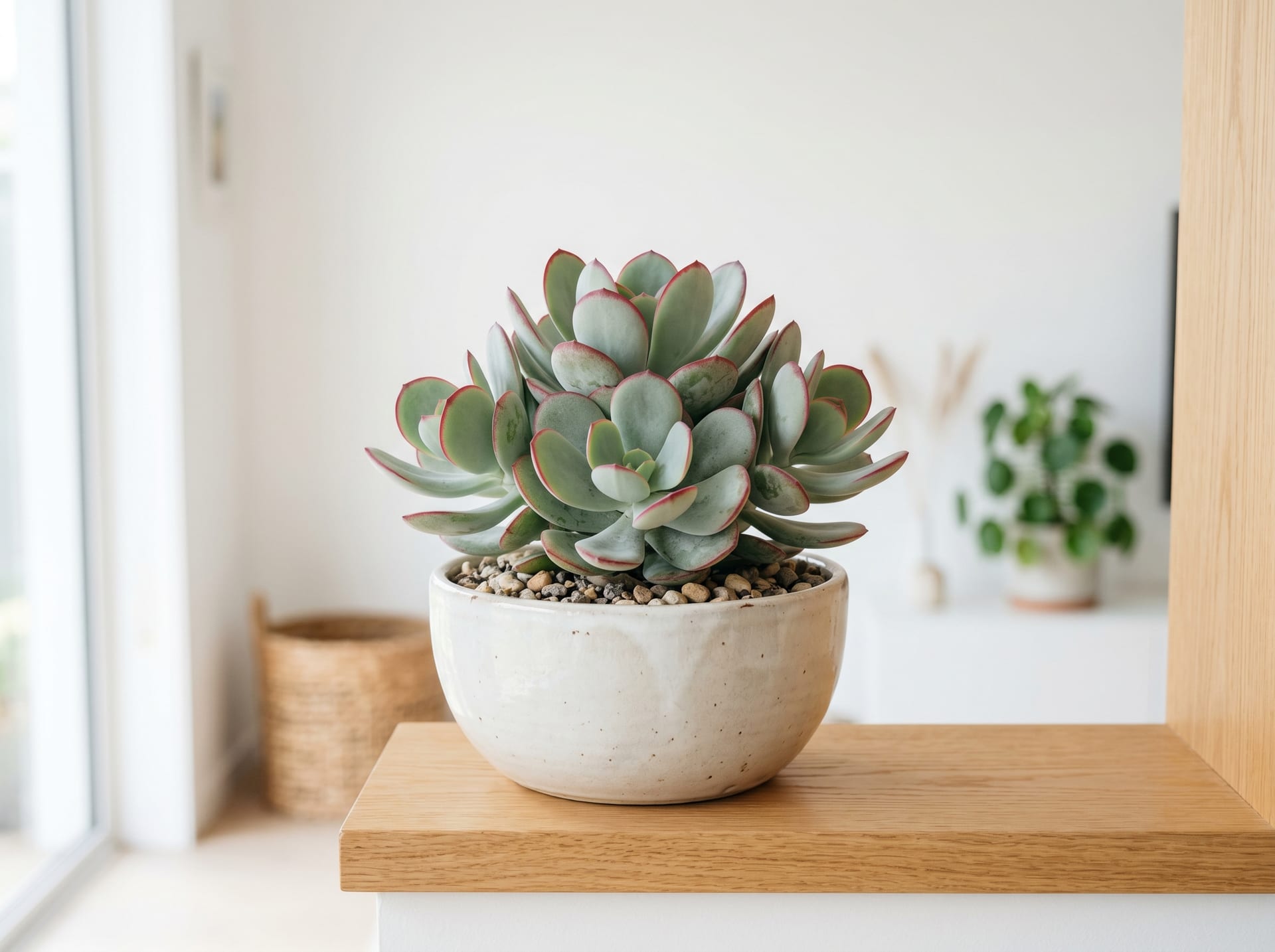
Cotyledon
Cotyledon spp.
South African succulent with bear-paw-like leaves inspiring its common name. Thick, soft foliage forming compact rosettes. Fast-growing with minimal care requirements, ideal for succulent beginners.
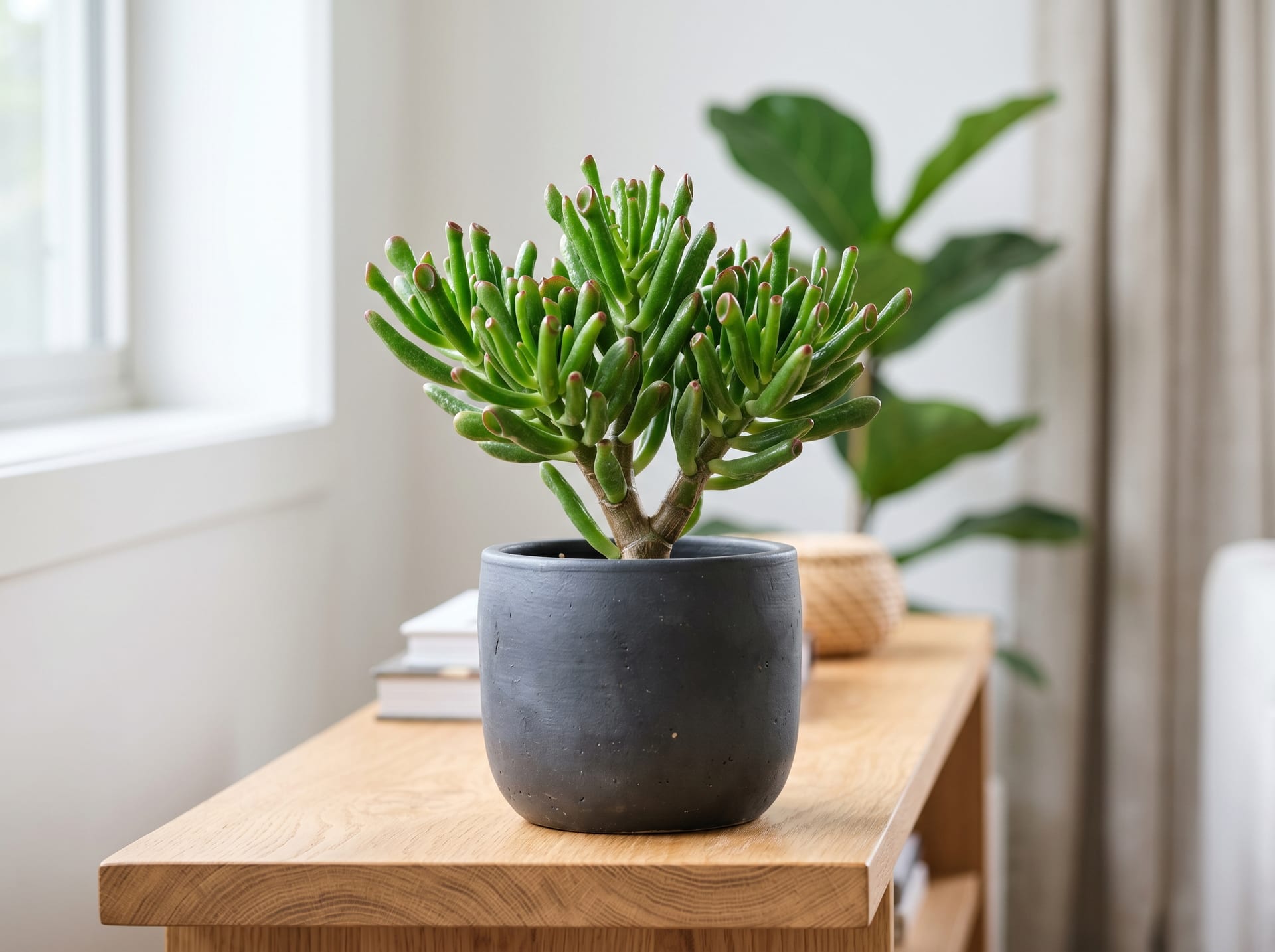
Crassula (Jade Plant)
Crassula ovata (Jade Plant) is the representative. Thick round leaves are charming. Given as good luck gift.
 © cultivar413 from Fallbrook, California / CC BY 2.0
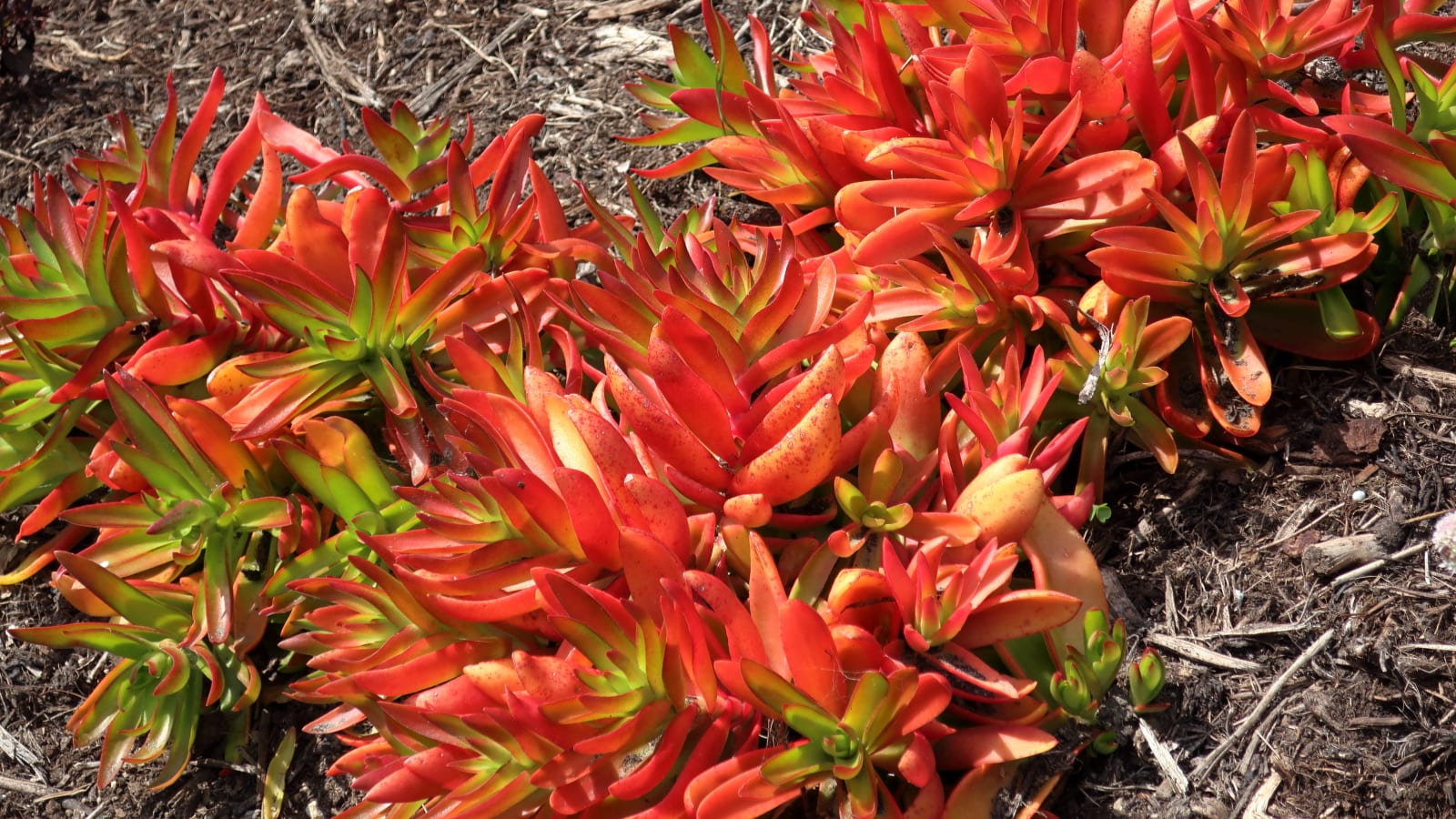
Crassula capitella 'Campfire'
Crassula capitella 'Campfire'
Pointed leaves stacked crosswise like propellers turn from lime green in summer to fiery red in winter cold and sun. A fast-growing, spreading Crassula cultivar.
 © Agnieszka Kwiecień, Nova / CC BY-SA 4.0
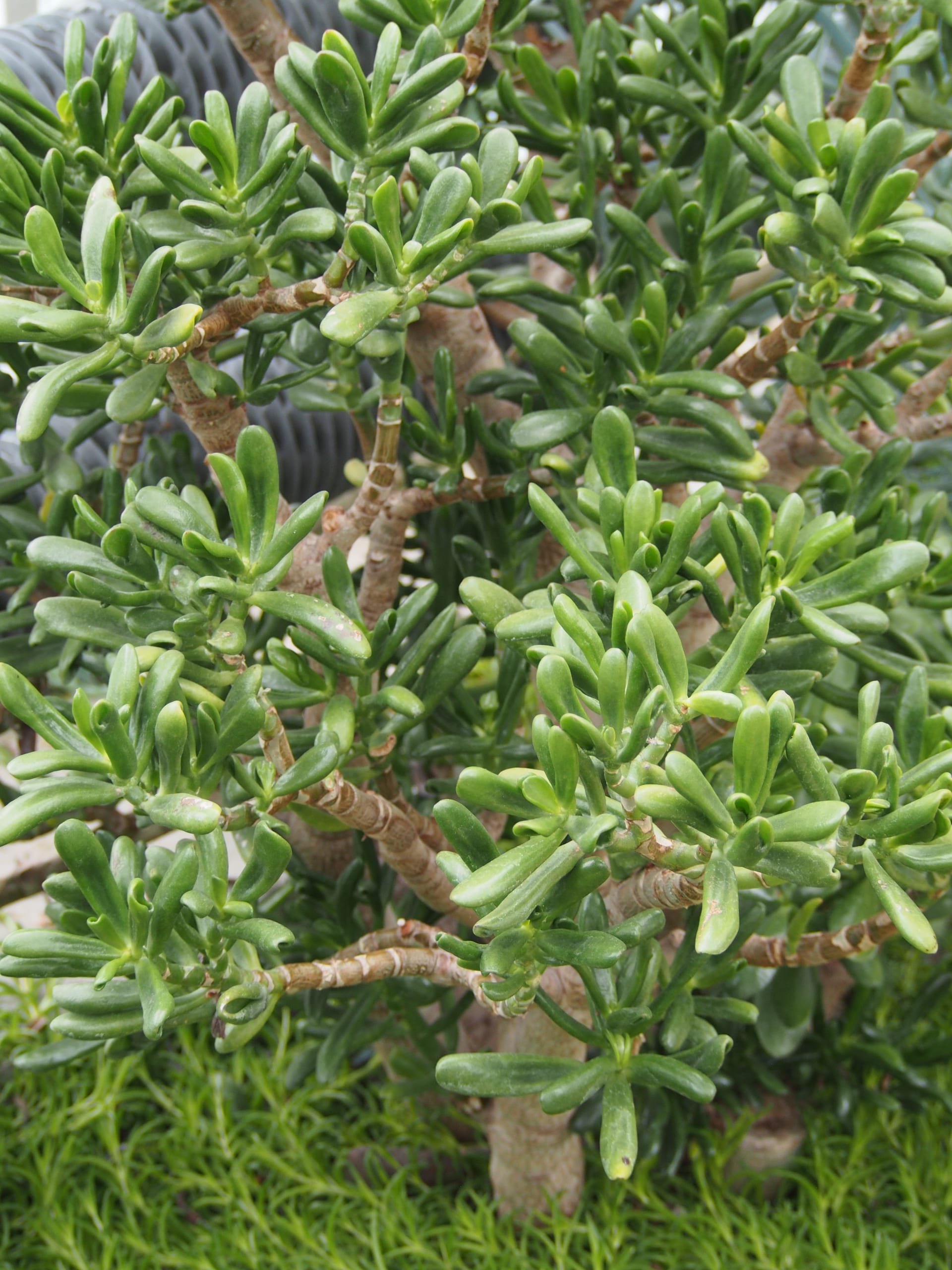
Crassula ovata 'Gollum'
Crassula ovata 'Gollum'
A sport of the jade plant with tubular leaves whose tips are hollowed like suction cups and turn red in cold weather. Finely branched stems thicken with age; also sold as 'tree of the universe'.
 © Prenn / CC BY-SA 3.0
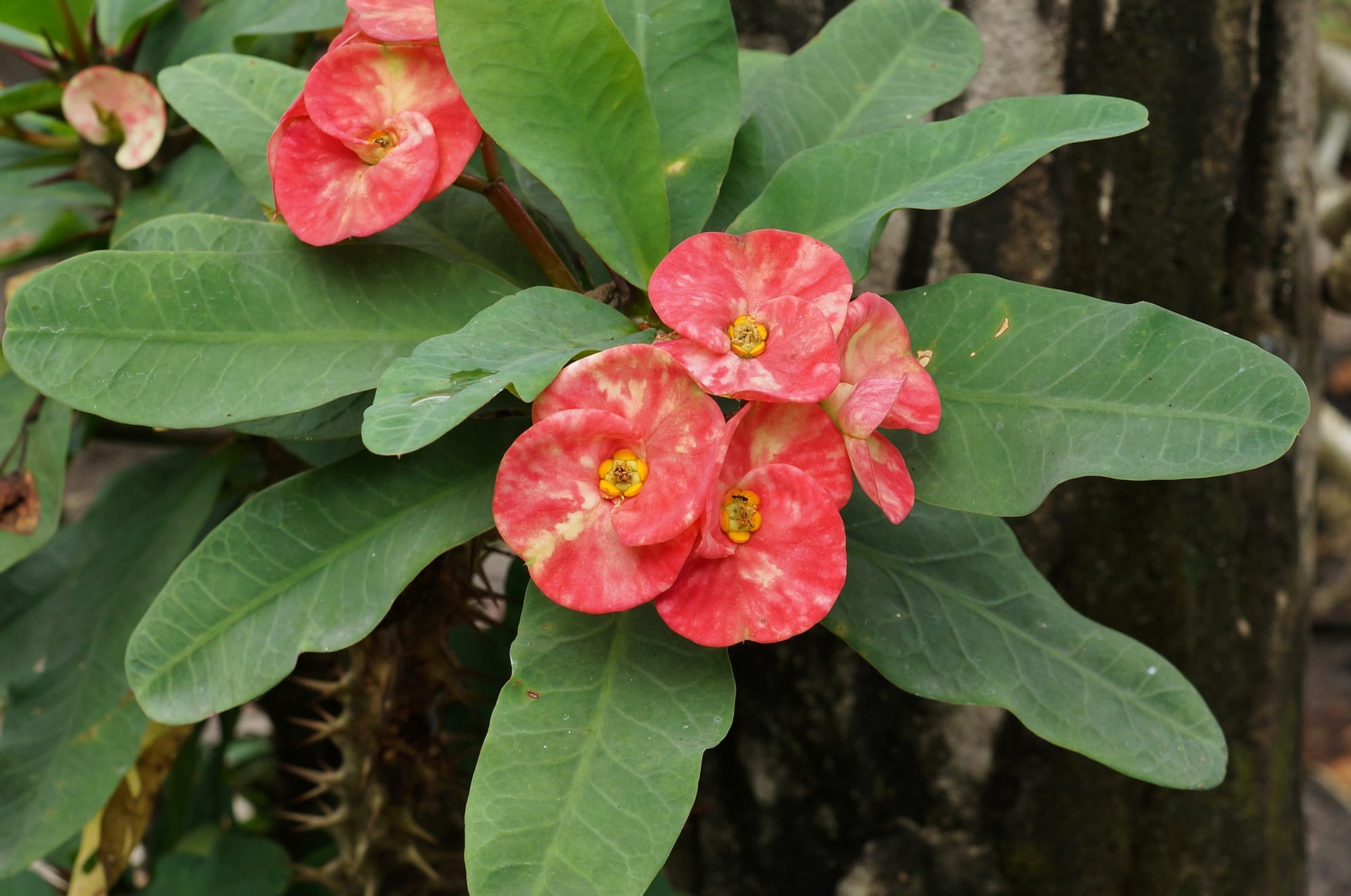
Crown of thorns
Euphorbia milii
A Madagascan Euphorbia with densely spiny stems topped by showy, petal-like bracts in red, pink, yellow or white. It blooms year-round given warmth and is a popular flowering pot plant.
 © Petar43 / CC BY-SA 3.0
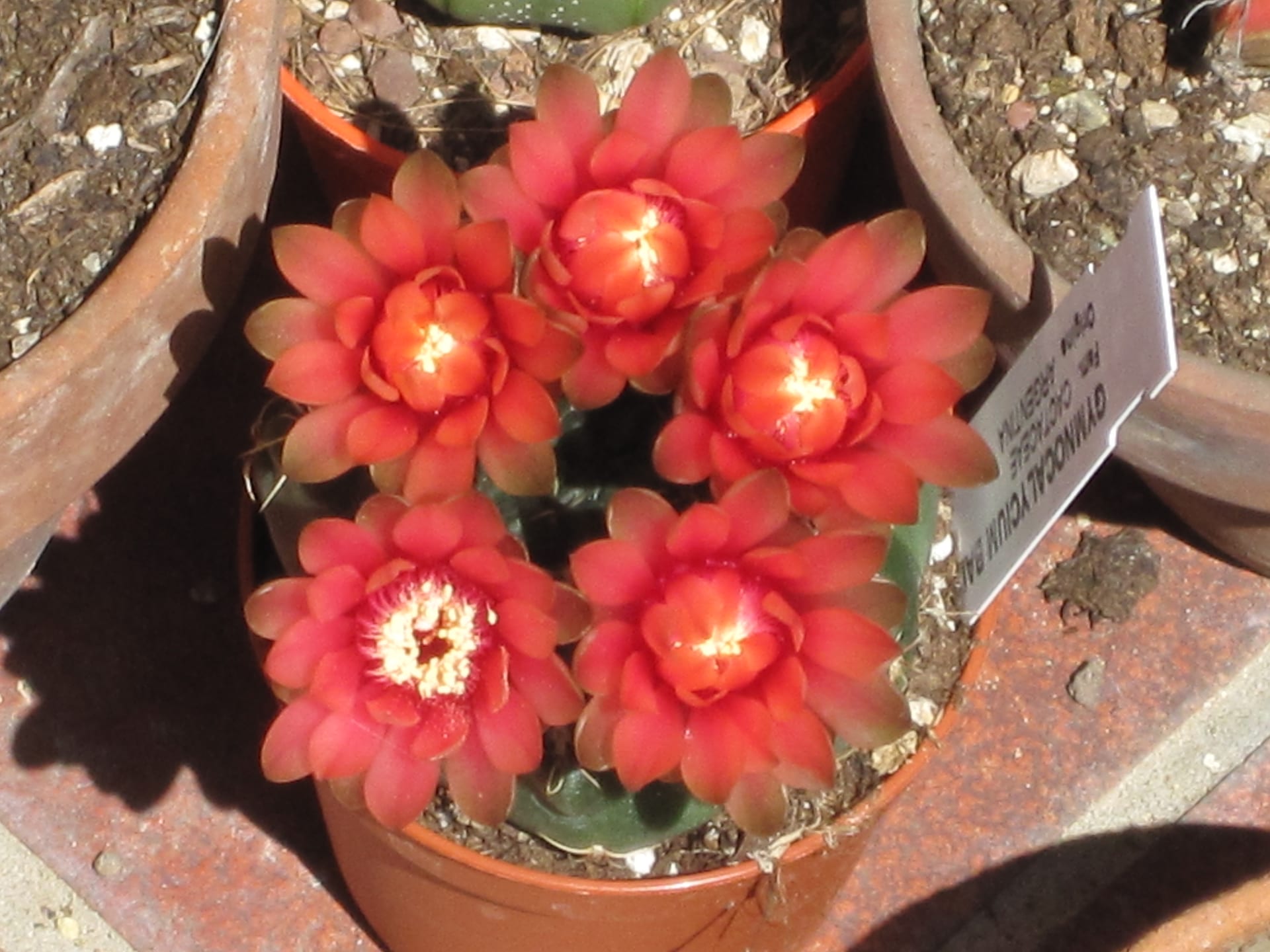
Dwarf chin cactus
Gymnocalycium baldianum
A small Gymnocalycium with a dark grey-green body that bears many deep purple-red flowers 3-4 cm across. It flowers even as a small plant.
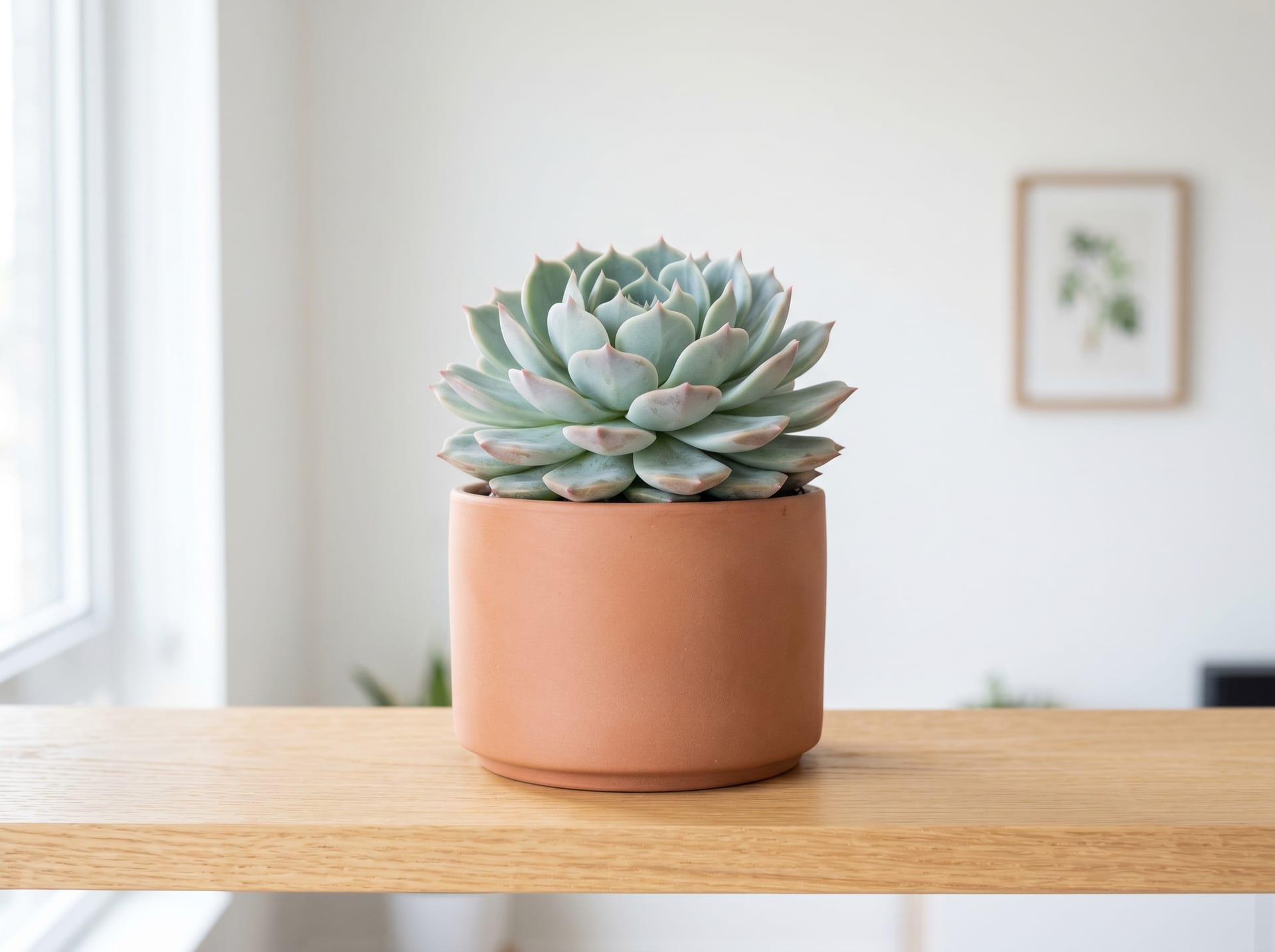
Echeveria
Echeveria spp.
The quintessential rosette succulent, with flower-like leaf arrangements in hundreds of species. Beautiful stress coloring in autumn/winter. Easy leaf propagation makes collecting irresistible.
Echeveria 'Ben Badis'
Echeveria 'Ben Badis'
A small hybrid with dense, glossy, bronze-green rounded leaves whose tips and keels blush red in cool weather. Said to derive from E. purpusorum × E. derenbergii.
Echeveria 'Blue Bird'
Echeveria 'Blue Bird'
An Echeveria hybrid whose leaves, heavily dusted with white bloom, show a soft gradient of pale colours. It forms a short stem, and the outer leaves droop at certain seasons.
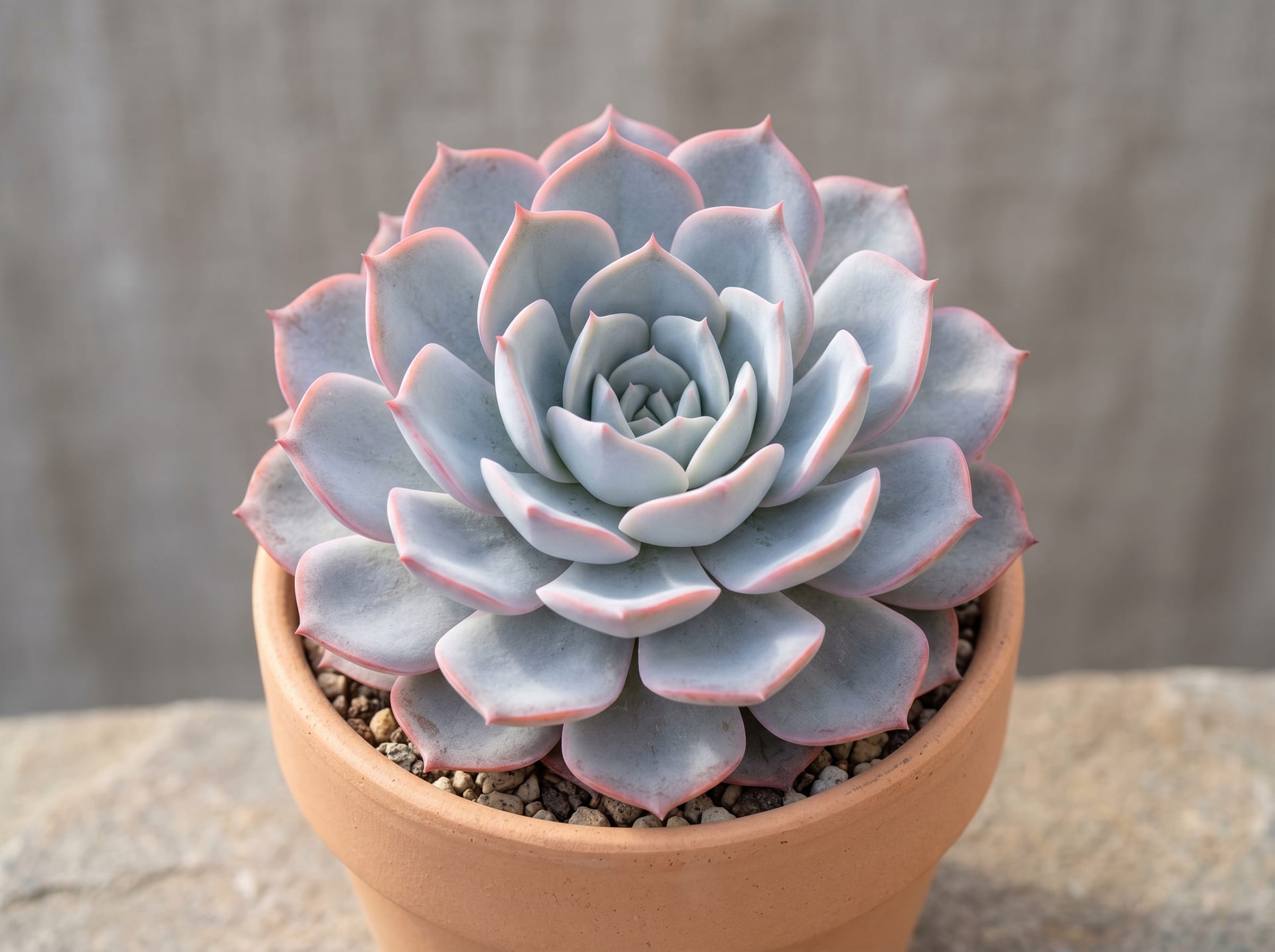
Echeveria ‘Laurinze’
Echeveria ‘Laurinze’
A beautiful echeveria hybrid with soft purple-green gradients and powdery texture. Popular for its neat rosette and stunning autumn color changes.
Related Content
Succulent FAQ
- How much do succulents cost?
- Common Echeveria cost 300-2,000 yen, popular Haworthia obtusa 1,000-10,000 yen, and rare hybrids or large specimens can exceed tens of thousands of yen.
- Can beginners grow succulents?
- Echeveria, Sedum, and Graptopetalum are hardy and beginner-friendly. Place in a sunny spot and water only when the soil is completely dry.
- What are the key tips for growing succulents?
- Place in a sunny spot with good airflow and water sparingly. Many species go dormant in summer and winter, so adjusting care to their growing season is key to beautiful growth.
- What should I check when buying succulents?
- Check that leaves are plump and firm, the base isn't rotting, and there are no pests (like mealybugs). For bare-root plants, root condition is also important.
- How long do succulents live?
- With proper care, succulents can thrive for 10+ years depending on species. They're easily propagated through leaf cuttings and division, allowing enjoyment across generations.