Agave Encyclopedia
Encyclopedia of popular agave varieties with traits, care guides, and pricing.
Featured Agave
Showing 75 of 139 species(25–48)
 © Marija Gajić / CC BY-SA 4.0
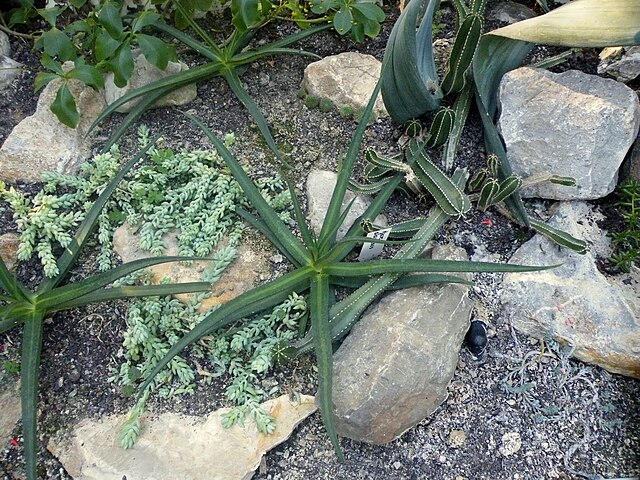
Agave Nizandensis
Agave nizandensis
An ultra-small agave that fits in the palm. Delicate species with narrow leaves radiating densely.
Agave obscura
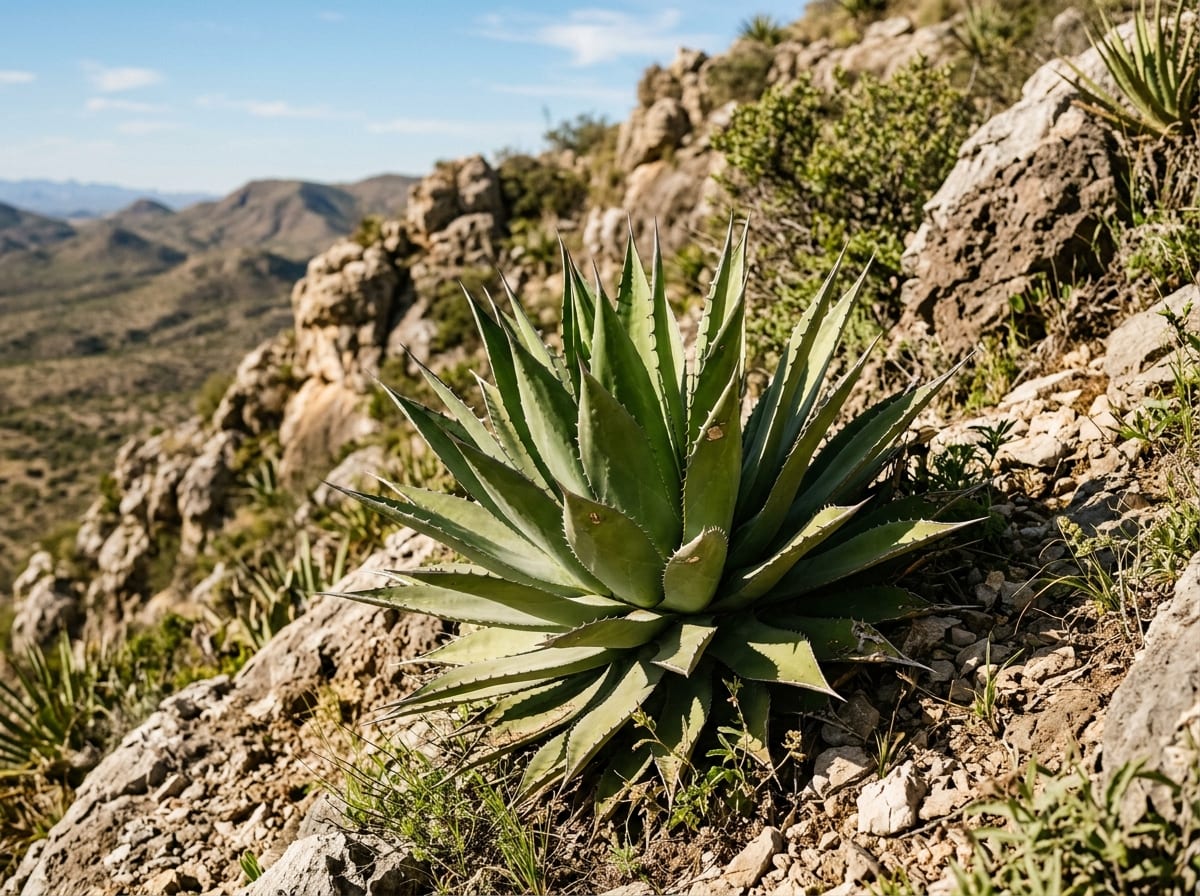
Agave obscura
A medium agave about 1 m across with stiff, pale green to green leaves and grey teeth. The epithet ('obscure') refers to its dull reddish flowers. Many plants sold under the name are said to be A. horrida subsp. perotensis.
Agave Oteroi
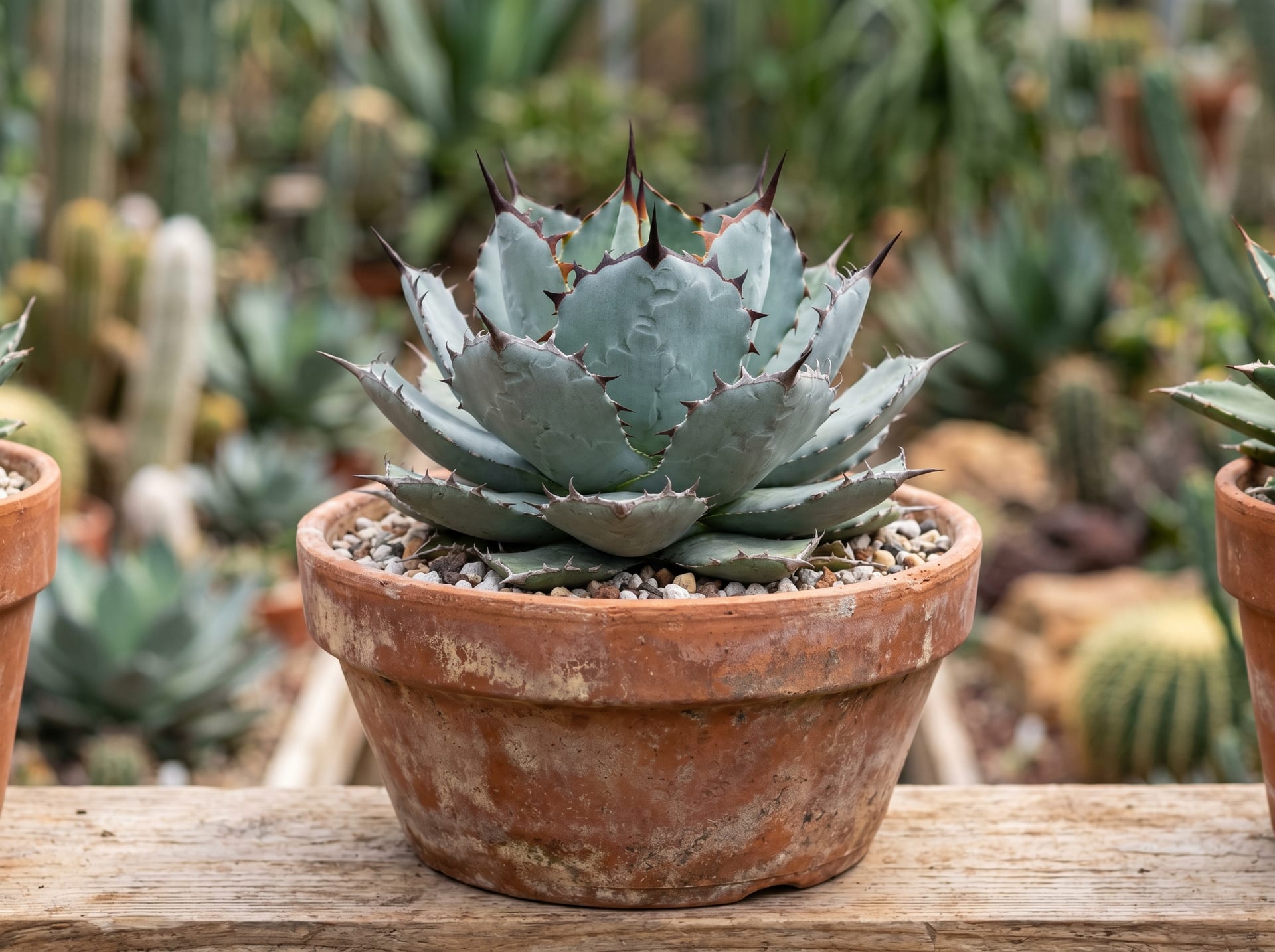
Agave oteroi
An agave described as a separate species in 2019, based on plants long cultivated under the name Titanota. Wild power from harsh Mexican habitat. Recently reclassified.
Agave oteroi 'Filigree'
Agave oteroi 'Filigree'
A selection with broad, very short grey-green leaves fringed with countless long, narrow, wavy teeth like eyelashes. Selected by a US nursery from an FO-076 seedling and released in 2010, it is formally a cultivar of Agave oteroi.
Agave ovatifolia 'Orca'
Agave ovatifolia 'Orca'
A variegated whale's tongue agave: broad blue leaves bordered by a very wide creamy-yellow edge. A rare clone propagated from a plant found in the mountains of northern Mexico.
Agave Parrasana
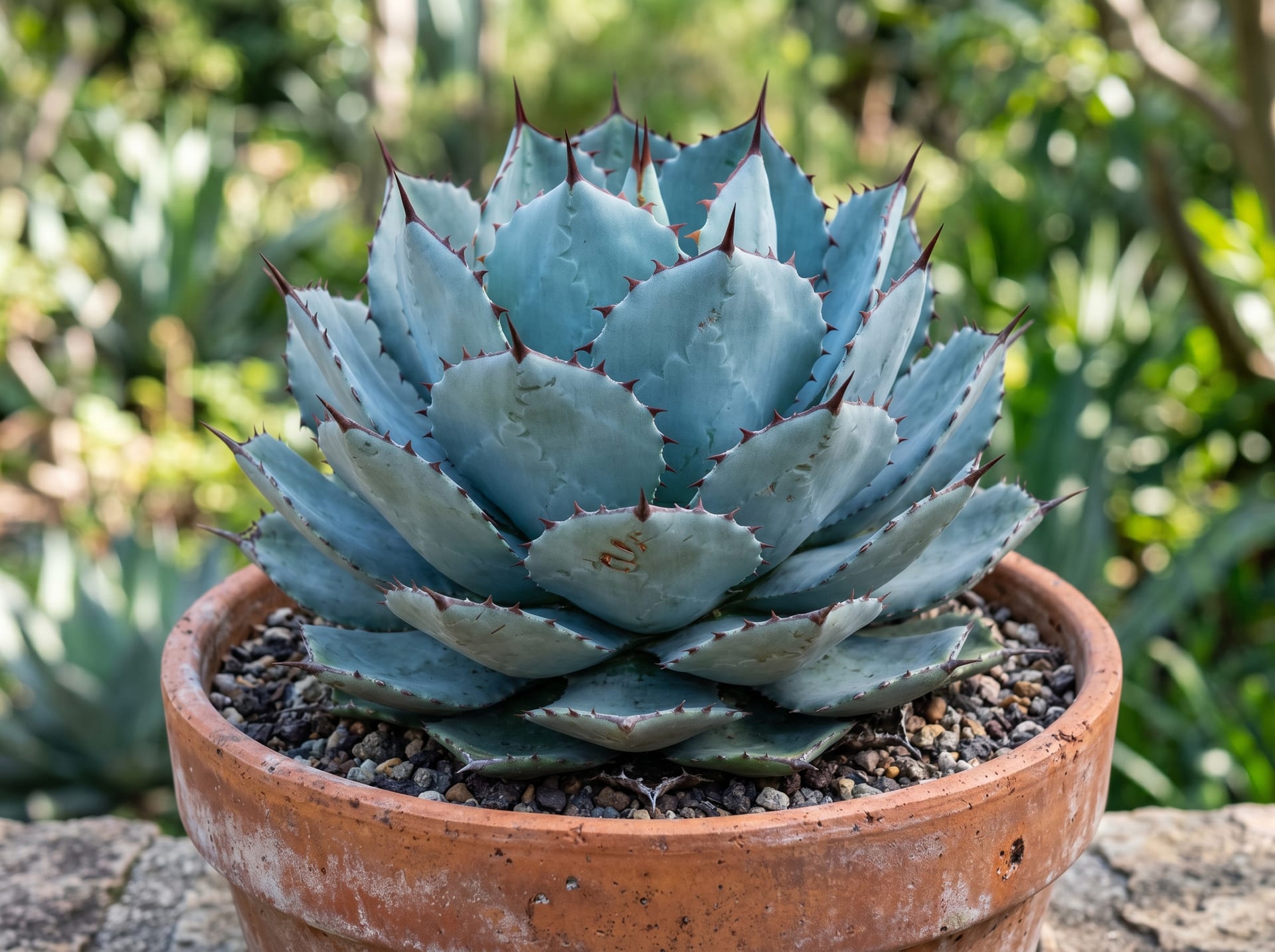
Agave parrasana
An agave from the Parras region of Coahuila, Mexico. Forms a near-spherical beautiful rosette with serrated leaf margins. Popular with collectors; relatively slow growing.
Agave Parrasana 'Globe'
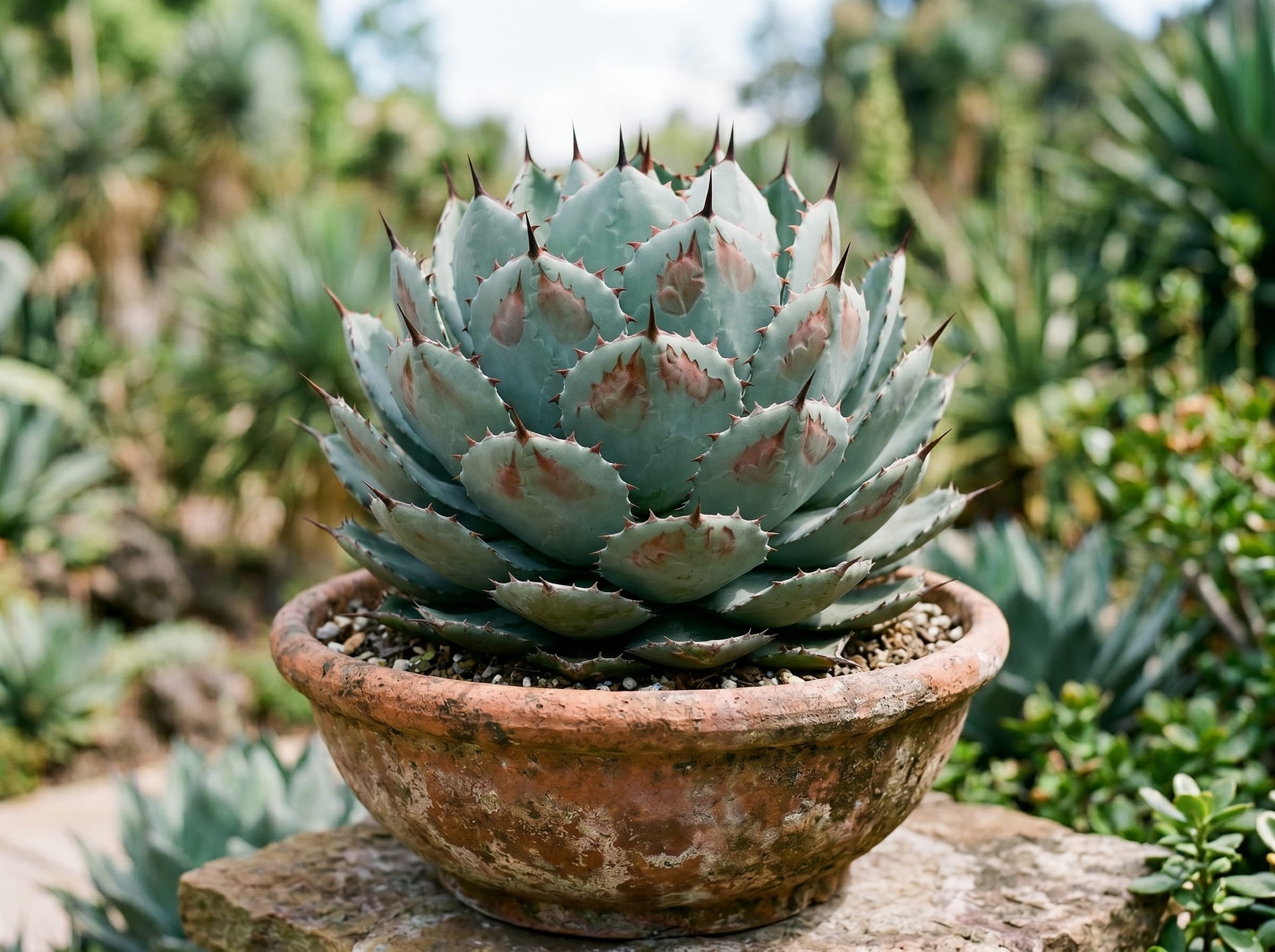
Agave parrasana 'Globe'
A garden-selected cultivar of Agave parrasana with exceptionally spherical rosette formation. Rounder than standard Parrasana; its near-perfect globe form is highly valued by collectors.
Agave parryi var. huachucensis variegated
Agave parryi var. huachucensis f. variegata
The variegated form of Kisshoten (Agave parryi var. huachucensis): the same short, broad grey leaves, stout brown spines and rounded rosette, with variegation that differs from plant to plant.
 © Stan Shebs / CC BY-SA 3.0
Agave parviflora (Santa Cruz striped agave)
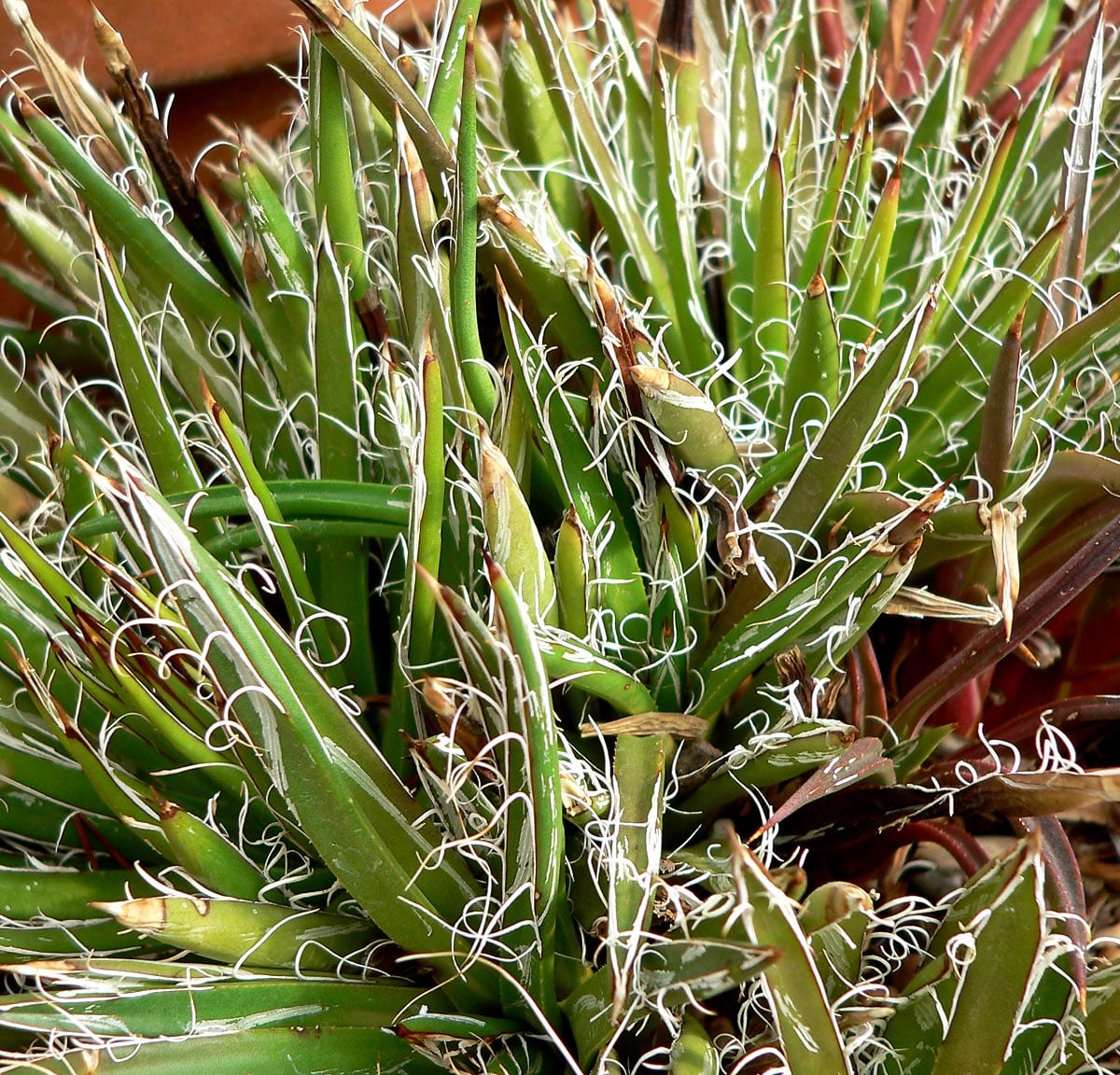
Agave parviflora
A tiny agave only about 20 cm across. Its narrow, dark green leaves carry white markings and shed white threads from the margins, so the whole plant looks white. Listed in CITES Appendix I; wild-origin plants are restricted from transfer under Japan's Act on Conservation of Endangered Species, so check the registration certificate.
Agave Pelona
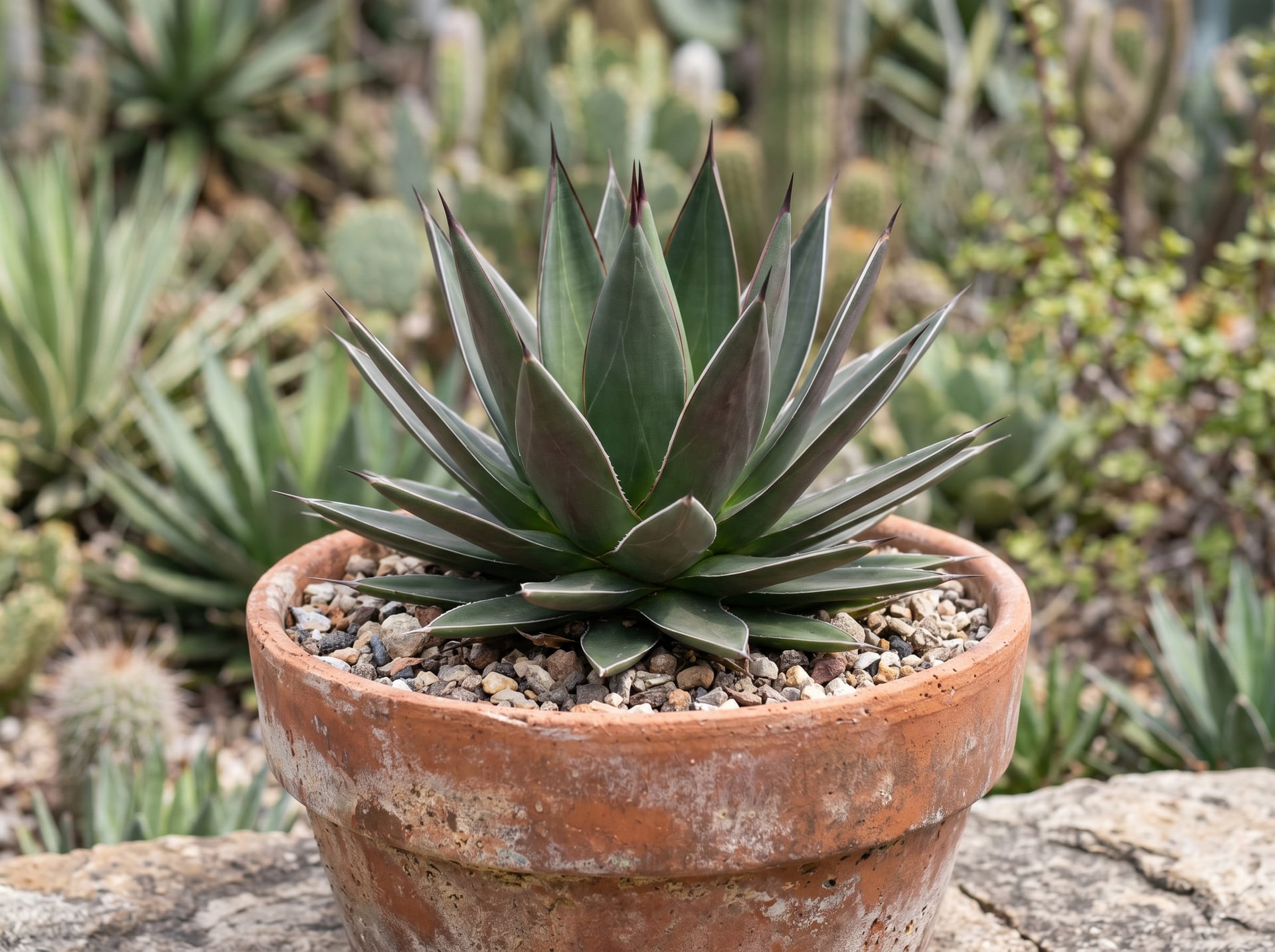
Agave pelona
A beautiful agave from Sonora, Mexico. Attractive contrast between smooth green leaves and black spines.
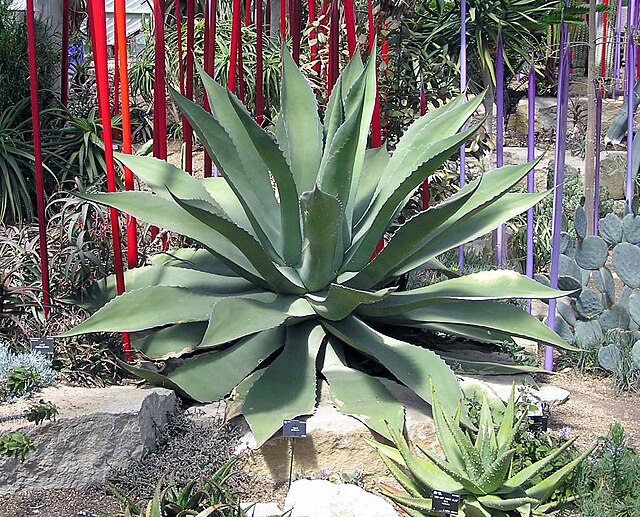 © Arpingstone / Public domain
Agave Potatorum
Agave potatorum
Also known as Kisshoukan in Japanese. Beautiful contrast of rounded leaves and red spines. Compact and suited for pots.
Agave potatorum 'Ouhi Raijin'
Agave potatorum 'Ouhi Raijin'
A dwarf 'raijin'-type agave whose short, thick leaves pack into a rosette only about 15 cm tall and 20 cm across. Teeth are modest, and offsets arise from the leaf bases to form small clumps.
Agave potatorum 'Ouhi Raijin' variegated
Agave potatorum 'Ouhi Raijin Nishiki'
The collective name for variegated Ouhi Raijin. Plants are sold by pattern and colour, such as white centre-stripe, yellow centre-stripe or cream edge, on the same small, tight rosette.
Agave potatorum 'Super Crown'
Agave potatorum 'Super Crown'
A sport of white-edged Kissho Kan that arose at Soda Nursery in Aichi, Japan. Glossy leaves carry a vivid cream edge, showier than Kissho Kan Nishiki but a little less tolerant of heat and cold.
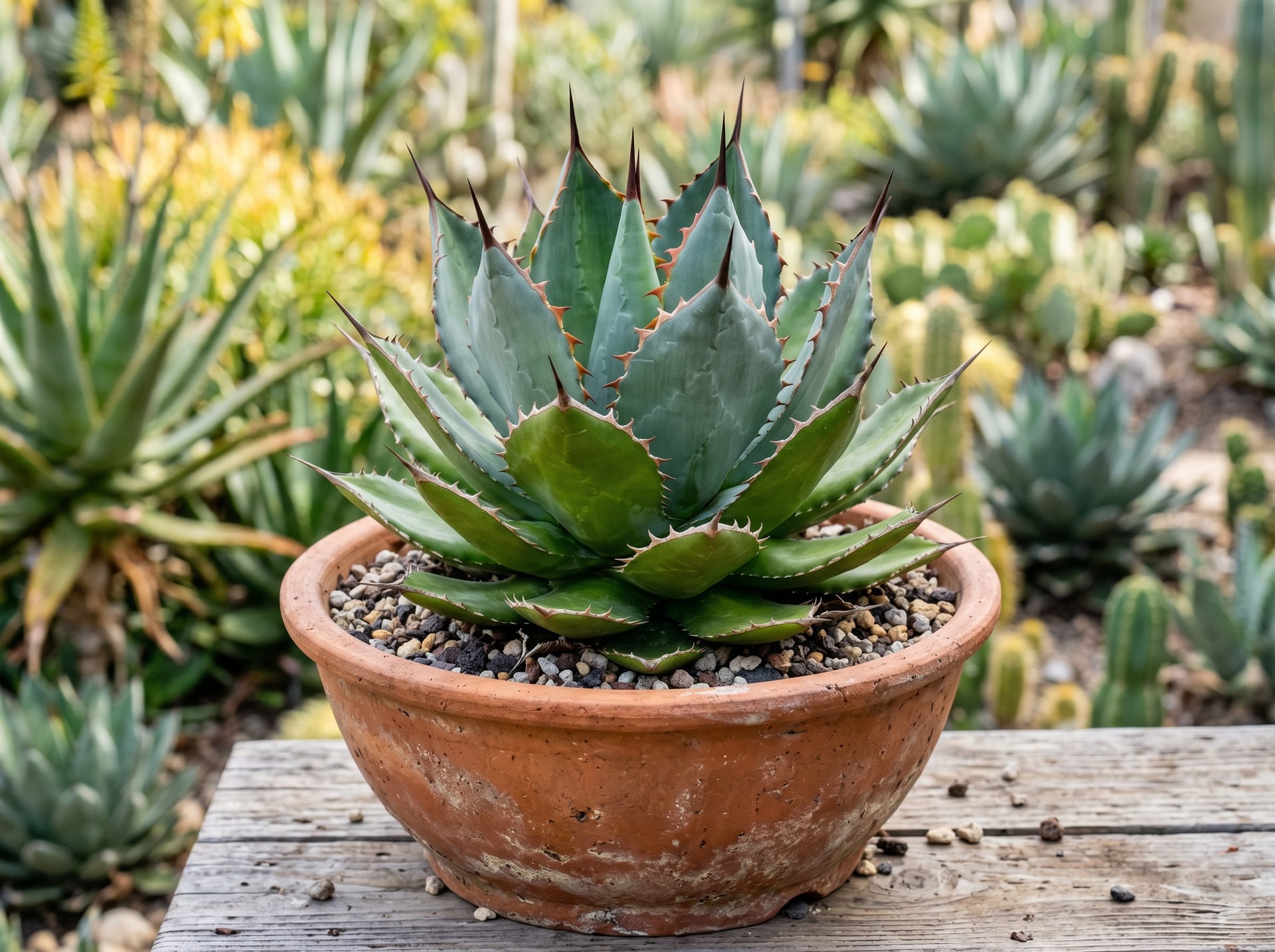
Agave Shawii
Agave shawii
An agave from southern California to Baja California. Native to coastal rocky areas with notable salt tolerance. Broad green leaves with reddish spines make it highly ornamental.
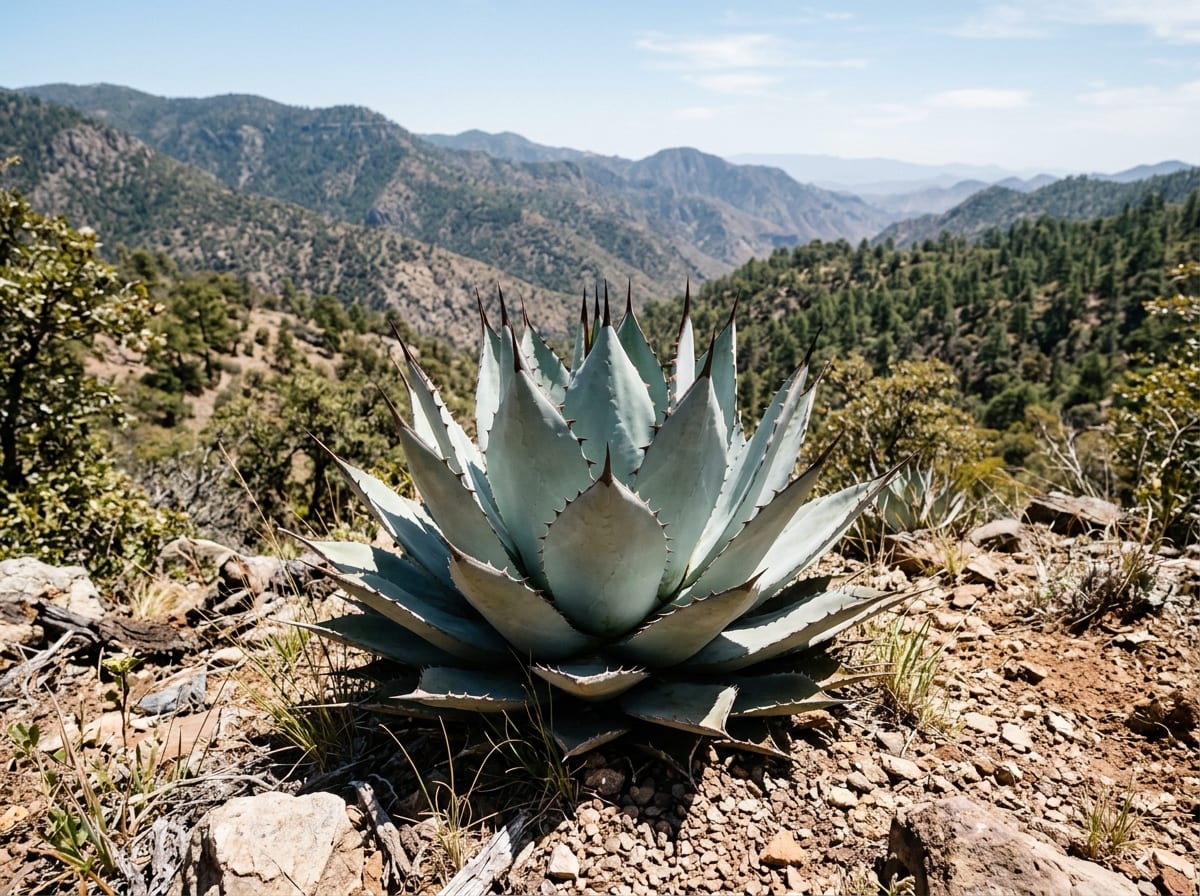
Agave shrevei subsp. magna
Agave shrevei subsp. magna
The largest of the three subspecies of Agave shrevei, forming handsome rosettes of blue-grey leaves. It grows where Chihuahua, Sonora and Sinaloa meet in the Sierra Madre Occidental of north-western Mexico.
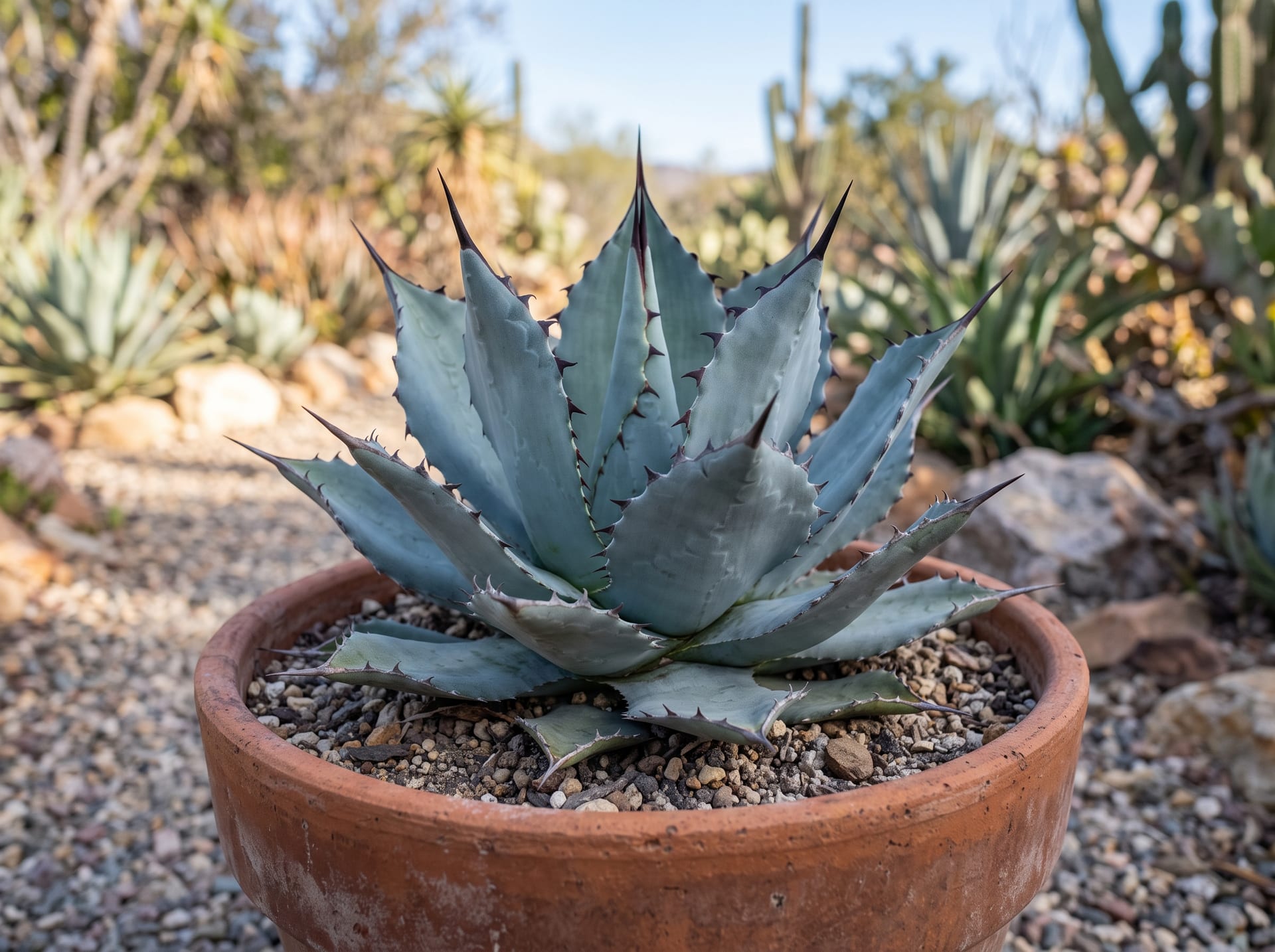
Agave Sobria
Agave sobria
Native to Baja California. Numerous subspecies offer rich variation in leaf color and form — from blue-white to gray and green. Extremely drought tolerant.
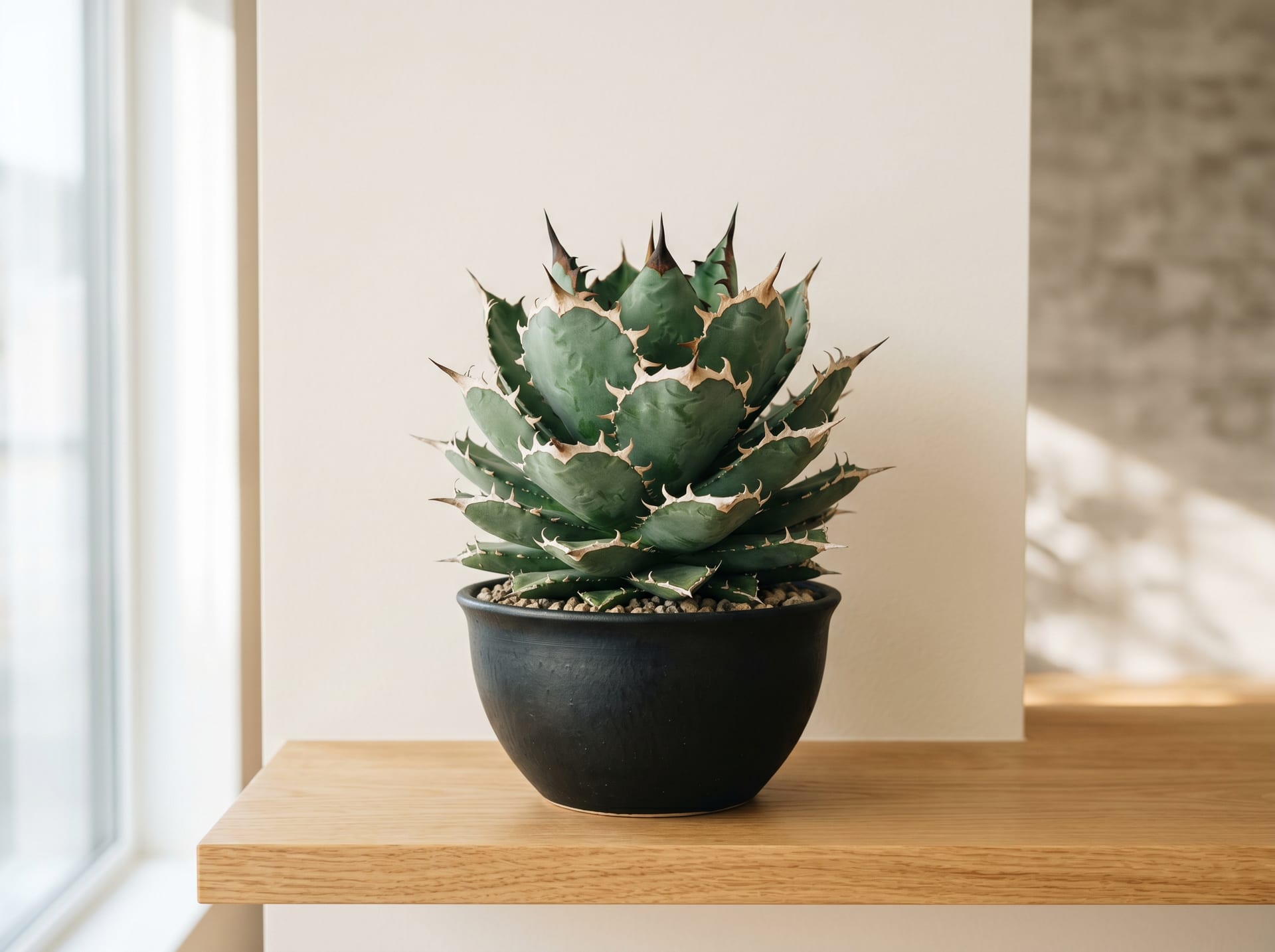
Agave Titanota
Agave titanota
The mid-sized agave that set off the current agave boom. It stays a manageable size in pots, with white marginal teeth and thick leaves. Provenance-based selections circulate under names such as 'Hakugei' and 'Himeganryu'.
Agave titanota 'Ashura'
Agave titanota 'Ashura'
A Taiwan-raised titanota selection with short, pale blue-white leaves and large white teeth. Its giveaway is the downward-pointing secondary teeth, larger than the main ones, a trait shared with 'Tarantula' and 'Demon Dragon'.
Agave titanota 'Bakemono' (Super Titanota)
Agave titanota 'Bakemono'
A titanota selection with large leaves bearing long, white, writhing teeth, sometimes called the finest of the named selections. 'Akuma-kun', 'Bakemono' and 'Super Titanota' are names for the same plant.
Agave titanota 'Black and Blue'
Agave titanota 'Black and Blue'
A compact titanota with thick, pale bluish-grey leaves and near-black teeth, selected by Kelly Griffin in the US from seed collected in Oaxaca. Often abbreviated to 'B&B'.
Agave titanota 'Black Panther'
Agave titanota 'Black Panther'
A titanota selection with broad leaves, moderately narrow tooth bands and a long, sharp tip spine: leaf width close to Juggernaut, with a more aggressive silhouette.
Agave titanota 'Black Whale' (Kokugei)
Agave titanota 'Black Whale'
A Taiwan-raised titanota selection with short, thick leaves in a rounded rosette. Often mistaken for Hakugei with wet, darkened spines, but its form marks it as a separate line, closer to 'Azarashi' or 'Black and Blue'.
Agave titanota 'Caesar'
Agave titanota 'Caesar'
A titanota selection with broad, short, bright blue-grey leaves packed into a ball and many long, pure-white teeth that twist wildly. The waviness shows even on two-leaf pups.
Related Content
Agave FAQ
- How much do agave cost?
- Small Titanota seedlings cost 2,000-10,000 yen, medium plants 10,000-50,000 yen, and select or rare varieties like Hakugei and Caesar can exceed 100,000 yen. Prices vary greatly by variety and condition.
- Can beginners grow agave?
- Agaves are drought-tolerant and hardy, making them easy for beginners. Place in a sunny spot with well-draining soil, and they're quite hard to fail with.
- What are the key points for growing agave?
- Sunlight, airflow, and drainage are the three essentials. Provide direct sunlight, use pumice or akadama-based soil, and water only when the pot is completely dry.
- What should I check when buying agave?
- Check whether it's rooted, leaves are developing healthily, and lower leaves aren't excessively dried. Imported bare-root plants require root establishment, so beginners should start with rooted domestically grown seedlings.
- How long do agave live?
- Agaves grow over decades and bloom only once in their lifetime before dying. However, they produce offsets, so with proper care you can enjoy them across generations.