Carnivorous Plant Encyclopedia
Encyclopedia of popular carnivorous plants with care guides, trapping mechanisms, and cultivation tips.
Featured Carnivorous Plant
Showing 44 of 140 species(1–24)
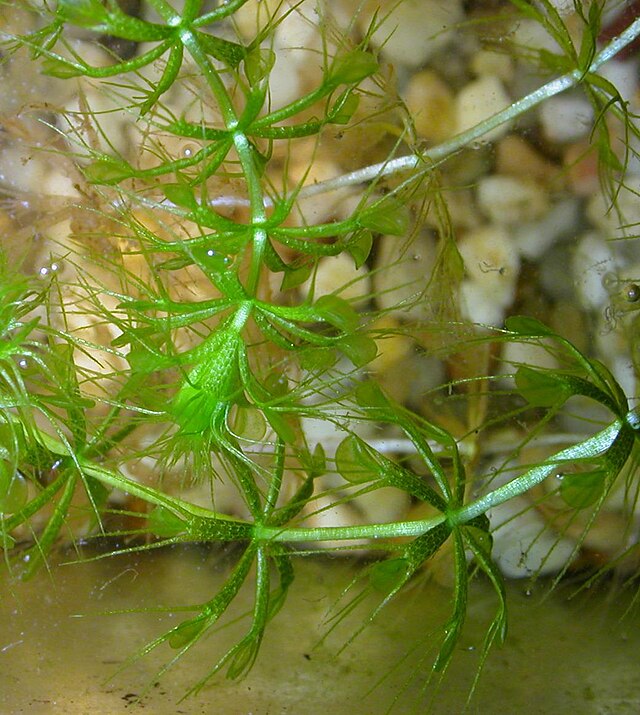
Aldrovanda Vesiculosa
Aldrovanda vesiculosa
Called Waterwheel Plant, a floating aquatic carnivore trapping prey without roots while drifting.
 © Denis Barthel / CC BY-SA 3.0
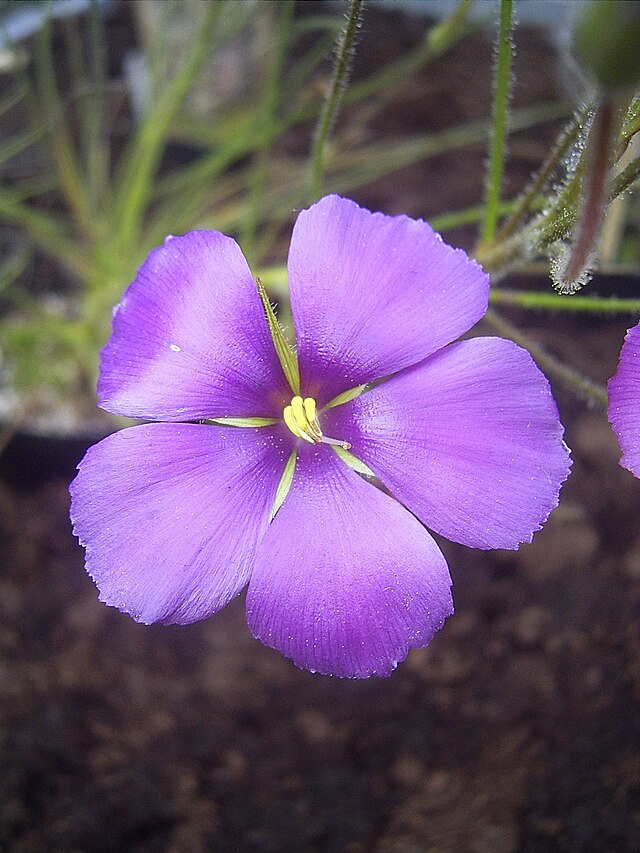
Byblis Gigantea
Byblis gigantea
A large perennial Byblis from Western Australia with spectacular mucilage-covered long leaves.
 © Gabriele Zoppoli / CC BY-SA 4.0
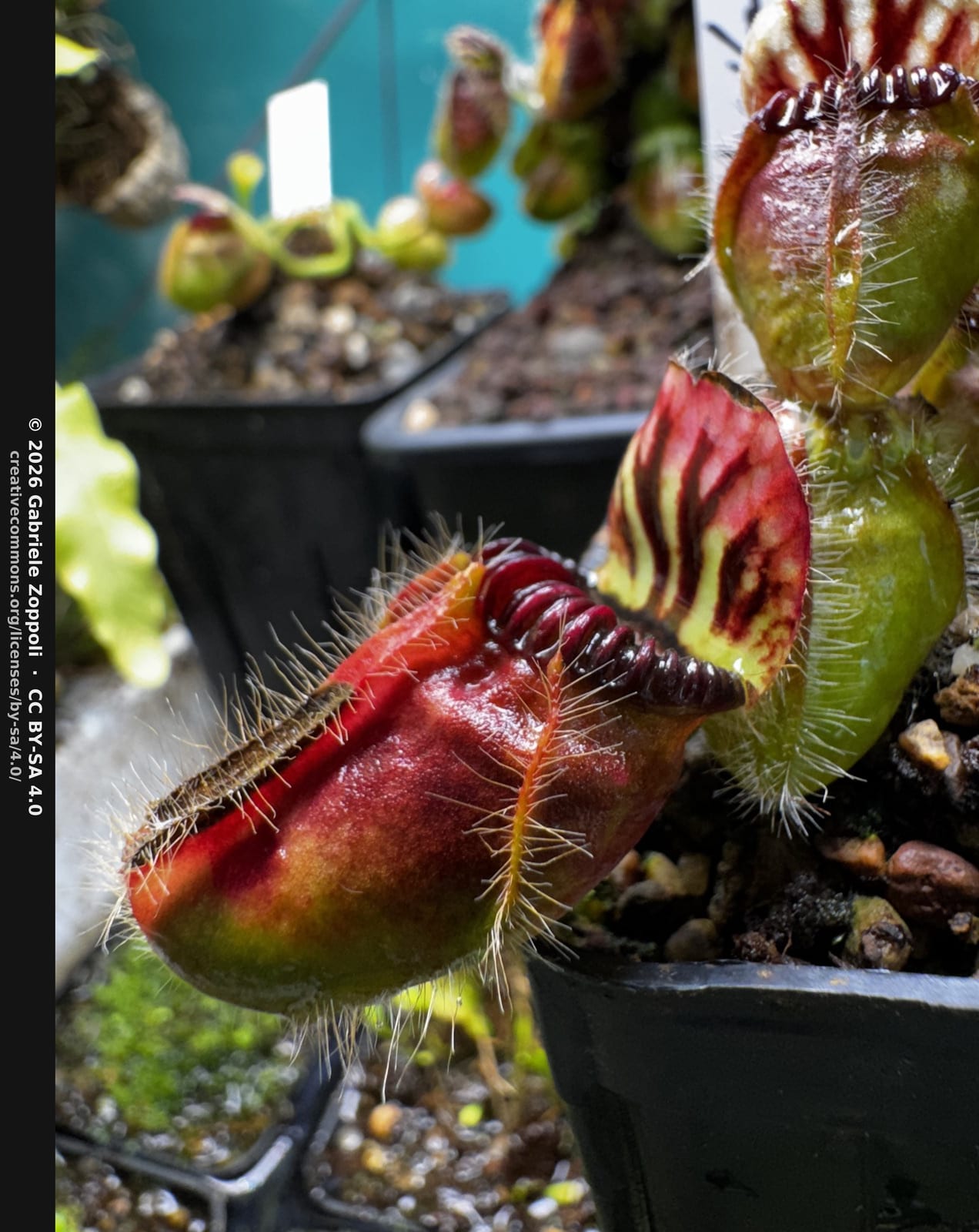
Cephalotus Eden Black
Cephalotus follicularis 'Eden Black'
A selected clone of the Albany pitcher plant. In strong light the rim, then the whole pitcher and even the lid darken to a near-black purple. Selected by a British grower in the late 1980s and registered with the ICPS in 2007.
 © Holger Hennern / CC BY-SA 3.0
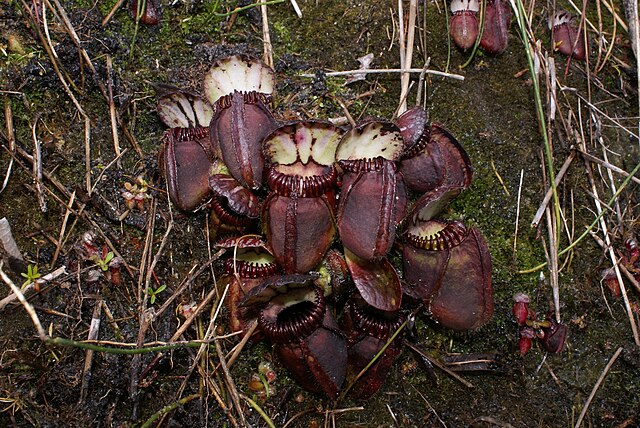
Cephalotus Follicularis
Cephalotus follicularis
A unique one-species-genus from Australia with cute small urn-shaped pitchers, coveted by collectors.
 © KyleGorczynski / CC0
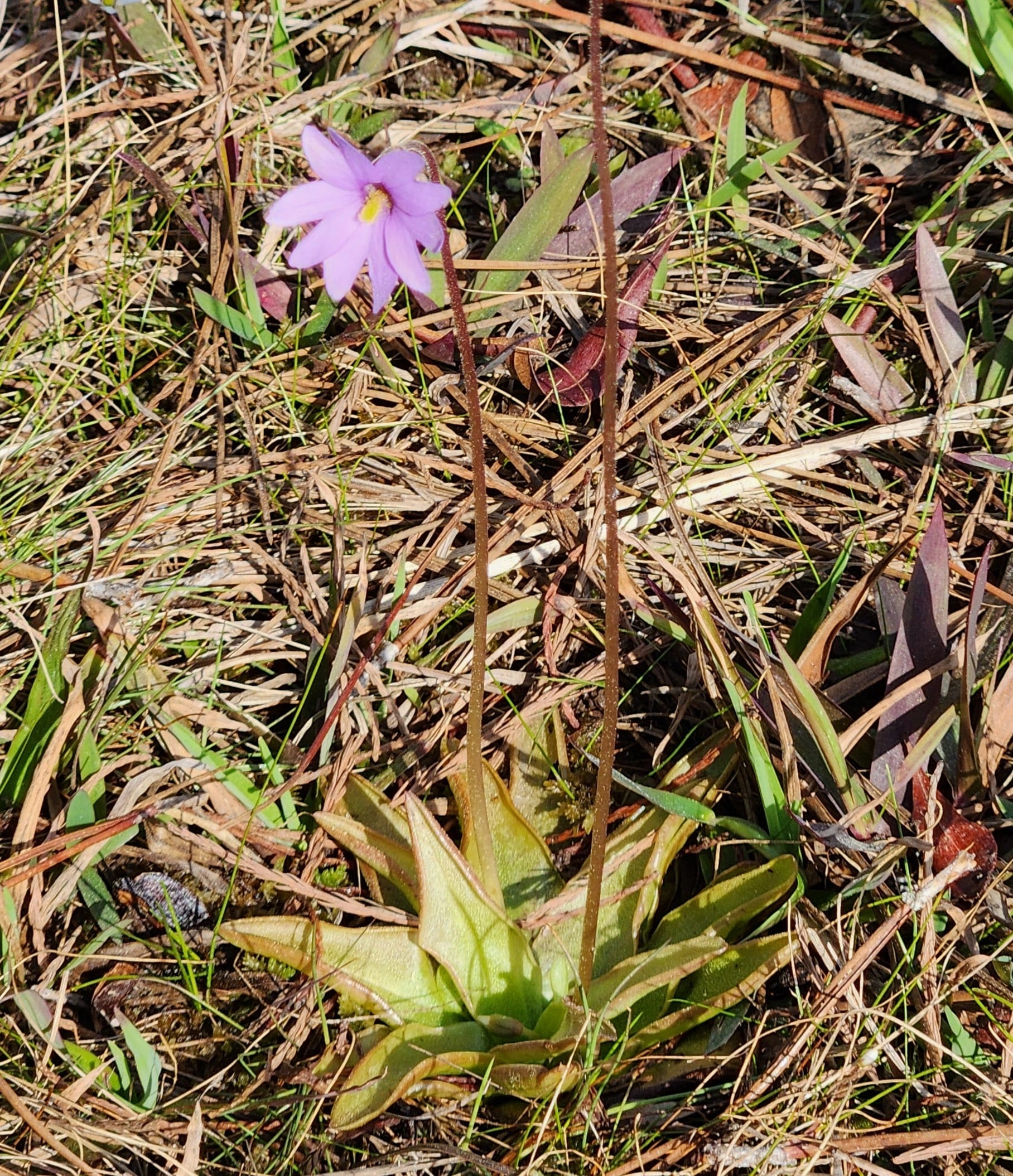
Chapman's butterwort
Pinguicula planifolia
A butterwort of wetlands along the US Gulf Coast. Its thin, flat leaves turn deep red to purple in full sun, and its purple flowers have petals notched almost halfway. A true wetland plant that can grow even when submerged.
 © NoahElhardt / CC BY-SA 3.0
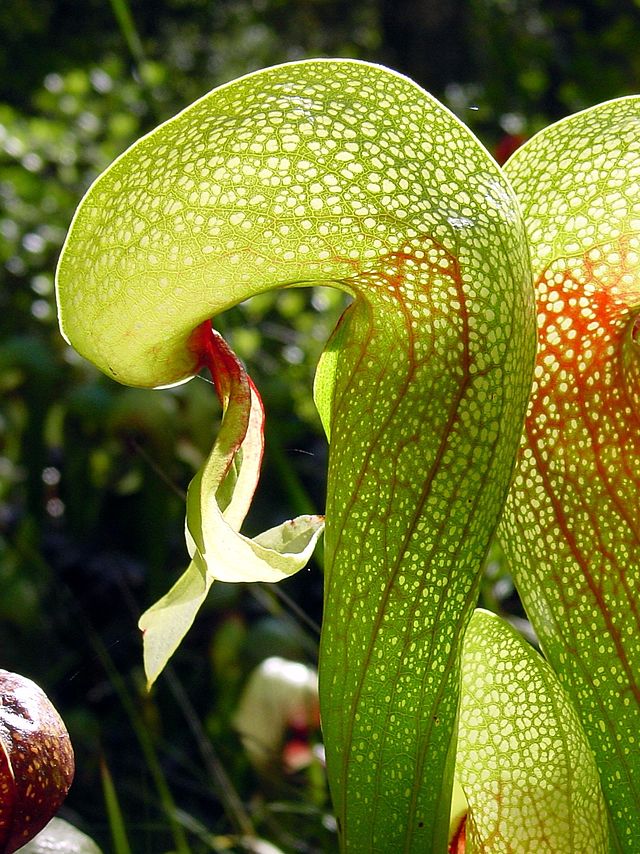
Darlingtonia Californica
Darlingtonia californica
Called Cobra Lily, a North American carnivorous plant with cobra-head-like pitchers preferring cool conditions.
 © Cooleyray / CC BY-SA 4.0
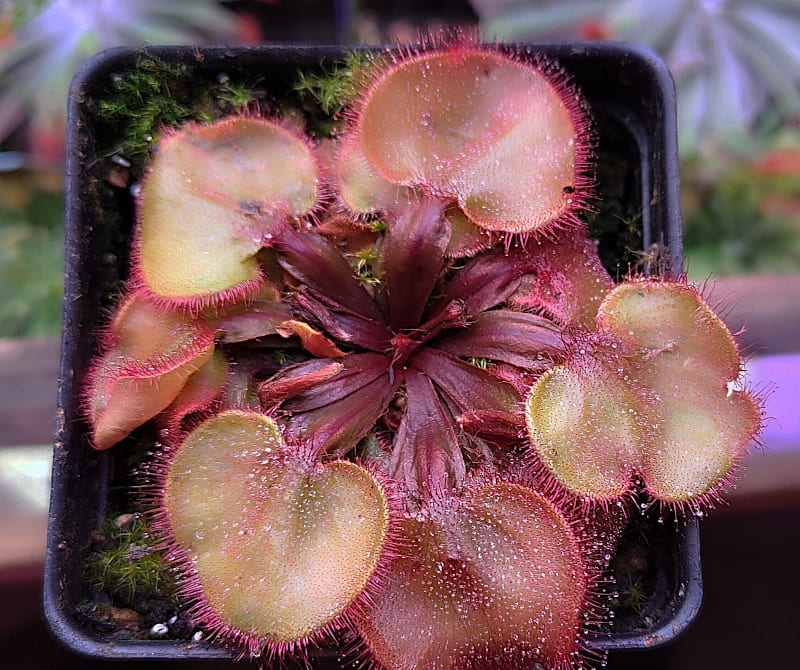
Drosera falconeri
Drosera falconeri
A sundew that lays large kidney-shaped leaves flat on the ground, looking rather like a Venus flytrap. Native to tropical northern Australia, it rests as a bud at soil level in the dry season. Unusually for a carnivorous plant it grows on alkaline, calcareous soil.
 © User:JarrahTree / CC BY 2.5 au
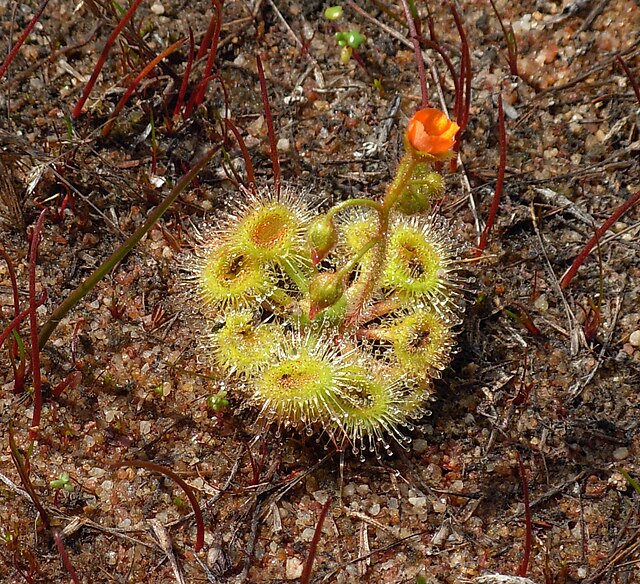
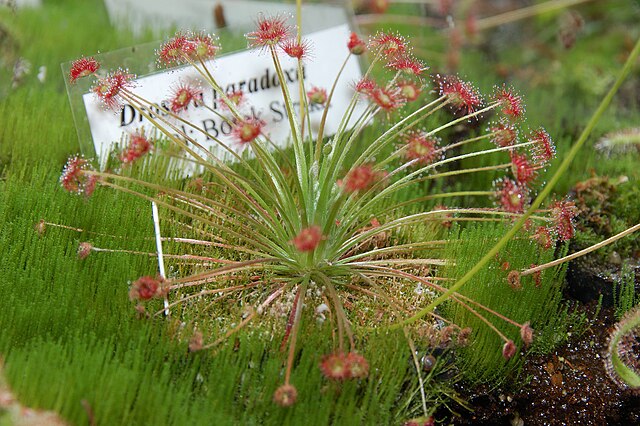
Drosera Glanduligera
Drosera glanduligera
An annual Australian sundew with both sticky tentacles and snap-tentacles that catapult prey in milliseconds.
 © Paulo Gonella / CC BY-SA 3.0
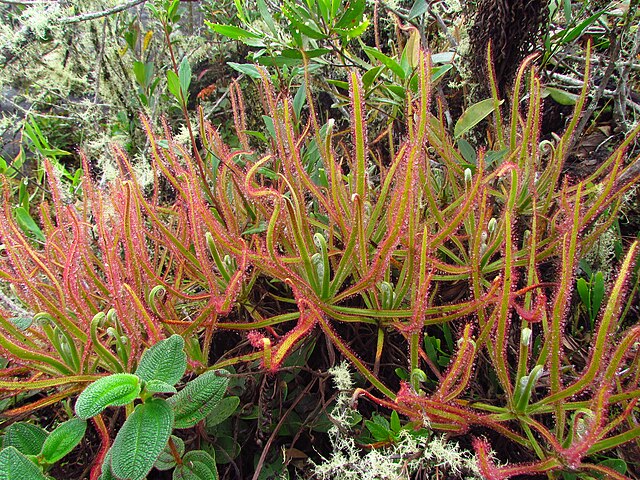
Drosera Magnifica
Drosera magnifica
Discovered in 2015, one of the world's largest sundews, endemic to one mountain in Brazil.
 © Michal Rubeš / CC BY 3.0 cz
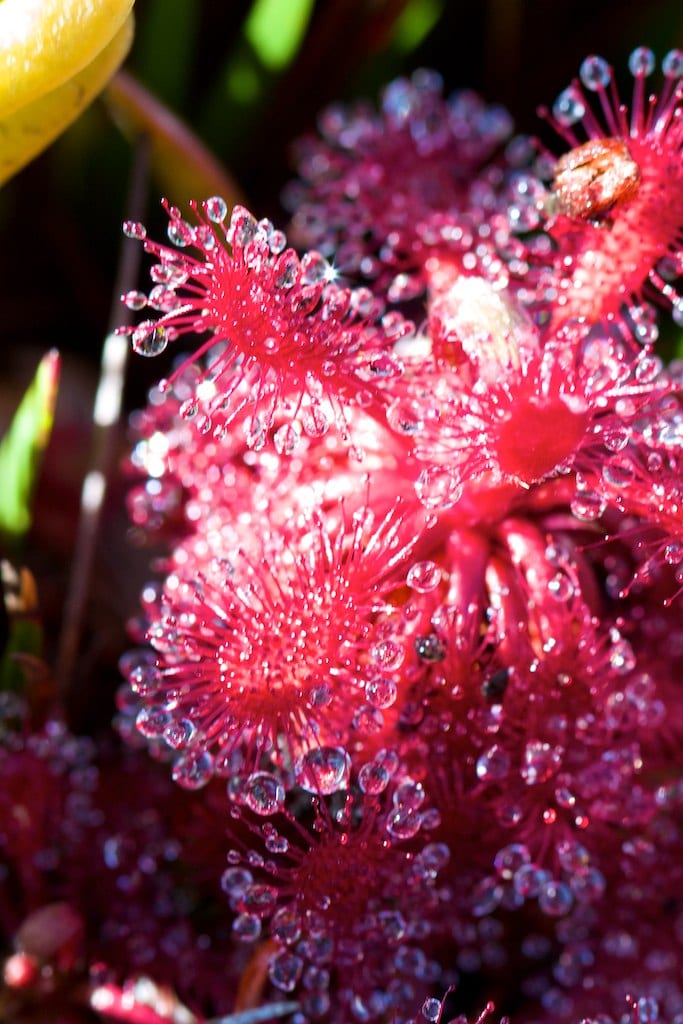
Drosera Paradoxa
Drosera paradoxa
A large tropical sundew with tall stems from northern Australia, wild and impressive.
 © user:Denis Barthel / CC BY-SA 3.0
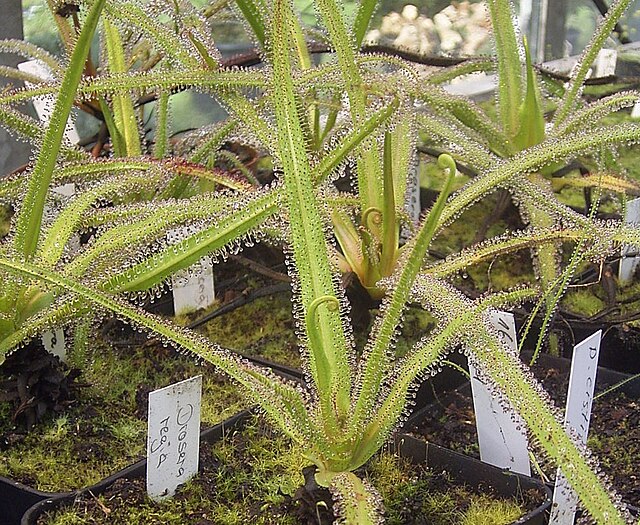
Drosera Regia
Drosera regia
Called King Sundew, the largest sundew with leaves exceeding 60cm.
 © Paulo Fassina / CC BY-SA 2.0
Drosera roraimae
Drosera roraimae
A highland sundew from South America whose type specimen was collected on Mount Roraima in the Guiana Highlands. It carries its sticky leaves on a short stem clothed in many dead leaves, and a glandular flower stalk bears about ten flowers.
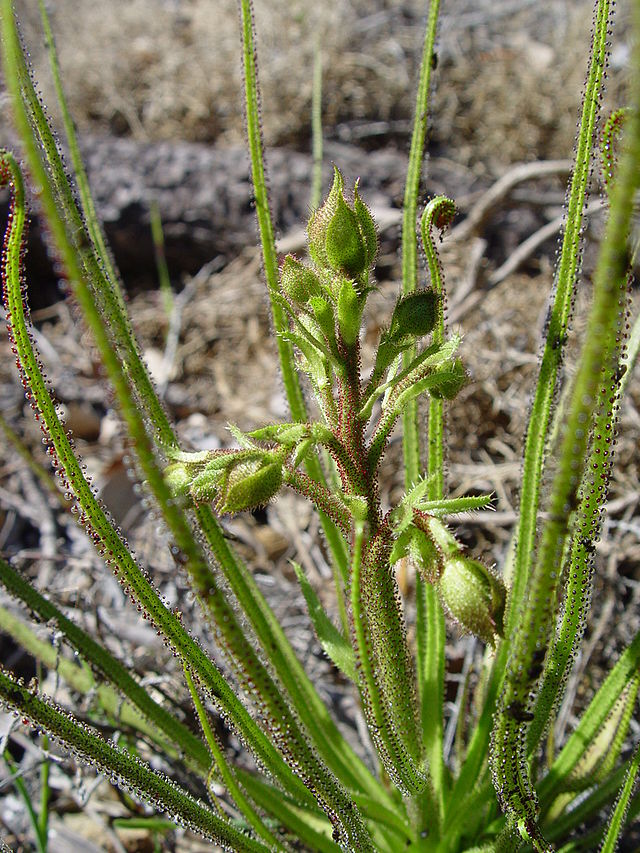 © Taken by Carsten Niehaus ( user:Lumbar ). / CC BY-SA 3.0
Drosophyllum Lusitanicum
Drosophyllum lusitanicum
A rare carnivorous plant from dry areas, attracting insects with honey-like sweet scent. Dislikes transplanting.
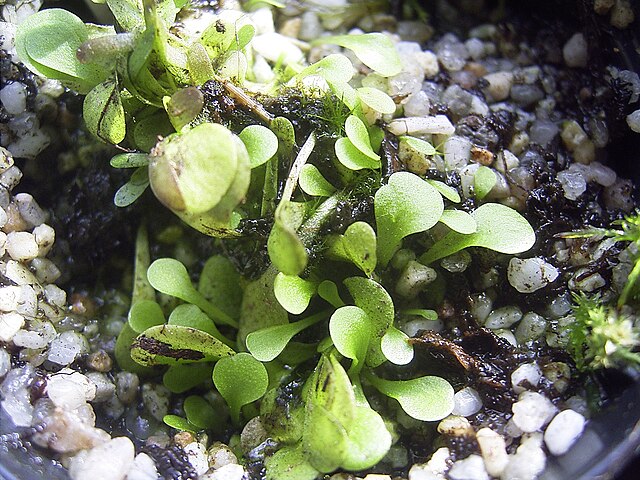 © No machine-readable author provided. Denis Barthel assumed (based on copyright claims). / CC BY-SA 3.0
Genlisea Violacea
Genlisea violacea
A South American carnivorous plant with underground spiral Y-shaped traps that capture microorganisms and protozoa.
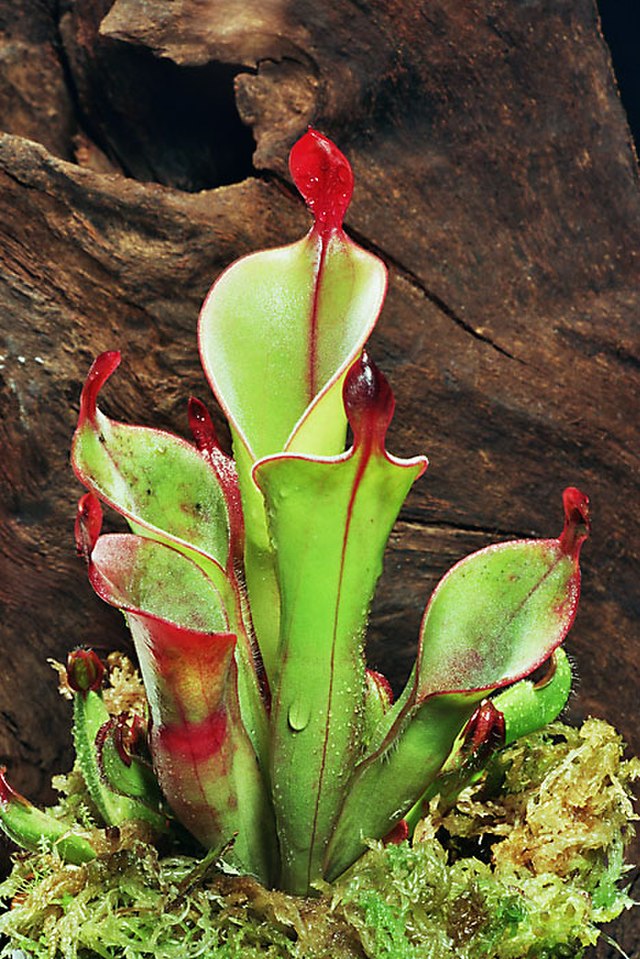 © Andreas Eils / CC BY-SA 3.0
Heliamphora Chimantensis
Heliamphora chimantensis
A beautiful Heliamphora from Chimanta Tepui with stunningly red-colored tubes.
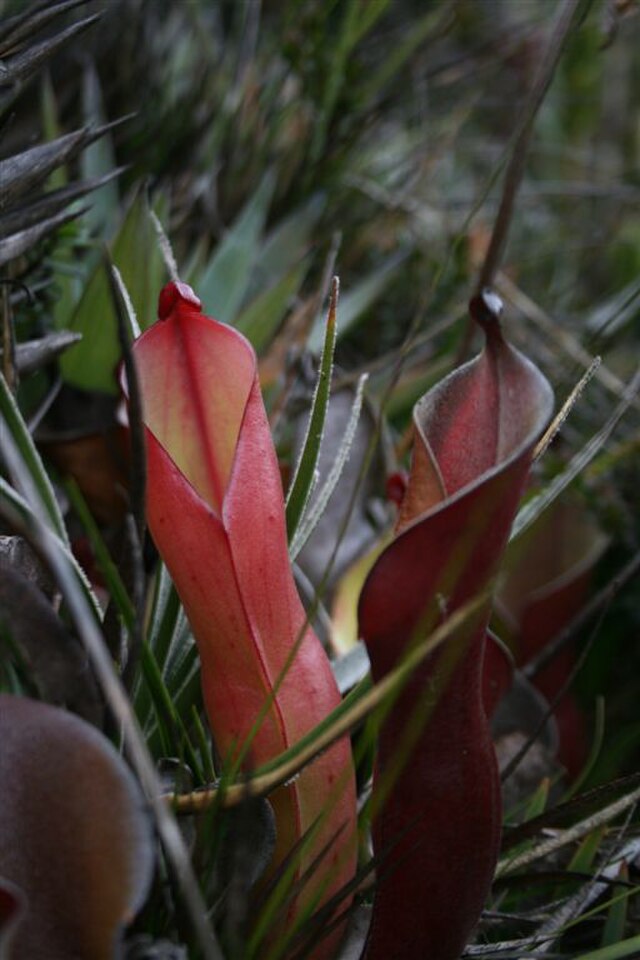 © Gérard Vigo / CC BY-SA 3.0
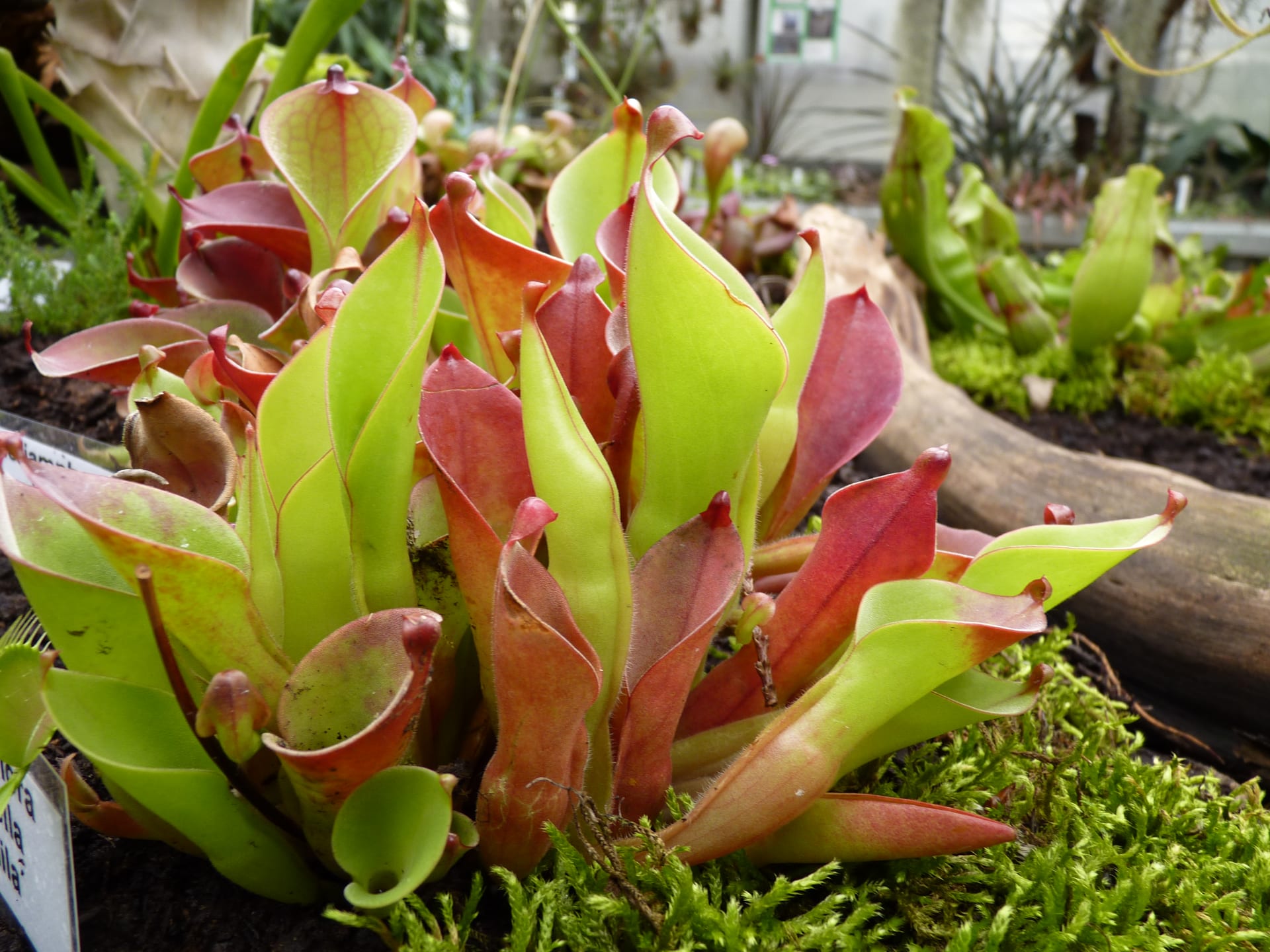
Heliamphora Nutans
Heliamphora nutans
A sun pitcher from Guiana Highlands table mountains with beautifully simple tubular pitchers.
 © Michal Klajban / CC BY-SA 3.0
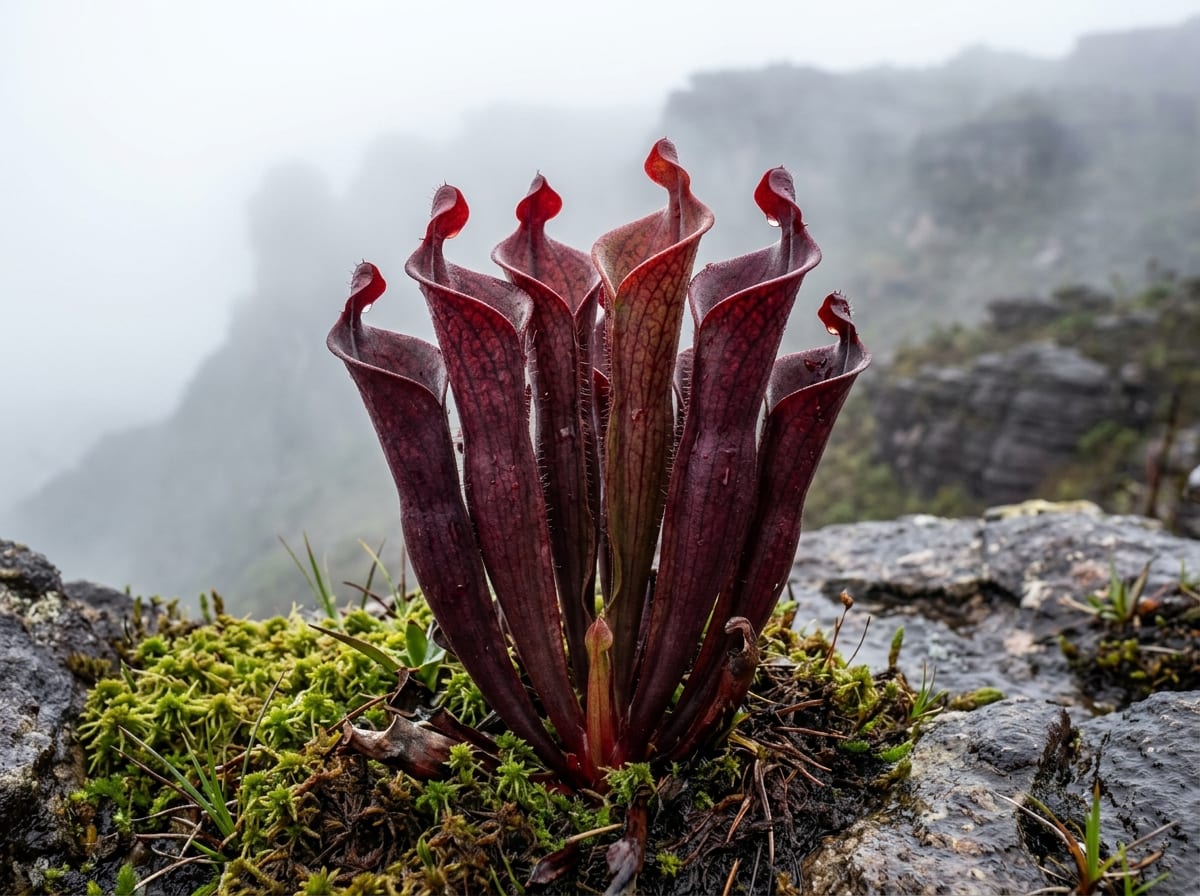
Heliamphora pulchella
Heliamphora pulchella
A small sun pitcher with clustered tubular pitchers 5-20 cm tall, each topped by a tiny helmet-shaped lid. It grows on the tepuis of the Chimantá Massif in Venezuela, and its name means 'pretty'.
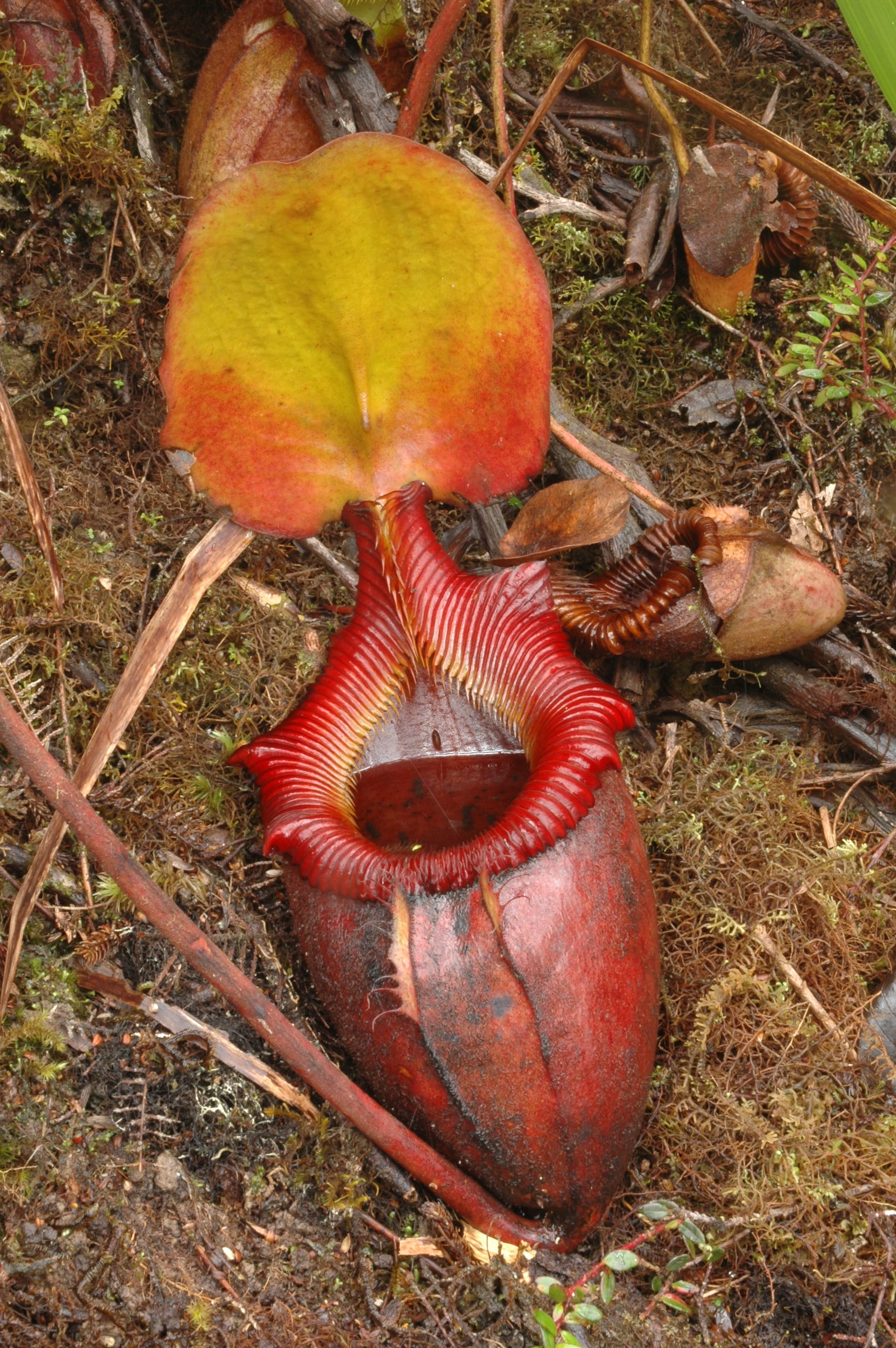
Heliamphora purpurascens
Heliamphora purpurascens
A sun pitcher species known only from the summit area of Ptari Tepui in Venezuela, at 2,400-2,500 m. Described only recently, it still has few detailed descriptions.
 © JeremiahsCPs (English Wikipedia) / CC BY-SA 3.0
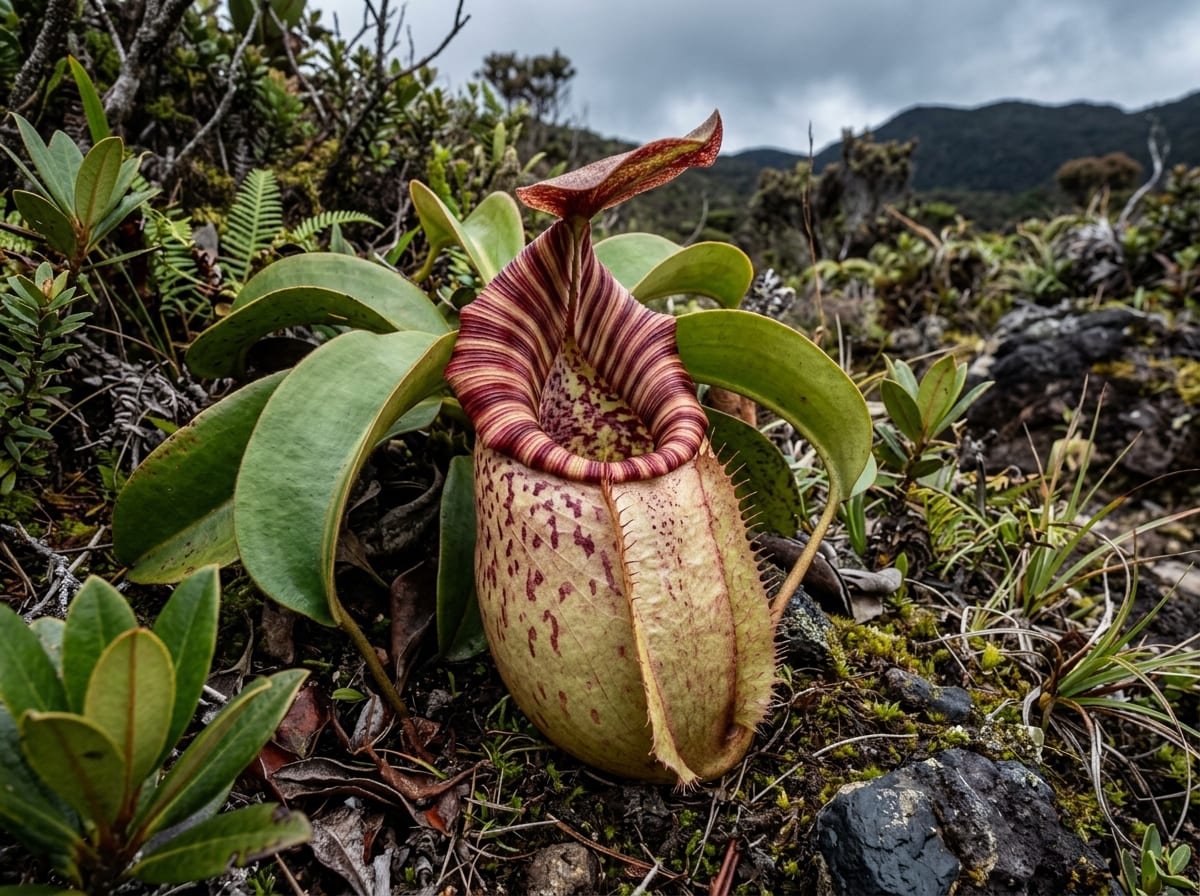
Nepenthes × kinabaluensis
Nepenthes × kinabaluensis
A natural hybrid between N. rajah and N. villosa, found only around Mount Kinabalu in Borneo. Ribs on the inner edge of the peristome end in long teeth, and its pitchers are intermediate between the parents. It forms upper pitchers more readily than either parent.
Nepenthes attenboroughii
Nepenthes attenboroughii
A large pitcher plant found only on Mount Victoria on Palawan in the Philippines. Its bell-shaped pitchers reach 30 cm tall, with volumes over 1.5 litres recorded. Named after the naturalist David Attenborough.
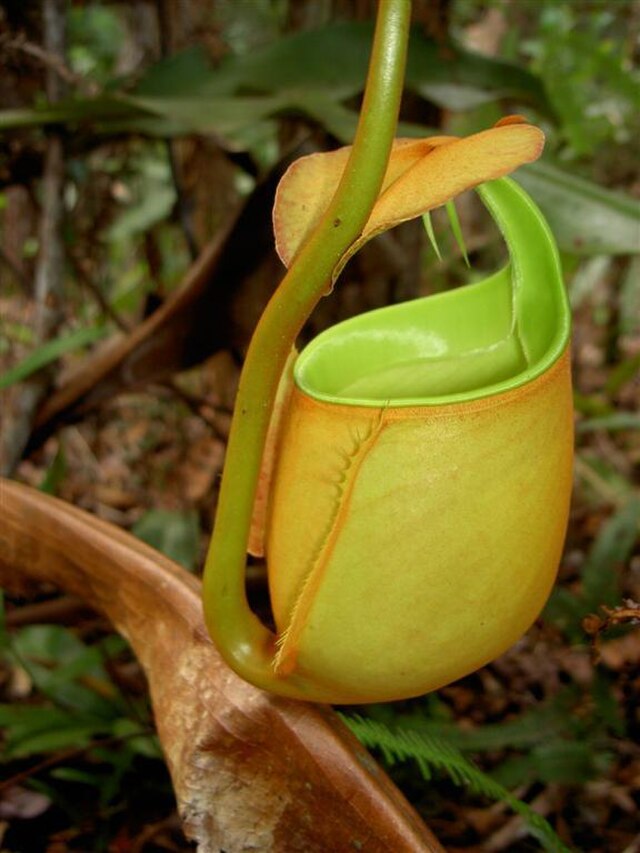 © Hans Breuer / CC BY 2.0
Nepenthes Bicalcarata
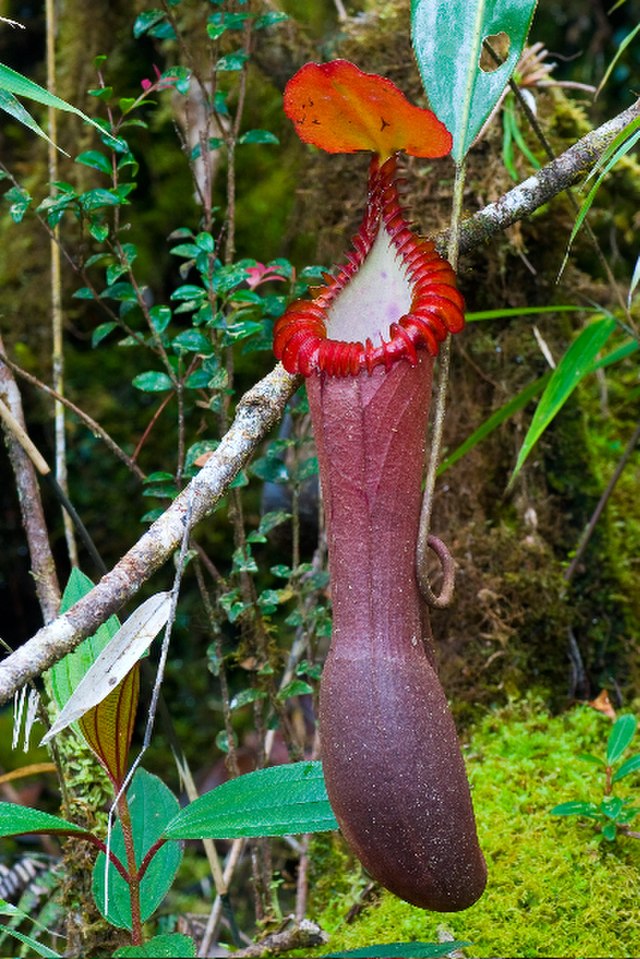
Nepenthes bicalcarata
A Nepenthes with two fang-like projections at the pitcher mouth, famous for ant symbiosis.
 © Michael Wolf (Webseite) / CC BY-SA 3.0
Nepenthes clipeata
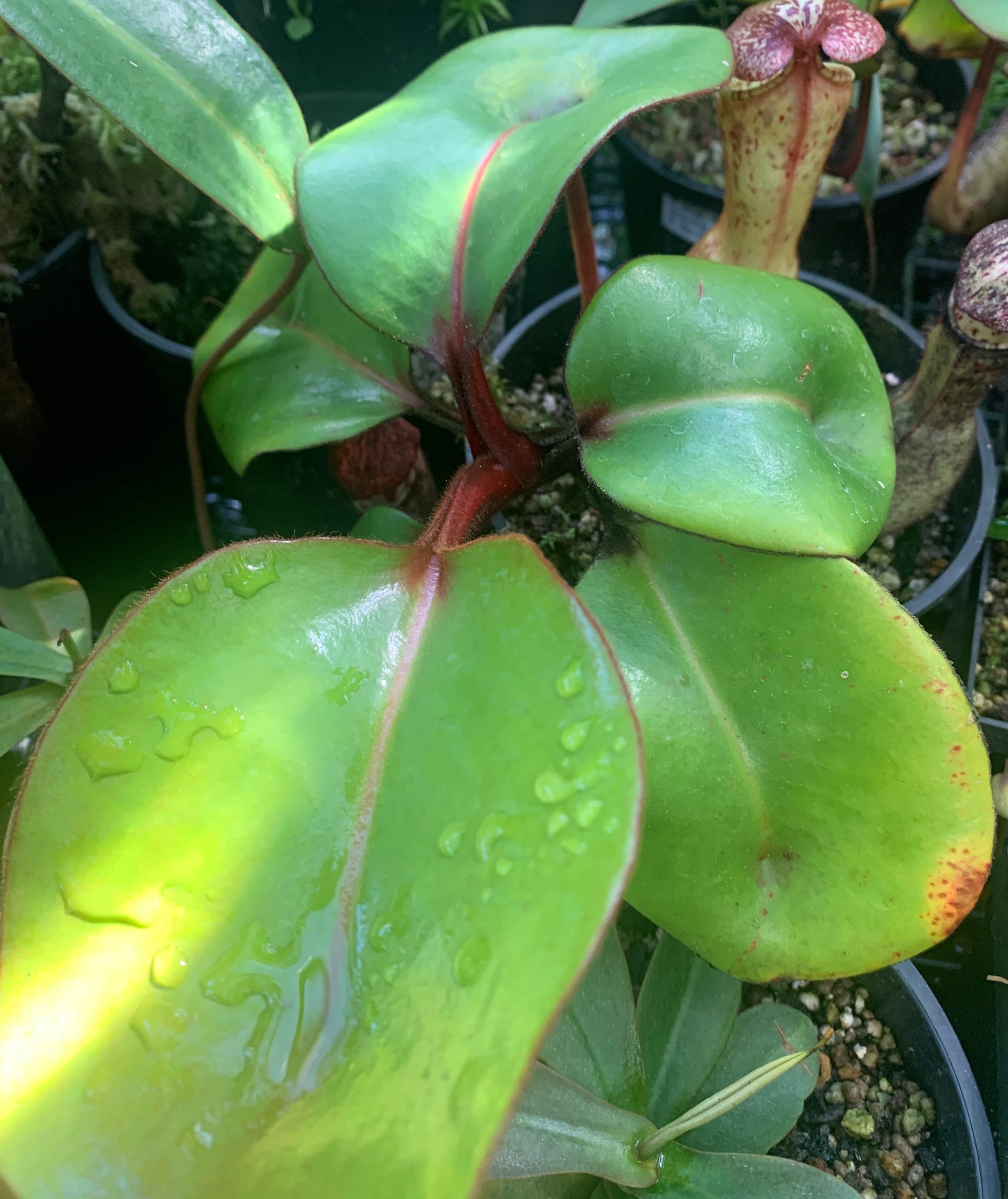
Nepenthes clipeata
A pitcher plant with round, shield-shaped leaves whose tendril joins the underside of the blade, and large pitchers swollen at the base. It grows only on the granite cliffs of Mount Kelam in Borneo and is among the most threatened species in the wild.
 © Attenboroughii at English Wikipedia / CC BY 3.0
Nepenthes Edwardsiana
Nepenthes edwardsiana
A ultra-rare Kinabalu endemic with exquisitely toothed peristome of unmatched beauty.
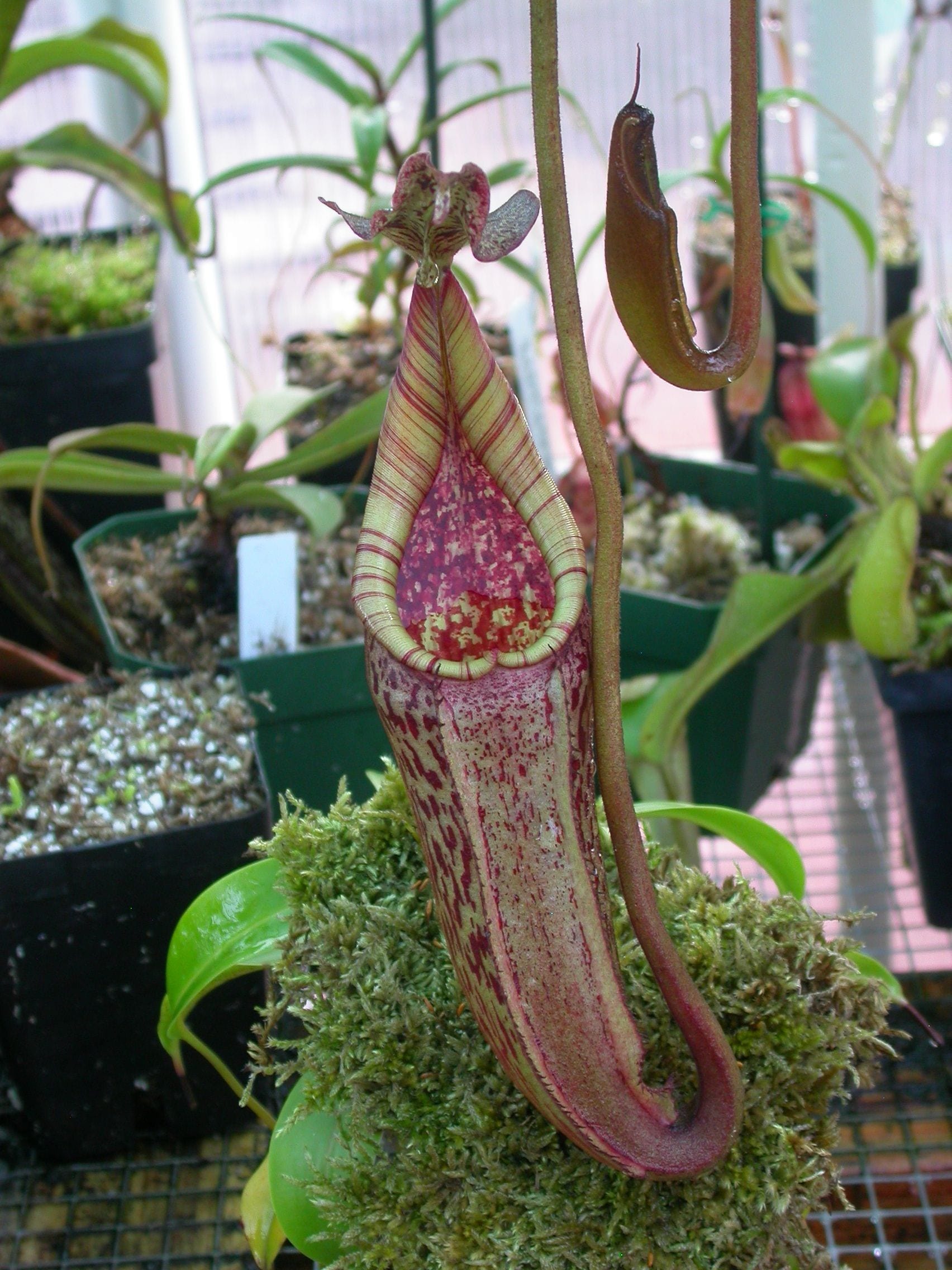 © JeremiahsCPs (English Wikipedia) / CC BY-SA 3.0
Nepenthes eymae
Nepenthes eymae
A highland pitcher plant endemic to Sulawesi, Indonesia. Its upper pitchers are narrow below and flare abruptly above like a wine glass, the feature that separates it from its close relative N. maxima.
Related Content
Carnivorous Plant FAQ
- How much do carnivorous plants cost?
- Venus Flytraps cost 500-2,000 yen, Nepenthes 1,000-10,000 yen, and rare highland Nepenthes can exceed tens of thousands of yen depending on species and size.
- Can beginners grow carnivorous plants?
- Venus Flytraps, Sundews, and Sarracenia are relatively easy and beginner-friendly. Keep them in a tray of water for humidity and place in a sunny spot.
- How long do carnivorous plants live?
- Venus Flytraps can live 10+ years with proper care, and Sarracenia are similarly long-lived. Nepenthes can grow for decades in the right conditions, getting progressively larger.
- What should I check when buying carnivorous plants?
- Check that leaves and traps are healthy with no root rot. For Nepenthes, choose specimens with pitchers. Avoid sudden environment changes after purchase and acclimate gradually.
- Do I need to feed insects to carnivorous plants?
- They grow fine through photosynthesis alone without feeding. Insects are supplemental nutrition and don't need to be force-fed. Outdoor plants catch bugs naturally, which is fun to observe.