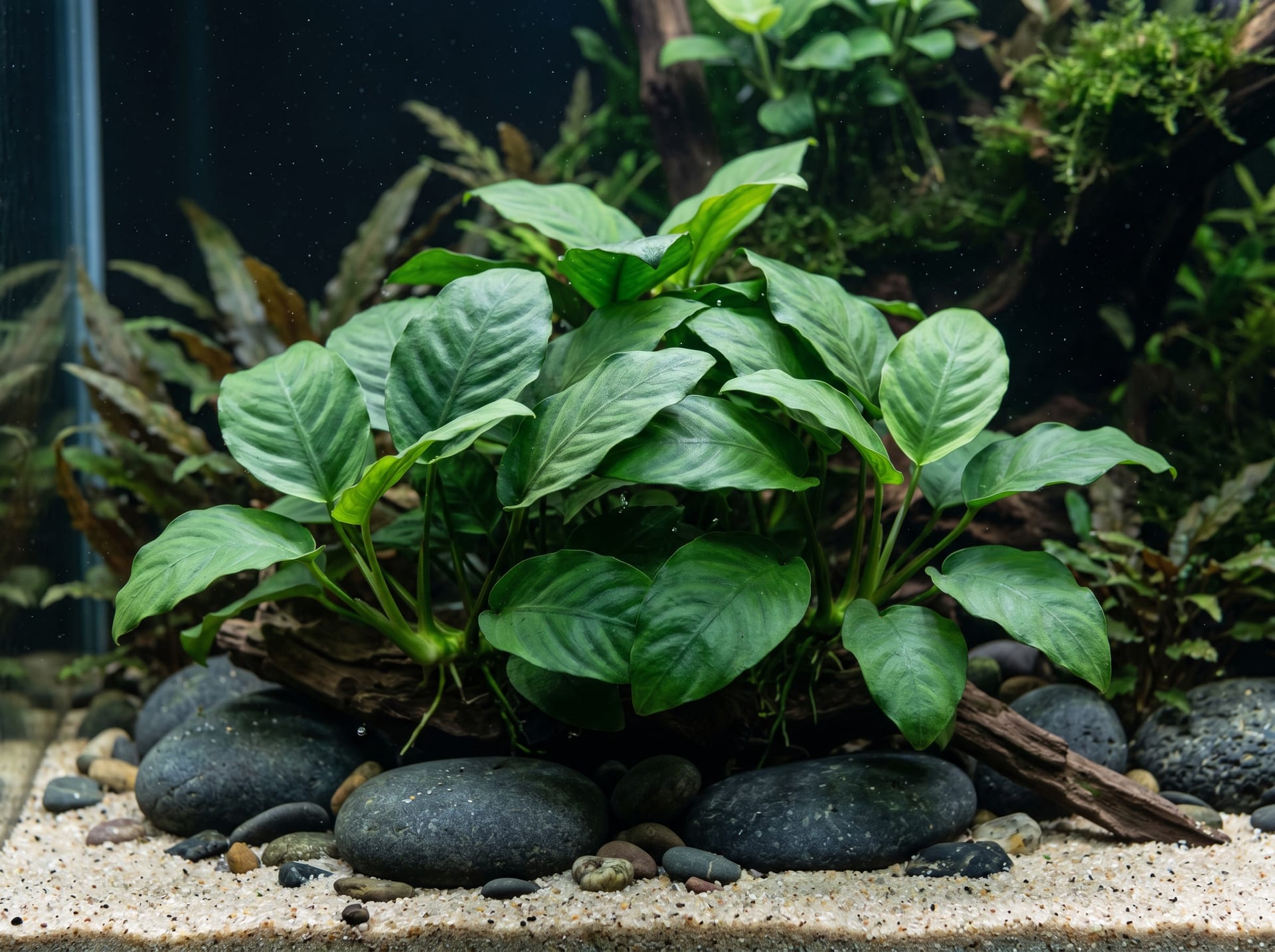
Anubias
Anubias is a shade-tolerant aquatic plant native to West Africa, prized for its ability to grow steadily even in low-light conditions. Its thick, firm leaves resist nibbling from herbivorous fish, making it a reliable choice for aquarists of all skill levels. Attaching it to driftwood or rocks is the classic approach, giving any aquascape a lush, natural appearance.
Grower Wanted!
List your plants on GrowerDirect and sell directly to customers nationwide!
6 Transparency Commitments from GrowerDirect
Grower provide complete information for all Aquatic Plants listings. We guarantee transparency in variety, origin, light requirements, and difficulty level.
- Variety Clarity
- Live Photos
- Color Details
- Origin Transparency
- Light Requirements
- Difficulty Level
Browse all 134 varieties
Difficulty Level
No listings match your filters
Adjust your filters, or get notified when new listings arrive.
Getting alerts is free with a member account. When new listings match your saved search, we'll notify you by email and in-app.
Browse other categories
Are you growing aquatic plants?
Register as a grower and connect with buyers directly.
Apply as a growerAbout Anubias
Anubias belongs to the family Araceae and is native to the streams and swamps of tropical West African rainforests. The genus name is said to derive from Anubis, the ancient Egyptian god, and its mysterious, sculptural appearance has long captivated aquarists worldwide. Its distinguishing features include rounded, deep-green leaves with a glossy surface and a creeping rhizome that spreads horizontally. As an amphibious plant, it adapts to both submerged and emergent cultivation. Its temperament is remarkably forgiving—it can be maintained in low light with minimal fertilization and without CO2 injection, making it ideal for simple, low-tech setups. Although its slow growth makes it somewhat prone to algae accumulation on the leaves, that same slow pace means a carefully composed layout remains intact for months or even years. Attached to driftwood or rock, Anubias brings depth and a sense of the wild to any aquarium and pairs well with virtually any tropical fish.
6 things to know before growing Anubias
1Never Bury the Rhizome
Burying the rhizome in substrate causes it to rot, which can kill the entire plant. Instead, tie or glue it onto driftwood or rocks, or simply rest it on the surface of the substrate. Keeping the rhizome exposed to water flow is the key to long-term health.
2Thrives in Low Light
Anubias is one of the few aquatic plants that thrives under low-intensity lighting. When kept alongside high-light plants, position it in shaded spots such as behind driftwood. Extended exposure to strong light tends to encourage algae growth on its slow-growing leaves.
3Algae Prone on Leaves
Because its leaves grow very slowly, algae—especially black beard algae—can colonize the surface, which is the plant's main vulnerability. Limit lighting to 8 hours or fewer per day, maintain moderate water flow, and perform regular water changes to control nutrients. Keeping Amano shrimp or otocinclus catfish as tankmates is also an effective preventive measure.
4Very Slow Grower
Anubias typically puts out only a few new leaves per month, making it one of the slowest-growing aquatic plants. It is not the best choice if you want rapid layout changes, but once established it can thrive for years, rewarding patient aquarists with lasting beauty.
5Adaptable Water Conditions
Anubias tolerates a wide range of conditions, thriving at temperatures of 20–30°C and pH levels of 6.0–7.5, making it compatible with most tropical fish setups. It prefers soft, slightly acidic water but adapts well to moderately hard water, so precise water chemistry is not critical. Avoid sudden temperature swings.
6CO2 Not Required
Anubias grows without CO2 injection, making it ideal for beginners who want to keep equipment costs low. Adding CO2 can produce richer leaf color and slightly faster growth, but excess CO2 may promote algae, so start with a low dose if you choose to inject. Use liquid fertilizers sparingly as well.
Frequently asked questions about Anubias
- Q.Is CO2 injection necessary?
- A.Anubias is one of the few aquatic plants that grows well without CO2 injection. That said, supplementing CO2 can improve leaf color and luster and may modestly accelerate growth.
- Q.Black beard algae keeps growing on my leaves
- A.Black beard algae is commonly caused by excess phosphate or stagnant water flow. Increasing water changes to reduce phosphate levels and introducing Amano shrimp can help keep it under control.
- Q.Can I bury the rhizome in the substrate?
- A.Burying the rhizome in substrate deprives it of oxygen and leads to rot, so always keep it exposed. If planting in substrate, insert only the roots lightly, leaving the rhizome fully above the surface.
- Q.Why are my leaves turning yellow?
- A.Yellowing is usually caused by nitrogen or potassium deficiency, or stress from excess light encouraging algae competition. Try adding a small dose of liquid fertilizer and reviewing your lighting duration and intensity.
- Q.Can Anubias grow in a goldfish tank?
- A.Goldfish tend to eat most aquatic plants, but Anubias is relatively resistant to grazing thanks to its tough leaves. However, it is not completely immune—some goldfish varieties or individual fish may still nibble at the leaves.
Handy Growing Tools for Anubias
Anubias related articles
Rare Attachment-Type Aquatic Plants Beyond Anubias, Bucephalandra, and Willow Moss | The Charm of Distinctive Varieties like Bolbitis
Beyond the standard attachment-type aquatic plants—Anubias, Bucephalandra, and Willow Moss—there are distinctive attachment-type aquatic plants like Bolbitis. This article introduces their charm, cultivation tips, and how to incorporate them into aquascaping layouts.
Complete Guide to Low-Tech Aquatic Plant Tanks Without CO2|Recommended Aquatic Plants and Setup Methods
Introduces 10 aquatic plant species that thrive without CO2 and under weak lighting. Covers selection of shade-loving species like Willow Moss, Anubias, and Cryptocoryne, species to avoid that demand high light, substrate and equipment selection, setup procedures, and algae control strategies.
10 Beginner-Friendly Aquatic Plants That Grow Without CO2 | Fail-Proof Types and Management Tips
Introducing 10 CO2-free aquatic plants suitable for beginners starting aquatic plant cultivation with minimal risk of failure. Detailed explanation of the characteristics, cultivation methods, and recommended use cases for each type, including Anubias, Microsorum, and Willow Moss.
Growing Low-Light Aquatic Plants Without CO2: How to Create Beautiful Layouts in Low-Tech Tanks
Learn how to select and care for aquatic plants that grow without CO2 supplementation and in low-light conditions. We introduce simple and beautiful aquascaping techniques using beginner-friendly species such as Anacharis, Willow Moss, and Anubias.
Anubias Types and Complete Growing Guide | Rooting Aquatic Plants Perfect for Beginners
Detailed explanation of Anubias types, rooting methods, trimming, and propagation. Introducing the appeal of hardy aquatic plants that grow without CO2 and the characteristics of each variety.
[2026 Edition] 15 Best Aquatic Plants for Beginners | How to Choose and Tips for Growing
Introduces 15 aquatic plants recommended for beginners, starting with species that don't require CO2 such as Anubias nana. Choose plants by light level, growth speed, and planting method. Equipment for a 60cm tank costs roughly ¥13,500–57,000, and the basic rule for algae control is to keep lighting to 8 hours or less.
More in this category
Can't find the plant you're looking for?
Post your wishes for free and growers with matching plants will contact you with introductions.