Microsorum
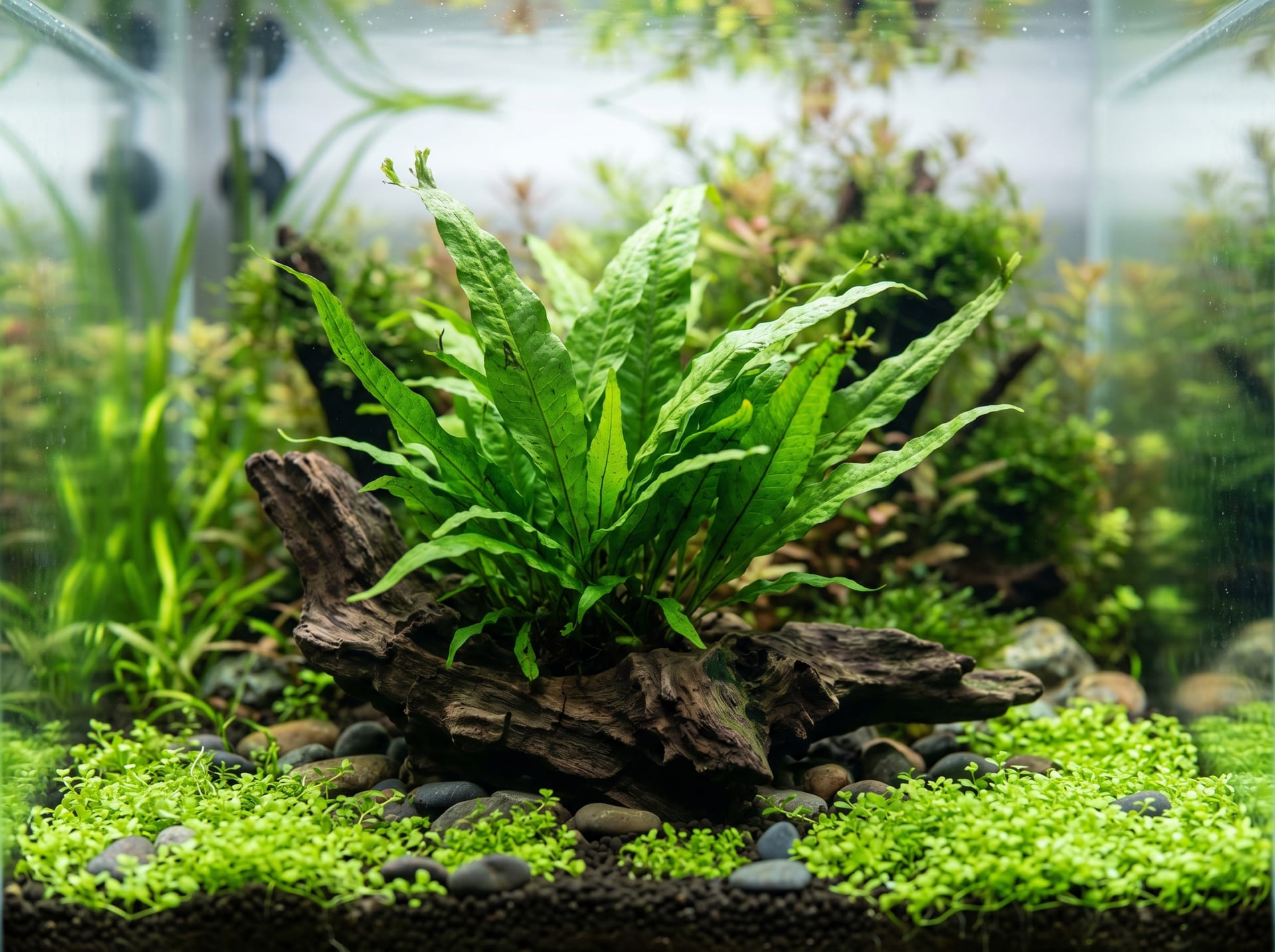
A fern aquatic plant from Southeast Asia. Attaches to driftwood and rocks, popular for its unique leaf shape.
View Microsorum encyclopedia →Grower Wanted!
List your plants on GrowerDirect and sell directly to customers nationwide!
6 Transparency Commitments from GrowerDirect
Grower provide complete information for all Aquatic Plants listings. We guarantee transparency in variety, origin, light requirements, and difficulty level.
- Variety Clarity
- Live Photos
- Color Details
- Origin Transparency
- Light Requirements
- Difficulty Level
Browse all 134 varieties
Difficulty Level
No listings match your filters
Adjust your filters, or get notified when new listings arrive.
Getting alerts is free with a member account. When new listings match your saved search, we'll notify you by email and in-app.
Browse other categories
Are you growing aquatic plants?
Register as a grower and connect with buyers directly.
Apply as a growerMicrosorum key facts
- Growing Difficulty
- Beginner-friendly
- Lifespan
- Perennial
- Size
- 10-30cm
- Watering
- Liquid fertilizer
- Housing
- Attach to wood or rock (do not bury in gravel)
- Lighting
- Excellent shade tolerance lets it grow in low light, even in dim spots such as the shadow of driftwood.
- CO2 & Fertilizer
- No CO2 is needed. As an epiphyte it takes nutrients mainly from liquid fertilizer rather than substrate fertilizer, and light dosing is enough.
- Trimming & Propagation
- Plantlets form on the tips and undersides of mature leaves. Once grown, detach them and attach to wood or rock to propagate.
- Cautions
- Because it grows slowly, algae tends to settle on the leaves. Cut old or damaged leaves at the base and keep algae under control.
About Microsorum
Microsorum, widely known as Java Fern, is a fern native to the tropical rainforests of Southeast Asia, where it grows attached to rocks and driftwood along streams and rivers — thriving in both submerged and emersed conditions. This adaptability translates well to the aquarium, where it is cultivated for its striking, leathery leaves that vary considerably by variety: the slender Narrow Leaf, the ornate Windelov with its branching tips, and several others. The deep green, durable foliage resists grazing by herbivorous fish, adding practical value to its visual appeal. Microsorum is exceptionally resilient across a broad range of water temperatures and chemistry, tolerating the minor fluctuations that often challenge beginners. Its signature attachment to hardscape — rather than rooting in substrate — enables aquascapers to compose naturalistic, stream-inspired layouts with remarkable ease. A long-standing staple of the hobby, it remains as relevant in a simple beginner tank as it does in a meticulously crafted planted aquarium.
7 things to know before growing Microsorum
1Never Bury in Substrate
Burying Microsorum's rhizome in gravel or substrate causes it to rot. Instead, tie it to driftwood or rocks using fishing line or aquarium-safe thread and allow it to attach naturally. Full attachment typically takes several weeks to about a month.
2Thrives in Low Light
Microsorum does not require intense lighting and grows well under moderate light for around 8 hours a day. Avoid direct sunlight or high-intensity setups that promote algae growth. Basic growth can be maintained without CO2 injection.
3Feed with Liquid Fertilizer
Liquid fertilizer suits Microsorum better than substrate tabs, as it absorbs nutrients through its leaves and roots. Add an aquatic-plant liquid fertilizer containing iron and potassium once or twice a week. Overdosing promotes algae, so keep doses conservative.
4Wide Water Parameter Tolerance
Microsorum tolerates pH 5.5–7.5 and water temperatures of 20–30°C, compatible with most tropical fish setups. It is sensitive to sudden parameter shifts, so limit water changes to about one-third of the tank volume at a time. Regular partial water changes are key to keeping the plant healthy.
5Watch for Black Leaf Spots
Black or brown spots on leaves—often called "black spot disease"—are commonly linked to poor water quality or insufficient light. Trim affected leaves promptly and improve conditions through water changes and lighting adjustments. Severe cases can weaken the entire plant, so early action matters.
6Slow but Steady Growth
Microsorum grows relatively slowly, typically producing only a few new leaves per month. Heavy trimming is rarely needed, but removing old or damaged leaves periodically keeps the plant tidy. With patient long-term care, it develops into a lush, attractive clump.
7Propagate by Rhizome Division
Once the rhizome has grown, you can propagate by cutting it into sections with two or three nodes each using clean scissors. Fix the divisions to new driftwood or rocks promptly to prevent the cut ends from deteriorating. Propagation from spores on leaf undersides is also possible but much slower, so rhizome division is the common method.
Frequently asked questions about Microsorum
- Q.How long does it take for Microsorum to attach to driftwood?
- A.Under typical aquarium conditions, roots usually anchor firmly within one to two months. Keep the plant secured with fishing line or soft ties until you can see the roots gripping the surface. Once attachment is confirmed, the ties can be safely removed.
- Q.My leaves are turning brown and melting. What is causing this?
- A.Sudden changes in water chemistry, a buried rhizome, or the natural die-back of older leaves are the most common causes. Check that the rhizome is not buried in substrate, remove affected leaves, and perform a partial water change. If new leaves are still emerging, the plant itself is likely in good health.
- Q.Can Microsorum be kept with goldfish or plecos?
- A.Microsorum's tough, leathery leaves are less appealing to most herbivorous fish, making it one of the better choices for goldfish tanks. However, large plecos may still nibble on the leaves, so monitoring is advisable. Individual fish behavior varies, so observe your tank after introducing the plant.
- Q.Which variety is best for beginners?
- A.The standard Microsorum or Narrow Leaf variety is the most widely available and recommended for beginners, offering a reliable balance of hardiness and ease of cultivation. Once you are comfortable with the basics, exploring more decorative varieties such as Windelov adds an enjoyable new dimension to the hobby.
- Q.Will Microsorum die without fertilizer?
- A.Microsorum rarely dies without added fertilizer, but growth may slow considerably and leaves can lose their rich color. In tanks with a good fish population, waste products often supply sufficient nutrients, making additional fertilization unnecessary. Observe your plant's condition and supplement with a small amount of liquid fertilizer only when needed.
Handy Growing Tools for Microsorum
Learn more about Microsorum in the encyclopedia
View Microsorum encyclopedia entry →
Care difficulty, size, origin and light needs — all basics covered.
Microsorum related articles
Complete Guide to Microsorum Types and Care | Tips for Growing Popular Attachment Aquatic Plants Beautifully
Microsorum, a standard attachment aquatic plant alongside Willow Moss. This guide covers the main types, methods for attaching to driftwood and rocks, light and water quality management, and trimming techniques.
10 Beginner-Friendly Aquatic Plants That Grow Without CO2 | Fail-Proof Types and Management Tips
Introducing 10 CO2-free aquatic plants suitable for beginners starting aquatic plant cultivation with minimal risk of failure. Detailed explanation of the characteristics, cultivation methods, and recommended use cases for each type, including Anubias, Microsorum, and Willow Moss.
10 Recommended Water Plants for Beginners | Carefully Selected Easy-to-Grow Species
10 beginner-friendly water plants that grow without CO2. We introduce hardy species like Anubias, Microsorum, and Vallisneria.
10 Aquatic Plants That Grow Without CO2 | Create a Beautiful Tank on a Budget
We introduce 10 carefully selected aquatic plants that thrive without CO2 supplementation. Learn how to cultivate aquatic plants like Anubias, Microsorum, and Vallisneria, and create beautiful layouts even with low light and low costs.
10 Recommended Aquatic Plants That Grow Without CO2
Carefully selected aquatic plants that thrive without CO2 supplementation. We introduce shade-tolerant, beginner-friendly aquatic plants like Anubias, Microsorum, and Willow Moss that are easy to get started with.
More in this category
Can't find the plant you're looking for?
Post your wishes for free and growers with matching plants will contact you with introductions.