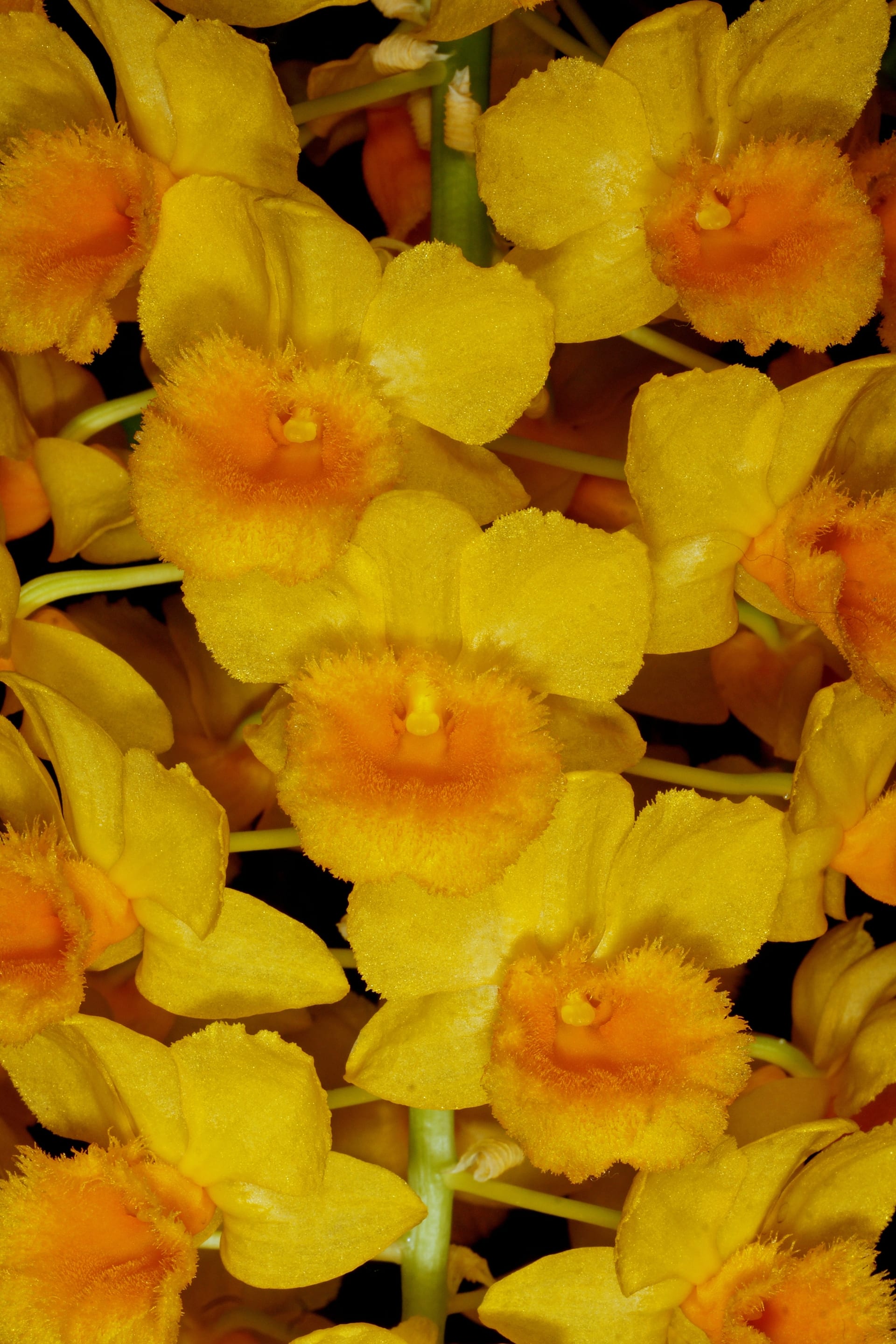
 © Orchi / CC BY-SA 3.0
Dense-flowered Dendrobium
Dendrobium densiflorum is a dendrobium prized for its dense, drooping clusters of pale-yellow flowers with golden-orange lips. Its stems grow upright with a distinctive squared cross-section. It is known as one of the sturdier, easier species among the cluster-flowering dendrobiums, and while it is rated for intermediate growers, getting the light and the winter rest right makes it rewarding to flower. As a perennial, it can be divided and grown on for years, though individual blooms last only about a week, so it is best enjoyed as a flush that opens gradually along the whole cluster. Mature canes typically reach 20-40 cm, keeping the plant a manageable size even in a pot.
View Dense-flowered Dendrobium encyclopedia →0% commission on your first sales!Register by September 30, 2026 and your first 2 plants are commission-free!
Grower Wanted!
List your plants on GrowerDirect and sell directly to customers nationwide!
6 Transparency Commitments from GrowerDirect
Growers disclose the following information for Orchids listings, guaranteeing transparency on variety, origin, light requirements, and growing difficulty.
- Variety Disclosed
- Real Photos
- Color Specification
- Origin Disclosed
- Light Requirements
- Difficulty Level Disclosed
Browse all 142 varieties
Light Requirements
Growing Difficulty
No listings match your filters
Adjust your filters, or get notified when new listings arrive.
Getting alerts is free with a member account. When new listings match your saved search, we'll notify you by email and in-app.
Browse other categories
Dense-flowered Dendrobium key facts
- Growing Difficulty
- Intermediate
- Lifespan
- Perennial that can be kept for many years by division (little data on lifespan)
- Size
- Stems 20-40 cm; flower sprays 8-17 cm; flowers 3-4 cm across
- Watering
- Feed in the spring-autumn growing season; stop in winter
- Light & Placement
- It likes sun and flowers poorly without enough light; shade only from midsummer sun.
- Watering
- Water generously from spring to autumn and give a clear dry rest in winter.
- Temperature & Overwintering
- A montane species that prefers fairly cool conditions; bring it indoors for winter and keep it from frost.
- Soil & Repotting
- Pot in sphagnum or bark in a smallish pot, or mount it; repot after flowering.
- Dormancy Care
- Stop water and fertilizer to rest it in winter, and resume when new shoots start in spring.
About Dense-flowered Dendrobium
Dendrobium densiflorum is an intermediate-level orchid with dense clusters of pale-yellow, gold-lipped flowers on sturdy, square-stemmed canes that can be divided and grown for years.
7 things to know before growing Dense-flowered Dendrobium
1Light and Placement
This orchid loves sun, and too little light makes it reluctant to flower. Shade it only from direct midsummer sun and give it plenty of light the rest of the year. During the growing season, placing it outdoors or near a well-ventilated window helps the canes develop strong growth.
2Watering
During the spring-to-autumn growing season, water thoroughly once the medium dries out, creating a clear wet-dry rhythm. In winter dormancy, cut back on watering and keep the plant on the drier side to encourage better flowering the following season.
3Potting Medium
Use a well-draining, epiphyte-appropriate medium such as bark chips or sphagnum moss. Pot it in a way that keeps water from pooling around the roots, since this species dislikes staying overly wet.
4Repotting
Repot after flowering has finished, using sphagnum moss or bark in a fairly small pot, or mount the plant. When dividing, split the canes into small clumps that each retain a growing point, which helps the divisions establish successfully.
5Seasonal Temperature
This orchid thrives in warmth during the growing season, but exposing it to cooler, drier conditions in winter helps trigger flower bud formation. Avoid sudden temperature swings, and move it indoors to a bright spot during cold months.
6After Flowering
Individual flowers stay at their best for about a week, but since blooms open in succession along the cluster, the display lasts for some time overall. Removing spent flowers promptly helps reduce strain on the plant.
7Choosing a Healthy Plant
Look for a plant with firm, plump, squared canes and leaves free of wrinkling or dark blemishes. Plants showing active new growth or root development tend to establish and grow more smoothly afterward.
Frequently asked questions about Dense-flowered Dendrobium
- Q.Can beginners grow this orchid?
- A.While it is generally considered suited to intermediate growers, beginners can still enjoy it by getting the basics right. Paying attention to watering and winter temperature management is usually enough to avoid major setbacks.
- Q.How long do the flowers last?
- A.Each individual flower stays at its best for only about a week, but blooms open in succession from the base of the cluster upward, extending the overall display. This makes the flowering period feel longer than a single bloom would suggest.
- Q.How large does this orchid grow?
- A.The canes typically reach 20-40 cm in height, with flower spikes of 8-17 cm and individual blooms around 3-4 cm across. This keeps the plant a manageable size even when grown in a pot.
- Q.Should it be kept outdoors or indoors?
- A.During the growing season, an outdoor spot or a well-ventilated windowsill with good light and airflow works well. Watch out for direct summer sun and winter cold or frost, and adjust its location with the seasons.
- Q.When and how should I divide the plant?
- A.Repot or divide after flowering has finished. Split the canes into small clumps that each keep a growing point, which helps the divisions settle in and grow smoothly afterward.
Handy Growing Tools for Dense-flowered Dendrobium
Learn more about Dense-flowered Dendrobium in the encyclopedia
View Dense-flowered Dendrobium encyclopedia entry →
Care difficulty, size, origin and light needs — all basics covered.
More in this category
Can't find the plant you're looking for?
Post your wishes for free and growers with matching plants will contact you with introductions.