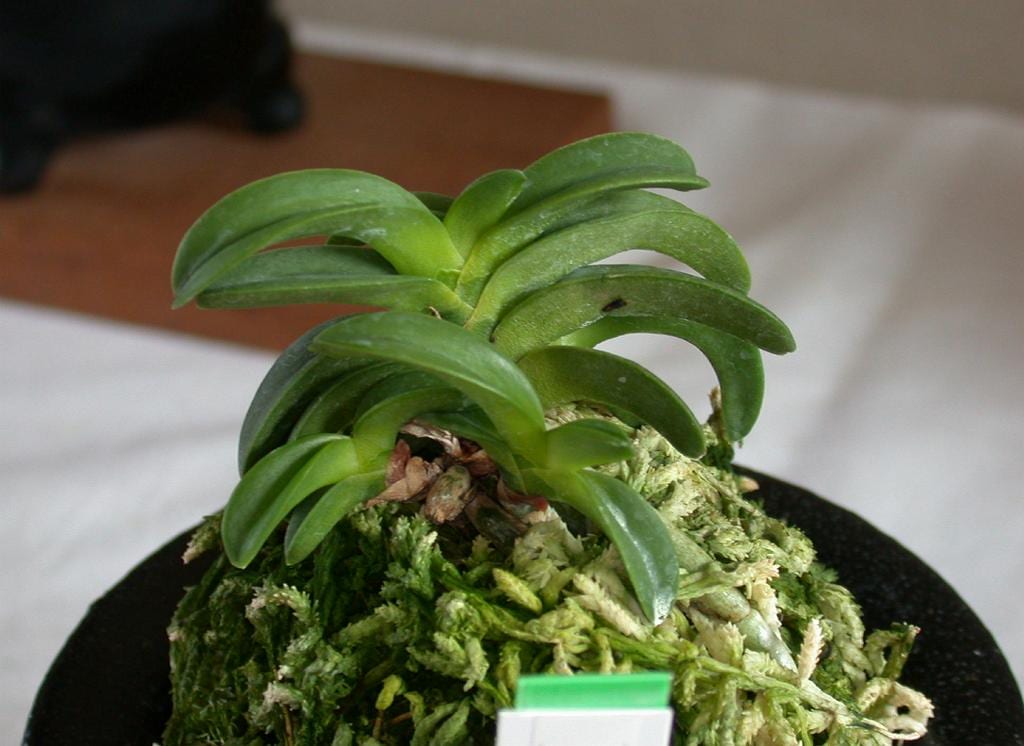
 © Keisotyo / CC BY-SA 3.0
Neofinetia falcata 'Seikai'
Neofinetia falcata 'Seikai' is a classic cultivar prized for its distinctive foliage — short, broad leaves that curl backward and overlap in a striking, layered form. Variegated Seikai plants even appear in picture albums kept by daimyo families during the Edo period, reflecting a long history of appreciation among enthusiasts. The compact, small-growing habit gives each plant a sculptural presence that suits container culture well. Rated as beginner-friendly, it's an approachable choice for those growing Neofinetia falcata for the first time. As a very slow-growing perennial that adds only about two or three new leaves a year, it lets growers watch the plant's form develop gradually over time.
View Neofinetia falcata 'Seikai' encyclopedia →0% commission on your first sales!Register by September 30, 2026 and your first 2 plants are commission-free!
Grower Wanted!
List your plants on GrowerDirect and sell directly to customers nationwide!
6 Transparency Commitments from GrowerDirect
Growers disclose the following information for Orchids listings, guaranteeing transparency on variety, origin, light requirements, and growing difficulty.
- Variety Disclosed
- Real Photos
- Color Specification
- Origin Disclosed
- Light Requirements
- Difficulty Level Disclosed
Browse all 142 varieties
Light Requirements
Growing Difficulty
No listings match your filters
Adjust your filters, or get notified when new listings arrive.
Getting alerts is free with a member account. When new listings match your saved search, we'll notify you by email and in-app.
Browse other categories
Neofinetia falcata 'Seikai' key facts
- Growing Difficulty
- Beginner-friendly
- Lifespan
- Perennial; individual leaves last four to five years, sometimes eight
- Size
- Small (short leaves)
- Watering
- Sparing, very dilute liquid fertilizer while growing
- Light & Placement
- Keep it in bright shade in summer and give good light in winter.
- Watering
- Water thoroughly when the sphagnum dries. Growth is very slow, with only two or three new leaves per stem each year.
- Temperature & Overwintering
- Native to warm parts of Japan, it is fairly tolerant of heat and cold, but protect it from frost and freezing in winter.
- Soil & Repotting
- The usual fukiran method is to mound sphagnum into a peak and set the plant on top, leaving the core of the moss hollow for air. Divide only once offsets are well grown.
- Identifying the Cultivar
- Seikai is identified by short, broad leaves that curve back and overlap. Buy plants with a reliable name to avoid confusion with similar short-leaved varieties.
- Pests & Cautions
- The parent species is native to Japan; choose propagated plants rather than wild-collected ones.
About Neofinetia falcata 'Seikai'
Neofinetia falcata 'Seikai' is a classic cultivar known for its short, broad leaves that curl and overlap in a distinctive layered form — compact, beginner-friendly, and appreciated since the Edo period.
7 things to know before growing Neofinetia falcata 'Seikai'
1Choose a Bright, Shaded Spot
Neofinetia falcata prefers bright, indirect light and good air circulation rather than direct sun, which can scorch the leaves. A spot behind a sheer curtain or on a shaded shelf works well. Because 'Seikai' is small with short leaves, positioning it so light reaches the whole plant evenly helps it keep a well-balanced shape.
2Water in a Wet-Dry Rhythm
As an epiphyte, Neofinetia falcata dislikes constantly soggy roots. Water thoroughly once the surface or moss has dried out, giving the roots a clear wet-dry cycle to stay healthy. Because 'Seikai' has short leaves that hold less water, you may want to water slightly more often during dry spells.
3Use Fast-Draining Media
Neofinetia falcata is typically grown in well-draining, breathable media such as sphagnum moss, pumice, or bark. Keeping the medium from staying constantly wet helps prevent root rot. Since compact cultivars like 'Seikai' have fewer roots, use just enough medium that the roots aren't cramped in the pot.
4Repot Every 1–2 Years
Repot roughly every one to two years, watching for breakdown of the moss and the condition of the roots. Early spring, as new growth begins, is the best time, and roots should be handled gently to avoid damage. Because 'Seikai' stays compact with short leaves, choose a pot size that matches the plant for a balanced look.
5Shade in Summer, Sun and Protection in Winter
In summer, provide shade in a bright spot and keep the air moving to prevent stagnant humidity. In winter, give it plenty of sun while protecting it from frost and freezing, such as in a bright indoor spot or a simple greenhouse. As a very slow-growing perennial, it rewards consistent seasonal care with a form you can enjoy for many years.
6Picking a Healthy Plant
Look for a plant with undamaged, unblemished leaves arranged in a tight, balanced overlap. 'Seikai' is known for its short, broad leaves that curl backward as they overlap, so plants that show this trait clearly tend to have the most ornamental value. It's also worth checking that the roots are firm and healthy.
7Feed Sparingly
Neofinetia falcata doesn't need much fertilizer, and overfeeding can damage the roots. A diluted liquid fertilizer applied once or twice a month during the growing season, spring through autumn, is generally enough. Compact cultivars like 'Seikai' are especially prone to fertilizer burn, so it's safer to use a weaker dilution than the label recommends.
Frequently asked questions about Neofinetia falcata 'Seikai'
- Q.Is Neofinetia falcata 'Seikai' suitable for beginners?
- A.Yes, 'Seikai' is rated as a beginner-friendly cultivar. Once you understand the basics of placement, watering, and potting media, it's an approachable plant even for first-time Neofinetia falcata growers.
- Q.How fast does 'Seikai' grow?
- A.Neofinetia falcata grows very slowly, with each stem producing only about two or three new leaves a year. Since the plant is a perennial, you can enjoy it over the long term as it gradually adds leaves.
- Q.What does 'Seikai' look like?
- A.Its defining feature is short, broad leaves that curl backward as they overlap in a distinctive layered form. The plant stays compact overall, making for an attractive small-scale specimen.
- Q.How long has 'Seikai' been cultivated?
- A.Variegated Seikai plants appear in picture albums kept by daimyo families during the Edo period, showing a long history of appreciation among growers. It remains a widely grown classic cultivar today.
- Q.What kind of spot suits 'Seikai' best?
- A.A bright, shaded location with good air circulation, away from direct sun, works well. Strong direct light can scorch the leaves, so filtered light such as through a sheer curtain is a good guideline.
Handy Growing Tools for Neofinetia falcata 'Seikai'
Learn more about Neofinetia falcata 'Seikai' in the encyclopedia
View Neofinetia falcata 'Seikai' encyclopedia entry →
Care difficulty, size, origin and light needs — all basics covered.
More in this category
Can't find the plant you're looking for?
Post your wishes for free and growers with matching plants will contact you with introductions.