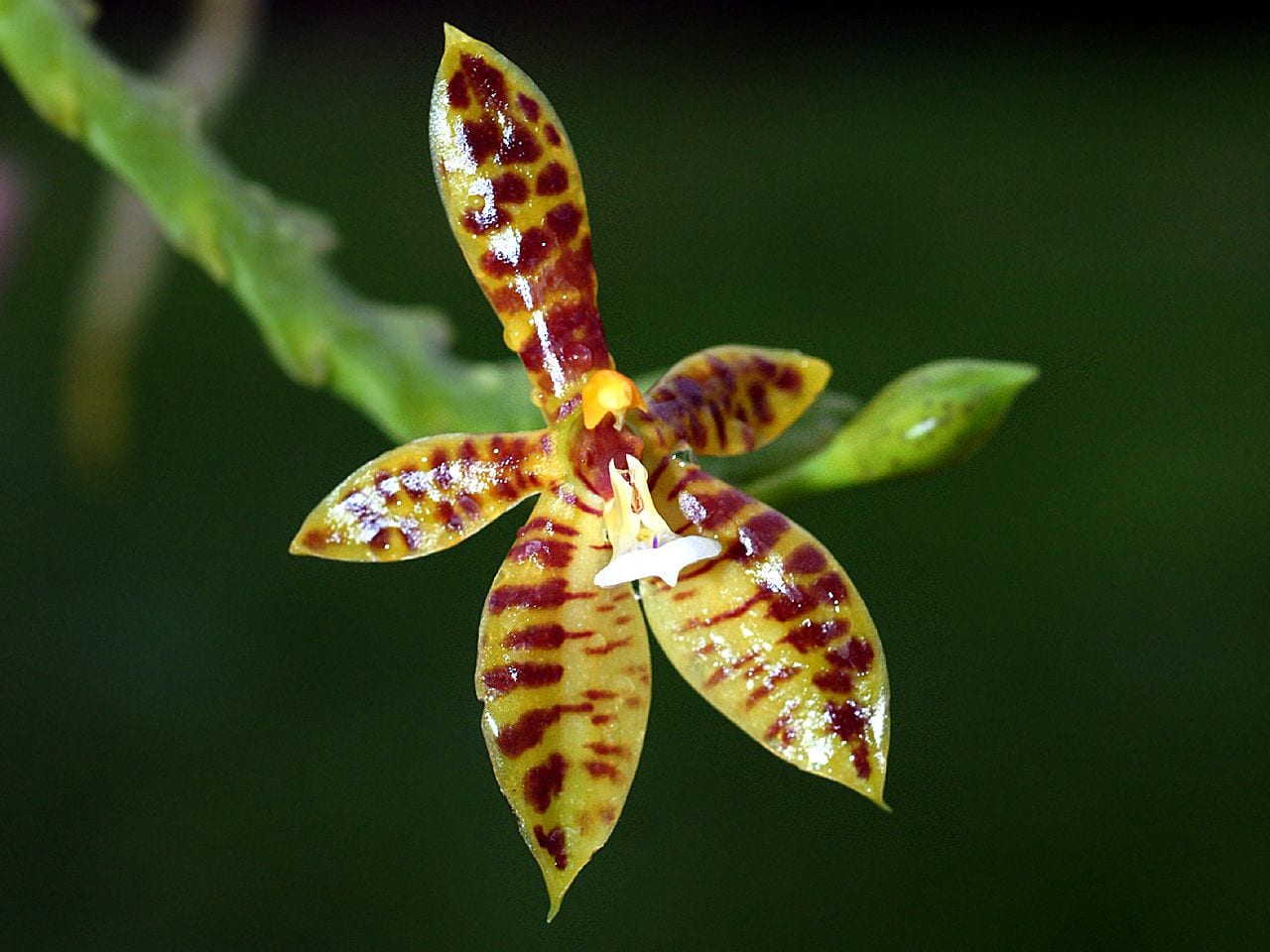
 © Orchi / CC BY-SA 3.0
Deer-antlered Phalaenopsis
Phalaenopsis cornu-cervi is a species orchid native to the lowlands of Southeast Asia. Its most distinctive feature is the flower spike, which branches flat like a deer's antlers, the source of its name. Unlike common hybrid Phalaenopsis, growers don't cut back the spike after flowering; instead, it keeps producing new blooms from the same spike over an extended period. The flowers themselves are thick-textured and fragrant, roughly 3 to 5cm across, while the plant stays compact overall, making it easy to fit into a modest growing space. As a perennial, it can be enjoyed for years as the plant renews itself over time. Because of its specific care needs, it's generally best suited to growers with some prior orchid experience.
View Deer-antlered Phalaenopsis encyclopedia →0% commission on your first sales!Register by September 30, 2026 and your first 2 plants are commission-free!
Grower Wanted!
List your plants on GrowerDirect and sell directly to customers nationwide!
6 Transparency Commitments from GrowerDirect
Growers disclose the following information for Orchids listings, guaranteeing transparency on variety, origin, light requirements, and growing difficulty.
- Variety Disclosed
- Real Photos
- Color Specification
- Origin Disclosed
- Light Requirements
- Difficulty Level Disclosed
Browse all 142 varieties
Light Requirements
Growing Difficulty
No listings match your filters
Adjust your filters, or get notified when new listings arrive.
Getting alerts is free with a member account. When new listings match your saved search, we'll notify you by email and in-app.
Browse other categories
Deer-antlered Phalaenopsis key facts
- Growing Difficulty
- Intermediate
- Lifespan
- Perennial that can be kept for many years (little data on lifespan)
- Size
- Small; flower stem 9-42 cm, flowers 3-5 cm across
- Watering
- Dilute liquid fertilizer in the growing season
- Light & Placement
- Grow it in bright partial shade.
- Watering
- Keep humidity high and water during growth, then give a distinct drier spell in winter.
- Temperature & Overwintering
- It is said to tolerate hot to cool conditions; keep it indoors and away from cold in winter.
- Soil & Repotting
- Mount it, or pot it in a coarse, free-draining medium.
- Fertilizer
- Feed dilute liquid fertilizer regularly in the growing season.
- Enjoying the Flowers
- The stem reblooms while it stays green, so do not cut it after flowering.
About Deer-antlered Phalaenopsis
Phalaenopsis cornu-cervi is a species orchid named for its flat, antler-like flower spikes. Its thick, fragrant 3–5cm blooms open repeatedly from the same spike over time, native to lowland Southeast Asia.
7 things to know before growing Deer-antlered Phalaenopsis
1Light and Placement
Native to lowland Southeast Asia, this orchid tolerates brighter conditions than typical hybrid Phalaenopsis. Direct sun can scorch the leaves, so place it near a window with soft, filtered light, such as behind a sheer curtain.
2Watering Tips
Water thoroughly once the surface of the potting medium has dried out. Avoid letting water pool at the base of the leaves or in the crown, and let the plant dry in a well-ventilated spot afterward.
3Choosing the Potting Mix
The roots like access to air, so a well-draining orchid mix of bark or sphagnum moss works best. Dense, compacted soil can lead to root rot, so it's best avoided.
4When to Repot
Repot once the potting medium starts to break down, timing it for a period of slower growth. Handle the root ball gently and avoid damaging any active flower spikes.
5Don't Cut the Spike
Unlike typical Phalaenopsis, which are cut back after flowering, this species reblooms repeatedly from the same spike over a long period. As long as the plant stays healthy, leave the spike in place after the flowers fade.
6Seasonal Care
Because it originates from warm lowland habitats, this orchid is sensitive to cold. Keep it in a warm indoor spot during winter and avoid letting temperatures drop too low.
7Choosing a Healthy Plant
Look for firm leaves and well-developed roots. It's also worth checking that the flower spikes and leaves are free of dark spots or damage.
Frequently asked questions about Deer-antlered Phalaenopsis
- Q.What does the name "cornu-cervi" mean?
- A.The name comes from the flower spike's flat, branching shape, which resembles a deer's antlers. "Cornu-cervi" is Latin for "deer horn" or "deer antler."
- Q.How big does this orchid grow?
- A.It's a compact species, with flower spikes reaching roughly 9 to 42cm and blooms about 3 to 5cm across. The plant itself stays fairly small, so it fits well in limited spaces.
- Q.How long do the flowers last?
- A.Individual flowers stay open for a while, and the same spike keeps producing new blooms in succession. Leaving the spike intact after flowering lets you enjoy blooms over an extended period.
- Q.Is this orchid suitable for beginners?
- A.It's generally considered suited to intermediate growers rather than complete beginners. Some prior experience with Phalaenopsis care helps, along with knowing species-specific points like leaving the flower spike intact.
- Q.Should I cut the flower spike after blooming ends?
- A.Unlike common Phalaenopsis hybrids, there's no need to cut it back right away. As long as the plant is healthy, the same spike will often flower again, so it's best to leave it and watch how it develops.
Handy Growing Tools for Deer-antlered Phalaenopsis
Learn more about Deer-antlered Phalaenopsis in the encyclopedia
View Deer-antlered Phalaenopsis encyclopedia entry →
Care difficulty, size, origin and light needs — all basics covered.
More in this category
Can't find the plant you're looking for?
Post your wishes for free and growers with matching plants will contact you with introductions.