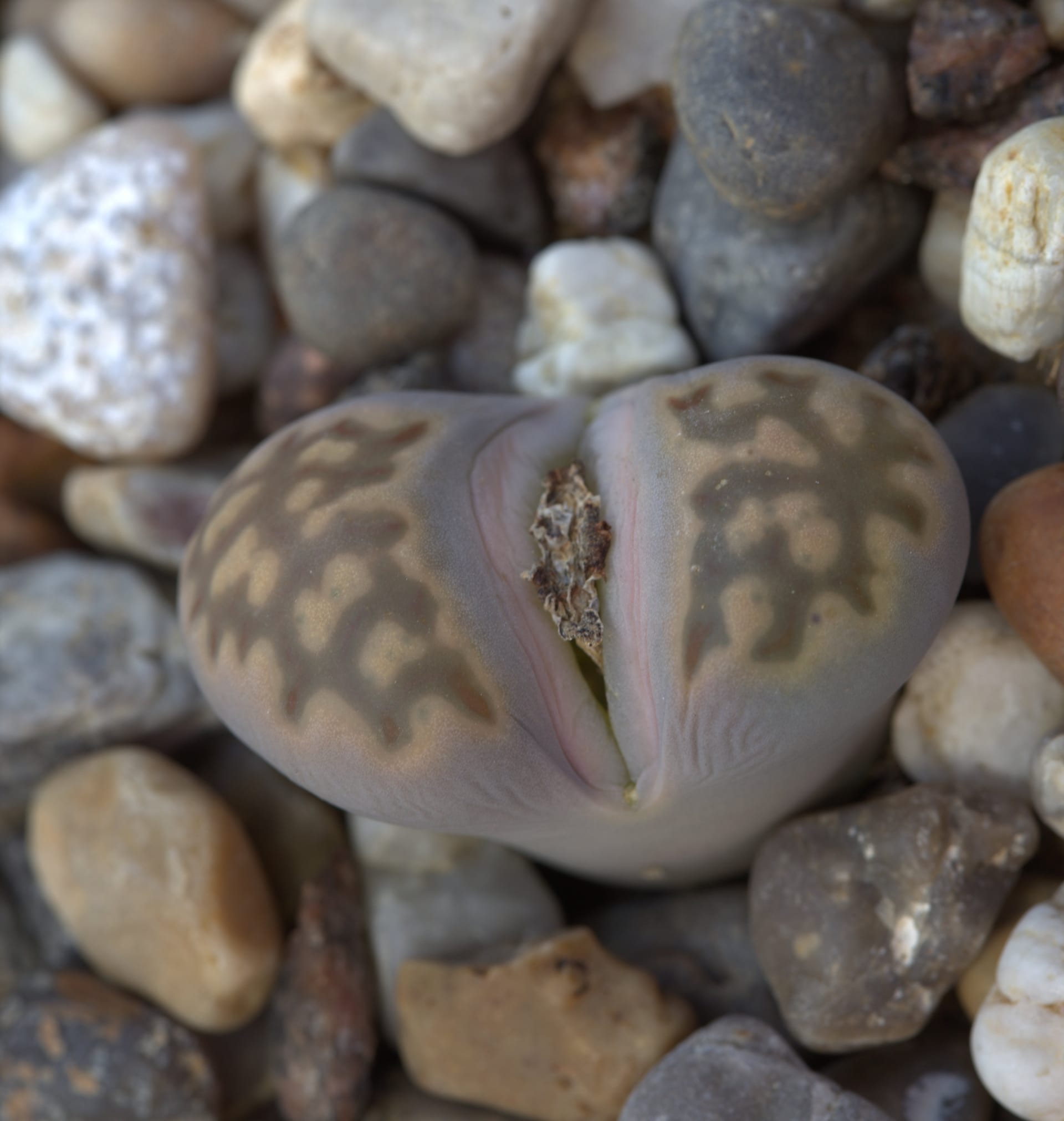
 © Averater / CC BY-SA 3.0
Lithops julii
Lithops julii, known in Japan as Jurei-gyoku, is one of the lithops, the so-called living stones that look like pebbles. Its pale grayish top surface carries a brown net-like pattern, and the fissure between the leaf pair is edged with a line that looks like smudged lipstick. White flowers open from midsummer into autumn, and the subspecies known in Japan as Fukurai-gyoku belongs to the same species. It stays small to medium in size, growing as a single head or as a clump of two to fifteen or more heads. A perennial rated as beginner-friendly, it rewards bright light, fast-draining soil and careful timing of watering with many years of shedding and blooming.
View Lithops julii encyclopedia →0% commission on your first sales!Register by September 30, 2026 and your first 2 plants are commission-free!
Grower Wanted!
List your plants on GrowerDirect and sell directly to customers nationwide!
6 Transparency Commitments from GrowerDirect
Grower disclose this information for Succulents & Cacti. We guarantee transparency in variety, origin, light requirements, and difficulty level.
- Variety Disclosed
- Real Photos
- Color Details
- Origin Disclosed
- Light Requirements
- Difficulty Level
Browse all 131 varieties
Light Requirements
Difficulty Level
No listings match your filters
Adjust your filters, or get notified when new listings arrive.
Getting alerts is free with a member account. When new listings match your saved search, we'll notify you by email and in-app.
Browse other categories
Verified growers (preview)
Are you growing succulents & cacti?
Register as a grower and connect with buyers directly.
Apply as a growerLithops julii key facts
- Growing Difficulty
- Beginner-friendly
- Lifespan
- Perennial (little published data on lifespan)
- Size
- Small to medium; solitary or clumps of 2-15 or more heads
- Temperature
- 8〜25℃
- Watering
- A little slow-release or liquid fertiliser from autumn to spring
- Light & Placement
- Give it as much light as possible, but small plants scorch easily in strong midsummer sun, so shade them and let them rest somewhere airy in summer.
- Watering
- It is a winter grower. Resume watering in autumn once night temperatures fall below about 20°C and soak the pot when the soil dries while growing. Hold back from flowering until the old leaves wither, and keep it dry in the June-September rest.
- Temperature & Overwintering
- Keep winter minimums above about 3°C to keep plants looking good (they survive down to roughly 0-3°C). Light frost rarely kills them, but bring them in or protect them in the coldest spell.
- Soil & Repotting
- Use an open mineral mix with little compost and plenty of grit or coarse sand. It sends down a thick taproot, so use a reasonably deep pot and free-draining mix. It needs repotting only when growth slows or the pot is crowded, ideally in October-November.
- Propagation
- Propagate from seed (October-November) or by dividing clumps.
- Pests & Cautions
- Scale insects and aphids may attack buds and flowers and root mealybugs the roots; slugs eat petals and cutworms the leaves. Pick off spent flowers, which can cause rot.
About Lithops julii
Lithops julii (Jurei-gyoku) is a beginner-friendly perennial lithops with a pale gray top surface and brown net-like pattern. Learn the basics of light, soil and seasonal watering before you start growing it.
7 things to know before growing Lithops julii
1Light and airflow
Lithops like strong light, so choose a bright spot sheltered from rain outdoors or a sunny windowsill indoors. Too little light makes the plant stretch and lose its compact shape. Good airflow matters too, so avoid stuffy corners.
2Seasonal watering
Watering follows the seasons. In the growing period from autumn to spring, water thoroughly only after the soil has dried out completely, and in the summer dormancy stop or cut back sharply. Rather than watering on a fixed schedule, judge by how dry the soil is and how plump the plant looks.
3Fast-draining soil
Drainage comes first when choosing soil. Mix a generous amount of gritty material such as pumice or sand into a succulent and cactus mix so the roots do not stay wet. Because the roots grow fairly long, a somewhat deep pot works well.
4Hold water while shedding
Lithops shed by growing a new leaf pair out of the old one, which happens from late winter into spring. Watering at this stage can make the new leaves rot or split, so stop watering and simply wait. Resume normal watering once the old leaves have dried into thin papery skins.
5Beat the summer humidity
Hot, humid summers are hard on lithops while they are dormant. Move the plant to a bright, shaded spot with good airflow and out of the rain, and hold back on water to prevent rot. When cooler weather brings growth back, return to regular watering gradually.
6Repotting and pots
Repotting does not need to be frequent; once every few years, when the clump has filled its pot, is enough. Autumn, when growth begins, suits it best, and you should wait a while after repotting before watering. Handle clumps gently and avoid pulling them apart so the base is not damaged.
7Choosing a plant
Lithops julii ranges from single heads to clumps of two to fifteen or more, so you can pick the number of heads you like. Look for firm, plump tops without dark patches or soft spots. Pattern and color vary from plant to plant, so compare photos and descriptions before choosing.
Frequently asked questions about Lithops julii
- Q.Can beginners grow Lithops julii?
- A.It is rated beginner-friendly and is easy to grow once it has bright light and well-drained soil. The main trick is its unusual watering rhythm, which means holding back water during summer dormancy and while shedding. Get that right and most common failures can be avoided.
- Q.How often should I water it?
- A.There is no fixed interval. In the autumn-to-spring growing period, water only after the soil has dried out completely. During summer dormancy and while shedding, water very little or not at all, and judge by the dryness of the soil and the plumpness of the plant.
- Q.What is shedding, and should I water then?
- A.Shedding is the natural process in which a new leaf pair emerges from inside the old one and replaces it. Do not water during this time, and return to normal watering once the old leaves have dried into thin papery skins.
- Q.Is Fukurai-gyoku a different plant?
- A.Fukurai-gyoku is a subspecies included in the same species as Lithops julii. The basic care is the same, and appearance varies from plant to plant, so it helps to check the photos before choosing.
- Q.When does it bloom, and what if it does not?
- A.It produces white flowers from midsummer into autumn. If it skips a year, low light or a plant that is not yet well established may be the cause. Keep it in a bright place and let it grow steadily through the growing season.
Handy Growing Tools for Lithops julii
Learn more about Lithops julii in the encyclopedia
View Lithops julii encyclopedia entry →
Care difficulty, size, origin and light needs — all basics covered.
More in this category
Can't find the plant you're looking for?
Post your wishes for free and growers with matching plants will contact you with introductions.