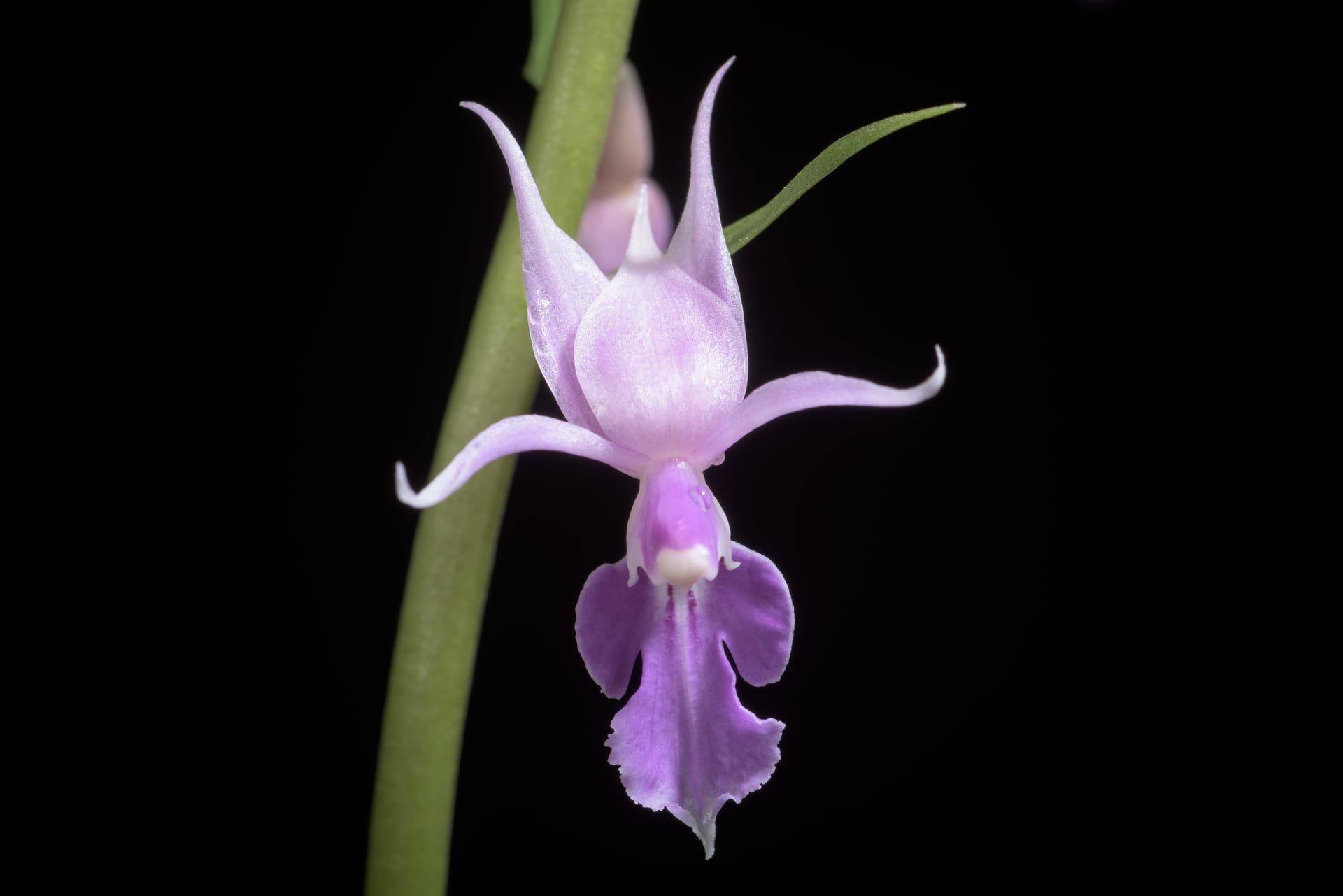
 © snotch from Sapporo, Hokkaido, Japan / CC BY 2.0
Summer Calanthe
Natsu-ebine is an unusual member of the Calanthe orchid family that blooms in the height of summer, sending up spikes of pale purple flowers in July and August. Its curled-back sepals and finely ruffled lip give the blossoms a delicate, cooling look that sets it apart from typical spring-flowering orchids. This perennial has a reputation for being tricky to keep over the long term, as it is sensitive to heat, dryness, and viral disease, making it best suited to experienced growers. Leaves reach 10 to 30 cm and flower stalks 20 to 40 cm, giving the plant a graceful, woodland-garden presence.
View Summer Calanthe encyclopedia →0% commission on your first sales!Register by September 30, 2026 and your first 2 plants are commission-free!
Grower Wanted!
List your plants on GrowerDirect and sell directly to customers nationwide!
6 Transparency Commitments from GrowerDirect
Growers disclose the following information for Orchids listings, guaranteeing transparency on variety, origin, light requirements, and growing difficulty.
- Variety Disclosed
- Real Photos
- Color Specification
- Origin Disclosed
- Light Requirements
- Difficulty Level Disclosed
Browse all 142 varieties
Light Requirements
Growing Difficulty
No listings match your filters
Adjust your filters, or get notified when new listings arrive.
Getting alerts is free with a member account. When new listings match your saved search, we'll notify you by email and in-app.
Browse other categories
Summer Calanthe key facts
- Growing Difficulty
- Advanced
- Lifespan
- Perennial (considered difficult to keep long-term)
- Size
- Leaves 10-30 cm; flower stem 20-40 cm tall
- Watering
- A little dilute liquid fertilizer from spring to early summer
- Light & Placement
- Keep it in bright shade away from strong sun; in summer it especially needs a cool, partly shaded spot.
- Watering
- It dislikes dryness; do not let the mix dry out, and in summer damp down the surroundings to keep humidity up.
- Temperature & Overwintering
- It is heat-sensitive and buds tend to drop in lowland summer heat. Keep it somewhere cool and airy in summer; it tolerates winter cold.
- Soil & Repotting
- Pot in a mix of kanuma or pumice with leaf mould that drains well yet holds moisture.
- Pests & Cautions
- It is prone to incurable viruses. Sterilise tools between plants and isolate any with symptoms. Choose propagated plants over wild-collected ones.
About Summer Calanthe
Natsu-ebine is a rare summer-blooming orchid with pale purple flowers in July and August. This perennial suits experienced growers for its curled sepals and ruffled lip, though it is sensitive to heat, dryness, and viral disease.
7 things to know before growing Summer Calanthe
1Place in Partial Shade
Natsu-ebine dislikes strong direct sun and scorches easily, so give it bright partial shade with good air circulation. Be especially careful of harsh summer afternoon sun, using shade cloth if needed to ease the strain on the plant.
2Balance Watering Carefully
Water thoroughly once the soil surface dries during the growing season, since overwatering leads to root rot. At the same time, it is sensitive to drying out completely, so avoid letting the potting mix go bone dry.
3Use Well-Draining Soil
A mix formulated for wild orchids or woodland plants, balancing drainage with moisture retention, suits this species well. Avoid soil that stays wet, as it can damage the roots.
4Repot After Dormancy
Repot every few years, right as new growth begins after the dormant season ends. Watch the plant's condition, since root-bound pots or breaking-down soil can weaken it over time.
5Summer Heat Needs Care
Midsummer, which is also the flowering season, is the most demanding time of year, and the combination of heat and dryness can quickly weaken the plant. Keeping it cool and shaded while maintaining airflow is key to growing it successfully over the long term.
6Winter Dormancy Care
As temperatures drop, the above-ground growth dies back and the plant enters dormancy. Reduce watering during this period and keep it somewhere protected from frost.
7Check Leaves Before Buying
Because this species is vulnerable to viral disease, it is worth checking the leaves for spots, discoloration, or stunting before bringing one home. Choosing a healthy, vigorous plant is the first step toward growing it successfully long-term.
Frequently asked questions about Summer Calanthe
- Q.Is Natsu-ebine suitable for beginners?
- A.It's considered an advanced-grower plant, being sensitive to heat, dryness, and viral disease, which makes long-term cultivation difficult. It suits those with prior orchid-growing experience or the time for close, regular care.
- Q.When does it bloom?
- A.Unlike most Calanthe orchids, Natsu-ebine flowers in the height of summer, during July and August. It produces spikes of pale purple blossoms.
- Q.If it's sensitive to heat, why does it bloom in summer?
- A.Because its flowering period overlaps with the hottest part of the year, the plant tends to use up a lot of energy at once. This means it needs even more attention to airflow and shade than typical Calanthe orchids.
- Q.Should it be grown outdoors or indoors?
- A.Outdoors in a spot with bright partial shade and good airflow is generally best. Just be sure to shield it from harsh summer sun and winter frost, adjusting its placement with the seasons.
- Q.How should I care for it after it finishes blooming?
- A.Warm weather often continues after flowering ends, so keep watching for both underwatering and overwatering during this stretch. Gradually ease off on watering as the plant heads into dormancy.
Handy Growing Tools for Summer Calanthe
Learn more about Summer Calanthe in the encyclopedia
View Summer Calanthe encyclopedia entry →
Care difficulty, size, origin and light needs — all basics covered.
More in this category
Can't find the plant you're looking for?
Post your wishes for free and growers with matching plants will contact you with introductions.