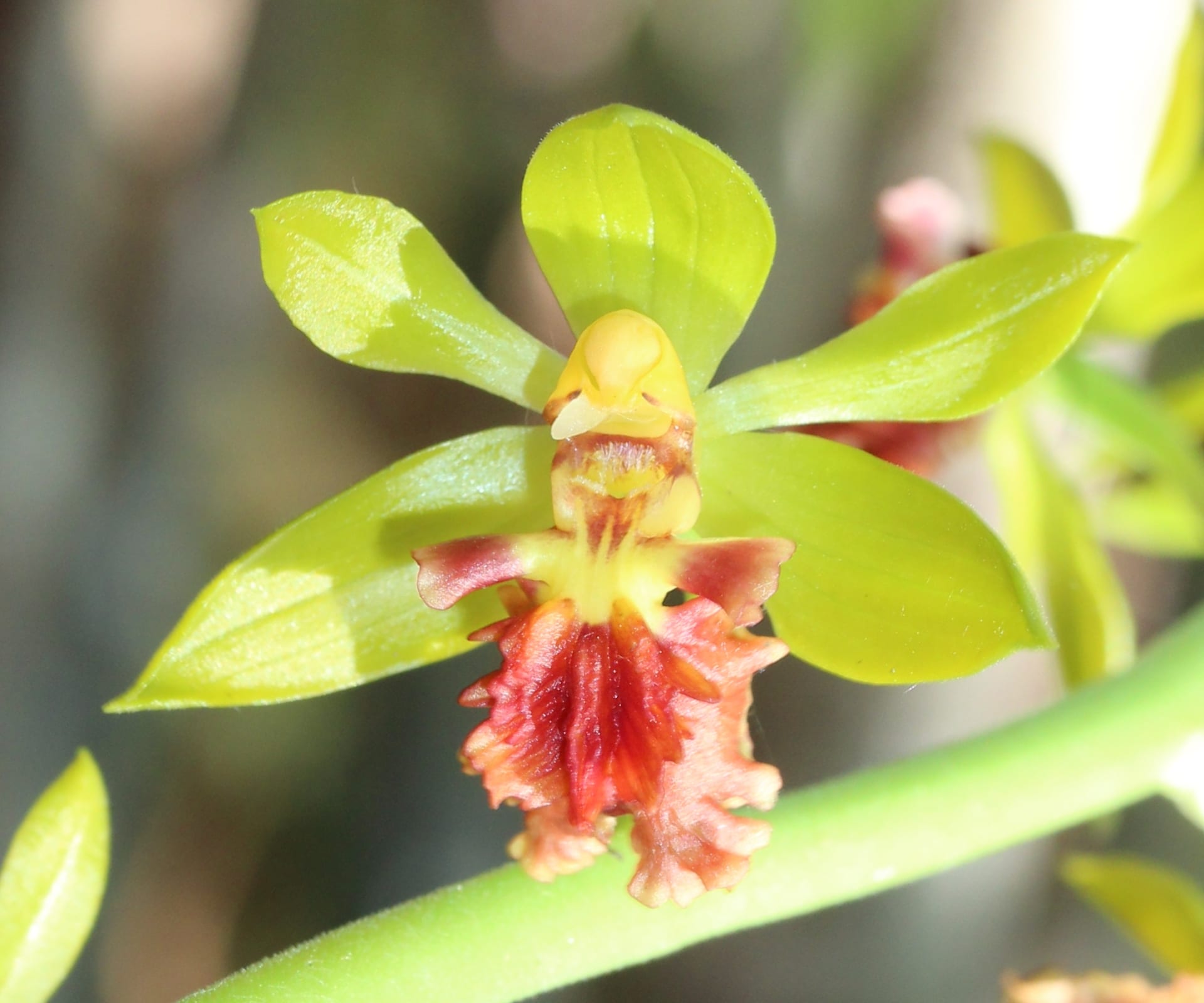
 © Alpsdake / CC BY-SA 3.0
Three-keeled Calanthe
The Sarumen Ebine, or Three-keeled Calanthe, is a mountain-dwelling terrestrial orchid known for its yellow-green flowers and wrinkled, reddish-brown lip that gives the bloom a face-like appearance — said to resemble a monkey, which inspired its Japanese name. In the wild, it grows in the cool, shaded understory of beech forests and struggles in summer heat. It is a cold-hardy perennial whose leaves reach 15 to 25 cm and whose flower stalks rise 30 to 50 cm tall. Because it prefers cool conditions, this orchid calls for more careful management and is best suited to experienced growers, yet its striking, sculptural flowers keep collectors coming back.
View Three-keeled Calanthe encyclopedia →0% commission on your first sales!Register by September 30, 2026 and your first 2 plants are commission-free!
Grower Wanted!
List your plants on GrowerDirect and sell directly to customers nationwide!
6 Transparency Commitments from GrowerDirect
Growers disclose the following information for Orchids listings, guaranteeing transparency on variety, origin, light requirements, and growing difficulty.
- Variety Disclosed
- Real Photos
- Color Specification
- Origin Disclosed
- Light Requirements
- Difficulty Level Disclosed
Browse all 142 varieties
Light Requirements
Growing Difficulty
No listings match your filters
Adjust your filters, or get notified when new listings arrive.
Getting alerts is free with a member account. When new listings match your saved search, we'll notify you by email and in-app.
Browse other categories
Three-keeled Calanthe key facts
- Growing Difficulty
- Advanced
- Lifespan
- Perennial; individual pseudobulbs can persist for over ten years
- Size
- Leaves 15-25 cm; flower stem 30-50 cm tall
- Watering
- A little dilute liquid fertilizer from spring to early summer
- Light & Placement
- A plant of the deciduous forest floor: give bright light in spring and a cool, shaded spot out of strong summer sun.
- Watering
- Do not let the soil dry out completely, but use a free-draining mix so the roots do not rot from excess water.
- Temperature & Overwintering
- It is cold-hardy but dislikes heat; the key is keeping it cool and airy through summer.
- Soil & Repotting
- Pot in a free-draining mix of kanuma, pumice and leaf mould. Repot after flowering or in autumn.
- Pests & Cautions
- Calanthe readily pick up viruses, which cannot be cured. Sterilise tools between plants and isolate affected ones. Buy propagated plants, not wild-collected ones.
About Three-keeled Calanthe
Sarumen Ebine (Three-keeled Calanthe) features yellow-green flowers with a wrinkled reddish-brown lip. A cool-loving perennial that dislikes summer heat, for experienced growers — here's what to know before you start.
7 things to know before growing Three-keeled Calanthe
1Placement
In the wild, Sarumen Ebine grows in the cool understory of mountain forests and dislikes strong summer sun and heat. Keep it in bright, indirect light with good airflow, and consider moving it somewhere cooler during the height of summer to keep it healthy.
2Watering
During the growing season, water thoroughly once the surface of the medium dries out, but avoid keeping the potting mix constantly wet. In summer, water in the cooler morning or evening hours and ensure good airflow so the base of the plant doesn't stay damp.
3Potting Mix
As a terrestrial orchid of the forest floor, it is potted in a well-draining mix of kanuma or pumice blended with leaf mold. The key to preventing root rot is keeping the mix from drying out completely while ensuring good drainage so the roots never sit waterlogged.
4Repotting
It's a good idea to repot every few years as the potting mix breaks down or the plant becomes crowded. The best times are just after flowering or in autumn.
5Getting Through Summer
Since summer heat is this orchid's greatest weakness, how it's managed at the height of summer often determines success. Shading, good ventilation, and moving the plant somewhere cooler all help limit heat and humidity buildup and keep the plant from weakening.
6Choosing a Plant
Since leaf length typically runs 15 to 25 cm, look for a plant with firm, undamaged leaves rather than one that seems unusually small or worn. It's also worth checking that the corm feels solid and healthy.
7Flower Stalks
The flower stalk rises to about 30 to 50 cm, bearing yellow-green blooms with a distinctive wrinkled, reddish-brown lip. If the stalk tends to lean, staking it can help keep the flowers displayed neatly.
Frequently asked questions about Three-keeled Calanthe
- Q.Where does the name Sarumen Ebine come from?
- A.The name comes from its wrinkled, reddish-brown lip, which is said to resemble a monkey's face. This distinctive lip contrasts with the plant's yellow-green flowers, a hallmark of this mountain-dwelling Calanthe.
- Q.Is this orchid suitable for beginners?
- A.Sarumen Ebine is generally considered an advanced-level plant to grow. It prefers cool conditions and struggles in summer heat, so some care and attention are needed — it's best attempted once you already have experience growing Calanthe orchids.
- Q.How should I care for it during summer?
- A.Since summer heat is its main weakness, keep it out of direct sun in a cool, well-ventilated spot. If possible, moving it temporarily to an even cooler location can also help it get through the hottest months.
- Q.What should I keep in mind when buying one?
- A.It is listed as Vulnerable (VU) on Japan's Ministry of the Environment Red List, and collection for horticulture is considered one cause of its decline. Some prefectures also restrict collecting wild plants by ordinance, so choose nursery-propagated plants raised from seed or division rather than wild-collected ones. Calanthe orchids are prone to viral disease, so it's also worth checking the leaves for any abnormalities.
- Q.How large does this orchid grow?
- A.Leaves typically reach 15 to 25 cm in length, while the flower stalk that emerges at bloom time grows to around 30 to 50 cm tall. Its modest, well-proportioned size is part of its understated appeal.
Handy Growing Tools for Three-keeled Calanthe
Learn more about Three-keeled Calanthe in the encyclopedia
View Three-keeled Calanthe encyclopedia entry →
Care difficulty, size, origin and light needs — all basics covered.
More in this category
Can't find the plant you're looking for?
Post your wishes for free and growers with matching plants will contact you with introductions.