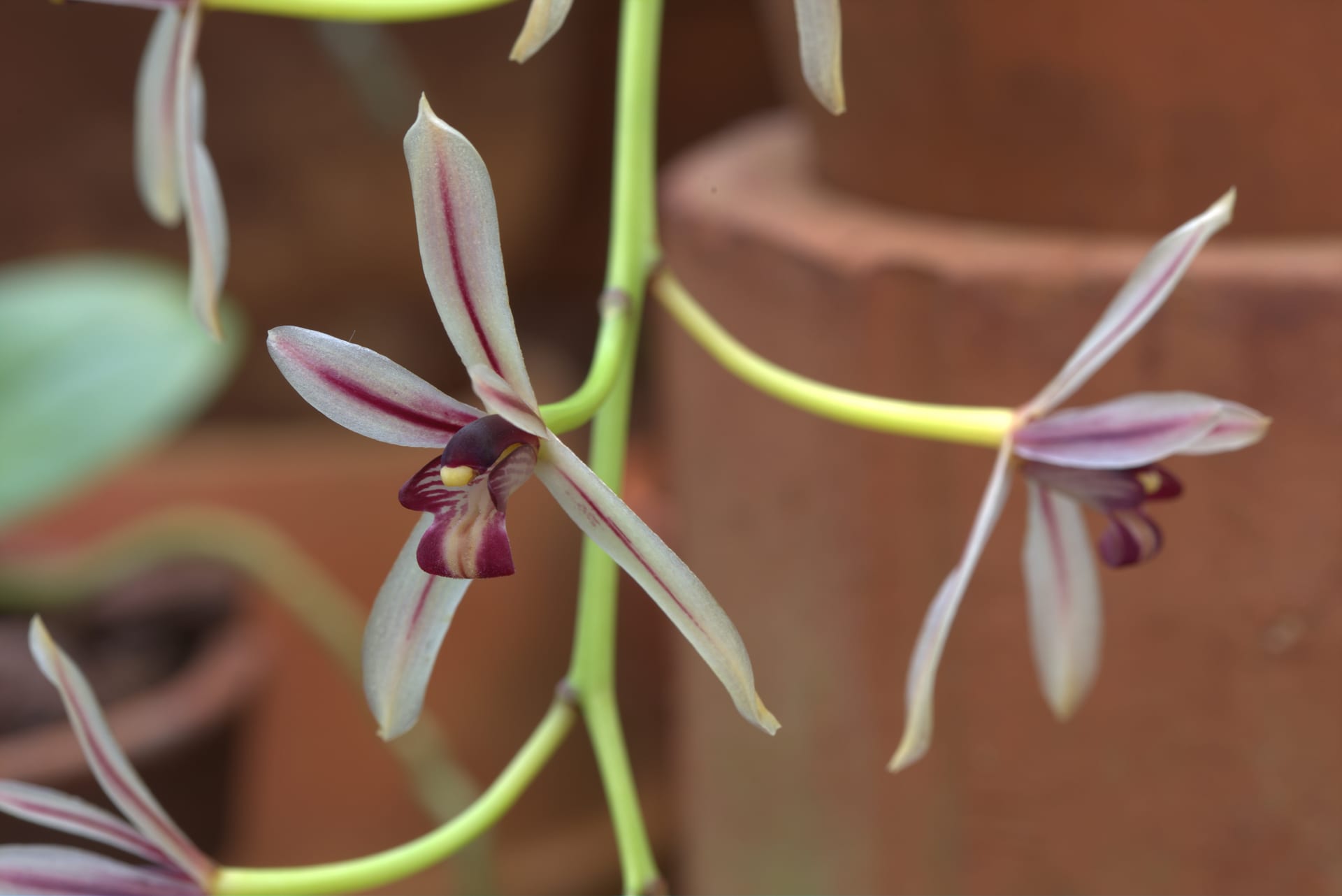
 © Averater / CC BY 3.0
Day's Cymbidium
Day's Cymbidium is a wild species of Cymbidium orchid whose slender, glossy dark-green leaves grow in dense bundles. From summer through autumn, it sends up arching or drooping flower spikes lined with medium-sized blooms. It grows wild in Japan's warmer regions, but unlike most Japanese native cymbidiums, which root in soil, this species naturally grows epiphytically on tree trunks and branches, a distinctive trait that calls for a bit of extra care and know-how. As a perennial, it can be divided and enjoyed for many years, rewarding growers who provide the airy conditions this tree-dwelling orchid prefers.
View Day's Cymbidium encyclopedia →0% commission on your first sales!Register by September 30, 2026 and your first 2 plants are commission-free!
Grower Wanted!
List your plants on GrowerDirect and sell directly to customers nationwide!
6 Transparency Commitments from GrowerDirect
Growers disclose the following information for Orchids listings, guaranteeing transparency on variety, origin, light requirements, and growing difficulty.
- Variety Disclosed
- Real Photos
- Color Specification
- Origin Disclosed
- Light Requirements
- Difficulty Level Disclosed
Browse all 142 varieties
Light Requirements
Growing Difficulty
No listings match your filters
Adjust your filters, or get notified when new listings arrive.
Getting alerts is free with a member account. When new listings match your saved search, we'll notify you by email and in-app.
Browse other categories
Day's Cymbidium key facts
- Growing Difficulty
- Intermediate
- Lifespan
- Perennial that can be kept for many years by division (little data on lifespan)
- Size
- Flower stem about 22 cm; flowers 4-5 cm across
- Watering
- Dilute liquid fertilizer in the growing season
- Light & Placement
- It grows on tree trunks inside forest, so keep it in bright shade out of direct sun.
- Watering
- Avoid extremes of drought or wetness year-round; water as the medium begins to dry.
- Temperature & Overwintering
- It handles heat fairly well but dislikes cold; bring it indoors in winter and avoid sudden temperature swings.
- Soil & Repotting
- As the flower stems hang, use a tall pot or basket with a free-draining orchid mix or bark.
- Pests & Cautions
- It is native to Japan; choose seed-raised or otherwise propagated plants rather than wild-collected ones.
About Day's Cymbidium
Day's Cymbidium is a native Japanese orchid that grows epiphytically on trees in warm regions, producing arching or drooping flower spikes with medium-sized blooms from summer to autumn. It's an intermediate-level orchid that can be divided and enjoyed for years.
7 things to know before growing Day's Cymbidium
1Choose a spot with good airflow
Because Day's Cymbidium naturally grows as an epiphyte on tree trunks, good air circulation around the plant is especially important. Bright, filtered light, such as through a sheer curtain, suits it better than long hours of direct sun, which can scorch the leaves.
2Avoid extremes of wet and dry
Year-round, avoid letting the medium dry out completely or stay waterlogged; water when it is just starting to dry. Constantly soggy media can lead to root rot, so pair this steady routine with a fast-draining potting mix.
3Use a fast-draining medium
Given its tree-dwelling habit, this orchid does best in a coarse, airy potting medium such as bark that lets excess water drain away quickly. Good drainage and airflow around the roots are key to keeping the plant healthy.
4Divide the plant to keep it going for years
As a perennial, Day's Cymbidium can be divided once a clump has filled out, letting you keep enjoying it, and share it, for many years. Repot when the medium has broken down or the roots have become crowded, timing the work for a period when the plant isn't actively pushing new growth.
5Watch for the arching flower spikes
From summer into autumn, upright to drooping flower spikes of around 20 cm emerge from the base, each carrying five to fifteen medium-sized blooms about 4 to 5 cm across. Because the spikes hang down, growing it in a tall pot or a basket makes it easier to appreciate the way they drape.
6Check the roots before choosing a plant
When selecting a plant, look for one with healthy, undamaged leaves and firmly established roots. Because this is an epiphytic species, roots that extend visibly across the surface of the medium or even outside the pot are a good sign of vigorous growth.
7An intermediate-level orchid, keep conditions steady
Day's Cymbidium is generally considered suited to intermediate-level growers and prefers conditions that stay fairly consistent throughout the year. It dislikes cold, so bring it indoors for winter and avoid sudden temperature changes; this helps the plant flower reliably year after year.
Frequently asked questions about Day's Cymbidium
- Q.Can beginners grow Day's Cymbidium?
- A.Day's Cymbidium is generally considered an intermediate-level orchid to grow. Because its watering and potting needs reflect its epiphytic habit, it's often easier to take on after gaining some experience with orchids first.
- Q.When does it bloom?
- A.Day's Cymbidium flowers from summer through autumn, sending up upright to drooping spikes of around 20 cm, each with five to fifteen blooms roughly 4 to 5 cm across.
- Q.Why does it grow on trees rather than in soil?
- A.Day's Cymbidium is unusual among Japan's native cymbidiums in that it naturally roots onto tree trunks and branches rather than growing in soil. This epiphytic nature is why, in cultivation, it prefers an airy environment and a well-draining potting medium.
- Q.How often should it be divided?
- A.There's no fixed schedule to follow, but division is generally considered once a clump has filled out and the roots or medium start showing signs of crowding or breakdown. As a perennial, it can be divided repeatedly and enjoyed over many years.
- Q.What should I watch out for in terms of placement?
- A.Since Day's Cymbidium grows naturally as an epiphyte, good air circulation should be the top priority for its placement. Direct sunlight can scorch the leaves, so bright shade or soft, filtered light works better.
Handy Growing Tools for Day's Cymbidium
Learn more about Day's Cymbidium in the encyclopedia
View Day's Cymbidium encyclopedia entry →
Care difficulty, size, origin and light needs — all basics covered.
More in this category
Can't find the plant you're looking for?
Post your wishes for free and growers with matching plants will contact you with introductions.