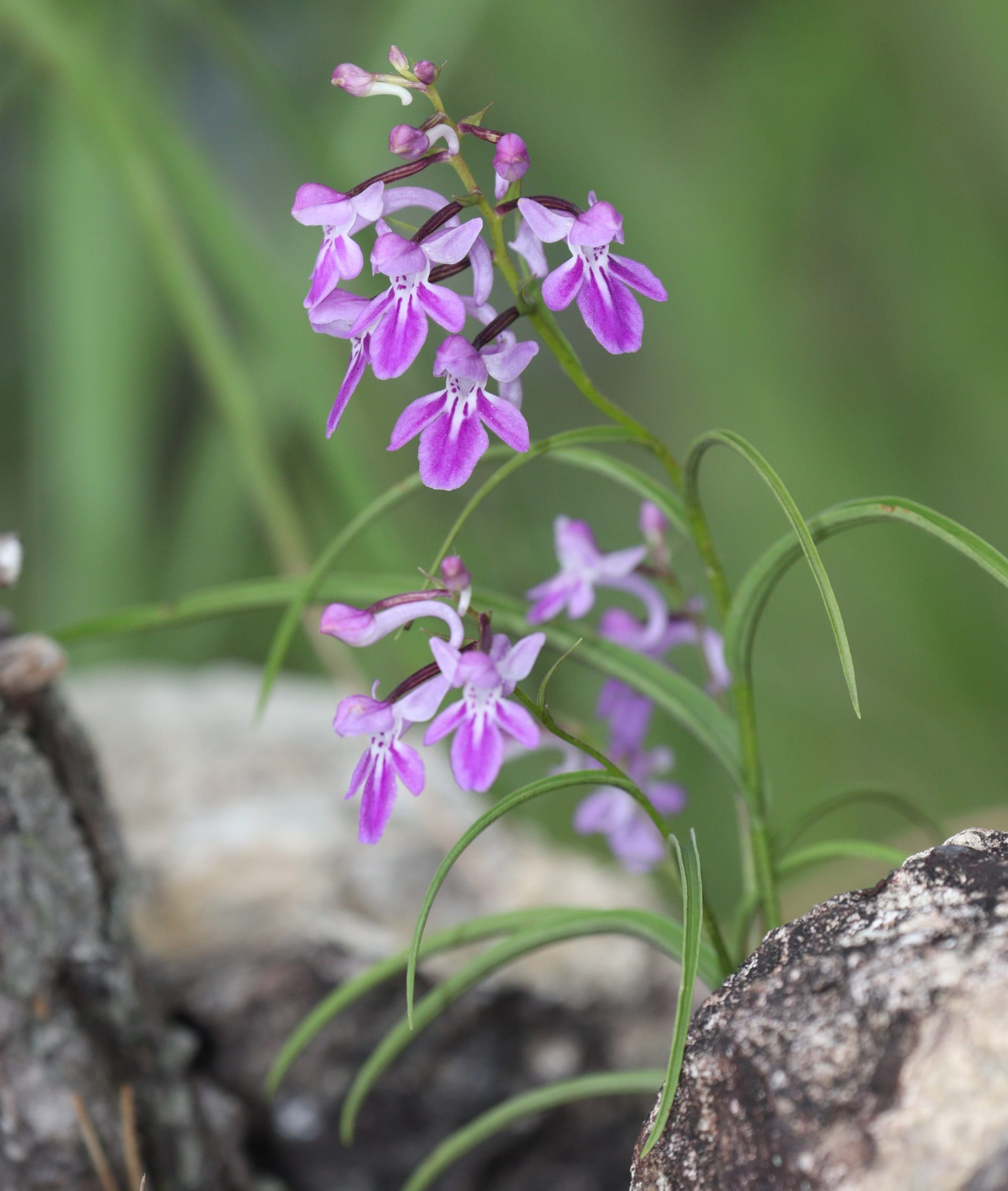
 © Alpsdake / CC BY-SA 4.0
Grass-leaved Hemipilia
The Grass-leaved Hemipilia (Uchouran) is a small terrestrial orchid native to low mountain slopes in Japan and the southern Korean peninsula, often found growing on damp rock faces. From between its slender leaves, a flower stalk rises bearing anywhere from a handful to several dozen small, elegant blooms in shades of reddish-purple. The patterns on the lip petal and the range of flower colors vary widely, and enthusiasts have long selected and bred a rich array of cultivated varieties. Standing just 5 to 20 cm tall with its small flowers clustered together, it has a delicate, compact charm suited to close-up admiration. As a perennial that renews itself each year by forming a fresh bulb, it rewards growers who take the time to understand its cycle with years of blooms to come.
View Grass-leaved Hemipilia encyclopedia →0% commission on your first sales!Register by September 30, 2026 and your first 2 plants are commission-free!
Grower Wanted!
List your plants on GrowerDirect and sell directly to customers nationwide!
6 Transparency Commitments from GrowerDirect
Growers disclose the following information for Orchids listings, guaranteeing transparency on variety, origin, light requirements, and growing difficulty.
- Variety Disclosed
- Real Photos
- Color Specification
- Origin Disclosed
- Light Requirements
- Difficulty Level Disclosed
Browse all 142 varieties
Light Requirements
Growing Difficulty
No listings match your filters
Adjust your filters, or get notified when new listings arrive.
Getting alerts is free with a member account. When new listings match your saved search, we'll notify you by email and in-app.
Browse other categories
Grass-leaved Hemipilia key facts
- Growing Difficulty
- Intermediate
- Lifespan
- Perennial; renews itself each year from new tubers
- Size
- 5-20 cm tall; flowers about 1.5 cm across
- Watering
- Sparing, dilute liquid fertilizer in the growing season
- Light & Placement
- Give bright partial shade in the spring-summer growing season, avoiding strong direct sun.
- Watering
- Keep the mix from drying out while in growth and cut back watering once the top dies down in autumn.
- Temperature & Overwintering
- It dies back in autumn and overwinters as tubers; keep them fairly dry and frost-free while dormant.
- Soil & Repotting
- Pot it in a gritty, free-draining mix and repot the dormant tubers.
- Dormancy Care
- From autumn to winter it rests as tubers; water little, avoid freezing and wait for spring growth.
- Pests & Cautions
- A Japanese native; choose nursery-propagated plants rather than wild-collected ones. Some prefectures restrict collecting wild plants by ordinance. Garden breeding is extensive, so treat variety or locality names on labels with caution.
About Grass-leaved Hemipilia
A small Japanese terrestrial orchid growing on damp mountain rock faces, bearing reddish-purple flowers in varied cultivar forms. Compact at 5-20 cm tall, it renews its bulb each year as a perennial.
7 things to know before growing Grass-leaved Hemipilia
1Prefers Bright Shade
Uchouran dislikes intense direct sun and thrives in bright, filtered light, such as through a sheer curtain, or morning sun only. Strong afternoon sun in midsummer can scorch the leaves, so shading is recommended. Good air circulation also helps keep the plant healthy.
2Water Without Overwetting
During the growing season, water thoroughly once the surface of the potting medium dries, taking care not to let it dry out completely. Excess moisture can rot the bulb, so avoid letting water sit in the saucer. Reduce watering frequency during dormancy.
3Coarse, Well-Draining Medium
Because it grows in crevices on damp rock faces, pot it in a coarse, gritty, well-draining medium. Since excess moisture can damage the bulb, choosing the right medium is key to successful cultivation.
4Repot Every Dormancy
Since Uchouran renews itself by forming a new bulb each year, the standard practice is to remove the new bulb from the old one and repot it in fresh medium during winter dormancy. Skipping this step can lead to medium breakdown and bulb damage from excess moisture.
5Dry Winter Dormancy
After flowering, the leaves die back in autumn and the plant enters dormancy; watering should be reduced and kept on the dry side during this period. While reasonably cold-hardy, it's best kept somewhere sheltered from freezing and sudden temperature swings.
6Check Bulb Condition
When choosing a plant, look for healthy, firm leaves and a well-developed bulb, which makes subsequent care easier. Since lip-petal patterns and flower colors vary between individuals, selecting a plant already in bloom lets you confirm its actual flower form.
7Suited to Intermediate Growers
With its distinct cultivation cycle, including dormant-season management and annual repotting, Uchouran is considered suitable for intermediate growers. Understanding its basic growth pattern and providing attentive care will reward you with blooms again the following year.
Frequently asked questions about Grass-leaved Hemipilia
- Q.Is Uchouran suitable for beginners?
- A.It's generally considered suited to intermediate growers due to its distinct cycle of dormant-season care and annual repotting. That said, with attention to watering and the growing medium, first-time growers can certainly give it a try.
- Q.When is the best time to repot?
- A.The best time is during winter dormancy, after the leaves have died back. Removing the new bulb from the old one and repotting it in fresh medium at this time supports healthy growth the following year.
- Q.How often should I water it?
- A.During the growing season, water thoroughly once the surface of the medium dries out. During dormancy, cut back on watering to prevent the bulb from rotting due to excess moisture.
- Q.What causes the variation in flower color and pattern?
- A.Uchouran naturally shows significant variation in lip-petal patterns and flower color from plant to plant, which has driven the development of many cultivated varieties. This means each plant can offer a slightly different look even within the same species.
- Q.How should I care for it in winter?
- A.Once the leaves die back and the plant enters dormancy, watering should be reduced and kept on the dry side. It is reasonably cold-hardy, but it's best to keep it somewhere sheltered from freezing and sudden temperature swings.
Handy Growing Tools for Grass-leaved Hemipilia
Learn more about Grass-leaved Hemipilia in the encyclopedia
View Grass-leaved Hemipilia encyclopedia entry →
Care difficulty, size, origin and light needs — all basics covered.
More in this category
Can't find the plant you're looking for?
Post your wishes for free and growers with matching plants will contact you with introductions.