 © Abu Shawka / CC0
Conophytum burgeri
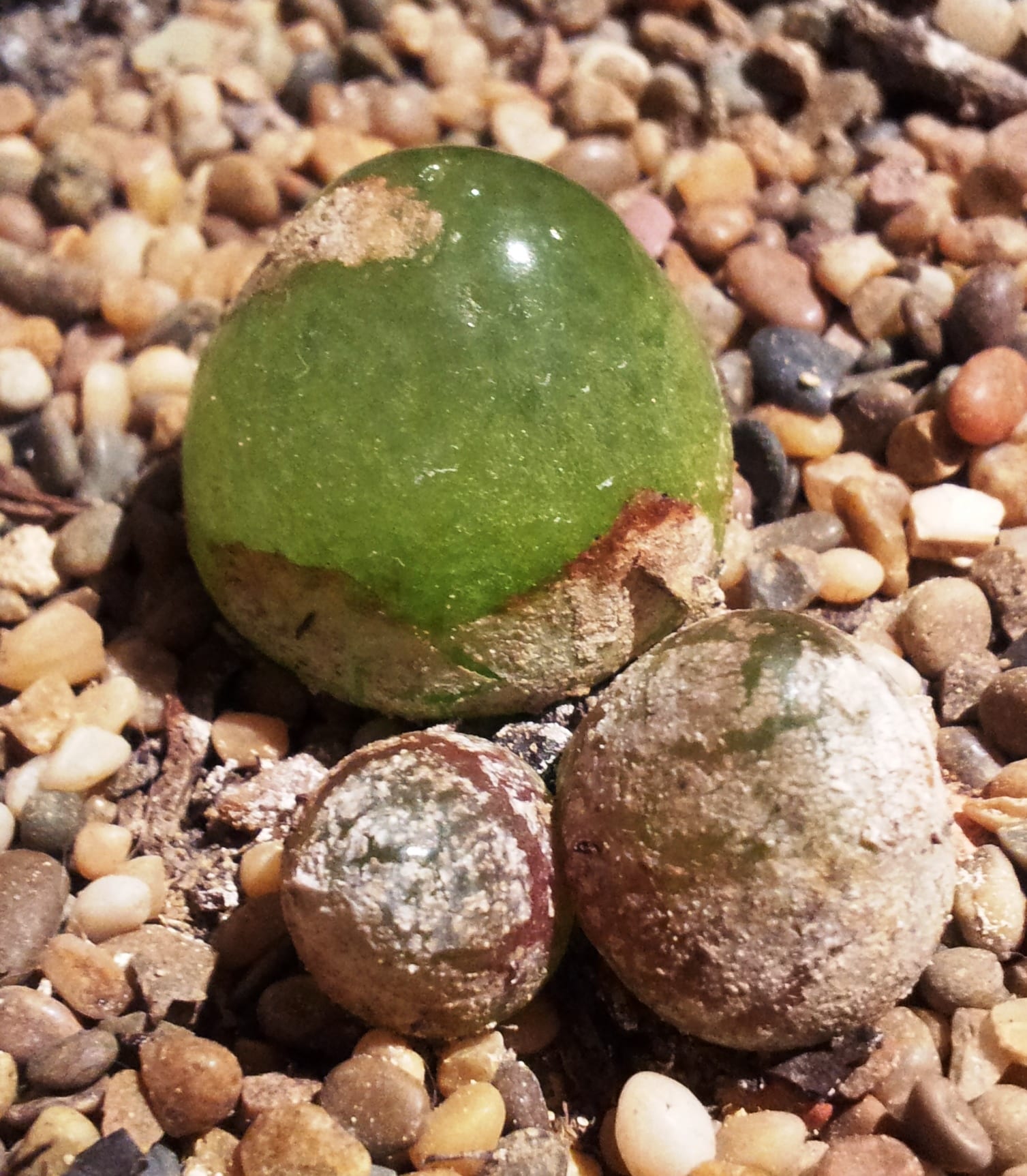
Conophytum burgeri is a small succulent shaped like a plump onion, with a glossy, translucent skin. Its most distinctive feature is the top of the body, where only a tiny slit breaks the smooth surface. It grows as a single head, and some plants approach 5 cm across. In cold weather or strong sunlight, the skin blushes from pink to reddish purple. A perennial, it renews itself by molting once a year. Its cultivation difficulty is rated for experienced growers, because watering and care during molting take practice. Still, if you choose a well-grown plant and follow its seasonal rhythm, this little gem is a rewarding one to keep.
View Conophytum burgeri encyclopedia →0% commission on your first sales!Register by September 30, 2026 and your first 2 plants are commission-free!
Grower Wanted!
List your plants on GrowerDirect and sell directly to customers nationwide!
6 Transparency Commitments from GrowerDirect
Grower disclose this information for Succulents & Cacti. We guarantee transparency in variety, origin, light requirements, and difficulty level.
- Variety Disclosed
- Real Photos
- Color Details
- Origin Disclosed
- Light Requirements
- Difficulty Level
Browse all 131 varieties
Light Requirements
Difficulty Level
No listings match your filters
Adjust your filters, or get notified when new listings arrive.
Getting alerts is free with a member account. When new listings match your saved search, we'll notify you by email and in-app.
Browse other categories
Verified growers (preview)
Are you growing succulents & cacti?
Register as a grower and connect with buyers directly.
Apply as a growerConophytum burgeri key facts
- Growing Difficulty
- Advanced
- Lifespan
- Perennial; renews its body once a year by shedding the old leaves
- Size
- Solitary heads can approach 5 cm across
- Watering
- Little; a mix with base fertiliser, or weak liquid feed in the growing season
- Light & Placement
- Except in the coldest weeks, keep it outdoors in sun and good air, out of the rain. In the summer rest give partial shade and keep it as cool as possible.
- Watering
- A winter grower. From autumn to spring water thoroughly once the pot is completely dry and keep it airy. When the skin loosens and the sheath forms, keep it almost dry until autumn nights cool.
- Temperature & Overwintering
- It is among the least heat- and humidity-tolerant conophytums, so summer is the main hurdle. A Japanese reference gives 3°C as the minimum survival temperature.
- Fertiliser
- A mix with slow-release base fertiliser is recommended; otherwise give liquid feed once or twice a month in spring and autumn, or a measured slow-release top dressing.
- Propagation
- It seldom divides, so propagation is from seed.
- Pests & Cautions
- The translucent skin marks easily. Do not peel the white dormant sheath; let the new body break through naturally.
About Conophytum burgeri
Conophytum burgeri is an onion-shaped, single-headed succulent with glossy, translucent skin that turns pink to reddish purple in cold or strong sun. A perennial that molts once a year, it suits experienced growers.
7 things to know before growing Conophytum burgeri
1Light and Airflow
Give it a spot with plenty of light and good airflow. With enough sun the skin stays firm, and in cold weather or strong light it colors from pink to reddish purple. Too little light can loosen its compact shape, so keep it bright during the growing season.
2Water in the Growing Season
It is a winter grower, active from early autumn to spring. During that time, water thoroughly once the soil has dried out completely, and keep air moving so it stays on the dry side. Because the plant stores water in its body, prolonged damp can lead to rot or a split skin. Once the skin loosens and molting begins, keep it nearly dry until night temperatures drop in autumn.
3A Fast-Draining Mix
Choose a fast-draining, mostly mineral mix such as pumice and fine-grain kanuma soil, and keep organic matter low because it stays damp longer. Since the plant is small, a compact, breathable pot helps the soil dry at a steady pace.
4Hold Back During Molting
Once a year, a new body forms inside the old skin as the plant molts. During this time it may look shrunken, which is a normal part of the process, so hold back on water and let it be. Don't peel the old skin off; wait until it dries and comes away on its own.
5Summer Dormancy
Summer is a slow period for this plant, and heat combined with humidity is hard on it. Move it to a bright, shaded, well-ventilated spot out of the rain and away from harsh midsummer sun, and water very sparingly. Avoiding stuffy conditions sets it up for a good start in autumn.
6When to Repot
The start of the growing season in early autumn is the best time to repot. Do it only when the roots have filled the pot or the soil has broken down, and avoid repotting during molting. After the job, let the roots settle for a while before watering again.
7Choosing a Healthy Plant and Its CITES Status
Look for a plump, firm plant with a glossy skin. Wrinkling is normal during molting, so it helps to ask the seller which stage the plant is in. The genus Conophytum is listed in CITES Appendix III (added by South Africa in 2023). International trade requires export permits from the country of origin, but no registration or other procedure is needed to transfer a plant within Japan.
Frequently asked questions about Conophytum burgeri
- Q.Can a beginner grow it?
- A.Its cultivation difficulty is rated for experienced growers. Getting the watering right and reading the molting stage are tricky, and it is prone to damage from excess moisture. It is a good idea to get used to the wet-and-dry rhythm with other succulents first.
- Q.Should I water during molting?
- A.While the plant molts, a new body grows inside the old skin, so hold back on watering. Wait until the old skin dries and comes away on its own, and don't pull it off. If you are unsure, check how firm the plant is and how dry the soil is.
- Q.Why does the skin turn pink or purple?
- A.In cold weather or strong sunlight, the skin takes on pink to reddish-purple tones. This is a response to its environment and part of the plant's appeal. If the color change comes with a soft, mushy body, however, suspect root rot or similar damage.
- Q.How do I care for it in summer?
- A.Summer is a slow period, and the plant dislikes hot, humid conditions. Keep it in a bright, shaded, well-ventilated spot out of the rain, and water very sparingly.
- Q.Is the slit on top a sign of disease?
- A.No, the small slit on top is a natural feature of this species, marking the seam where its two fused leaves meet. If the area around it turns dark or mushy, that is a sign of damage, so review your care.
Handy Growing Tools for Conophytum burgeri
Learn more about Conophytum burgeri in the encyclopedia
View Conophytum burgeri encyclopedia entry →
Care difficulty, size, origin and light needs — all basics covered.
More in this category
Can't find the plant you're looking for?
Post your wishes for free and growers with matching plants will contact you with introductions.