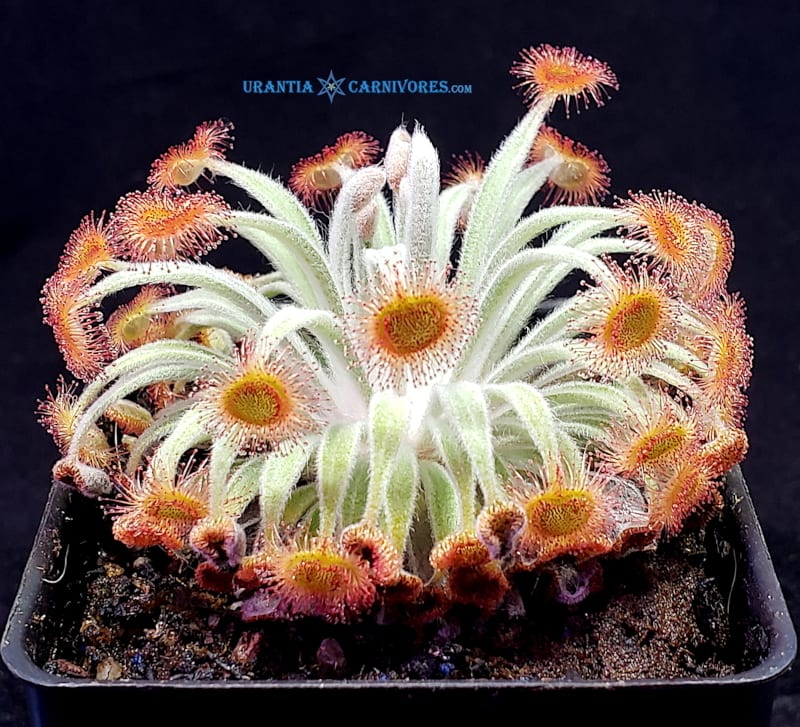
 © Cooleyray / CC BY-SA 4.0
Drosera ordensis
Drosera ordensis is a carnivorous sundew native to the Ord River region of northern Australia. It belongs to the woolly petiolaris group, its broad leaf stalks densely coated in long, silvery-white hairs that fan out into a striking rosette. Rosettes typically reach around 8cm across, though specimens up to 20cm have been reported. In the wild it flowers from December to April, producing pink-to-white blooms that contrast beautifully with its fuzzy foliage. As a perennial suited to intermediate growers, it rewards keepers who make sure it stays warm.
View Drosera ordensis encyclopedia →0% commission on your first sales!Register by September 30, 2026 and your first 2 plants are commission-free!
Grower Wanted!
List your plants on GrowerDirect and sell directly to customers nationwide!
6 Transparency Commitments from GrowerDirect
Every Grower listing discloses variety, origin, light requirements, and difficulty level for Carnivorous Plants. Complete transparency, guaranteed.
- Variety Disclosed
- Real Photos
- Color Information
- Origin Disclosed
- Light Requirements
- Difficulty Level
Browse all 145 varieties
Light Requirements
Difficulty Level
No listings match your filters
Adjust your filters, or get notified when new listings arrive.
Getting alerts is free with a member account. When new listings match your saved search, we'll notify you by email and in-app.
Browse other categories
Are you growing carnivorous plants?
Register as a grower and connect with buyers directly.
Apply as a growerDrosera ordensis key facts
- Growing Difficulty
- Intermediate
- Lifespan
- Perennial
- Size
- Rosettes about 8 cm across (up to 20 cm reported)
- Watering
- No fertilizer (catches small insects)
- Temperature & Overwintering
- Its relatives like the low 30s °C in summer and dislike dropping below 18°C at any time; heat it through winter.
- Light & Placement
- Grows best in strong light, which shows off the white hairs; weak light makes the leaves stretch.
- Watering
- Stand small pots in a tray of pure water: higher in summer, lower in winter, even allowing a few dry days.
- Soil & Repotting
- Grows in pure peat or equal parts peat, sand and perlite; a free-draining mix suits this sandy-soil species.
- Propagation
- Leaf cuttings do not work and leaf pullings only sometimes succeed; some plants do not divide. To get seed you need two unrelated plants flowering together and hand pollination.
About Drosera ordensis
Learn about Drosera ordensis, a woolly sundew from northern Australia with silvery-haired leaves, pink-white blooms, and an 8cm rosette, best suited to intermediate growers.
7 things to know before growing Drosera ordensis
1Light and Placement
Native to the tropical Ord River region, Drosera ordensis thrives in warm, brightly lit conditions year-round. Outdoors, give it direct sun; indoors, a south-facing window or a grow light works well and helps the silvery hairs develop fully. It's sensitive to cold, so take care with its placement in winter.
2Watering by Tray Method
Like most sundews, this species is best kept on the tray, or bottom-watering, method, with the soil constantly moist. Keep a shallow dish of water under the pot and top it up as it evaporates. Tap water minerals can stress the plant over time, so rainwater or purified water is preferable.
3Soil Mix
In the wild it grows in sandy ground near sandstone outcrops, so a free-draining mix suits it. Pure peat, or equal parts peat, sand, and perlite, both work. Avoid standard potting soil or anything containing fertilizer, as it can damage the roots.
4When to Repot
Repot in spring through early summer, once growth is active, if the soil has broken down or the roots have become crowded. Handle the plant by its base rather than the hairy leaves or rosette center to avoid damage. Keep the tray well-watered for a while afterward to help it settle in.
5Year-Round Temperature Care
In the wild it forms small, hairy leaves in the dry season and goes semi-dormant. Its relatives prefer the low 30s °C in summer and dislike falling below 18°C at any time, so keep it heated through winter. In winter, lower the tray water level; letting it dry for a few days is fine.
6Choosing a Healthy Plant
Look for a plant with a firm rosette center and leaves densely covered in hair. Browning leaves or a dry appearance with little dew production can signal a weakened plant. Checking that the roots are well established is also worth doing.
7Handle the Hairy Leaves Gently
The dense silvery hairs covering the leaves are delicate, and rough contact or splashed soil and water can disrupt dew production and damage the leaf. When repotting or inspecting the plant, handle it by the base or the outer rosette rather than touching the leaves directly.
Frequently asked questions about Drosera ordensis
- Q.Is this a good sundew for beginners?
- A.It's generally considered suited to intermediate growers rather than complete beginners. If you already have some experience with sundews and understand its need for warmth, humidity, and tray watering, it's a rewarding plant to take on.
- Q.Should I bring it indoors in winter?
- A.Yes. It dislikes falling below 18°C at any time of year, so it needs heating through winter. In the wild it goes semi-dormant in the dry season, so keep the tray water level lower in winter.
- Q.What do the flowers look like?
- A.It produces pink-to-white flowers held on a tall flower stalk above the foliage. The blooms offer a nice contrast against the plant's densely haired, silvery leaves.
- Q.How large does it grow?
- A.The rosette typically reaches around 8cm across, though reports exist of specimens growing up to 20cm under favorable conditions. Actual size varies with the health and care of the individual plant.
- Q.What should I watch for when watering?
- A.Keep the soil consistently moist using the tray method, but avoid tap water where possible since its mineral content can stress the plant over time; rainwater or purified water is better. Also be careful not to splash water directly onto the hairy leaves.
Handy Growing Tools for Drosera ordensis
Learn more about Drosera ordensis in the encyclopedia
View Drosera ordensis encyclopedia entry →
Care difficulty, size, origin and light needs — all basics covered.
More in this category
Can't find the plant you're looking for?
Post your wishes for free and growers with matching plants will contact you with introductions.