Caudex Plant Encyclopedia
Encyclopedia of popular caudex plants with care guides, traits, and root management tips.
Featured Caudex Plant
Showing 80 of 141 species(25–48)
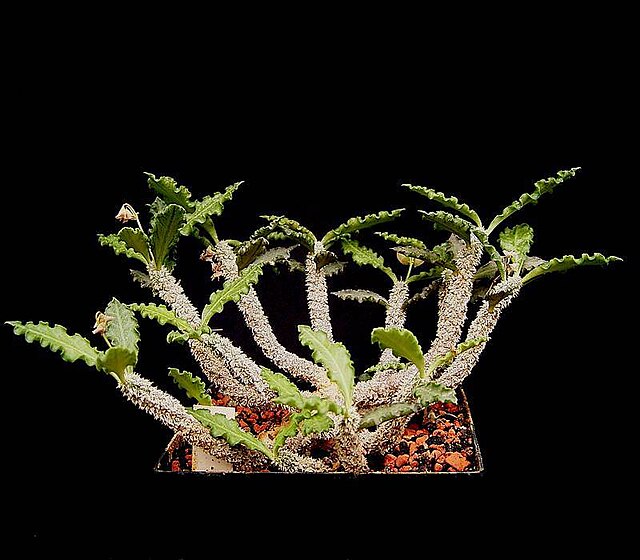 © Frank Vincentz / CC BY-SA 3.0
Euphorbia Ambovombensis
Euphorbia ambovombensis
A small caudex Euphorbia from Madagascar with a plump caudex and small leaves.
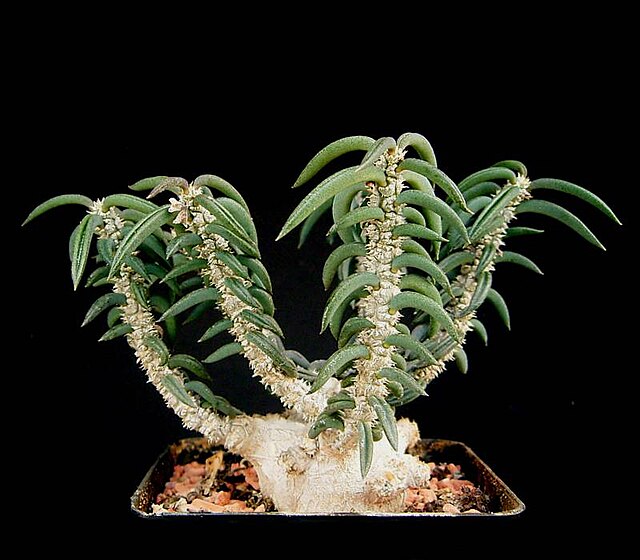 © Frank Vincentz / CC BY-SA 3.0
Euphorbia Cylindrifolia
Euphorbia cylindrifolia
A small Euphorbia with cylindrical leaves and caudex, endemic to Madagascar.
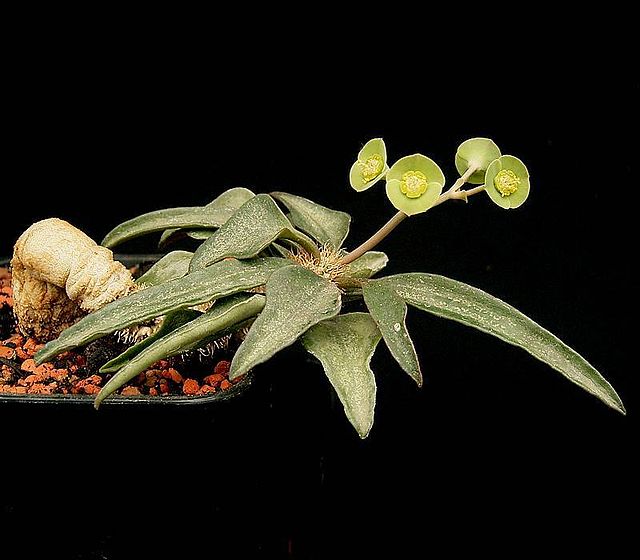 © Frank Vincentz / CC BY-SA 3.0
Euphorbia Francoisii
Euphorbia francoisii
A Madagascar Euphorbia popular for beautifully patterned leaves and caudex, many leaf variations.
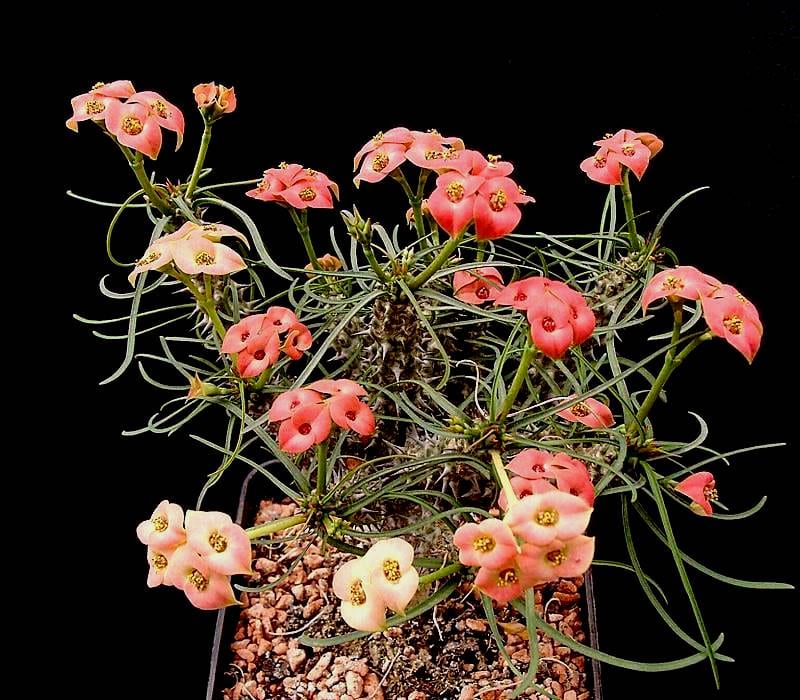 © Frank Vincentz / CC BY-SA 3.0
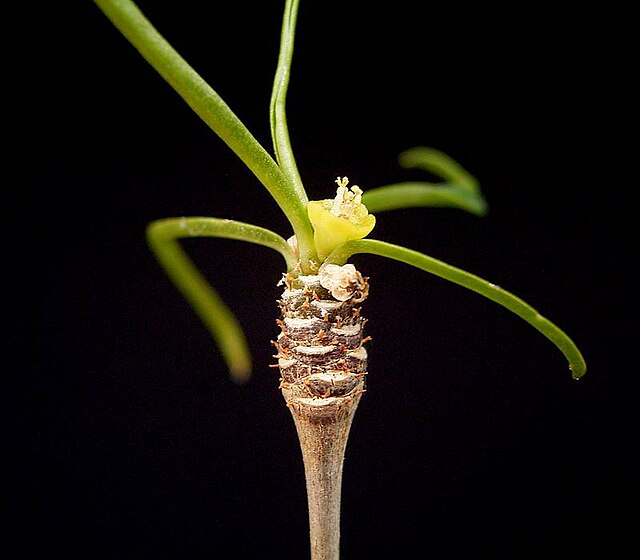
Euphorbia gottlebei
Euphorbia gottlebei
A shrubby Madagascan spurge with slender, densely spiny branches, narrow leaves and small flowers with orange-red bracts below the branch tips. It looks like a miniature crown-of-thorns.
 © Frank Vincentz / CC BY-SA 3.0
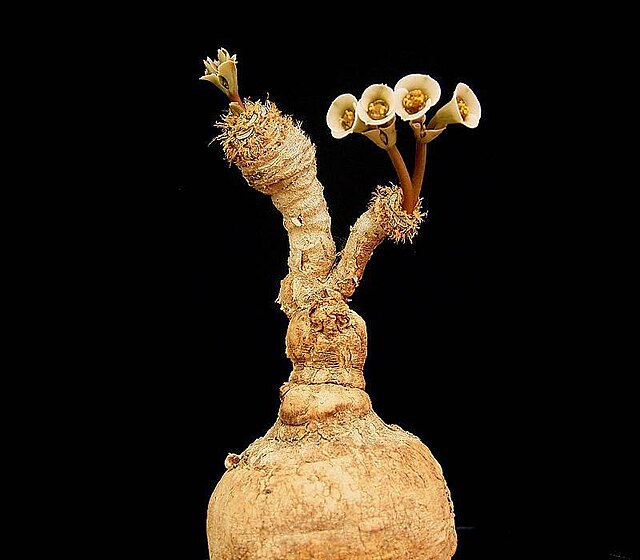
Euphorbia Hedyotoides
Euphorbia hedyotoides
A Madagascar Euphorbia with white trunk and small round leaves, bonsai-like appearance.
 © Frank Vincentz / CC BY-SA 3.0
Euphorbia Primulifolia
Euphorbia primulifolia
A Madagascar Euphorbia with primrose-like leaves and flat caudex.
 © D.Georgi / CC BY-SA 3.0 de
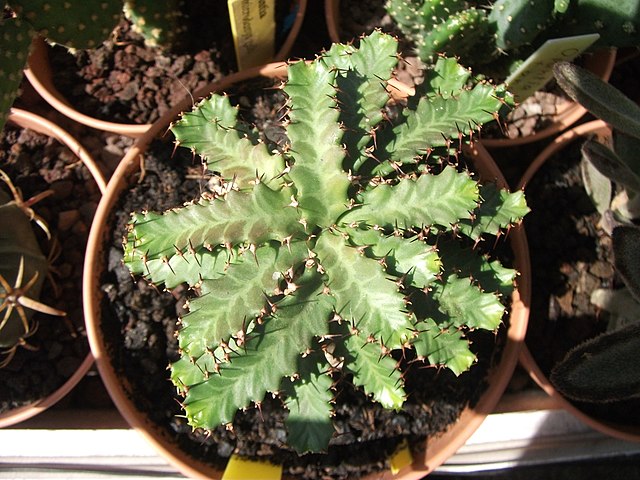
Euphorbia Stellata
Euphorbia stellata
A Euphorbia from the Eastern Cape, South Africa, with star-shaped radiating branches from a flat caudex.
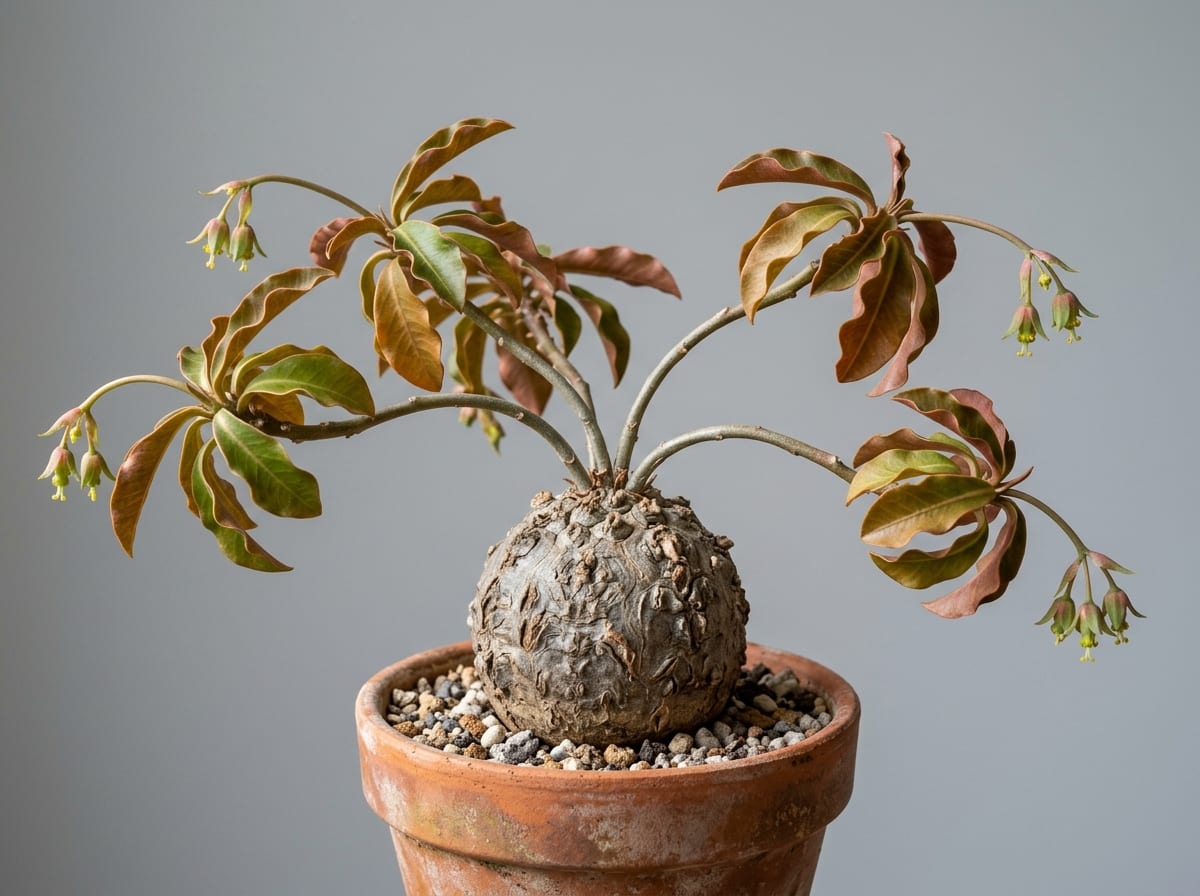
Euphorbia suzannae-marnierae
Euphorbia suzannae-marnierae
A small spurge from the southern tip of Madagascar with a round grey-brown caudex about 5 cm across, a few slender branches and spirally arranged, leathery, curled leaves in green to copper. The flowers are pendulous bells.
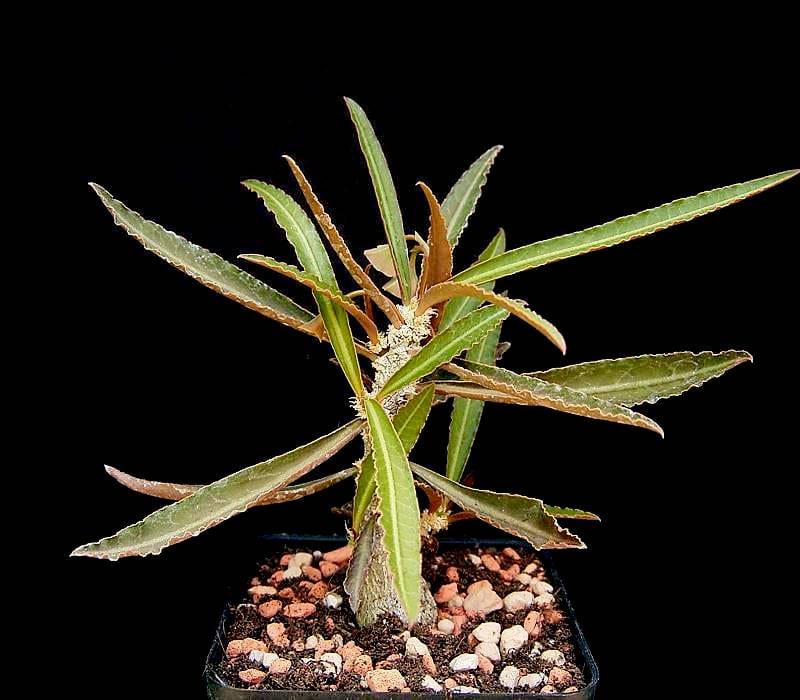 © Frank Vincentz / CC BY-SA 3.0
Euphorbia waringiae
Euphorbia waringiae
A small spurge from south-eastern Madagascar whose half-buried round caudex, about 6 cm across, sends out slender leaning branches set with small whitish bumps. White to cream flowers keep opening for several months.
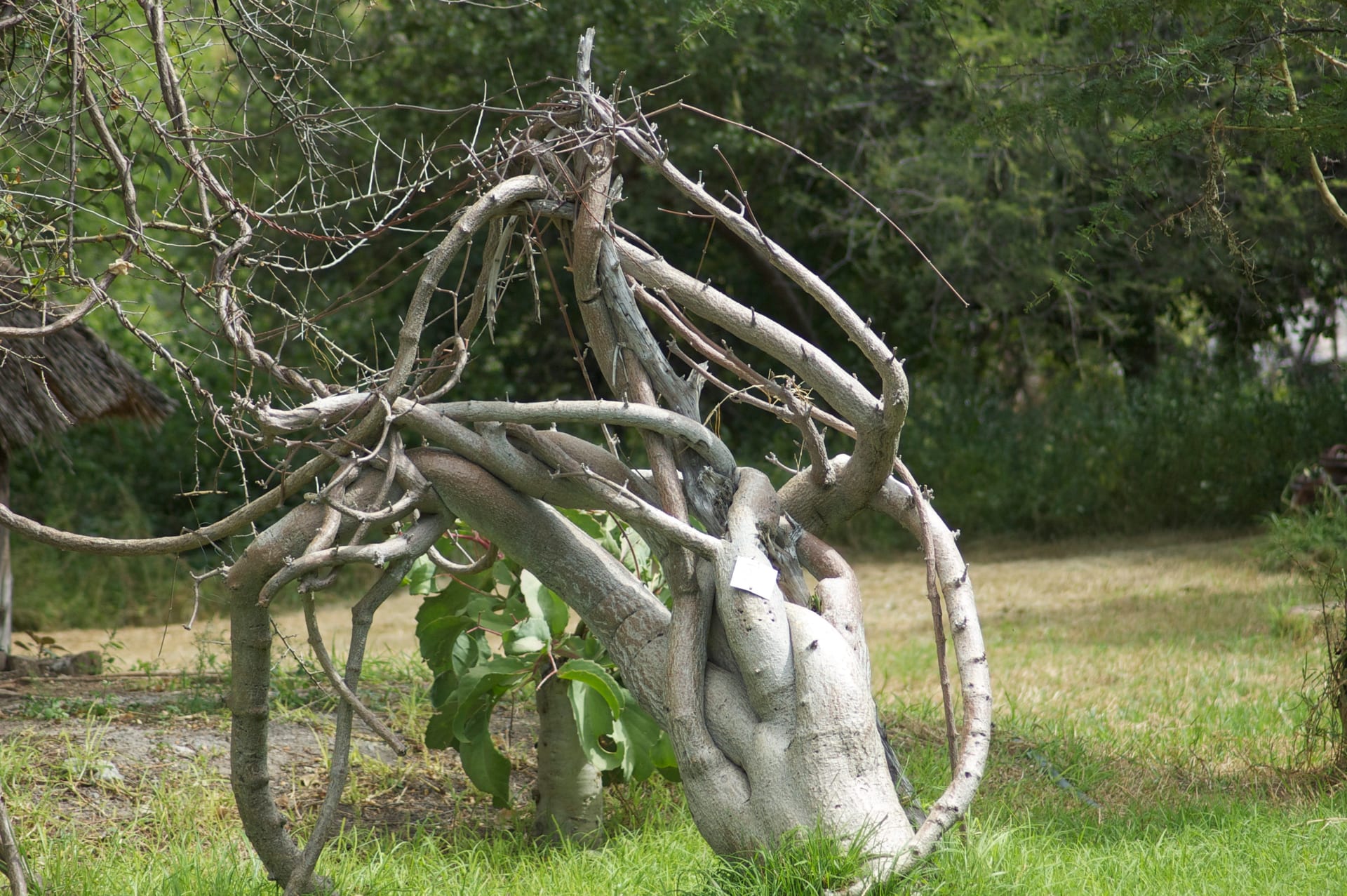 © Lidine Mia / CC BY-SA 4.0
Fockea multiflora
Fockea multiflora
The giant of the genus Fockea: a tropical African liana whose thick stems climb up to 15 m into trees. Unlike tuberous relatives such as F. edulis, it has no distinct tuber; instead the trunk swells toward the base.
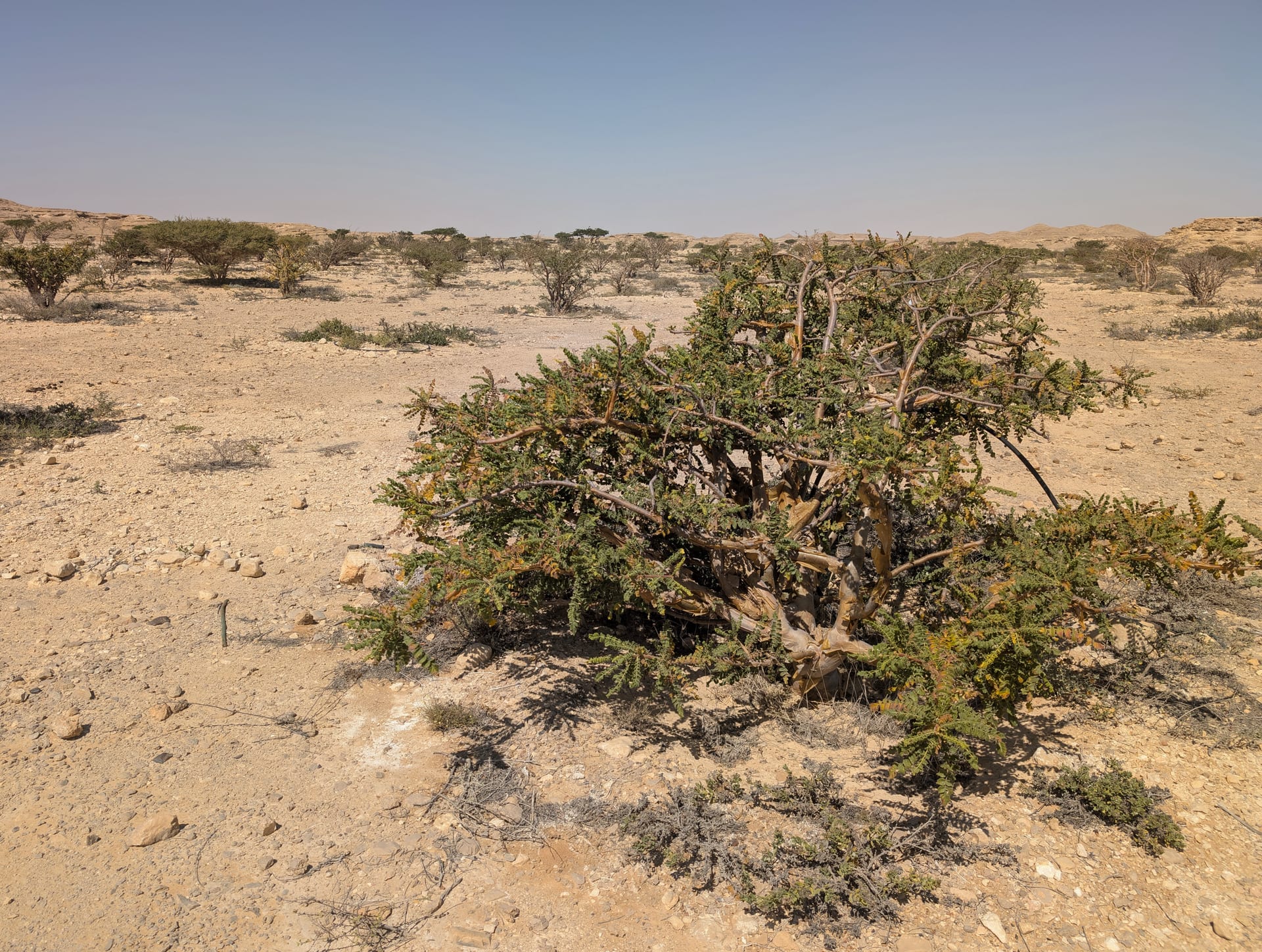 © Krzysztof Ziarnek, Kenraiz / CC BY-SA 4.0
Frankincense Tree
Boswellia sacra
The tree that yields frankincense. It has papery, peeling bark and a trunk base that swells to grip rock, and in a pot it makes a small caudex bonsai.
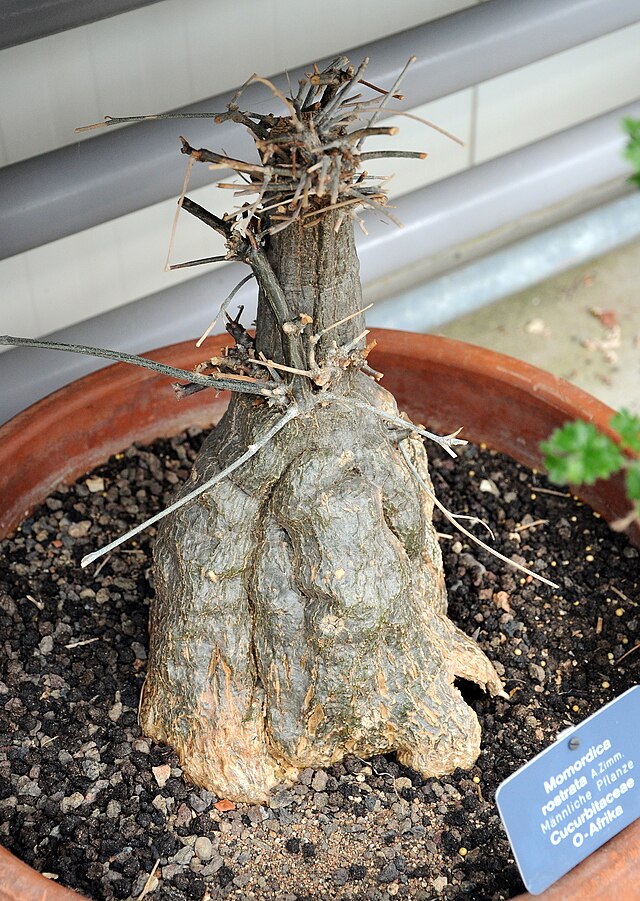 © Amada44 / CC BY 3.0
Momordica Rostrata
Momordica rostrata
A cucurbit caudex with white bark-like tuber producing vines and red fruits.
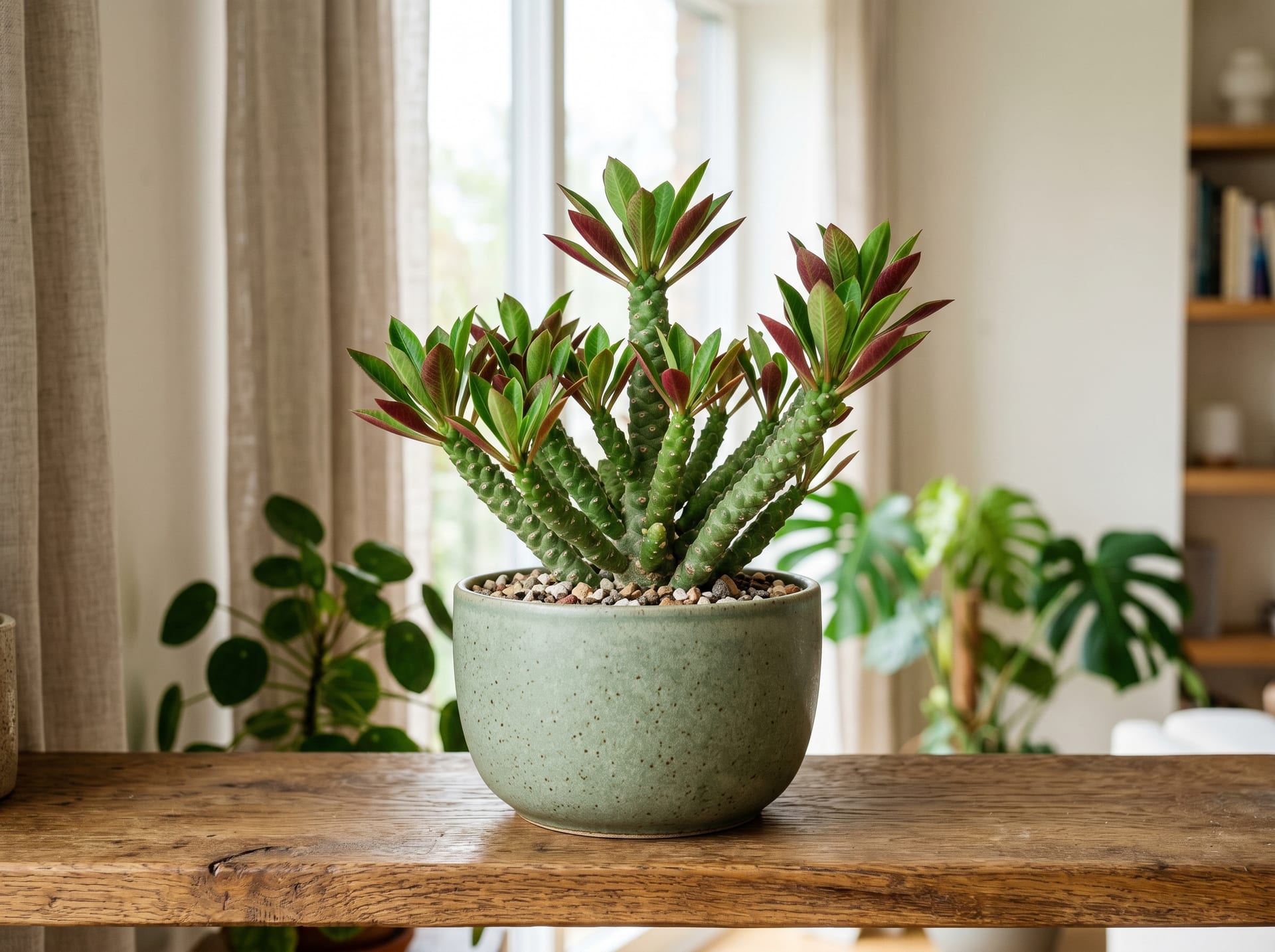
Monadenium
Monadenium spp.
African succulent caudex featuring unusual flowers and thick, fleshy stems. Compact size suitable for indoor cultivation and mixed arrangements. Prefers drought conditions and excellent drainage with distinct growing and dormant cycles.
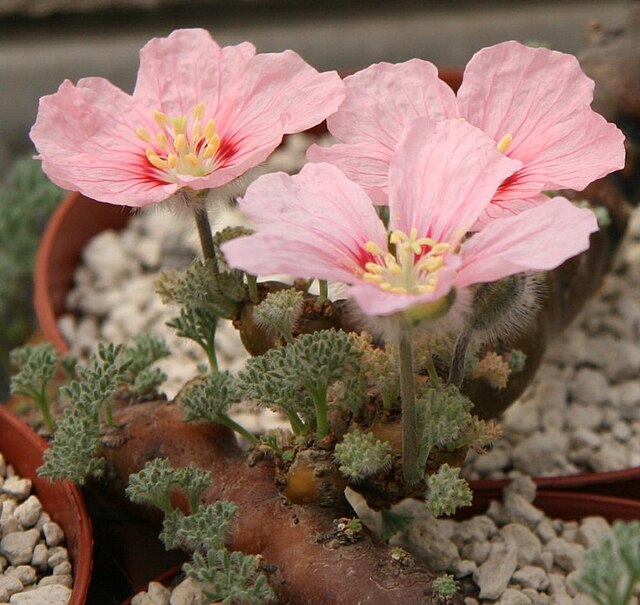 © Michael Wolf / CC BY 2.5
Monsonia Multifida
Monsonia multifida
A Geraniaceae caudex with thick trunk and finely divided leaves, winter-growing.
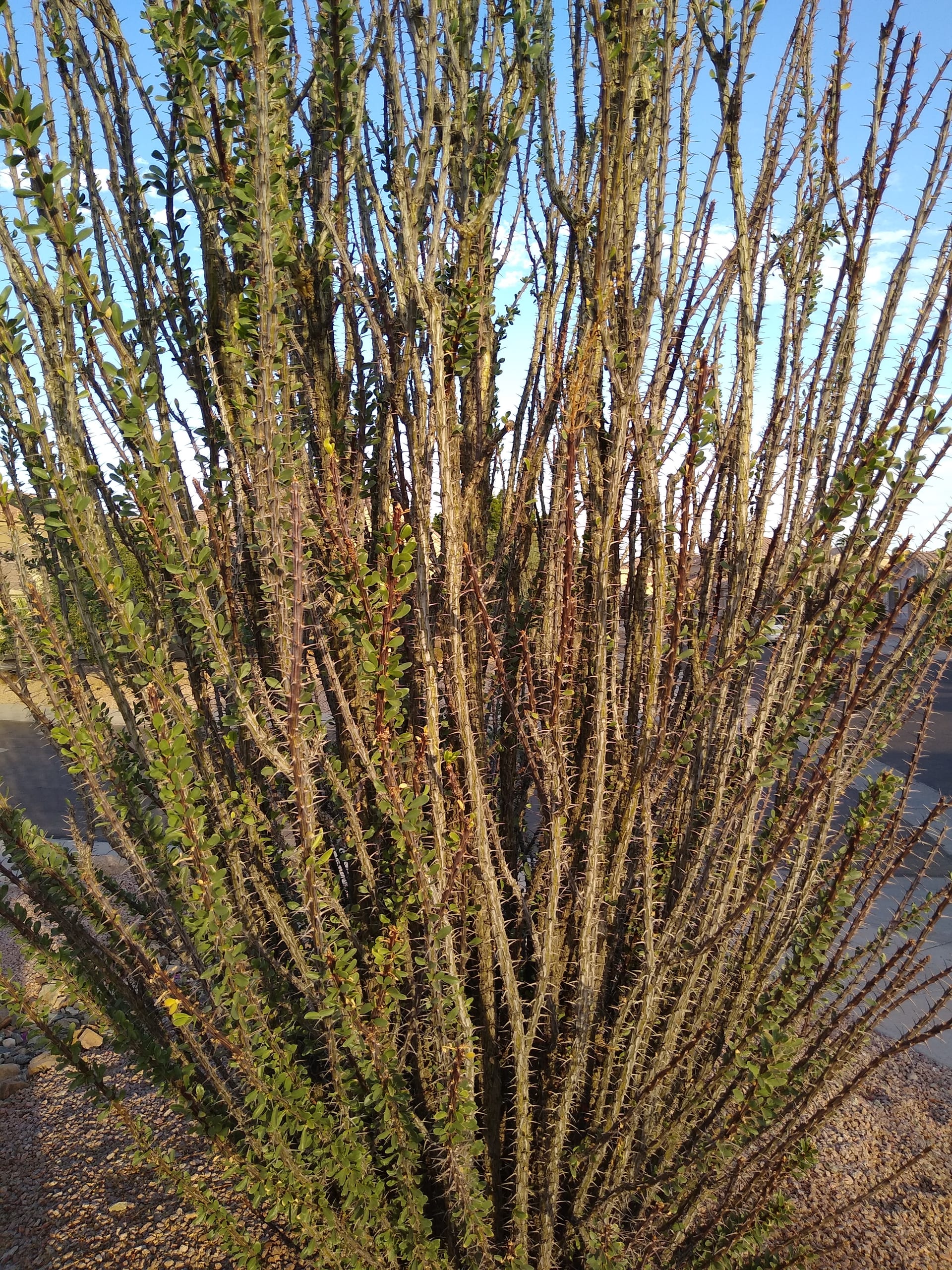 © Prahlad balaji / CC BY-SA 4.0
Ocotillo
Fouquieria splendens
The ocotillo of North American deserts: many spiny, whip-like stems rise from the base, leaf out within days of rain and carry spikes of red tubular flowers at their tips. In Japan subspecies breviflora and campanulata are also sold.
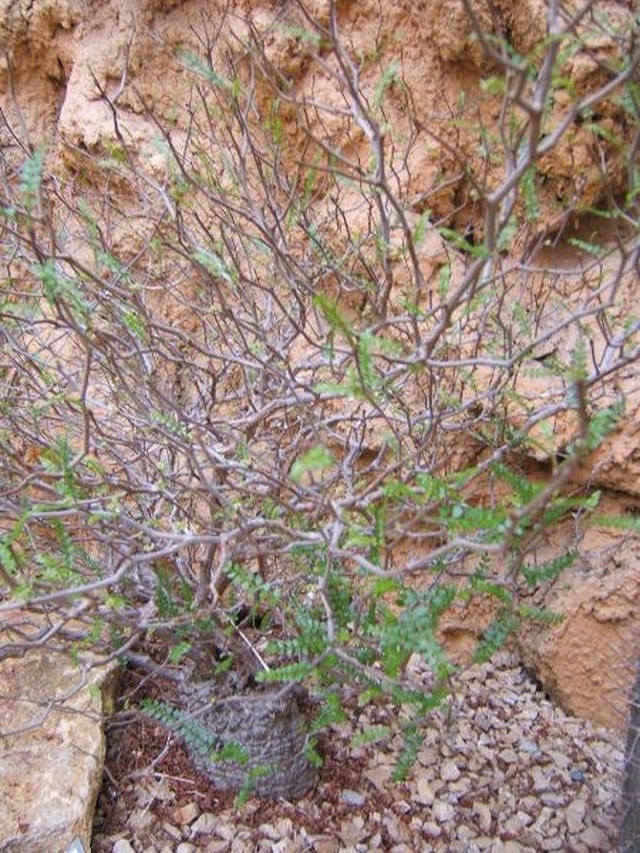 © User:Qwertzy2 / CC BY-SA 3.0
Operculicarya Decaryi
Operculicarya decaryi
A caudex plant with bonsai-like form, beautiful balance of small leaves and thick trunk.
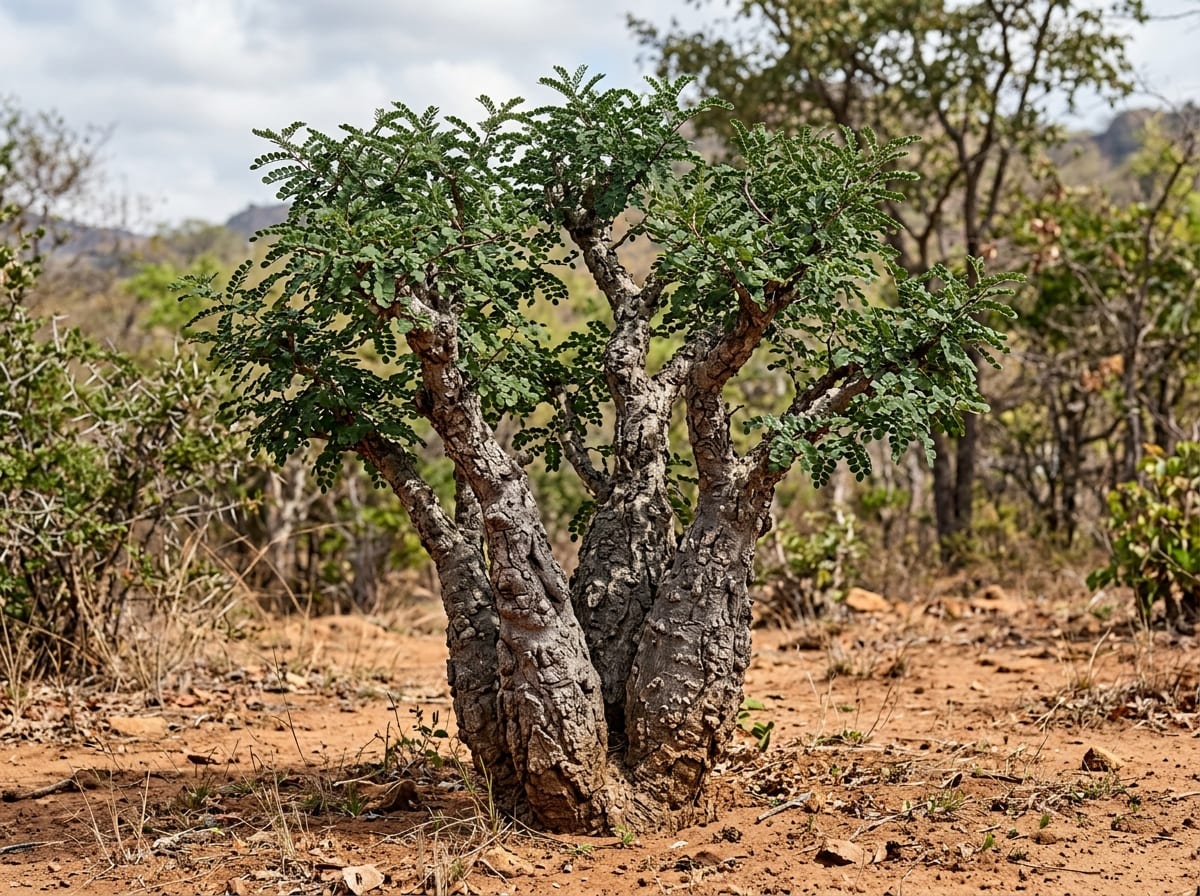
Operculicarya hyphaenoides
Operculicarya hyphaenoides
A south-western Madagascan Operculicarya with several thick, warty trunks from one base and finely divided, densely hairy pinnate leaves. Its rounded, squarish leaflets and overall hairiness set it apart from O. pachypus and O. decaryi.
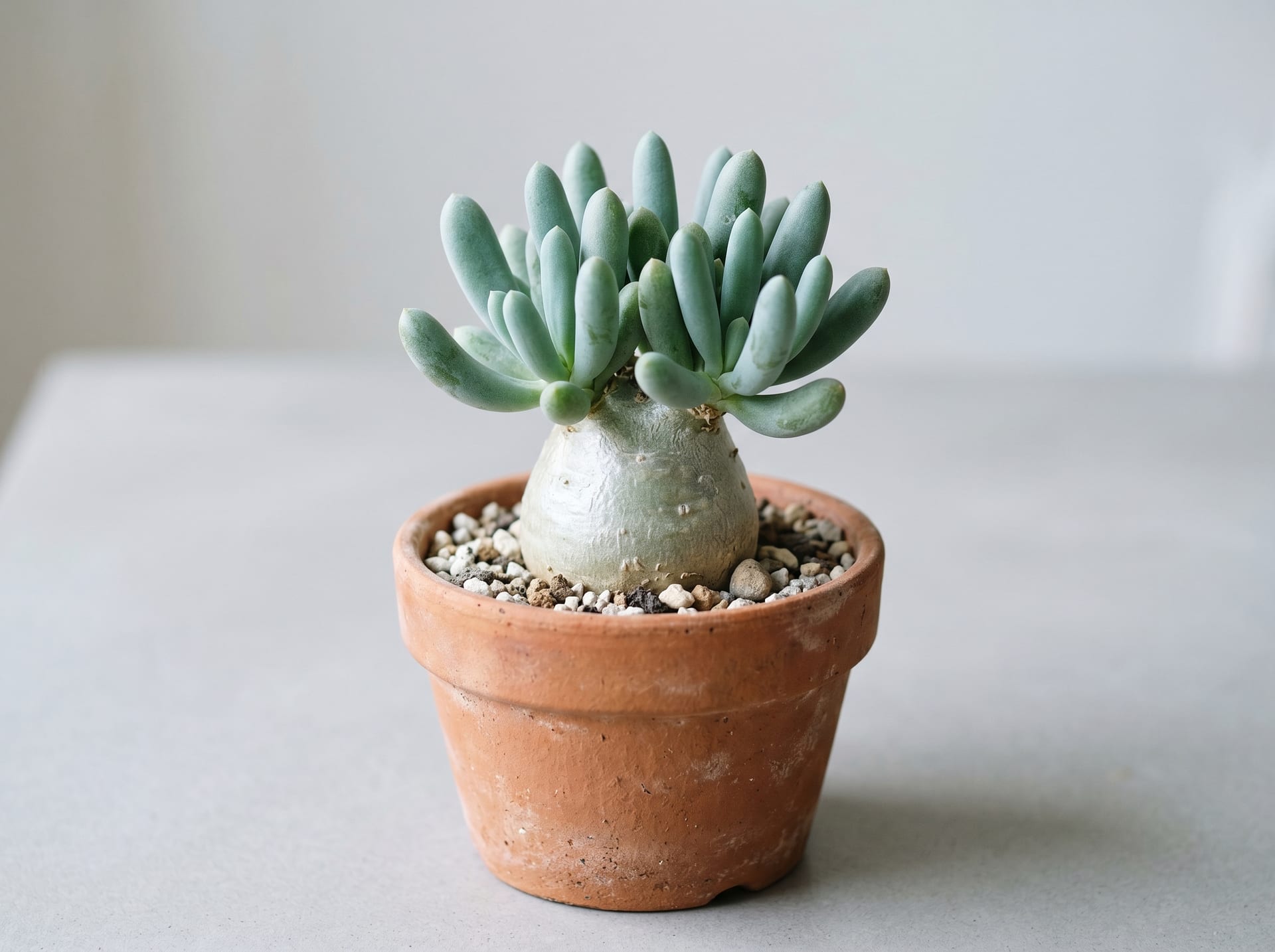
Othonna Clavifolia
Othonna clavifolia
An Asteraceae caudex with club-shaped succulent leaves and yellow flowers, winter-growing.
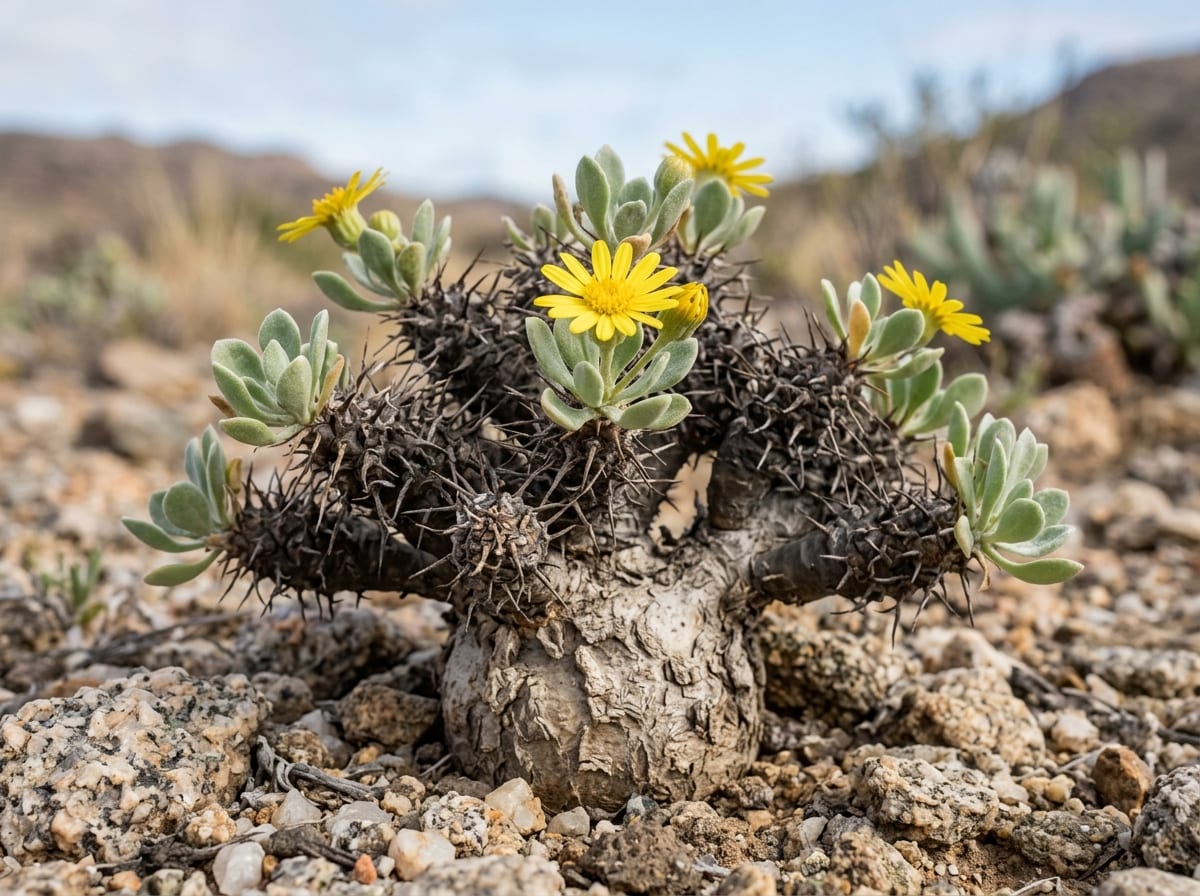
Othonna euphorbioides
Othonna euphorbioides
The most cactus- or spurge-like member of the daisy family: a small winter-growing shrublet whose spent flower stalks harden into spines around a potato-like caudex. Pale green, spoon-shaped leaves dusted with white powder cluster at the branch tips.
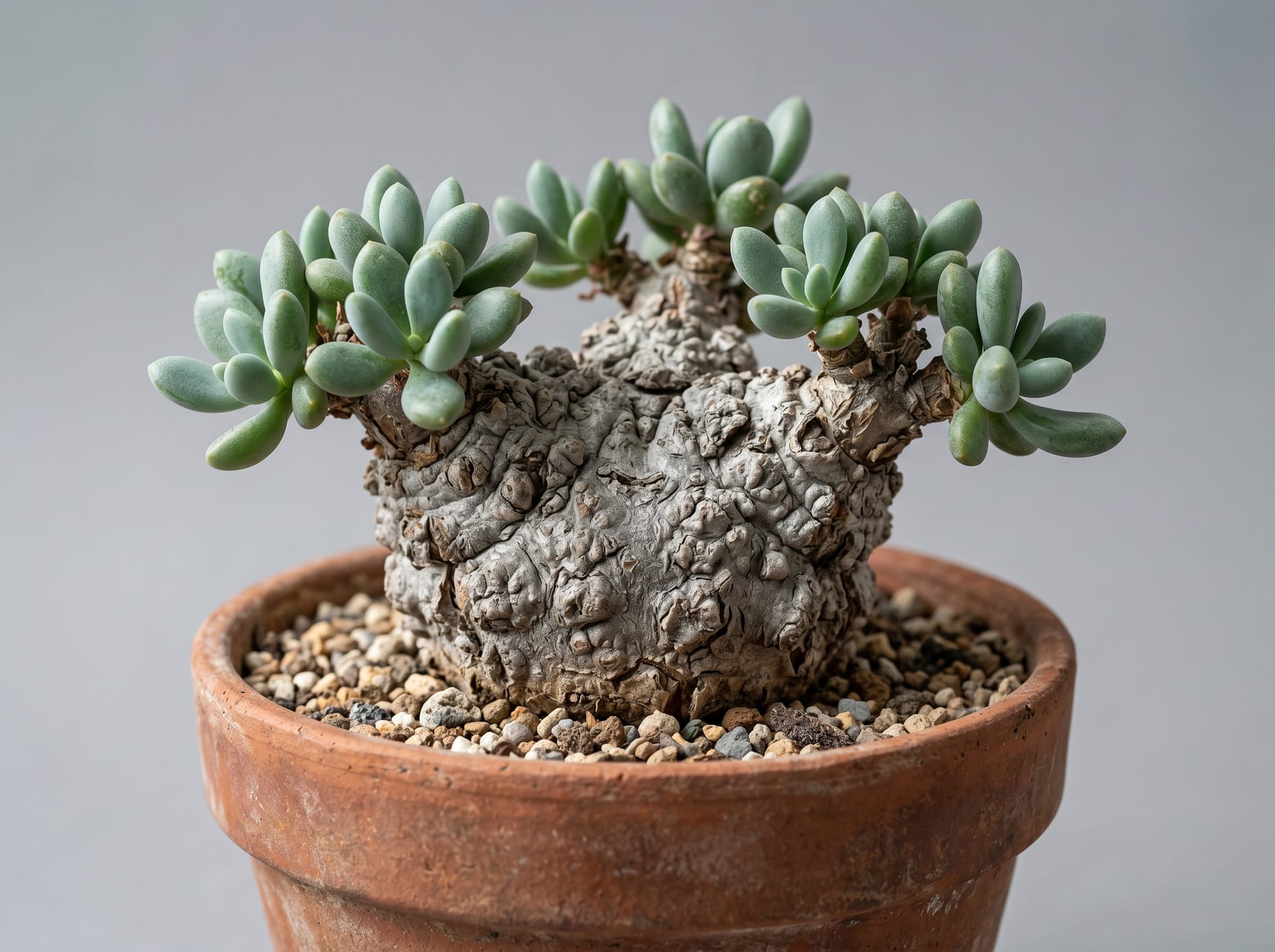
Othonna Herrei
Othonna herrei
An Asteraceae caudex whose thick, short branches, with persistent knob-like leaf bases, and succulent leaves with wavy margins create a bonsai-like atmosphere, a classic winter type.
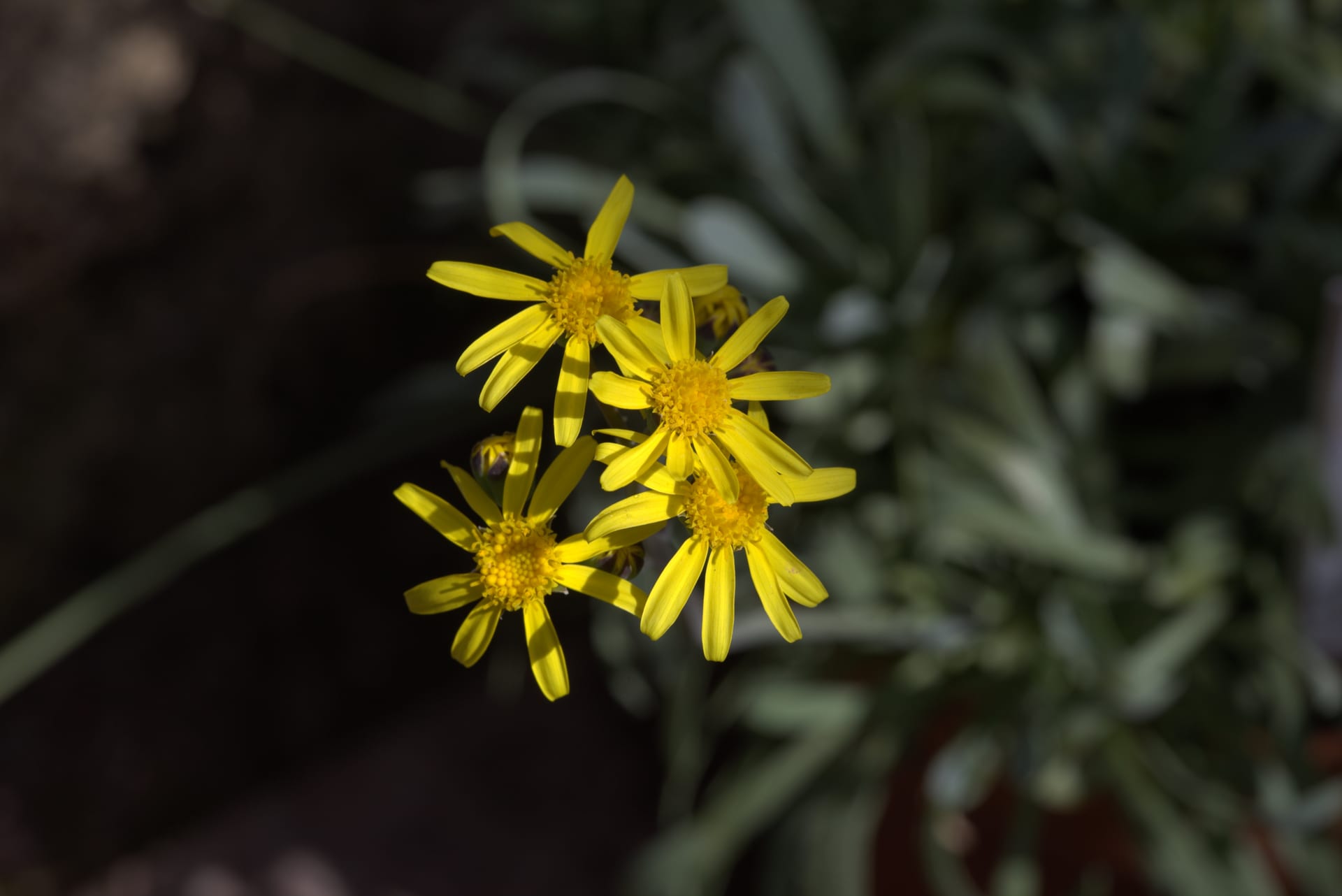 © Averater / CC BY-SA 3.0
Othonna retrorsa
Othonna retrorsa
A winter-growing Othonna with a woolly, many-headed caudex bearing rosettes of stiff, chalky grey-green leaves with a raised net of veins. Small white marginal teeth, often pointing backwards, give it its name.
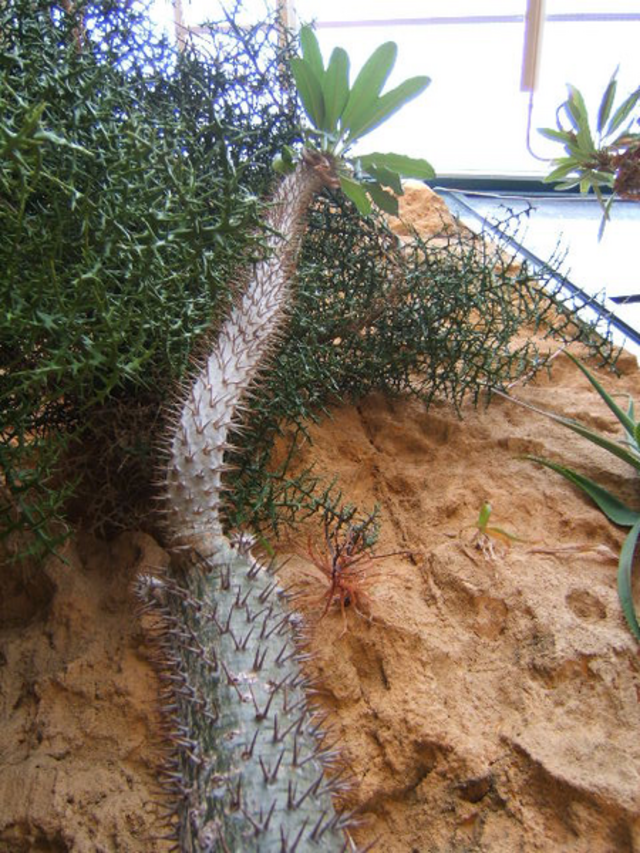 © User:Qwertzy2 / CC BY-SA 3.0
Pachypodium
Pachypodium
Caudex plant from Madagascar. Fascinating contrast between thick thorny trunk and small leaves. Rapidly growing popularity.
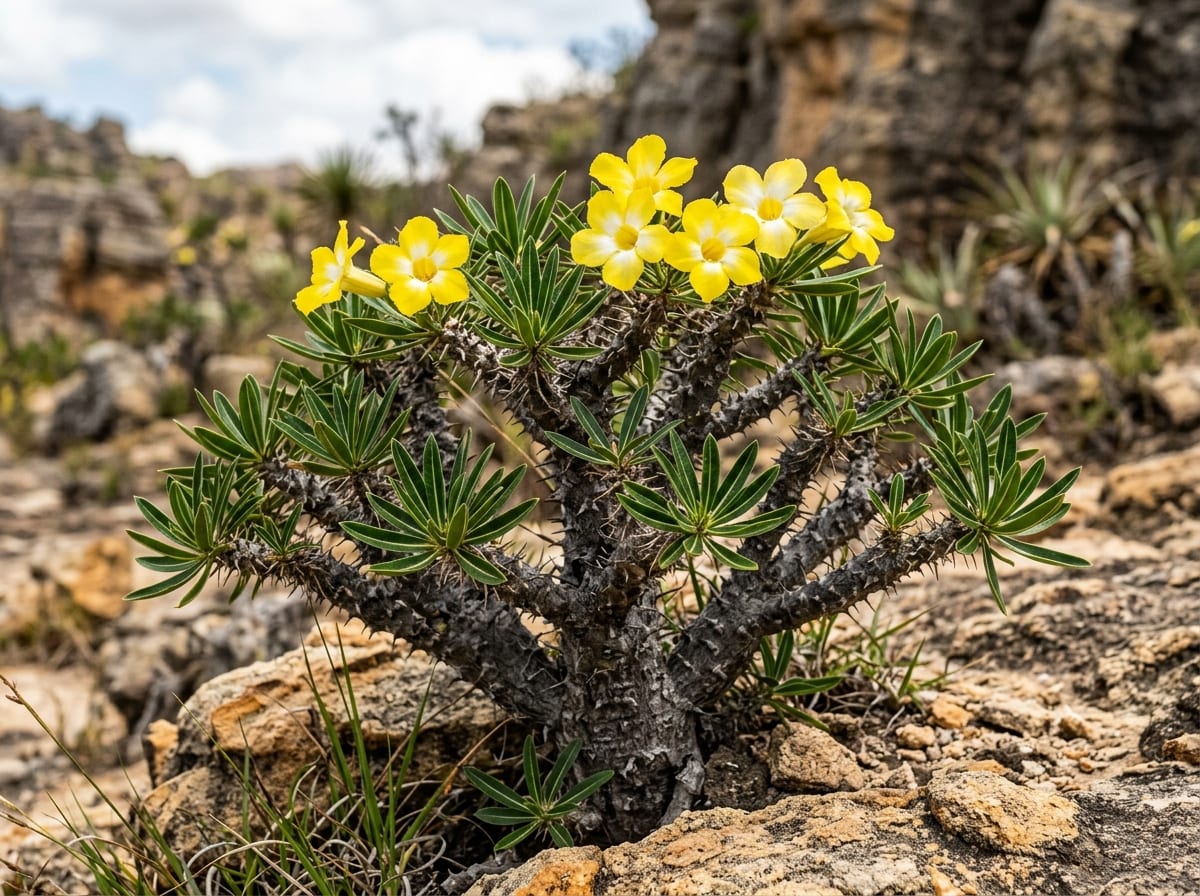
Pachypodium bicolor
Pachypodium bicolor
A yellow-flowered Pachypodium in the P. rosulatum group, named for its two-tone flowers whose throat is white inside. A thick trunk branches densely into a low, somewhat pendulous shrub 25-50 cm tall.
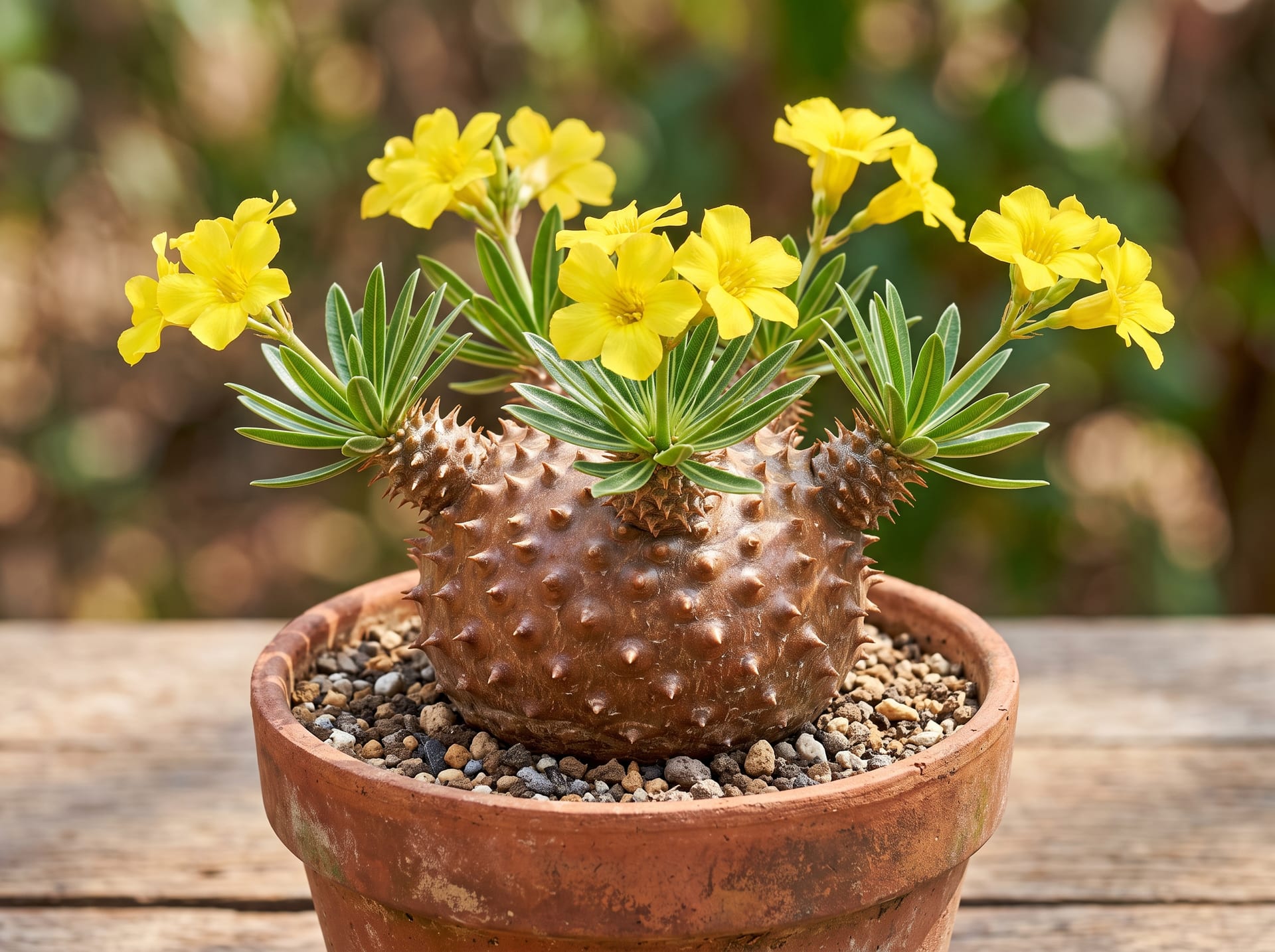
Pachypodium Cactipes
Pachypodium cactipes
Similar in form to Gracilius, and like Gracilius it bears yellow flowers, relatively available.
Related Content
Caudex Plant FAQ
- How much do caudex plants cost?
- Pachypodium gracilius seedlings cost 2,000-10,000 yen, wild-collected specimens 30,000-200,000+ yen, and Operculicarya pachypus can reach hundreds of thousands of yen.
- Can beginners grow caudex plants?
- Adenium (Desert Rose) and Pachypodium seedlings are relatively easy and beginner-friendly. Just be careful with watering during winter dormancy, and you can enjoy them for years.
- How long do caudex plants live?
- Some specimens live for hundreds of years in the wild. In cultivation, they can thrive for decades with proper care. Watching the caudex thicken year by year is the greatest appeal.
- What should I check when buying caudex plants?
- Whether it's rooted is the most important point. Wild-collected imports are often unrooted and require root establishment. Beginners should start with rooted domestically grown seedlings.
- How do caudex plants overwinter?
- Many caudex plants go dormant in winter. Reduce watering from October, and withhold water completely from December to February. Keep indoors in a sunny spot at minimum 10°C.