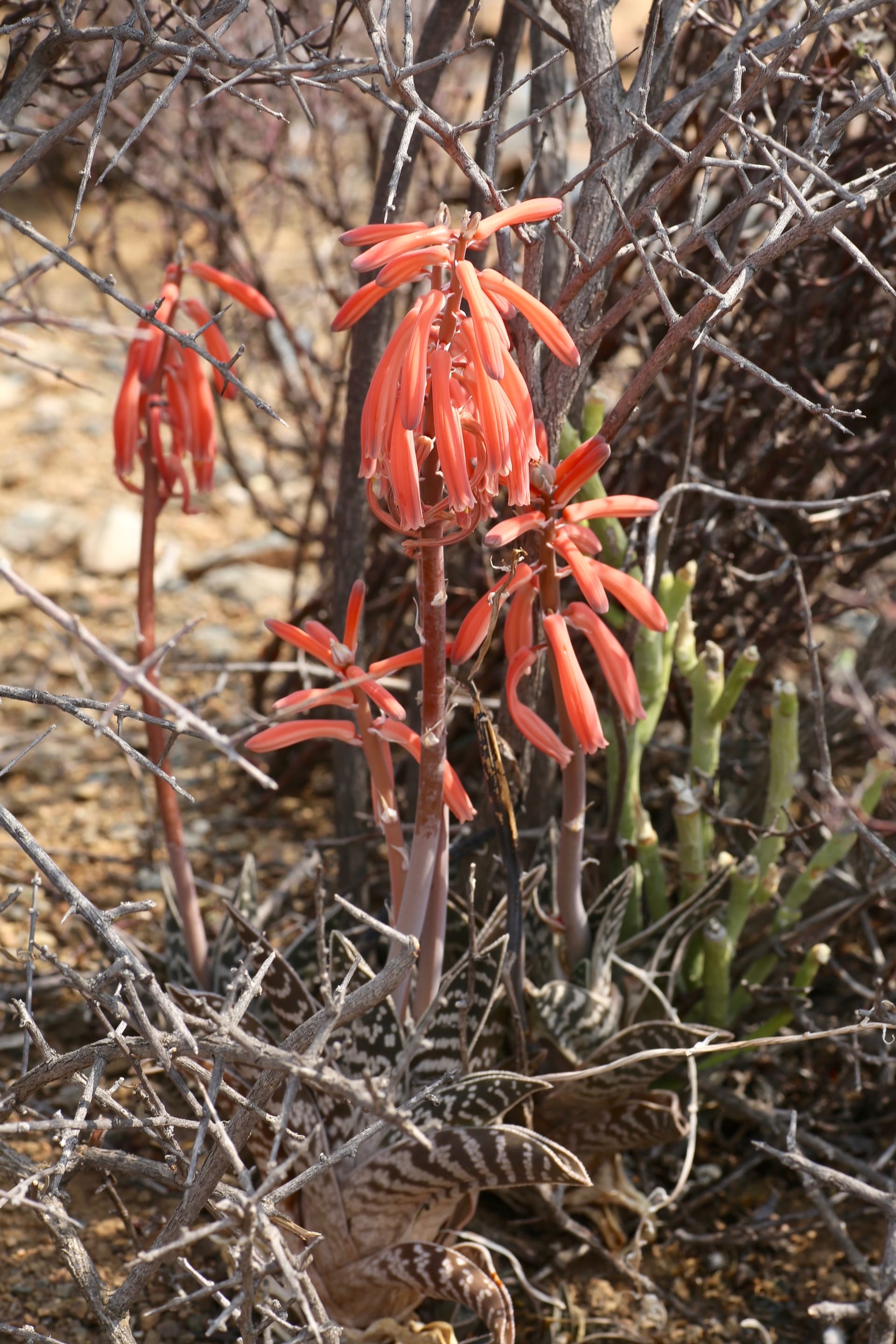
 © yakovlev.alexey from Moscow, Russia / CC BY-SA 2.0
Tiger aloe
Chiyoda-nishiki (also known as Tiger Aloe) is a compact aloe relative whose triangular, V-shaped leaves stack in three neat rows as the plant grows. Its deep green leaves are marked with white spots that form irregular crossbands, and each leaf edge is trimmed with a crisp white cartilaginous border. Once classified within the genus Aloe, it now belongs to the separate genus Gonialoe. This perennial stays compact, reaching up to about 25 cm tall with leaves 15 to 20 cm long. Its manageable size and easy-going nature make it a great choice for beginners exploring succulents and cacti.
View Tiger aloe encyclopedia →0% commission on your first sales!Register by September 30, 2026 and your first 2 plants are commission-free!
Grower Wanted!
List your plants on GrowerDirect and sell directly to customers nationwide!
6 Transparency Commitments from GrowerDirect
Grower disclose this information for Succulents & Cacti. We guarantee transparency in variety, origin, light requirements, and difficulty level.
- Variety Disclosed
- Real Photos
- Color Details
- Origin Disclosed
- Light Requirements
- Difficulty Level
Browse all 131 varieties
Light Requirements
Difficulty Level
No listings match your filters
Adjust your filters, or get notified when new listings arrive.
Getting alerts is free with a member account. When new listings match your saved search, we'll notify you by email and in-app.
Browse other categories
Verified growers (preview)
Are you growing succulents & cacti?
Register as a grower and connect with buyers directly.
Apply as a growerTiger aloe key facts
- Growing Difficulty
- Beginner-friendly
- Lifespan
- Perennial; reaches flowering size in about 3–7 years
- Size
- 20–30 cm tall (leaves 10–20 cm long)
- Watering
- Modest; a little dilute fertiliser in the growing season
- Light & Placement
- In the wild it grows in the shade of shrubs or rocks. Give bright sun to light shade and soften harsh midsummer sun.
- Watering
- Very drought tolerant but prone to rotting at the base if overwatered or poorly drained. Water only after the mix has dried well.
- Temperature & Overwintering
- Dislikes temperatures below 5°C and winter wet. In winter keep it bright, frost-free and on the dry side. Japanese references classify it as a spring–autumn grower.
- Soil & Repotting
- Use a sandy, free-draining mix. Repot when offsets crowd the pot, dividing the clump at the same time.
- Propagation
- Dividing offsets is easiest. Fresh seed is best; South African growers sow it in summer and keep it moist.
- Pests & Cautions
- Scale insects and aphids may appear; remove them early and keep plants healthy with good air movement.
About Tiger aloe
Tiger Aloe (Chiyoda-nishiki) is a compact Gonialoe succulent known for its three-ranked, white-spotted leaves. Beginner-friendly and perennial, it stays a tidy size of up to about 25cm tall.
7 things to know before growing Tiger aloe
1Light and Airflow
Chiyoda-nishiki enjoys bright light, but intense direct summer sun can scorch its leaves. Outdoors, filtering the light through a sheer curtain or giving it partial shade helps protect the foliage. Good airflow also reduces the risk of rot and keeps the rosette looking its best.
2Watering Basics
Like most succulents, it's best watered only after the soil surface has dried out for a few days. Its distinctive three-ranked leaves store water, so overwatering easily leads to root rot. Cut back on watering frequency in winter, when growth naturally slows down.
3Well-Draining Soil
Choosing a well-draining succulent or cactus soil mix is essential to prevent root rot. Mixing in pumice or small akadama granules improves aeration around the roots. A layer of drainage material at the bottom of the pot also helps excess water escape quickly.
4When to Repot
When roots start filling the pot, it's time to move up to a slightly larger container. Repotting during the active growing season puts the least stress on the plant. Hold off on watering for a few days afterward and keep it out of direct sun while the roots settle in.
5Seasonal Care
During its slow season, water less often and let the soil stay on the dry side. Avoid sudden temperature swings or prolonged cold, and keep the plant in a bright indoor spot if needed. During active growth, ample light and regular watering help it develop a sturdy rosette.
6Choosing a Plant
Healthy plants typically show deep green leaves with crisp, well-defined rows of white spots. Look for one whose leaves stack neatly in three tight ranks for that classic Chiyoda-nishiki silhouette. Avoid plants with damaged leaf tips or an overly stretched, leggy shape.
7Enjoying the Flowers
The flowers are pink to dull red, appearing from July to September in its native habitat on a flower stalk that is large for the size of the plant. Rather than rushing toward bloom, it's worth enjoying the leaf pattern and rosette shape over the long term.
Frequently asked questions about Tiger aloe
- Q.Is Chiyoda-nishiki technically an Aloe?
- A.Chiyoda-nishiki was once classified in the genus Aloe, but its classification has since been revised and it's now placed in its own genus, Gonialoe. It's easiest to think of it as a close relative within the Aloe family.
- Q.Is this a good plant for beginners?
- A.Yes, Chiyoda-nishiki is considered a beginner-friendly succulent. As long as you use well-draining soil and water only after the soil dries out, it's an easy plant to grow even for first-time succulent owners.
- Q.How large does it grow?
- A.It grows up to about 25 cm tall, with leaves 15 to 20 cm long. Its three-ranked leaves stay compact, making it easy to find a spot for it.
- Q.When does it flower?
- A.The flowers are pink to dull red and appear from July to September in its native habitat, on a flower stalk that is surprisingly large for the size of the plant.
- Q.What does Chiyoda-nishiki look like?
- A.Its deep green leaves are marked with white spots forming irregular crossbands and edged with a crisp white cartilaginous border. The triangular, V-shaped leaves stacking in three neat ranks is also a signature trait of this variety.
Handy Growing Tools for Tiger aloe
Learn more about Tiger aloe in the encyclopedia
View Tiger aloe encyclopedia entry →
Care difficulty, size, origin and light needs — all basics covered.
More in this category
Can't find the plant you're looking for?
Post your wishes for free and growers with matching plants will contact you with introductions.