 © Stan Shebs / CC BY-SA 3.0
Melon spurge
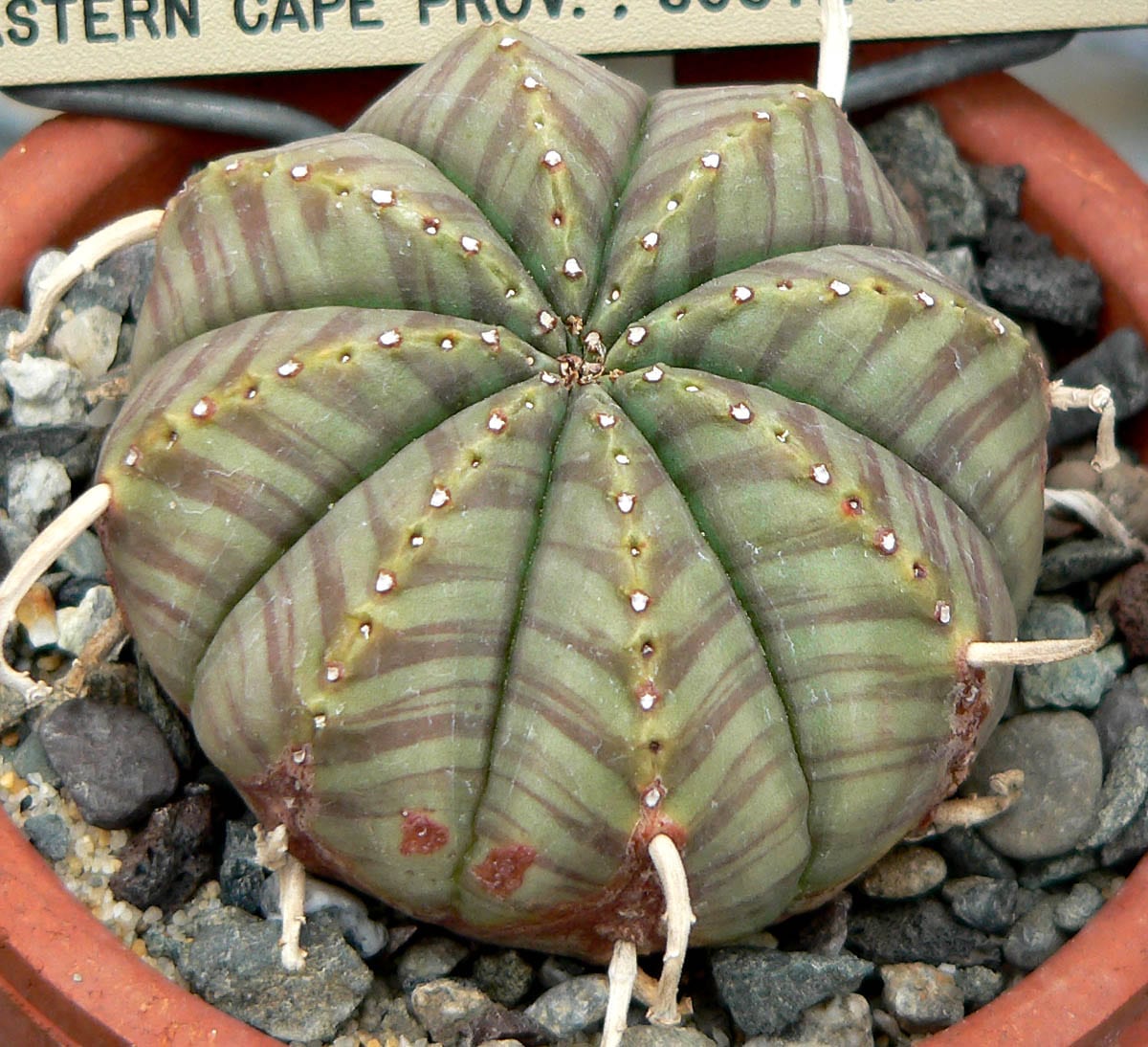
Euphorbia meloformis, the melon spurge, is a compact succulent with a round, melon-like body divided into eight ribs. Its pale green skin is striped with purple-brown, so it stands out even in a small pot. It grows no more than 10 cm tall and 5–10 cm across, and it is considered beginner-friendly. As a perennial, it rewards you for years once you learn its seasonal rhythm. Its dried flower stalks stay on the plant long after blooming, which helps you tell it apart from the look-alike Euphorbia obesa.
View Melon spurge encyclopedia →0% commission on your first sales!Register by September 30, 2026 and your first 2 plants are commission-free!
Grower Wanted!
List your plants on GrowerDirect and sell directly to customers nationwide!
6 Transparency Commitments from GrowerDirect
Grower disclose this information for Succulents & Cacti. We guarantee transparency in variety, origin, light requirements, and difficulty level.
- Variety Disclosed
- Real Photos
- Color Details
- Origin Disclosed
- Light Requirements
- Difficulty Level
Browse all 131 varieties
Light Requirements
Difficulty Level
No listings match your filters
Adjust your filters, or get notified when new listings arrive.
Getting alerts is free with a member account. When new listings match your saved search, we'll notify you by email and in-app.
Browse other categories
Verified growers (preview)
Are you growing succulents & cacti?
Register as a grower and connect with buyers directly.
Apply as a growerMelon spurge key facts
- Growing Difficulty
- Beginner-friendly
- Lifespan
- Perennial
- Size
- Under 10 cm tall, 5–10 cm across
- Watering
- Light feeder; slow-release organic fertiliser as a base dressing
- Light & Placement
- From spring to autumn keep it in sun and good air, out of the rain, with about 20–30% shade to prevent sunburn when conditions change.
- Watering
- Japanese sources class it as a summer or spring–autumn grower; either way it grows from spring to autumn. Water thoroughly when the mix is dry, less often on hot nights in midsummer, and keep it dry through winter dormancy.
- Temperature & Overwintering
- It has some cold tolerance but must be protected from frost and freezing; overwinter it in a sunny room or cold frame. Japanese references give 3–5°C as its limit.
- Soil & Repotting
- Use a free-draining mix with slow-release organic fertiliser mixed in. It has a long taproot, so a deeper pot suits it.
- Propagation
- Plants are male or female, so both are needed for seed. Offsets, when produced, can be removed and rooted.
- Pests & Cautions
- The white latex from wounds strongly irritates skin and eyes; wear gloves when repotting and do not rub your eyes.
About Melon spurge
Euphorbia meloformis (melon spurge) is a perennial succulent with a ribbed, melon-shaped body striped in pale green and purple-brown. It stays within 10 cm in height and 5–10 cm across, and suits beginners. Learn its key traits and care basics.
7 things to know before growing Melon spurge
1A bright, airy spot
From spring to autumn, place it where it gets plenty of light and good airflow. Right after purchase or in strong summer sun, acclimate it gradually, for example behind a sheer curtain, to avoid sunburn on the body. Indoors, a windowsill works well as long as you ventilate the room from time to time.
2Water only when dry
Water thoroughly only after the soil has dried out completely, until water runs from the drainage hole. The round body already stores water, so overwatering is a common pitfall. Do not let water sit in the saucer.
3Fast-draining soil
Choose a mix that drains quickly. A succulent and cactus potting soil blended with gritty material such as pumice works well. Use a pot with a drainage hole and keep it modest in size to suit the small body.
4When to repot
Repotting is not needed every year. Do it at the start of the growing season, once the roots start to feel cramped in the pot. After repotting, wait a few days for any root damage to dry before watering.
5Seasonal care
It grows slowly but steadily from spring to autumn in a bright place. In winter its growth slows, so cut back watering sharply and keep it in a bright spot indoors, away from frost and cold drafts. Too much water in the cold months can lead to root rot.
6Choosing a plant
Look for a plump, firm body with no soft spots, dark patches or scars, and with clear striping. Check the photos and description on each listing to confirm the overall shape and condition.
7Telling it from obesa
The flower stalks that remain long after blooming are the key clue for telling meloformis from the look-alike Euphorbia obesa. A plant that has not flowered yet may not show them, so check the listing description as well.
Frequently asked questions about Melon spurge
- Q.Can a beginner grow it?
- A.Yes, it is rated as beginner-friendly. Overwatering is the easiest way to go wrong, so water thoroughly only once the soil is dry and go easy in winter. In a bright, airy spot, this perennial can be enjoyed for many years.
- Q.How big does it get?
- A.It stays compact, at no more than 10 cm tall and 5–10 cm across. It does well in a small pot and fits easily on a windowsill or shelf.
- Q.How is it different from obesa?
- A.The main clue is that its flower stalks stay on the plant long after blooming. Because the two look so alike, they can be hard to distinguish when no stalks are present.
- Q.Can I grow it indoors only?
- A.Yes, if you can give it a bright windowsill and good airflow. Too little light can spoil its shape and dull its color, so choose the sunniest spot you have and turn the pot now and then.
- Q.Is there anything to watch out for when handling it?
- A.Plants in the Euphorbia group can release a white sap when damaged. Some people find it irritating to the skin, so wear gloves when repotting and rinse well with water if it touches you. Take care to keep it out of your eyes, and place the plant out of reach of small children and pets.
Handy Growing Tools for Melon spurge
Learn more about Melon spurge in the encyclopedia
View Melon spurge encyclopedia entry →
Care difficulty, size, origin and light needs — all basics covered.
More in this category
Can't find the plant you're looking for?
Post your wishes for free and growers with matching plants will contact you with introductions.