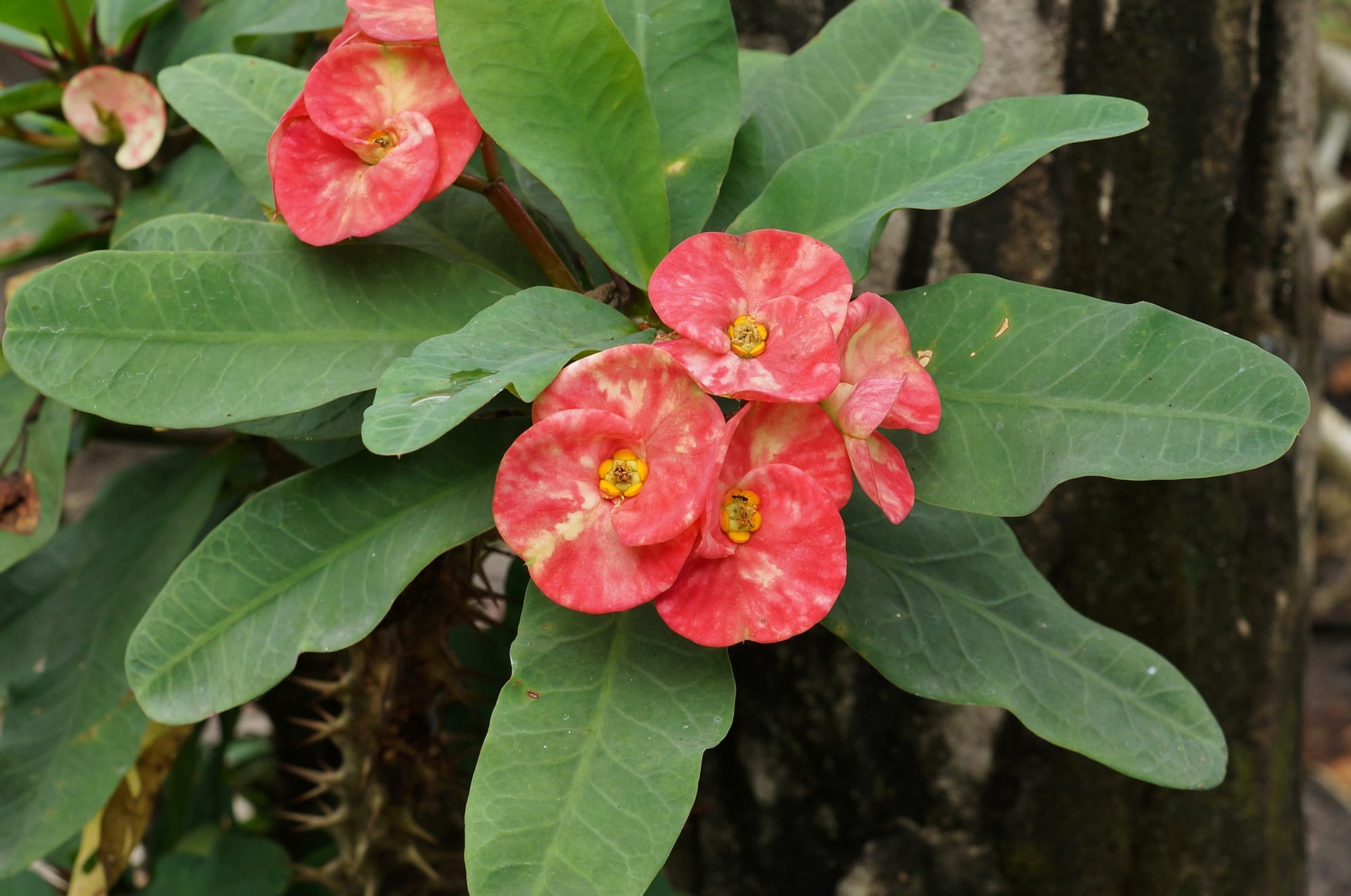
 © Prenn / CC BY-SA 3.0
Crown of thorns
Crown of thorns (Hanakirin) is a Euphorbia native to Madagascar. Its stems are densely covered with sharp spines, and at the tips it carries petal-like bracts in red, pink, yellow, or white. In warm conditions it can flower all year round. It is a perennial shrub that reaches about 1 to 1.8 m depending on the cultivar, and its size can be managed through pot choice and pruning, so it can be grown on a windowsill. The spines call for a little care when handling, but it has long been a popular potted flowering plant. Give it plenty of light and a well-drained mix and it grows sturdily, which makes it a good first succulent for beginners.
View Crown of thorns encyclopedia →0% commission on your first sales!Register by September 30, 2026 and your first 2 plants are commission-free!
Grower Wanted!
List your plants on GrowerDirect and sell directly to customers nationwide!
6 Transparency Commitments from GrowerDirect
Grower disclose this information for Succulents & Cacti. We guarantee transparency in variety, origin, light requirements, and difficulty level.
- Variety Disclosed
- Real Photos
- Color Details
- Origin Disclosed
- Light Requirements
- Difficulty Level
Browse all 133 varieties
Light Requirements
Difficulty Level
No listings match your filters
Adjust your filters, or get notified when new listings arrive.
Getting alerts is free with a member account. When new listings match your saved search, we'll notify you by email and in-app.
Browse other categories
Verified growers (preview)
Are you growing succulents & cacti?
Register as a grower and connect with buyers directly.
Apply as a growerCrown of thorns key facts
- Growing Difficulty
- Beginner-friendly
- Lifespan
- Perennial shrub
- Size
- 1–1.8 m tall (often under 60 cm in pots)
- Watering
- Moderate feeding in the growing and flowering season
- Light & Placement
- Loves sun; indoors give it a sunny spot. Outdoors in hot climates a little midday shade improves flowering.
- Watering
- A summer grower. It likes dry to moderately moist soil; water after the mix dries. Leaf drop before the rest period is normal, so water less then.
- Temperature & Overwintering
- Dislikes cold, wet soil and temperatures below about 2°C; keep it in a sunny room in winter.
- Soil & Repotting
- Use a free-draining, soil-based potting mix, and wear thick gloves when repotting because of the spines.
- Propagation
- Propagate from cuttings in warm weather, letting the latex dry on the cut before inserting.
- Pests & Cautions
- The white latex from cuts is toxic: it irritates skin and can cause severe eye inflammation. Wear gloves and eye protection when pruning or repotting, and keep the plant away from children and pets. It is toxic to dogs and cats. Watch for scale, mealybugs, thrips and mites.
About Crown of thorns
Crown of thorns (Hanakirin) is a beginner-friendly Euphorbia from Madagascar, with spiny stems and red, pink, yellow, or white bracts that can bloom year-round in warmth. Learn about light, watering, and choosing a healthy plant.
7 things to know before growing Crown of thorns
1Give it plenty of light
Bright light is the key to long-lasting flowers. In dim spots the stems stretch out and blooming tends to drop off. From spring to autumn, keep it outdoors with good airflow or on a bright windowsill.
2Water only when dry
The stems store water, so let the soil surface dry out completely before watering thoroughly. Soil that stays constantly wet can lead to root rot. Always empty any water that collects in the saucer.
3Choose a fast-draining mix
A cactus and succulent mix, or a blend of akadama and pumice, drains well and suits this plant. Choose a pot with a drainage hole. A pot that is not too large for the plant also helps keep the soil from staying soggy.
4Bring it in for winter
Because it comes from Madagascar, it dislikes cold. Move it to a bright spot indoors before the chilly weather sets in. Water sparingly in cold months and keep it away from chilly windows at night. In a warm, bright room it may keep flowering through winter.
5Repotting and pruning
To prevent a root-bound plant, repot about once every one to two years in the warm weather of spring to early summer. This is also a good time to cut back leggy branches and tidy the shape. The white sap from cut stems can irritate sensitive skin, so wear gloves and keep it away from your eyes and mouth.
6Choosing a healthy plant
Look for sturdy stems with compact spacing between the leaf nodes and glossy, healthy-colored leaves. Check that the base is firm and the soil is not constantly damp. It is also worth inspecting the undersides of the leaves and the bases of the spines for pests such as scale insects.
7Feeding and tidying up
During the growing season from spring to autumn, a small amount of slow-release fertilizer supports flowering. Too much fertilizer can make the stems leggy, so err on the light side. Removing faded, damaged parts regularly keeps the plant looking neat.
Frequently asked questions about Crown of thorns
- Q.Can beginners grow crown of thorns?
- A.Yes, it is considered beginner-friendly. Provide good light and drainage, avoid overwatering, and it is easy to grow. Just remember to protect it from winter cold.
- Q.Does it really flower all year round?
- A.In a warm spot with enough sunlight, it can keep blooming throughout the year. However, flowering may slow down in cold weather or when light is insufficient.
- Q.How big does crown of thorns get?
- A.It is a perennial shrub that reaches about 1 to 1.8 m tall depending on the cultivar. You can manage its size through pot choice and pruning.
- Q.Can I grow it indoors only?
- A.Yes, if you have a bright windowsill. Weak light makes the stems stretch and reduces flowering, so give it as much sun as you can. Moving it outdoors in the warm season is ideal.
- Q.Why are the leaves dropping?
- A.Common causes include cold, overwatering, letting the soil stay too dry, or a sudden change of location. Check the temperature and soil moisture first, then keep the plant in a warm, bright place.
Handy Growing Tools for Crown of thorns
Learn more about Crown of thorns in the encyclopedia
View Crown of thorns encyclopedia entry →
Care difficulty, size, origin and light needs — all basics covered.
More in this category
Can't find the plant you're looking for?
Post your wishes for free and growers with matching plants will contact you with introductions.