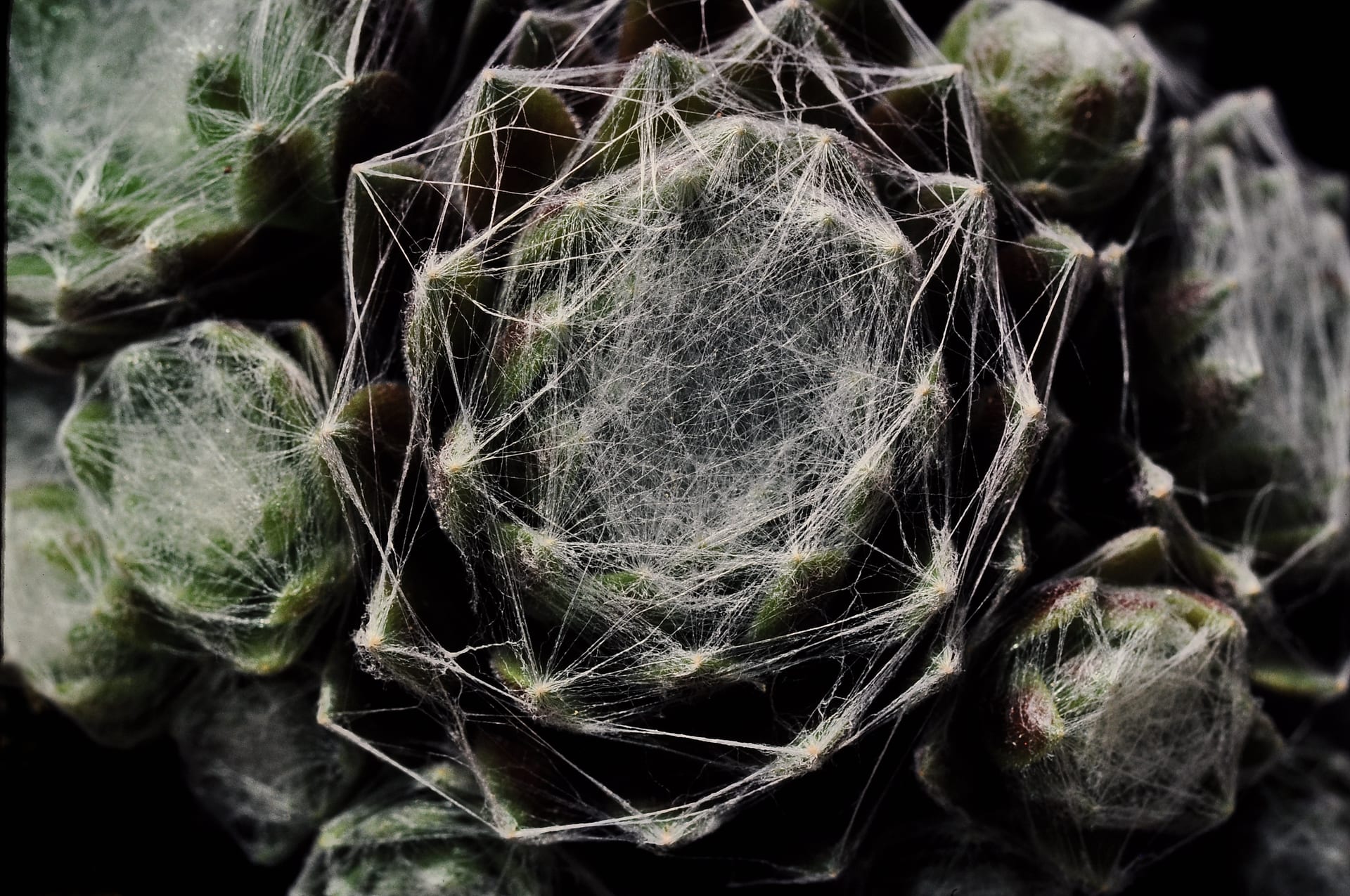
 © Schnobby / CC BY-SA 3.0
Cobweb houseleek
Cobweb houseleek (Makiginu) is a Sempervivum whose small rosettes are linked at the leaf tips by fine white threads that look like spider webs. Native to the high mountains of Europe, this succulent is very cold-hardy and is considered beginner-friendly. Each rosette starts at about 1 to 2 cm across, and as offsets multiply the plant spreads into a mat that can exceed 30 cm. A rosette that flowers sets seed and then dies, but the clump renews itself through offsets, so it can keep going for a long time.
View Cobweb houseleek encyclopedia →0% commission on your first sales!Register by September 30, 2026 and your first 2 plants are commission-free!
Grower Wanted!
List your plants on GrowerDirect and sell directly to customers nationwide!
6 Transparency Commitments from GrowerDirect
Grower disclose this information for Succulents & Cacti. We guarantee transparency in variety, origin, light requirements, and difficulty level.
- Variety Disclosed
- Real Photos
- Color Details
- Origin Disclosed
- Light Requirements
- Difficulty Level
Browse all 131 varieties
Light Requirements
Difficulty Level
No listings match your filters
Adjust your filters, or get notified when new listings arrive.
Getting alerts is free with a member account. When new listings match your saved search, we'll notify you by email and in-app.
Browse other categories
Verified growers (preview)
Are you growing succulents & cacti?
Register as a grower and connect with buyers directly.
Apply as a growerCobweb houseleek key facts
- Growing Difficulty
- Beginner-friendly
- Lifespan
- Perennial; each rosette dies after flowering and is replaced by offsets
- Size
- Rosettes from about 1-2 cm; clumps form mats 30 cm or more across
- Watering
- A little slow-release or liquid fertiliser in spring and autumn
- Light & Placement
- Grow it outdoors in full sun except in midsummer. It is not heat-tolerant, so from the rainy season through summer keep it in airy partial shade out of the rain. Leaves colour from late autumn.
- Watering
- It is a spring-autumn grower (March-June and September-November). Water thoroughly when the surface dries in these periods and hold back from the end of the rainy season through summer. It rots if watered too often.
- Temperature & Overwintering
- It is very cold-hardy, reportedly to at least -12°C. However, the cobweb hairs trap rain and invite rot, so keep it out of prolonged winter wet.
- Soil & Repotting
- Use a gritty, free-draining mix; it dislikes rich soil. Repot every 2-3 years just before or early in a growing season.
- Propagation
- It is easily increased by division or by rooting the offsets on the ends of runners, in March-May or September-October.
- Pests & Cautions
- A rosette that flowers dies, so remove flower stems early to help the offsets grow. Scale insects and aphids may attack stems and leaves, and root mealybugs the roots.
About Cobweb houseleek
Cobweb houseleek (Makiginu) is a beginner-friendly Sempervivum whose small rosettes are joined by web-like white threads. Cold-hardy and native to European mountains, it grows from rosettes of 1 to 2 cm into mats over 30 cm wide. Learn the care basics and how to choose a plant.
7 things to know before growing Cobweb houseleek
1Light and airflow
Choose a bright, well-ventilated spot outdoors. With too little light the rosettes stretch out and lose their tight shape. A place sheltered from driving rain, such as under the eaves, makes care easier.
2Water on the dry side
Water thoroughly only after the soil has dried out completely, until it runs from the drainage hole. Water pooling between the leaves can cause damage, so pour at the base instead of over the top. Erring on the dry side is safer than overwatering.
3Free-draining soil
Use a fast-draining mix. Commercial succulent and cactus soil blended with pumice or sand keeps water from lingering around the roots. Because the roots are shallow, a shallow pot works well.
4Watch for summer humidity
Since it grows wild in high mountains, it is not at its best in the hot, muggy weather of the rainy season and summer. Move it to a bright, airy place out of the rain and water sparingly. Removing outer leaves that have been damaged by stuffy conditions helps keep the rest of the plant healthy.
5Wintering outdoors
It is very cold-hardy and can spend the winter outdoors. Growth slows in winter, so cut watering back even further. Keeping the pot under the eaves prevents the soil from staying soaked by rain or melting snow.
6Repotting and dividing
When offsets crowd the pot, it is time to repot or divide. Spring or autumn, when the weather is mild, is the best time; simply detach an offset from its parent and plant it to make a new one. A rosette that flowers dies after setting seed, so let the offsets carry the clump on.
7Choosing a plant
Look for tight rosettes with healthy leaf color and no melting or blackened outer leaves. The amount of white webbing varies with conditions and season, so do not judge a plant by webbing alone. A plant that already has offsets is also easier to keep renewing.
Frequently asked questions about Cobweb houseleek
- Q.Can a beginner grow cobweb houseleek?
- A.Yes, it is considered beginner-friendly. Give it a bright, airy spot, a free-draining soil, and water on the dry side, and it is easy to keep. Just watch out for stuffy, humid weather in summer.
- Q.Do I need to bring it indoors for winter?
- A.It is very cold-hardy and can stay outdoors through winter. However, soil that stays wet from rain or melting snow can cause damage, so a spot sheltered from rain, such as under the eaves, is a safer choice.
- Q.Is it my fault if a rosette dies after flowering?
- A.No, this is normal. A cobweb houseleek rosette that flowers will die after setting seed. If offsets are growing beside it, they take over and keep the clump going.
- Q.Why has the white webbing become sparse?
- A.The amount of webbing changes with conditions, the plant's health, and the season. A weak plant from too little light or stuffy air may show less of it, so it is worth reviewing its position and ventilation.
- Q.How large does it grow?
- A.A single rosette starts at about 1 to 2 cm across. As offsets multiply, the clump can spread into a mat of 30 cm or more. A shallow, wide pot suits it well if you want to enjoy that spreading habit.
Handy Growing Tools for Cobweb houseleek
Learn more about Cobweb houseleek in the encyclopedia
View Cobweb houseleek encyclopedia entry →
Care difficulty, size, origin and light needs — all basics covered.
More in this category
Can't find the plant you're looking for?
Post your wishes for free and growers with matching plants will contact you with introductions.