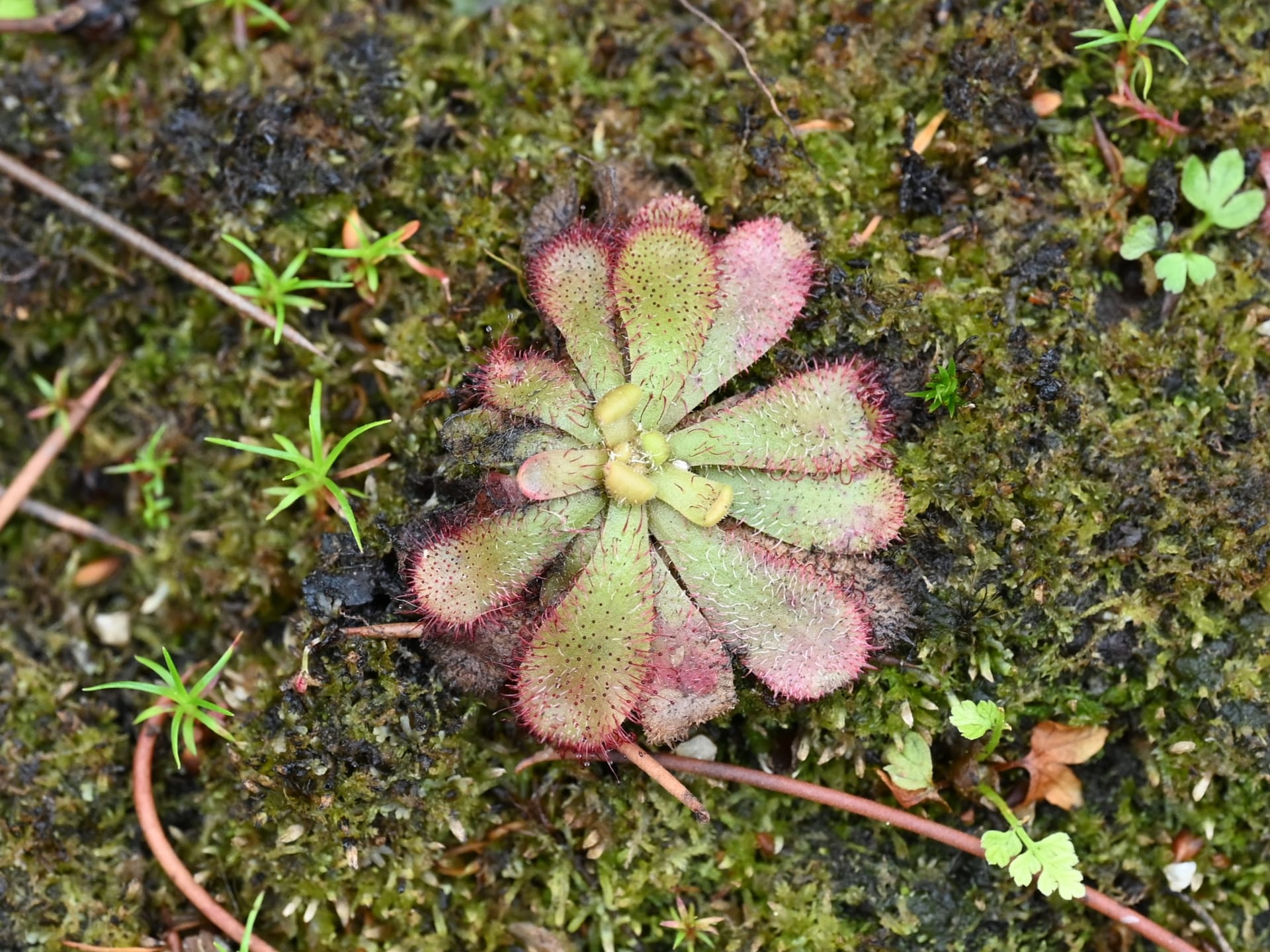
 © Krzysztof Ziarnek, Kenraiz / CC BY-SA 4.0
Rosy sundew
Drosera hamiltonii, commonly known as the rosy sundew, is a perennial sundew native to southwestern Australia. Its spoon-shaped leaves form a rosette roughly 4-6cm across, each covered in glistening, mucilage-tipped tentacles that give the plant its classic carnivorous-plant sparkle. When in bloom, it sends up a tall flower stalk reaching 30-40cm, lined with large, deep pink flowers. Botanically, the flowers are notable for their fused styles, a trait distinctive enough to place this species alone in its own section among the sundews. As a perennial, it rewards growers with years of steady growth, though it is generally considered a plant for growers with some prior sundew experience rather than an absolute beginner's first pick.
View Rosy sundew encyclopedia →0% commission on your first sales!Register by September 30, 2026 and your first 2 plants are commission-free!
Grower Wanted!
List your plants on GrowerDirect and sell directly to customers nationwide!
6 Transparency Commitments from GrowerDirect
Every Grower listing discloses variety, origin, light requirements, and difficulty level for Carnivorous Plants. Complete transparency, guaranteed.
- Variety Disclosed
- Real Photos
- Color Information
- Origin Disclosed
- Light Requirements
- Difficulty Level
Browse all 145 varieties
Light Requirements
Difficulty Level
No listings match your filters
Adjust your filters, or get notified when new listings arrive.
Getting alerts is free with a member account. When new listings match your saved search, we'll notify you by email and in-app.
Browse other categories
Are you growing carnivorous plants?
Register as a grower and connect with buyers directly.
Apply as a growerRosy sundew key facts
- Growing Difficulty
- Intermediate
- Lifespan
- Perennial
- Size
- Rosette 4-6 cm across (flower stalks 30-40 cm)
- Watering
- No fertilizer (catches small insects)
- Light & Placement
- Grow in good light; in low light the leaves stretch and colour poorly.
- Watering
- It grows on wet peat in the wild, so keep the soil constantly moist on a water tray, using pure or rain water.
- Soil & Repotting
- Plant in a peat-based mix or sphagnum. The roots are thick and long, so a fairly deep pot suits it.
- Temperature & Overwintering
- From a winter-rainfall region, it dislikes midsummer heat and stuffiness; keep it bright, airy and not too hot in summer.
- Fertilizer
- No fertilizer in the soil; small insects supply nutrients.
About Rosy sundew
Drosera hamiltonii (rosy sundew): a perennial sundew from southwestern Australia with 4-6cm rosettes and deep pink, fused-style flowers on 30-40cm stalks. Considered an intermediate-level plant.
7 things to know before growing Rosy sundew
1Needs Bright Light
Drosera hamiltonii thrives with plenty of direct sun, whether grown outdoors or on a sunny windowsill. Good light brings out deep red coloring in the leaves and keeps growth compact. Too little light tends to make the rosette stretch and grow leggy.
2Water via Tray Method
Like most sundews, it's typically grown using the tray method, standing the pot in a shallow layer of water so the soil never fully dries out. In hot summer weather, refresh the water regularly and ensure good airflow to avoid rot.
3Peat-Based Mix in a Deeper Pot
Pot it in a peat-based mix or sphagnum moss. Its thick black roots grow long, so a somewhat deeper pot works well. Avoid fertilized potting soil, which can damage the roots.
4Repot During Active Growth
It's time to repot once the rosette has outgrown its pot. Doing this during the active growing season minimizes stress, and it's best to move the root ball gently into fresh mix without disturbing it too much.
5Summer Is the Hard Season
Coming from the winter-rainfall climate of southwestern Australia, it struggles most with midsummer heat and stuffiness. In summer, keep it somewhere bright and airy without letting it get too hot, and keep the mix moist with a water tray all year round.
6Check Leaf Color and Dew
A healthy plant has firm, unwilted leaves with glistening mucilage clearly visible on the tentacles. Fresh new growth unfurling at the center of the rosette is another good sign of vigor.
7No Need to Feed Insects
The sticky mucilage on its leaves naturally attracts and traps small insects, so there's no need to feed it by hand. Indoor growers can simply focus on light and watering to keep the plant healthy.
Frequently asked questions about Rosy sundew
- Q.Is this sundew suitable for beginners?
- A.It's generally considered an intermediate-level plant rather than a true beginner species. If you're already comfortable with tray watering and mineral-poor soil mixes for sundews, it's very manageable, though first-time growers may want to start with a hardier species.
- Q.How big does it get?
- A.The leaf rosette typically reaches about 4-6cm across. During flowering, it sends up a much taller stalk of 30-40cm, so the plant looks compact most of the year but gains height when in bloom.
- Q.What makes its flowers distinctive?
- A.Its flowers have fused styles, an unusual structural trait among sundews that sets it apart from related species. This feature is distinctive enough that Drosera hamiltonii is classified alone in its own section, with large deep pink blooms carried on a 30-40cm stalk.
- Q.Can it be grown indoors?
- A.Yes, as long as it gets plenty of light from a sunny window. Indoor conditions often provide less light than outdoor growing, though, which can affect leaf color and overall growth compared to a brighter outdoor spot.
- Q.How is it different from other sundews?
- A.Beyond its spoon-shaped leaves and 4-6cm rosette, its most notable difference is the fused-style flower structure. This trait is unique enough that it's classified in its own section among sundew species.
Handy Growing Tools for Rosy sundew
Learn more about Rosy sundew in the encyclopedia
View Rosy sundew encyclopedia entry →
Care difficulty, size, origin and light needs — all basics covered.
More in this category
Can't find the plant you're looking for?
Post your wishes for free and growers with matching plants will contact you with introductions.