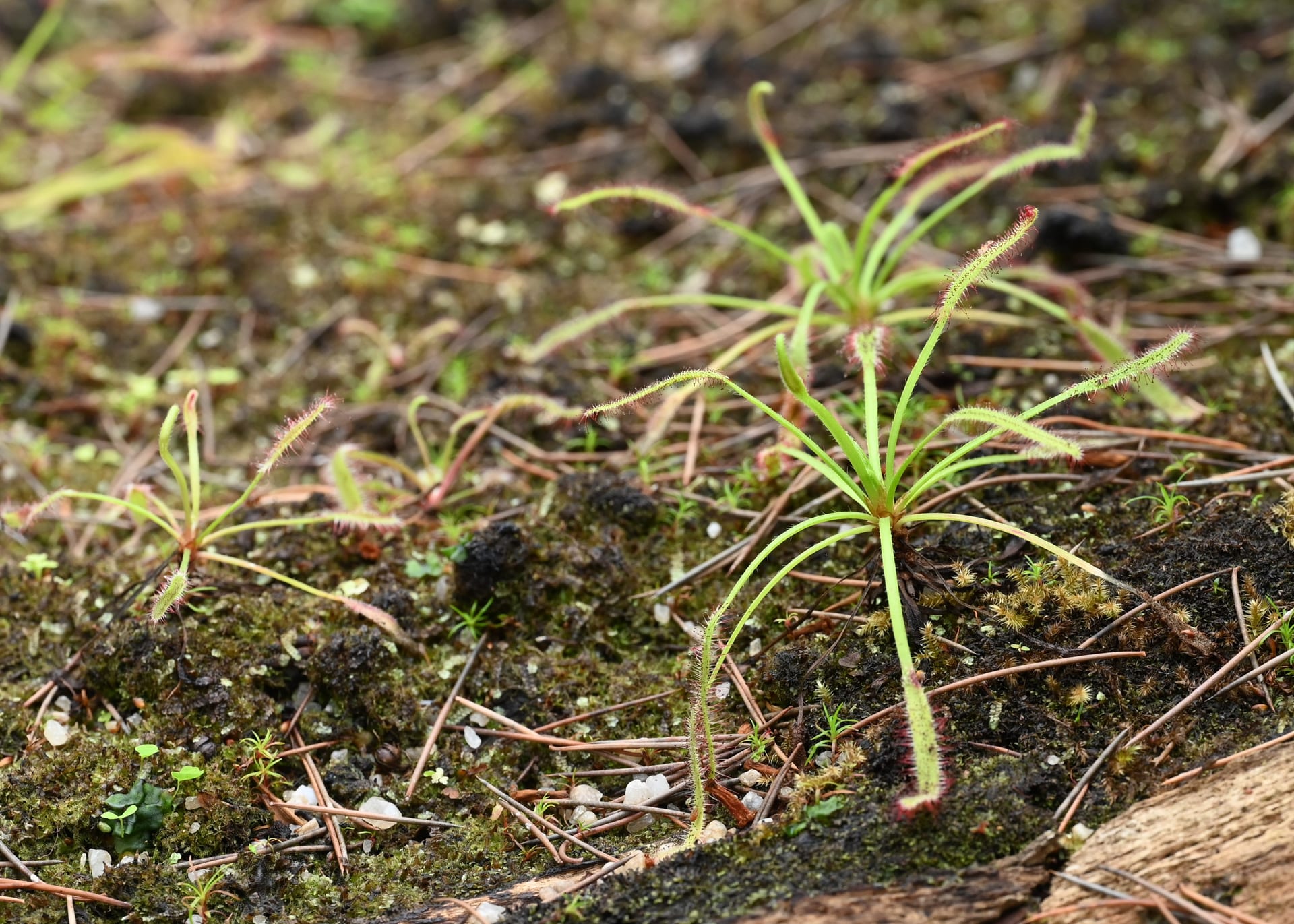
 © Krzysztof Ziarnek, Kenraiz / CC BY-SA 4.0
Drosera natalensis
Drosera natalensis is a compact rosette-forming sundew native to the wetlands of South Africa and Madagascar. Its wedge- to spoon-shaped leaves, only about 2cm long, spread low to the ground and bristle with red glandular hairs that glisten with dewy droplets to trap small insects. The tidy, low-growing rosette makes for an easy, attractive houseplant. A wiry, thread-like flower stalk rises to roughly 25cm, topped with small blooms. As a perennial, it renews its growth year after year, and its forgiving nature makes it a great pick for anyone new to growing carnivorous plants.
View Drosera natalensis encyclopedia →0% commission on your first sales!Register by September 30, 2026 and your first 2 plants are commission-free!
Grower Wanted!
List your plants on GrowerDirect and sell directly to customers nationwide!
6 Transparency Commitments from GrowerDirect
Every Grower listing discloses variety, origin, light requirements, and difficulty level for Carnivorous Plants. Complete transparency, guaranteed.
- Variety Disclosed
- Real Photos
- Color Information
- Origin Disclosed
- Light Requirements
- Difficulty Level
Browse all 145 varieties
Light Requirements
Difficulty Level
No listings match your filters
Adjust your filters, or get notified when new listings arrive.
Getting alerts is free with a member account. When new listings match your saved search, we'll notify you by email and in-app.
Browse other categories
Are you growing carnivorous plants?
Register as a grower and connect with buyers directly.
Apply as a growerDrosera natalensis key facts
- Growing Difficulty
- Beginner-friendly
- Lifespan
- Perennial
- Size
- Small rosette with leaves about 2 cm long (flower stalks about 25 cm)
- Temperature
- 10〜35℃
- Watering
- No fertilizer (catches small insects)
- Light & Placement
- Grow in bright light; windowsills are often too dim, so a greenhouse or LED lights suit it.
- Watering
- Keep the soil constantly moist on a water tray with pure or rain water; if it dries out the leaves stop producing dew.
- Temperature & Overwintering
- Subtropical sundews grow at about 10-35°C and need no dormancy; keep above 10°C in winter.
- Soil & Repotting
- Grows in pure sphagnum or a peat-sand mix; repot roughly every 3-5 years.
- Propagation
- Propagate from leaf or root cuttings. If sowing seed, sow on the surface without covering.
About Drosera natalensis
A compact rosette sundew native to the wetlands of South Africa and Madagascar, Drosera natalensis has tiny 2cm leaves and beginner-friendly care. Here's what to know about its features and how to grow it.
7 things to know before growing Drosera natalensis
1Light & Placement
Grow Drosera natalensis in bright light. A windowsill often doesn't provide enough, so a greenhouse or LED grow lights are recommended. With good light, it forms a compact rosette.
2Watering by Tray Method
Like most sundews, it's grown using the tray method, with the pot sitting in a shallow dish of water at all times. The plant dislikes drying out, so keep the tray topped up, especially when evaporation is fast.
3Choosing the Right Soil
Use a nutrient-free mix such as sphagnum moss or peat, or a ready-made carnivorous plant soil. Regular potting soil contains minerals and fertilizer this species can't tolerate, so it's best avoided.
4When to Repot
Repot when roots become crowded or the soil starts to break down, ideally during active growth. Handle the small rosette gently to avoid damaging the roots, and keep it in bright shade for a short recovery period afterward.
5Seasonal Care
As a perennial, Drosera natalensis grows again each year, though growth slows as temperatures drop. Protect it from extreme cold and drying conditions, and if kept outdoors, move it somewhere sheltered from direct frost.
6The Flower Stalk
It sends up a wiry flower stalk about 25cm tall carrying up to about ten flowers, although they are said to open only rarely. If you'd rather the plant focus its energy on leaf growth, it's fine to trim the stalk early.
7Picking a Healthy Plant
Look for vivid leaf color and glistening droplets on the glandular hairs, both signs of good health. New leaves unfurling steadily from the center of the rosette are a sign of active, vigorous growth.
Frequently asked questions about Drosera natalensis
- Q.Is this a good choice for beginners?
- A.Yes. It can be treated as a subtropical sundew with no dormancy, and grows well given constantly moist soil on a water tray and bright light. A windowsill is often too dim, though, so a greenhouse or LED grow lights make success more likely.
- Q.How big does it get?
- A.The rosette itself stays small, with leaves only about 2cm long. When the plant is thriving, its wiry flower stalk can stretch to roughly 25cm.
- Q.Where does it grow in the wild?
- A.It's native to wetlands in South Africa and Madagascar. That's why it prefers consistently moist conditions in cultivation.
- Q.How long does this plant live?
- A.It's a perennial, so with proper care it keeps growing and renewing itself year after year. Many growers also propagate it over time to keep fresh plants going.
- Q.Do I need to feed it insects?
- A.Not really — the sticky droplets on its leaves naturally catch small insects on their own. If kept outdoors, it will typically catch enough prey without any extra help.
Handy Growing Tools for Drosera natalensis
Learn more about Drosera natalensis in the encyclopedia
View Drosera natalensis encyclopedia entry →
Care difficulty, size, origin and light needs — all basics covered.
More in this category
Can't find the plant you're looking for?
Post your wishes for free and growers with matching plants will contact you with introductions.