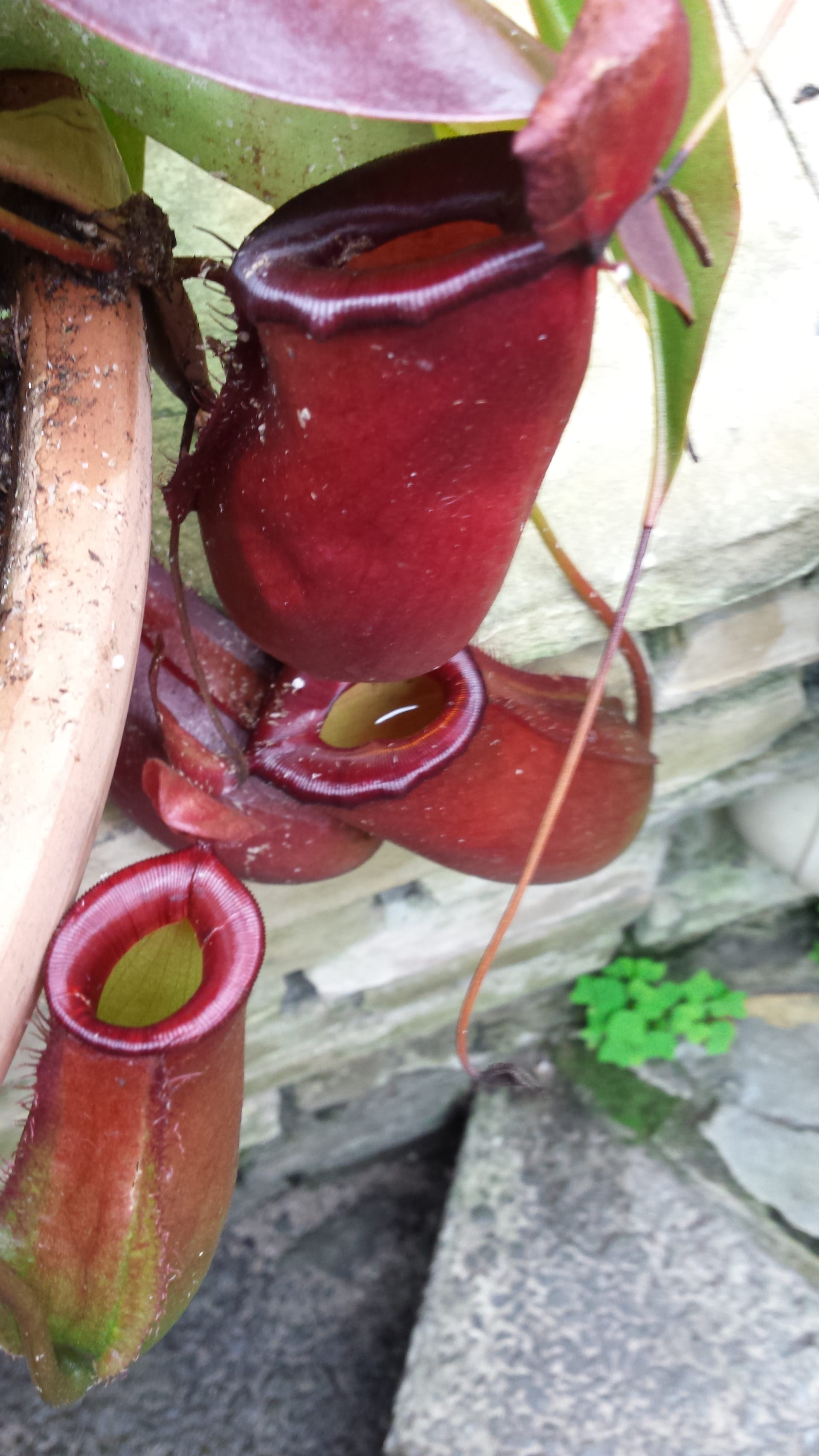
 © Olaf / CC BY-SA 4.0
Nepenthes Bloody Mary
Nepenthes Bloody Mary is a hybrid pitcher plant born from crossing N. ventricosa and N. ampullaria. Its signature trait is the deep, blood-red color that saturates both the pitchers and leaves, giving it striking presence as a houseplant. It inherits a naturally tough constitution and is widely regarded as one of the easiest Nepenthes for beginners, making it a great starting point for anyone new to pitcher plants. It's sometimes sold under the name "Lady Luck," and the two are often considered the same clone. As a vining perennial, it rewards long-term care by producing pitchers whose shape and color shift as the plant matures and climbs.
View Nepenthes Bloody Mary encyclopedia →0% commission on your first sales!Register by September 30, 2026 and your first 2 plants are commission-free!
Grower Wanted!
List your plants on GrowerDirect and sell directly to customers nationwide!
6 Transparency Commitments from GrowerDirect
Every Grower listing discloses variety, origin, light requirements, and difficulty level for Carnivorous Plants. Complete transparency, guaranteed.
- Variety Disclosed
- Real Photos
- Color Information
- Origin Disclosed
- Light Requirements
- Difficulty Level
Browse all 145 varieties
Light Requirements
Difficulty Level
No listings match your filters
Adjust your filters, or get notified when new listings arrive.
Getting alerts is free with a member account. When new listings match your saved search, we'll notify you by email and in-app.
Browse other categories
Are you growing carnivorous plants?
Register as a grower and connect with buyers directly.
Apply as a growerNepenthes Bloody Mary key facts
- Growing Difficulty
- Beginner-friendly
- Lifespan
- Perennial climber
- Size
- Few published measurements
- Watering
- Very dilute fertilizer at most (catches insects)
- Light & Placement
- The brighter the window, the deeper the red of pitchers and leaves, though it still pitchers in modest light.
- Watering
- With N. ampullaria in its background it tolerates wet soil. Use rain water or low-mineral water.
- Temperature & Overwintering
- Said to tolerate a wide temperature range; bring it into a warm room for winter.
- Soil & Repotting
- Plant in a free-draining, airy mix; pure sphagnum or orchid mix with sphagnum or perlite are common choices.
- Fertilizer
- If using chemical fertilizer, use it at very low strength; an occasional insect dropped into a pitcher is enough.
- Pests & Cautions
- Often sold as 'Lady Luck'; check photos and parentage labels to avoid buying the same clone twice.
About Nepenthes Bloody Mary
Nepenthes Bloody Mary, a hybrid of N. ventricosa and N. ampullaria, is a hardy, beginner-friendly pitcher plant known for its deep blood-red pitchers and leaves, often sold as "Lady Luck."
7 things to know before growing Nepenthes Bloody Mary
1Light & Placement
Bloody Mary does best in bright, indirect light, such as near a sheer-curtained window. Strong, direct midday sun, especially in summer, can scorch the leaves, so some shading is recommended.
2Watering
Water thoroughly once the surface of the growing medium starts to dry, keeping it consistently moist rather than bone dry. Using rainwater or purified water with low mineral content helps avoid stress on the roots and foliage.
3Growing Medium
A mix that balances drainage with moisture retention works best, and many growers use sphagnum moss, bark, and perlite blended for carnivorous plants. Ordinary potting soil tends to compact and hold too much water, so it's best avoided.
4Repotting
Repot into a slightly larger pot with fresh medium once the roots have filled the current one. The roots are fine and easily damaged, so handle them gently and work quickly during the process.
5Seasonal Care
Consistent warmth and humidity during the growing season encourage better pitcher production. Growth slows in winter, so ease up on watering while keeping an eye on humidity in dry, heated rooms.
6Pitcher Development
As the vine grows and matures, pitcher shape gradually shifts from rounder lower pitchers to more elongated upper ones. Older pitchers browning and dying back is a normal part of the cycle, so it helps to watch the whole plant, not just the newest growth, and take a patient, long-term view.
7Choosing a Healthy Plant
Look for a plant with actively extending new growth and firm, healthy leaves. Rather than judging by pitchers alone, check the condition of the base and the whole vine as well.
Frequently asked questions about Nepenthes Bloody Mary
- Q.Is this a good plant for beginners?
- A.Yes, it's known for being hardy and is often treated as an entry-level Nepenthes among carnivorous plants. As long as you get the basics of light and watering right, it's a manageable first Nepenthes to try.
- Q.What if it isn't producing pitchers?
- A.Insufficient light or low humidity are common reasons pitchers stop forming. Providing brighter light and maintaining higher humidity around the plant tends to encourage new pitchers to develop.
- Q.Is this the same as 'Lady Luck'?
- A.Overseas retailers often sell it as the same clone as 'Lady Luck.' However, neither name appears in the International Carnivorous Plant Society (ICPS) cultivar register, so whether they are identical can't be confirmed from official records. To avoid buying the same plant twice under different names, check the photos and the listed parentage.
- Q.Can I water it with tap water?
- A.Tap water can be used occasionally, but mineral and chlorine buildup over time can stress the roots and leaves. When possible, rainwater or purified water with low mineral content is preferable.
- Q.How large does it grow?
- A.As a vining plant, its ultimate size depends a lot on how it's trained, whether staked upright, left to trail, or hung. Detailed size data isn't well documented, and growth varies considerably depending on the growing environment.
Handy Growing Tools for Nepenthes Bloody Mary
Learn more about Nepenthes Bloody Mary in the encyclopedia
View Nepenthes Bloody Mary encyclopedia entry →
Care difficulty, size, origin and light needs — all basics covered.
More in this category
Can't find the plant you're looking for?
Post your wishes for free and growers with matching plants will contact you with introductions.