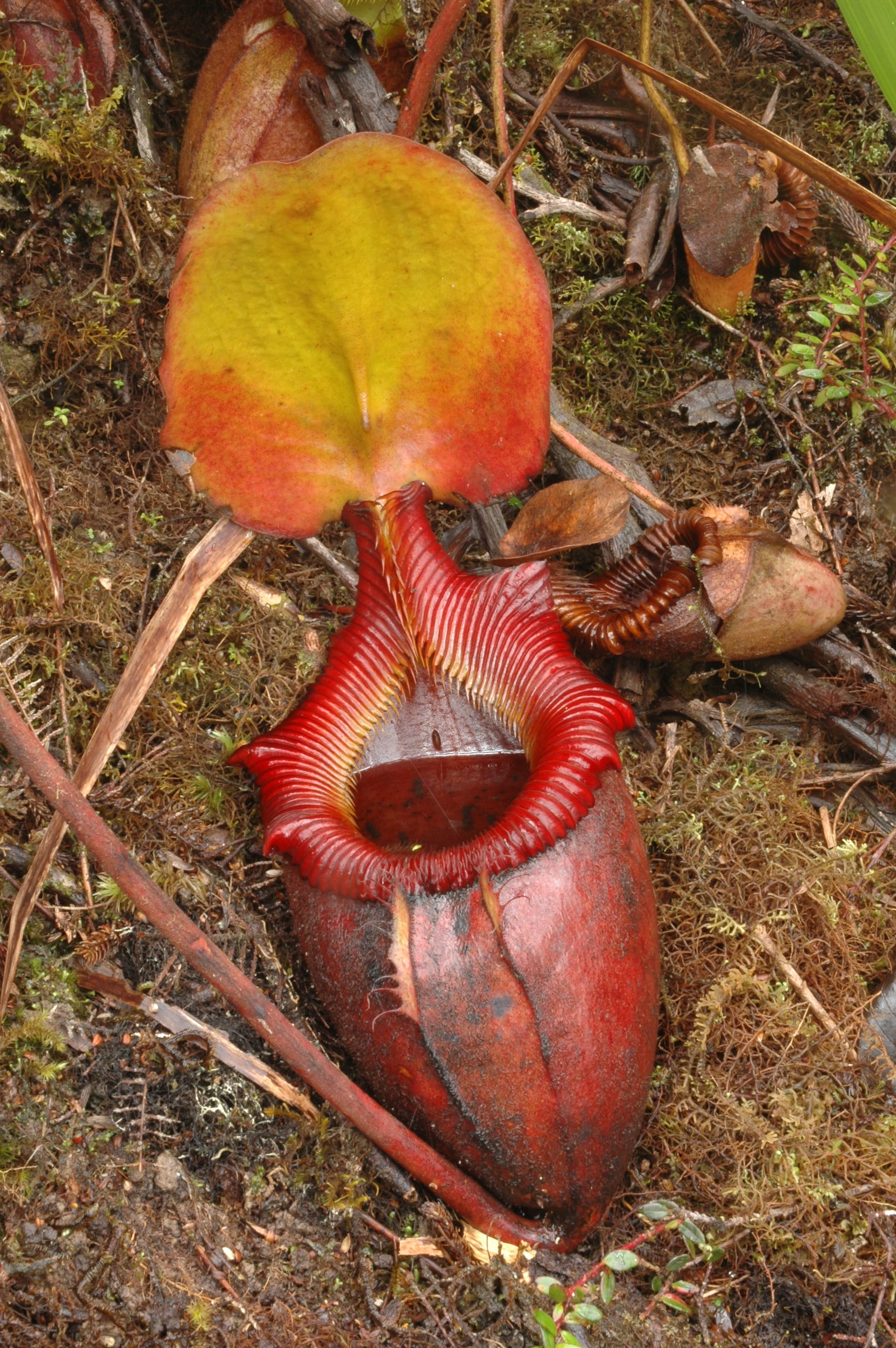
 © JeremiahsCPs (English Wikipedia) / CC BY-SA 3.0
Nepenthes × kinabaluensis
Nepenthes × kinabaluensis is a highland carnivorous plant found only around Mount Kinabalu in Borneo. It's a natural hybrid between the bold, large-pitchered N. rajah and the more delicate N. villosa, producing pitchers with a form intermediate between its two parents. It's a perennial vine that keeps growing and climbing over many years, and its pitcher rims carry a row of long, tooth-like ridges that give it a distinctive look. It's also known for readily producing upper pitchers, a trait it shows even more than its parents. Because it needs cool, high-altitude conditions to thrive, it's generally considered a plant for experienced growers — but a rewarding one for those ready for the challenge.
View Nepenthes × kinabaluensis encyclopedia →0% commission on your first sales!Register by September 30, 2026 and your first 2 plants are commission-free!
Grower Wanted!
List your plants on GrowerDirect and sell directly to customers nationwide!
6 Transparency Commitments from GrowerDirect
Every Grower listing discloses variety, origin, light requirements, and difficulty level for Carnivorous Plants. Complete transparency, guaranteed.
- Variety Disclosed
- Real Photos
- Color Information
- Origin Disclosed
- Light Requirements
- Difficulty Level
Browse all 145 varieties
Light Requirements
Difficulty Level
No listings match your filters
Adjust your filters, or get notified when new listings arrive.
Getting alerts is free with a member account. When new listings match your saved search, we'll notify you by email and in-app.
Browse other categories
Are you growing carnivorous plants?
Register as a grower and connect with buyers directly.
Apply as a growerNepenthes × kinabaluensis key facts
- Growing Difficulty
- Advanced
- Lifespan
- Perennial (climbing)
- Size
- Little published size data (pitchers larger than N. villosa)
- Watering
- Very dilute fertilizer at most (catches insects)
- Temperature & Overwintering
- A highland species that needs cool nights to thrive long term; warm Japanese summer nights are the main challenge.
- Light & Placement
- Likes bright light, but harsh midsummer sun can scorch it. Keep it in bright part shade where humidity can be kept up.
- Watering
- Use rain water or water low in dissolved minerals and water before the mix dries out. Do not leave the pot standing in water.
- Soil & Repotting
- Plant in a free-draining, airy mix; pure sphagnum or orchid mix with sphagnum or perlite are common choices.
- Fertilizer
- If using chemical fertilizer, use it at very low strength; an occasional insect dropped into a pitcher is enough.
- Pests & Cautions
- A hybrid from around 3,000 m that is especially intolerant of heat; it suits growers who can cool summer nights with air conditioning or other cooling.
About Nepenthes × kinabaluensis
A natural Nepenthes hybrid of N. rajah and N. villosa, found only around Mount Kinabalu, Borneo. This perennial vine produces pitchers intermediate between its parents and readily forms upper pitchers; best suited to experienced growers.
7 things to know before growing Nepenthes × kinabaluensis
1Needs a Day-Night Swing
As a hybrid native to the highlands of Mount Kinabalu, this plant thrives where cool nights contrast with mild days. It tends to weaken under prolonged summer heat, so placing it somewhere cool and well-ventilated is the first step to successful care.
2Prefers High Humidity
In its native habitat, mist and fog are common, so this plant favors humid air. In dry indoor environments the pitchers may not develop well, so using a humidifier or a nearby water tray can help maintain adequate humidity.
3Water with Soft Water
Like most nepenthes, it dislikes the mineral content in tap water, so watering with rainwater, softened water, or RO water is standard practice. Keep the growing medium consistently moist, but avoid waterlogging that can lead to root rot.
4Use Well-Draining Media
A mix of sphagnum moss, perlite, and pumice that balances drainage with moisture retention suits this plant well. Nutrient-rich soil can damage the roots, so it's important to choose a low-fertility medium made for nepenthes.
5Repot with Care for Roots
The roots are fine and easily damaged, so repot during active growth and handle the root ball gently without breaking it apart too much. After repotting, keep the plant out of direct sun and dry air until the roots settle in.
6Summer Is the Biggest Challenge
As a highland species, it struggles most during Japan's hot, humid summers. Using air conditioning or improving ventilation to keep at least the nights cool is key to helping it get through the season.
7Choose by Plant Health
There isn't much documented data on the typical size of N. × kinabaluensis, and pitcher size varies between individual plants. When choosing one, it's best to focus on overall health — root development, leaf condition, and vine vigor — rather than size alone.
Frequently asked questions about Nepenthes × kinabaluensis
- Q.Can beginners grow this plant?
- A.N. × kinabaluensis is generally considered suitable for experienced growers. It requires consistently cool, humid conditions, so it's best to gain experience with other Nepenthes species before taking this one on.
- Q.What kind of soil or medium should I use?
- A.A mix of sphagnum moss, perlite, and pumice that balances drainage and moisture retention works well. Avoid standard nutrient-rich potting soil, as it can damage the roots.
- Q.How large does this plant typically grow?
- A.There isn't much detailed data on its typical size, but the pitchers are said to grow larger than those of its parent N. villosa. Growth varies with conditions and between individual plants, so treat this as a general guide rather than a fixed figure.
- Q.What is an "upper pitcher"?
- A.As the vine grows taller, the pitchers that form higher up are called "upper pitchers," while those near the base are "lower pitchers." This highland hybrid tends to produce upper pitchers more readily than either of its parent species.
- Q.How can I help it survive a Japanese summer?
- A.As a highland species, it's especially vulnerable during hot, humid summers. Using air conditioning or better ventilation to cool things down, even just at night, is key to helping it get through the season.
Handy Growing Tools for Nepenthes × kinabaluensis
Learn more about Nepenthes × kinabaluensis in the encyclopedia
View Nepenthes × kinabaluensis encyclopedia entry →
Care difficulty, size, origin and light needs — all basics covered.
More in this category
Can't find the plant you're looking for?
Post your wishes for free and growers with matching plants will contact you with introductions.