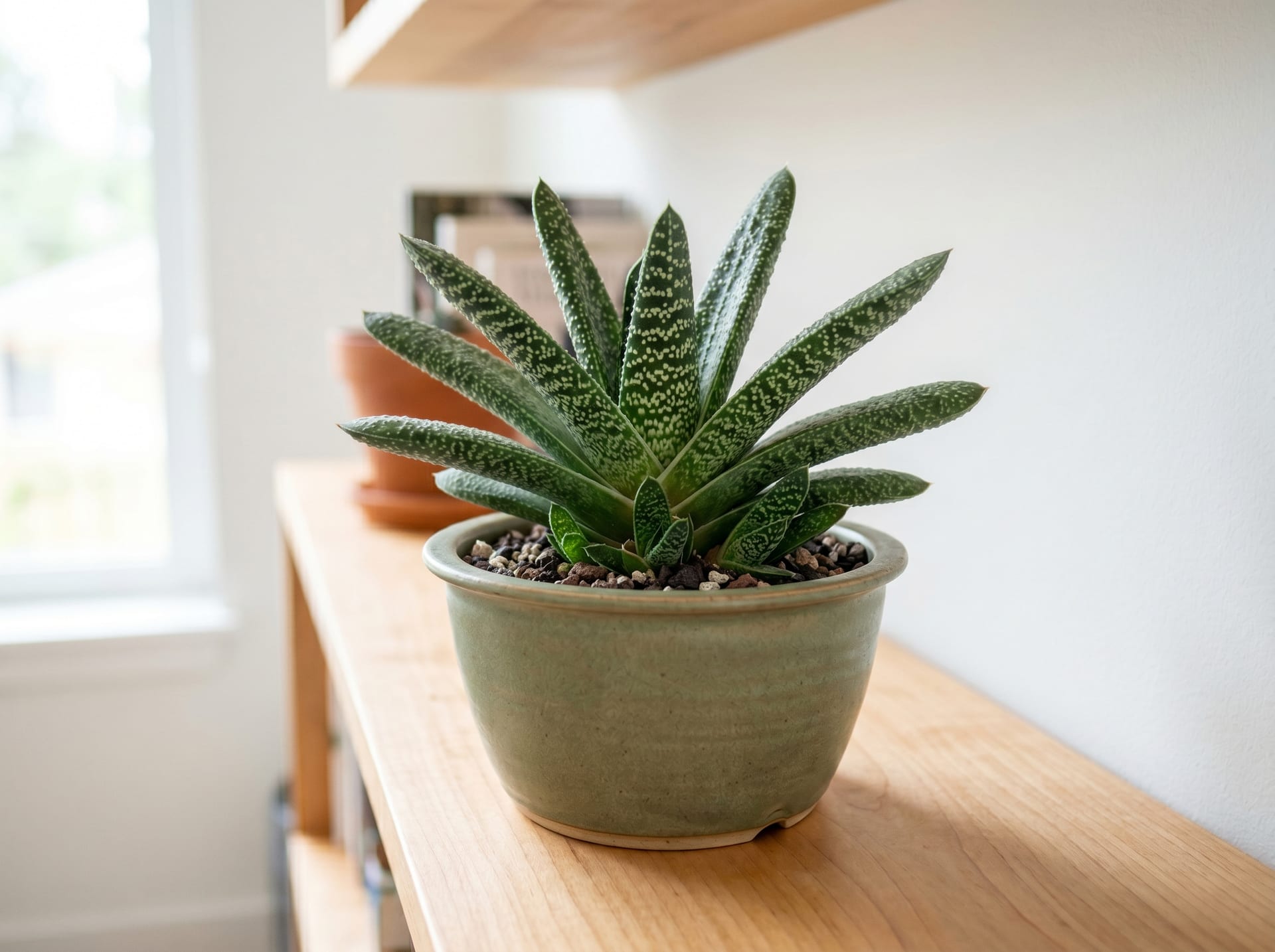
Gasteria
Gasteria is a South African succulent recognized by its distinctive tongue-shaped leaves arranged in alternating rows. Unlike most succulents, it thrives in bright indirect light, making it well-suited for indoor growing even in shadier spots. Growth is slow and steady, but it rewards patient growers with charming tubular flowers in season.
View Gasteria encyclopedia →Grower Wanted!
List your plants on GrowerDirect and sell directly to customers nationwide!
6 Transparency Commitments from GrowerDirect
Grower disclose this information for Succulents & Cacti. We guarantee transparency in variety, origin, light requirements, and difficulty level.
- Variety Disclosed
- Real Photos
- Color Details
- Origin Disclosed
- Light Requirements
- Difficulty Level
Browse all 131 varieties
Light Requirements
Difficulty Level
No listings match your filters
Adjust your filters, or get notified when new listings arrive.
Getting alerts is free with a member account. When new listings match your saved search, we'll notify you by email and in-app.
Browse other categories
Verified growers (preview)
Are you growing succulents & cacti?
Register as a grower and connect with buyers directly.
Apply as a growerGasteria key facts
- Growing Difficulty
- Beginner-friendly
- Lifespan
- Perennial (decades)
- Size
- 10-30cm
- Temperature
- ≥5℃
- Watering & Fertilizer
- Moderate watering
- Light & Placement
- Very shade-tolerant; bright indoor shade out of direct sun is enough. Avoid hot summer sun, which scorches the leaves.
- Watering
- Water sparingly, only once the soil dries. Avoid wet soil and keep it on the dry side.
- Temperature & Overwintering
- Tolerates lows of about 0-5°C. In winter keep it in a bright indoor spot away from frost.
- Soil & Repotting
- Use a well-draining succulent mix. Repot and divide when the pot becomes crowded with offsets.
- Propagation
- It offsets vigorously, so division is easy. Let separated offsets dry before potting.
About Gasteria
Gasteria belongs to the family Asphodelaceae alongside Aloe and Haworthia, and is native to South Africa. Its genus name derives from the Latin word "gaster" meaning stomach, a reference to the swollen, belly-like shape of its tubular flowers. The plant's defining feature is its thick, glossy, tongue-shaped leaves that unfurl in neat distichous rows, giving it a sculptural, highly individual appearance among succulents. Many varieties display distinctive white spots or streaks on their leaves, a detail that has made Gasteria a favorite among collectors. In its natural habitat, it grows beneath shrubs and rocky overhangs, which explains its unusually high shade tolerance — a trait that sets it apart from most succulents and makes it genuinely well-suited to indoor cultivation. Growth is slow and deliberate, rewarding patient growers with a plant that can live for decades with minimal care. In spring to early summer, it sends up arching stems bearing small orange-red tubular flowers, adding seasonal charm to its year-round appeal. Hardy, long-lived, and low-maintenance, Gasteria is an excellent choice for beginners and experienced collectors alike.
7 things to know before growing Gasteria
1Avoid Direct Sunlight
Unlike most succulents, Gasteria is prone to leaf scorch under intense direct sun, causing leaves to turn reddish-brown. A bright windowsill indoors or a shaded outdoor spot with a shade cloth works best. Even a south-facing window is fine when filtered through a sheer curtain.
2Water Only When Dry
Wait until the soil has been completely dry for several days before watering again. In winter, reduce to once or twice a month to prevent root rot. During humid summer heat, err on the dry side to avoid rot caused by poor air circulation.
3Use Fast-Draining Soil
A commercial cactus and succulent mix is ideal for Gasteria. Standard potting soil retains too much moisture and increases the risk of root rot. Adding a layer of pumice or perlite at the bottom of the pot further improves drainage.
4Easy Propagation via Offsets
Gasteria frequently produces offsets at the base, which can be separated and potted individually. Let the cut end dry for a few days before planting to reduce the risk of rot. While leaf cuttings are also possible, offsets have a significantly higher success rate.
5Reasonably Cold-Hardy
Gasteria can tolerate temperatures down to around 5°C, so in mild climates it may overwinter outdoors. However, it cannot handle frost or freezing temperatures, so bring it indoors when temperatures approach 0°C. Keep watering minimal during winter dormancy.
6Fertilize Sparingly
Because Gasteria grows slowly, over-fertilizing can cause more harm than good. A diluted liquid fertilizer formulated for succulents, applied once a month during the growing seasons of spring and autumn, is sufficient. Avoid feeding during summer and winter.
7Repot Every 2–3 Years
Gasteria tolerates being slightly root-bound and does not need frequent repotting. Repot when roots begin emerging from drainage holes or the pot becomes crowded with offsets. Spring or autumn, during active growth, is the best time to minimize stress on the plant.
Frequently asked questions about Gasteria
- Q.Can Gasteria be grown entirely indoors?
- A.Yes, Gasteria grows well indoors near a bright window with indirect light. Its preference for shade over direct sun actually makes it better suited to indoor conditions than many other succulents. However, ensure good air circulation to prevent the humidity buildup that can cause rot.
- Q.Why are my Gasteria leaves turning red or brown?
- A.Reddish-brown discoloration is most commonly caused by sunscorch from exposure to intense direct light. Moving the plant to bright indirect light often halts further damage, though already-scorched areas will not recover. Sudden temperature changes or extreme dryness in winter can also affect leaf color.
- Q.What happens if I overwater Gasteria?
- A.Persistent overwatering leads to root rot, which causes leaves to become soft and mushy as the plant deteriorates. If caught early, removing the rotted roots, allowing the plant to dry out, and repotting in fresh dry soil can sometimes save it. The best prevention is always waiting until the soil is completely dry before watering again.
- Q.Does Gasteria die after flowering?
- A.No, Gasteria does not die after flowering. Unlike monocarpic plants such as Agave that bloom once and then die, Gasteria flowers repeatedly year after year. Simply cut the flower stalk off at the base once blooming is finished.
- Q.What is the difference between Gasteria and Haworthia?
- A.Both are South African succulents in the same family, but they differ in leaf shape and arrangement. Gasteria leaves are tongue-shaped and grow in alternating left-and-right rows (a distichous pattern), while Haworthia typically forms a rosette. Their flowers also differ — Gasteria produces stomach-shaped tubular flowers, while Haworthia's flowers are narrower and more uniformly tubular.
Handy Growing Tools for Gasteria
Learn more about Gasteria in the encyclopedia
View Gasteria encyclopedia entry →
Care difficulty, size, origin and light needs — all basics covered.
Gasteria related articles
See more Gasteria articles →More in this category
Can't find the plant you're looking for?
Post your wishes for free and growers with matching plants will contact you with introductions.