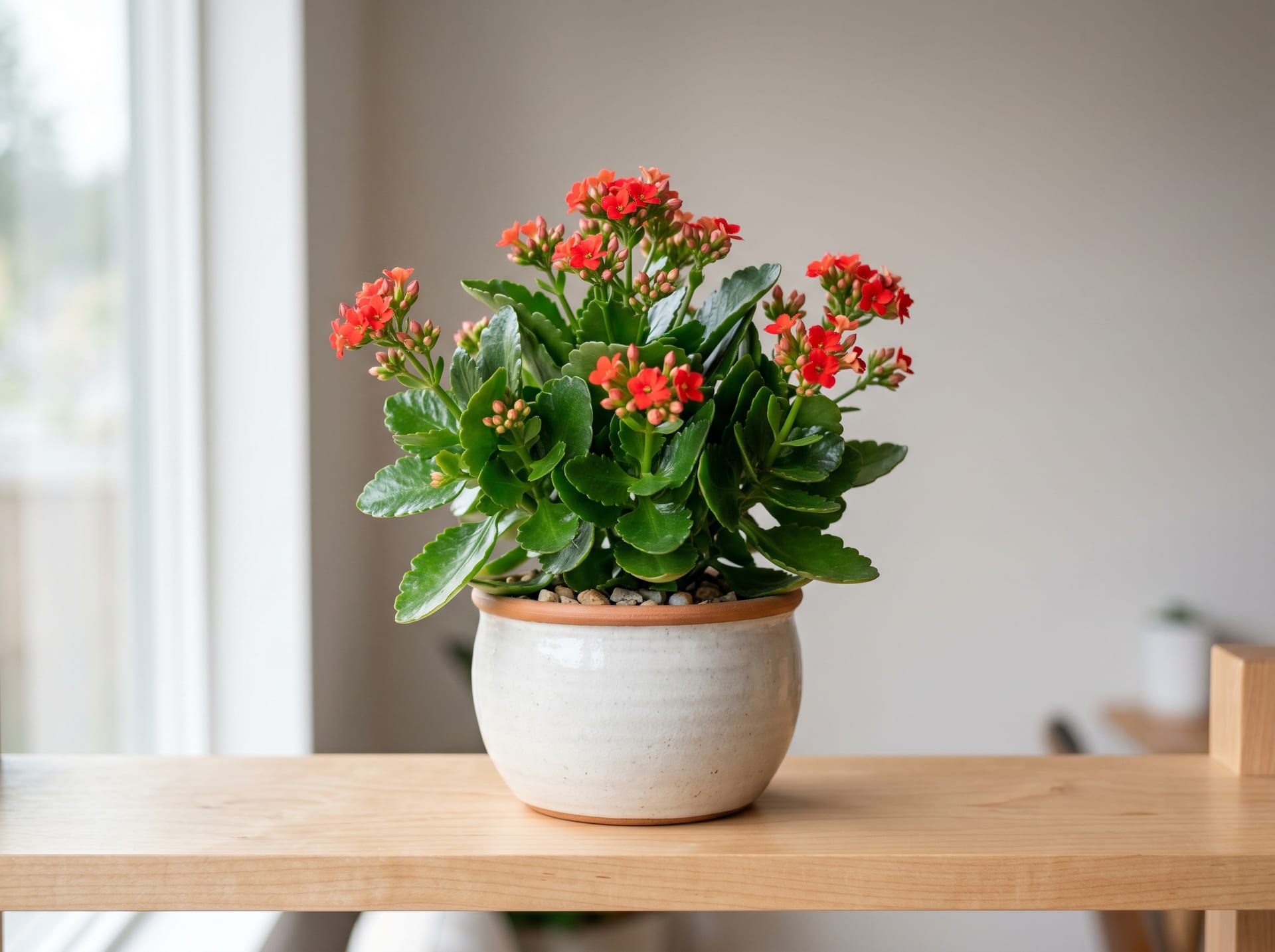
Kalanchoe
Kalanchoe is a popular succulent native to Madagascar, beloved for its vibrant clusters of small flowers that bloom for extended periods. Its drought tolerance and hardy nature make it an ideal choice for beginner plant growers. Simply place it near a bright indoor window to enjoy its cheerful colors throughout the year.
View Kalanchoe encyclopedia →Grower Wanted!
List your plants on GrowerDirect and sell directly to customers nationwide!
6 Transparency Commitments from GrowerDirect
Grower disclose this information for Succulents & Cacti. We guarantee transparency in variety, origin, light requirements, and difficulty level.
- Variety Disclosed
- Real Photos
- Color Details
- Origin Disclosed
- Light Requirements
- Difficulty Level
Browse all 131 varieties
Light Requirements
Difficulty Level
No listings match your filters
Adjust your filters, or get notified when new listings arrive.
Getting alerts is free with a member account. When new listings match your saved search, we'll notify you by email and in-app.
Browse other categories
Verified growers (preview)
Are you growing succulents & cacti?
Register as a grower and connect with buyers directly.
Apply as a growerKalanchoe key facts
- Growing Difficulty
- Beginner-friendly
- Lifespan
- 5+ years
- Size
- 10-50cm
- Temperature
- 5〜30℃
- Light & Placement
- Prefers a bright spot but not direct sun, so place it in bright indirect light. As a short-day plant, it sets flower buds as days shorten.
- Watering
- When soil dries. Keep slightly on dry side
- Temperature & Overwintering
- Keep between 5 and 30°C; as long as the minimum stays above 5°C it overwinters easily indoors. Place it by a bright window in winter.
- Flowers
- Short-day treatment (12+ hours dark daily) promotes blooming
- Propagation
- Propagate by stem cuttings. Species that form plantlets along the leaf margins can be multiplied simply by setting those plantlets on soil.
- Notes
- Mother of Thousands species spread via aerial plantlets — invasive
About Kalanchoe
Kalanchoe belongs to the family Crassulaceae and is native primarily to Madagascar and tropical Africa. The genus name is thought to derive from Arabic or Chinese, and since its introduction to Europe in the 19th century, extensive cultivation has produced hundreds of garden varieties. The leaves are thick and glossy, typically green, though some cultivars display reddish tints along the margins. Its most celebrated feature is its flowers: dense clusters of small blooms in a wide range of colors—red, orange, yellow, pink, and white—that remain attractive for unusually long periods. Ease of care is another draw; with minimal watering needs and adaptability to indoor environments, kalanchoe is widely enjoyed as a gift plant and decorative houseplant.
7 things to know before growing Kalanchoe
1Sunlight Is Key
Kalanchoe thrives in bright light and ideally needs 4–6 hours of direct or bright indirect sunlight per day. Insufficient light causes leggy growth and poor flowering. A south- or east-facing windowsill is the ideal placement.
2Water Sparingly
As a succulent, kalanchoe should be watered only after the soil has completely dried out. Overwatering is the leading cause of root rot, so never let water pool in the saucer. In winter, reduce frequency further to about once or twice a month.
3Short Days Trigger Reblooming
Kalanchoe is a short-day plant that forms flower buds when exposed to 14 or more hours of darkness per day. To encourage reblooming, practice "short-day treatment" by keeping the plant in a dark location for 14+ hours daily over 6–8 weeks. With this care, you can enjoy blooms year-round.
4Protect from Cold
Being of tropical origin, kalanchoe struggles in temperatures below 5°C. In winter, move it away from cold drafts near windows to a warmer indoor spot. It is particularly sensitive to frost, making outdoor overwintering difficult in most parts of Japan.
5Soil and Pot Selection
A well-draining succulent or cactus mix is ideal for kalanchoe. Choose unglazed terracotta pots or containers with drainage holes to allow excess moisture to escape and prevent root rot. Avoid oversized pots, as soil stays wet too long; a pot just one size larger than the root ball is appropriate.
6Fertilize Lightly in Bloom
Over-fertilizing can encourage leafy growth at the expense of flowers. Apply a diluted liquid fertilizer about once a month during the blooming seasons of spring and autumn. Avoid fertilizing in midsummer and winter when the plant tends to be less active.
7Be Aware of Toxicity
Kalanchoe is known to be toxic to pets such as dogs, cats, and rabbits. Ingestion can cause symptoms like vomiting and diarrhea, so it is important to keep the plant out of reach of animals. Households with small children should also take care with placement.
Frequently asked questions about Kalanchoe
- Q.Should I prune kalanchoe after flowering?
- A.Removing spent flower stems at the base keeps the plant tidy and encourages the formation of new flower buds. If the foliage becomes crowded, trimming back the stems periodically helps maintain a compact shape.
- Q.Why are my kalanchoe leaves shriveling?
- A.Shriveled leaves are often a sign of underwatering; if the soil is completely dry, water the plant thoroughly. However, advanced root rot can cause similar symptoms, so also check the condition of the soil and roots.
- Q.Can kalanchoe grow in a room without much sunlight?
- A.Kalanchoe prefers bright light, and in very low-light conditions it will become leggy and bloom poorly. Supplementing with fluorescent or LED grow lights can help to some extent, but placing it near a bright window is recommended whenever possible.
- Q.Can kalanchoe be propagated by cuttings?
- A.Kalanchoe propagates relatively easily from stem cuttings. Cut a stem about 5–7 cm long, allow the cut end to dry for 2–3 days, then insert it into fresh succulent mix to encourage rooting. Spring through early summer is the best time for propagation.
- Q.Do I need to repot kalanchoe right after buying it?
- A.Repotting immediately after purchase is not essential, but if roots are emerging from the drainage holes or the soil looks depleted, repotting in spring is advisable. To help the plant acclimate, minimize environmental changes for the first 2–3 weeks after bringing it home.
Handy Growing Tools for Kalanchoe
Learn more about Kalanchoe in the encyclopedia
View Kalanchoe encyclopedia entry →
Care difficulty, size, origin and light needs — all basics covered.
Kalanchoe related articles
Complete Guide to Growing Kalanchoe tomentosa (Panda Plant) | Tips for Keeping Fuzzy Leaves and Edge Markings Beautiful
Kalanchoe tomentosa (Panda Plant), popular for its leaves covered with fuzzy hairs that resemble rabbit ears. This guide explains how to care for it, including placement, watering, soil, and propagation methods, while keeping its fuzzy leaves and leaf-tip markings beautiful.
Top 10 Succulents for Beginners | Expert Selection of Echeveria, Haworthia, Sedum, Aloe & More
For beginners growing succulents for the first time, we've carefully selected 10 easy-to-grow species. We explain in detail the characteristics, care tips, and availability of popular varieties like Echeveria, Haworthia, Sedum, Aloe, and Kalanchoe from a beginner's perspective.
More in this category
Can't find the plant you're looking for?
Post your wishes for free and growers with matching plants will contact you with introductions.