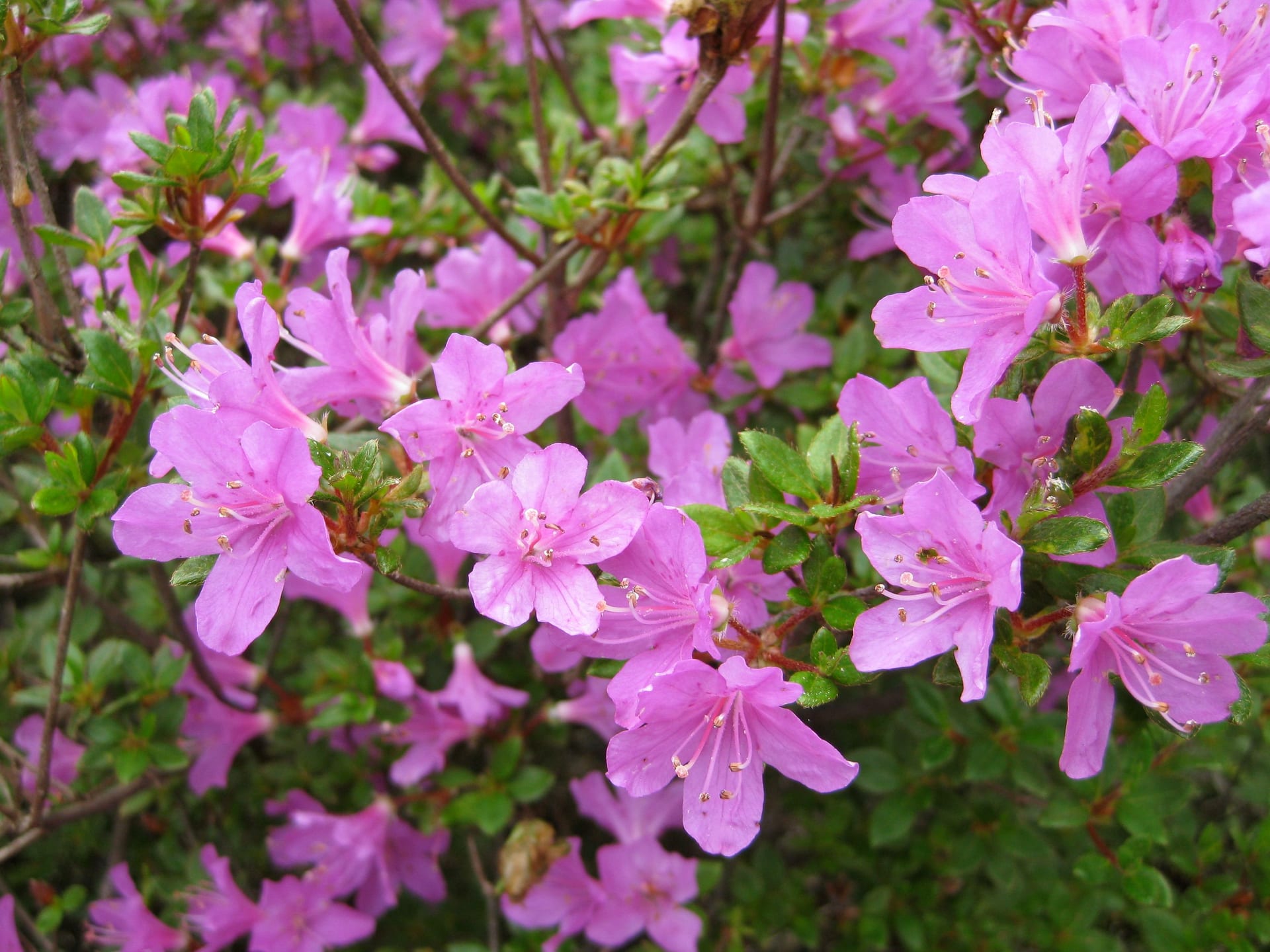
 © Ray_go / CC BY-SA 3.0
Kyushu azalea
Miyama Kirishima is a compact azalea native to the volcanic highlands of Kyushu, including Mount Kirishima, Mount Aso, and the Kuju mountains. It has small leaves and a densely branching habit, producing masses of small flowers—mostly reddish-purple, with some pink and white—that cover the branch tips. In the wild it grows to about 1-2 meters, but in a pot it's commonly trained into a compact form around 30cm, prized for the balance of fine branching and flowers in small-scale (shohin) bonsai. It's hardy and easy to manage, making it approachable for those new to bonsai, and in bloom its small flowers give the whole tree a lively, colorful look.
View Kyushu azalea encyclopedia →0% commission on your first sales!Register by September 30, 2026 and your first 2 plants are commission-free!
Grower Wanted!
List your plants on GrowerDirect and sell directly to customers nationwide!
6 Transparency Commitments from GrowerDirect
Growers clearly display the following information for all Bonsai listings. Guaranteed transparency for tree variety, origin, light requirements, and difficulty level.
- Tree Variety
- Real Photos
- Color & Appearance
- Growing Region
- Light Requirements
- Difficulty Level
Browse all 144 varieties
Light Requirements
Difficulty Level
No listings match your filters
Adjust your filters, or get notified when new listings arrive.
Getting alerts is free with a member account. When new listings match your saved search, we'll notify you by email and in-app.
Browse other categories
Verified growers (preview)
Kyushu azalea key facts
- Growing Difficulty
- Beginner-friendly
- Lifespan
- Little data on lifespan
- Size
- 1–2 m in the wild; often kept around 30 cm in pots
- Watering
- Fertilizer (after flowering, plus a winter feed)
- Light & placement
- Outdoors in sun and airflow—more sun, more flowers. Soften harsh summer sun with part shade or a screen
- Watering
- Likes water and dislikes drought, especially while flowering and making new leaves; dryness invites spider mites
- Temperature & overwintering
- Tough in heat and cold (to about −23 °C / −10 °F). Winter outdoors with proper chill; shelter from harsh drying wind and frost
- Soil & repotting
- Acidic mix such as kanuma and akadama half and half. Repot young plants every 2–3 years after flowering or in autumn
- Fertilizer
- Responds well to feeding: after flowering around June and a winter feed around December; add a little in summer if leaves pale
- Pruning & styling
- Soon after flowering (around May–June) cut new shoots back to about two leaves and remove spent flowers. Crowded growth rots in wet weather
- Pests & cautions
- Spider mites in dry spells, rot in stuffy conditions. Most wild sites are in national parks where plant collection is restricted—buy nursery-grown plants only
About Kyushu azalea
Miyama Kirishima is a hardy, compact Kyushu azalea from Japan's volcanic highlands, with dense branching and small red-purple, pink, or white blooms—well suited to beginner-friendly shohin bonsai.
7 things to know before growing Kyushu azalea
1Give It Full Sun
Miyama Kirishima flowers best with plenty of direct sunlight, so keep it in a bright spot for most of the year. During the height of summer, though, move it to partial shade to prevent the leaves from scorching.
2Watch for Dry Soil
Because shohin-style pots hold very little soil, this azalea can dry out quickly. Water thoroughly once the surface soil feels dry, and check more often during the growing season and hot summer months.
3Use Acidic Soil
As a member of the azalea family, Miyama Kirishima prefers acidic, well-draining soil—kanuma soil is a common base for bonsai growers. Ordinary potting mix isn't well suited to its needs and can lead to poor growth.
4Repot After Flowering
The best time to repot is right after the flowers finish. Avoid breaking up the root ball too aggressively—just remove the old soil and refresh it, which keeps stress on the roots low while you shape the tree.
5Prune for Density
This azalea naturally branches densely, and trimming new growth after flowering encourages even more branching for that classic compact shohin look. Regular pinching of new shoots gradually refines the branch structure.
6Summer and Winter Care
Miyama Kirishima is a tough azalea that tolerates both heat and cold, reportedly down to about -23°C. In midsummer, watch for dryness and soften strong sun with partial shade or a reed screen. In winter, keep it outdoors so it experiences the cold; only in especially dry regions does it need shelter from cold wind and frost.
7Choose by Branch Structure
The appeal of Miyama Kirishima lies in its small leaves and dense branching, so when choosing a plant, look for one with plenty of branches and short internodes—it will be easier to shape from there. It's also worth checking how flower buds are forming.
Frequently asked questions about Kyushu azalea
- Q.Can beginners grow this azalea?
- A.Miyama Kirishima is hardy and generally considered a beginner-friendly bonsai variety. As long as you keep to the basics of sunlight and watering, it's fairly forgiving to grow.
- Q.How large does it grow?
- A.In the wild it reaches about 1-2 meters, but when trained as bonsai in a pot it's commonly kept to a compact size around 30cm. Pruning and pinching let you control its size over time.
- Q.When does it bloom?
- A.Most azaleas bloom in spring, and Miyama Kirishima is no exception. Small flowers—mostly reddish-purple, with some pink and white—cover the branch tips when in season.
- Q.Can it be grown indoors?
- A.Miyama Kirishima does best outdoors where it gets plenty of sunlight, and outdoor care is standard practice for this bonsai. Indoors it tends to suffer from insufficient light, so a sunny balcony or garden spot is recommended instead.
- Q.Is it sensitive to cold?
- A.No. Miyama Kirishima is a tough azalea that handles both heat and cold, reportedly down to about -23°C. The standard approach is to keep it outdoors through winter so it experiences the cold. In especially dry regions, place it where it is sheltered from cold wind and frost.
Handy Growing Tools for Kyushu azalea
Learn more about Kyushu azalea in the encyclopedia
View Kyushu azalea encyclopedia entry →
Care difficulty, size, origin and light needs — all basics covered.
More in this category
Can't find the plant you're looking for?
Post your wishes for free and growers with matching plants will contact you with introductions.