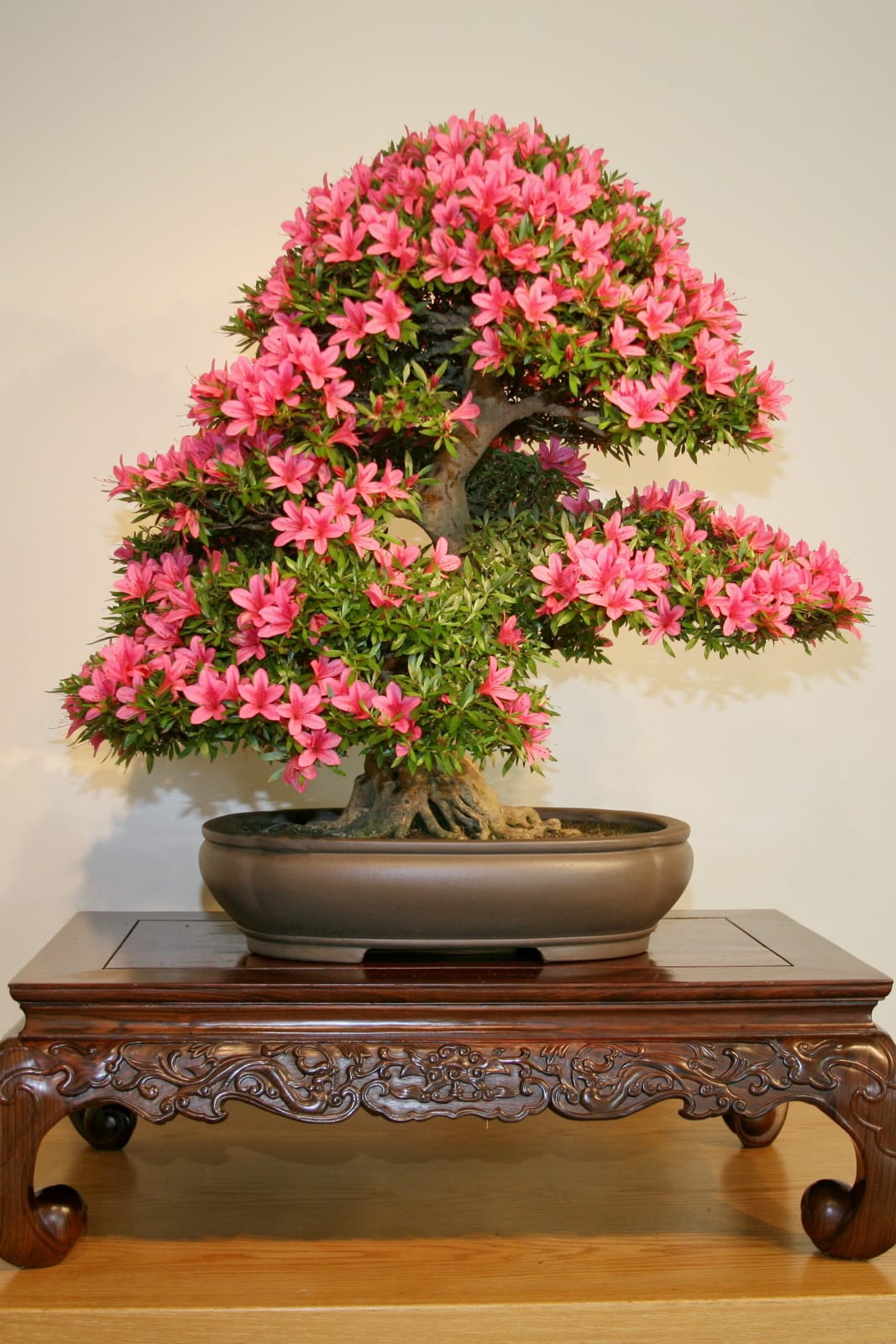
 © Cliff from Arlington, Virginia, USA / CC BY 2.0
Satsuki azalea 'Korin'
Korin is a beloved Satsuki azalea bred from 'Kozan' and 'Ogata', prized for its abundant purplish-red single-color blooms. The thick, pointed sword-shaped petals give each flower a crisp, elegant look, and the plant's naturally good branching makes it easy to train into a range of bonsai shapes despite its small flower size. It grows vigorously, flowers reliably, and tolerates a range of conditions, making it a great choice for anyone starting out with Satsuki bonsai. Its small, narrow leaves turn red in autumn, extending the plant's seasonal interest well beyond the spring bloom.
View Satsuki azalea 'Korin' encyclopedia →0% commission on your first sales!Register by September 30, 2026 and your first 2 plants are commission-free!
Grower Wanted!
List your plants on GrowerDirect and sell directly to customers nationwide!
6 Transparency Commitments from GrowerDirect
Growers clearly display the following information for all Bonsai listings. Guaranteed transparency for tree variety, origin, light requirements, and difficulty level.
- Tree Variety
- Real Photos
- Color & Appearance
- Growing Region
- Light Requirements
- Difficulty Level
Browse all 144 varieties
Light Requirements
Difficulty Level
No listings match your filters
Adjust your filters, or get notified when new listings arrive.
Getting alerts is free with a member account. When new listings match your saved search, we'll notify you by email and in-app.
Browse other categories
Verified growers (preview)
Satsuki azalea 'Korin' key facts
- Growing Difficulty
- Beginner-friendly
- Lifespan
- Little data for the cultivar
- Size
- Satsuki is an evergreen shrub of about 0.5–1 m; as bonsai it is trained to suit the pot
- Watering
- Fertilizer (April, June after flowering, Sept–Oct)
- Light & placement
- Likes light, but summer sun scorches leaves and roots. Give young plants full sun; keep finished trees in part shade, always with good airflow
- Watering
- Likes water but its fine roots rot if waterlogged: 1–2 times daily in spring, 2–3 in summer, every 2–3 days in winter. Avoid watering in the midday heat
- Temperature & overwintering
- Reasonably hardy but dislikes cold winter wind; keep the pot from freezing under eaves or similar
- Soil & repotting
- Coarse, acidic kanuma-based mix. Repot right after flowering (June) or in autumn (late Sep–early Oct)
- Fertilizer
- Solid fertilizer about April as new leaves harden, after flowering in June, and monthly in Sep–Oct. Underfeeding causes dieback
- Pruning & styling
- Flower buds form in July to mid-August, so finish pinching and pruning in June (early July west of Kanto). Wire in April and Sep–Oct
- Pests & cautions
- Pest-prone: watch for lace bugs, spider mites, aphids and thrips. It tends to send up vigorous shoots from the base—remove them early
About Satsuki azalea 'Korin'
Korin is a purplish-red Satsuki azalea bred from 'Kozan' and 'Ogata'. Its dense sword-shaped blooms, reliable flowering, and hardy nature make it an easy, rewarding choice for bonsai beginners.
7 things to know before growing Satsuki azalea 'Korin'
1Light & Airflow
Korin thrives in full sun with good air circulation outdoors. In the height of summer, move it to bright, indirect light during the hottest part of the day to prevent leaf scorch, and keep it under an eave in winter to shield it from frost.
2Watering Basics
Water thoroughly until it drains from the pot's base once the soil surface has dried. Watch closely for dryness during summer, when flower buds are forming, and water more sparingly in winter, keeping the soil slightly on the dry side.
3Well-Draining Soil
Like other Satsuki azaleas, Korin prefers acidic, well-draining soil. A mix based on kanuma pumice helps prevent root rot, and a ready-made Satsuki/azalea potting mix is a convenient option.
4When to Repot
Early summer, right after flowering ends, is the best time to repot. Since roots fill the pot readily, repotting every two to three years — either into a slightly larger pot or the same one after removing old soil — keeps the plant vigorous.
5Pruning & Feeding
Because Korin grows vigorously, cut back the branches right after flowering to maintain its shape. Applying a slow-release solid fertilizer after pruning supports next year's flower buds; avoid feeding during the height of summer and winter.
6Choosing a Plant
Since Korin flowers freely, look for a plant with buds packed densely along the branch tips for a fuller bloom. Glossy leaves and smooth, unblemished bark are also good signs of a healthy, vigorous plant.
7Watch for Pests
Poor airflow can invite spider mites and lace bugs, so check the undersides of leaves regularly. During the rainy season, thin out crowded branches to keep air moving and prevent fungal problems caused by excess humidity.
Frequently asked questions about Satsuki azalea 'Korin'
- Q.Is Korin easy for beginners to grow?
- A.Yes, Korin is considered a beginner-friendly variety. It's hardy and flowers reliably, so with basic watering and good sun exposure it makes an approachable first Satsuki azalea bonsai.
- Q.What do Korin's flowers look like?
- A.Korin produces small, solid purplish-red blooms. The petals are thick and sword-shaped, giving each flower a crisp, well-defined form.
- Q.How large does Korin grow?
- A.As a Satsuki azalea, it's naturally an evergreen shrub reaching roughly 0.5 to 1 meter in height. When trained as bonsai, its size is shaped to match the pot, so it can be kept compact.
- Q.When should I repot Korin?
- A.The best time is early summer, right after flowering ends. Repotting roughly every two to three years, depending on root growth, helps keep the plant healthy.
- Q.Does Korin offer interest beyond its blooms?
- A.Yes — its small, narrow leaves turn red in autumn. So even after the flowering season ends, you can enjoy the seasonal change in foliage color.
Handy Growing Tools for Satsuki azalea 'Korin'
Learn more about Satsuki azalea 'Korin' in the encyclopedia
View Satsuki azalea 'Korin' encyclopedia entry →
Care difficulty, size, origin and light needs — all basics covered.
More in this category
Can't find the plant you're looking for?
Post your wishes for free and growers with matching plants will contact you with introductions.