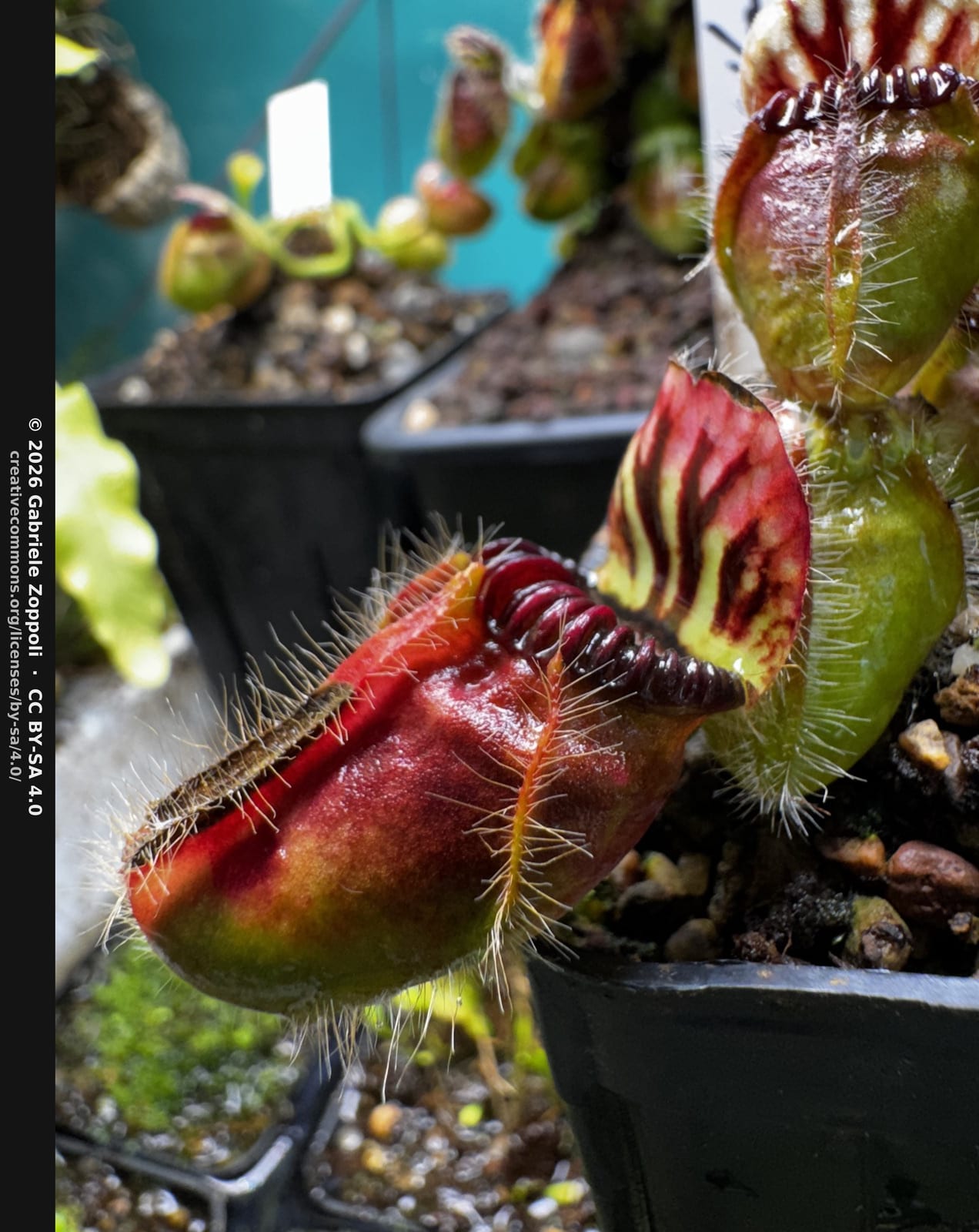
 © Gabriele Zoppoli / CC BY-SA 4.0
Cephalotus Eden Black
Cephalotus Eden Black is a selected clone of Cephalotus follicularis, prized above all for its deep color: given plenty of direct sun, the pitchers darken from the rim through the entire body to the underside of the lid, taking on an almost black-purple hue unlike any other carnivorous plant. Selected by a British grower in the late 1980s and registered as a cultivar in 2007, it carries a well-documented selection history. Its pitchers stay around 5cm long, making it easy to fit on a shelf while still standing out. As a perennial that can be kept going for years through division, it rewards patient, attentive growers.
View Cephalotus Eden Black encyclopedia →0% commission on your first sales!Register by September 30, 2026 and your first 2 plants are commission-free!
Grower Wanted!
List your plants on GrowerDirect and sell directly to customers nationwide!
6 Transparency Commitments from GrowerDirect
Every Grower listing discloses variety, origin, light requirements, and difficulty level for Carnivorous Plants. Complete transparency, guaranteed.
- Variety Disclosed
- Real Photos
- Color Information
- Origin Disclosed
- Light Requirements
- Difficulty Level
Browse all 145 varieties
Light Requirements
Difficulty Level
No listings match your filters
Adjust your filters, or get notified when new listings arrive.
Getting alerts is free with a member account. When new listings match your saved search, we'll notify you by email and in-app.
Browse other categories
Are you growing carnivorous plants?
Register as a grower and connect with buyers directly.
Apply as a growerCephalotus Eden Black key facts
- Growing Difficulty
- Advanced
- Lifespan
- Perennial (can be kept for many years by division)
- Size
- Rosette up to about 10 cm tall; pitchers up to 5 cm long
- Humidity
- 60〜80%
- Watering
- Little or no fertilizer needed (catches ants and other small insects)
- Light & Placement
- Strong light turns the pitchers black-purple. Grow on a south-facing sill or under bright LED lights; in low light they stay greenish.
- Watering
- A fen plant that dislikes stagnant water. Either stand a tall pot in about 1 cm of water or water from above daily without a tray, depending on the mix. Use pure or rain water.
- Soil & Repotting
- A mix of about 20% peat or chopped sphagnum to 80% sand in a tall pot works well; 1 cm of pure sand on top keeps moss down. Flush water through the pot now and then to remove salts.
- Pests & Cautions
- Highly susceptible to powdery mildew, which has wiped out whole collections. Keep air moving and treat promptly with a fungicide if white mould appears.
- Propagation
- Keep the cultivar true by division, rhizome cuttings or leaf pullings. Stems die back after flowering; this is normal and new shoots follow.
About Cephalotus Eden Black
Cephalotus Eden Black is a selected pitcher-plant cultivar whose traps darken to near-black purple in strong light. A perennial with pitchers about 5cm long, it suits experienced growers and can be kept for years through division.
7 things to know before growing Cephalotus Eden Black
1Light drives the black color
The near-black purple of Eden Black deepens in proportion to light exposure — in low light, pitchers stay greenish and never darken. Give it as much strong, direct light as possible, outdoors or on a bright windowsill.
2Match Watering to Your Mix
Cephalotus comes from wetlands but dislikes stagnant water. Depending on your mix, either stand a deep pot in about 1cm of water or skip the tray and water from above every day. Use purified water or rainwater.
3Sandy Mix in a Deep Pot
Use a mix of two parts peat or chopped sphagnum to eight parts sand in a deep pot. A 1cm layer of sand on top helps keep moss down. Avoid ordinary fertilized potting soil, and flush the pot with water now and then to wash out salts.
4Repot in spring
Repotting is best done in early spring, as growth resumes, rather than during the depths of winter dormancy, to minimize stress on the plant. Dividing offsets at the same time tends to give the smoothest recovery.
5Watch summer heat and humidity
Cephalotus dislikes muggy heat, so in midsummer it needs good airflow and some shade from the harshest direct sun to avoid damage. This difficulty getting plants through summer is a major reason the cultivar is considered one for experienced growers.
6Keep cool through winter
Growth slows in winter, so water less often and let the plant rest in a cooler spot. Avoiding sudden temperature swings is key to keeping it healthy through the season.
7Choose for depth of color
Individual Eden Black plants vary in how dark they turn depending on growing conditions. When choosing one, check the coloring of the pitchers and the plant's overall condition to get a sense of what care it will need going forward.
Frequently asked questions about Cephalotus Eden Black
- Q.Is this suitable for beginners?
- A.Eden Black is considered a variety for experienced growers, since it needs careful humidity and temperature management. It suits growers who already have some experience with carnivorous plants or can devote time to care.
- Q.Where does the name 'Eden Black' come from?
- A.It's a clone selected by British grower S. Morley in the late 1980s and registered with the International Carnivorous Plant Society (ICPS) in 2007. The name comes from the name of the breeder's house and the color of its pitchers.
- Q.Why aren't my pitchers turning black?
- A.The most common cause is insufficient light — without strong direct sun, pitchers tend to stay greenish. Try moving the plant to a brighter spot.
- Q.How large does it grow?
- A.Its pitchers are about 5cm long, and the plant stays compact. It's less about growing big and more about enjoying the depth of color that develops in strong light.
- Q.How is it different from a regular Cephalotus?
- A.It's the same species, Cephalotus follicularis, at its core, but Eden Black is a clone specifically selected for producing an especially deep black-purple color in sun. The main difference is the intensity of that coloring.
Handy Growing Tools for Cephalotus Eden Black
Learn more about Cephalotus Eden Black in the encyclopedia
View Cephalotus Eden Black encyclopedia entry →
Care difficulty, size, origin and light needs — all basics covered.
More in this category
Can't find the plant you're looking for?
Post your wishes for free and growers with matching plants will contact you with introductions.