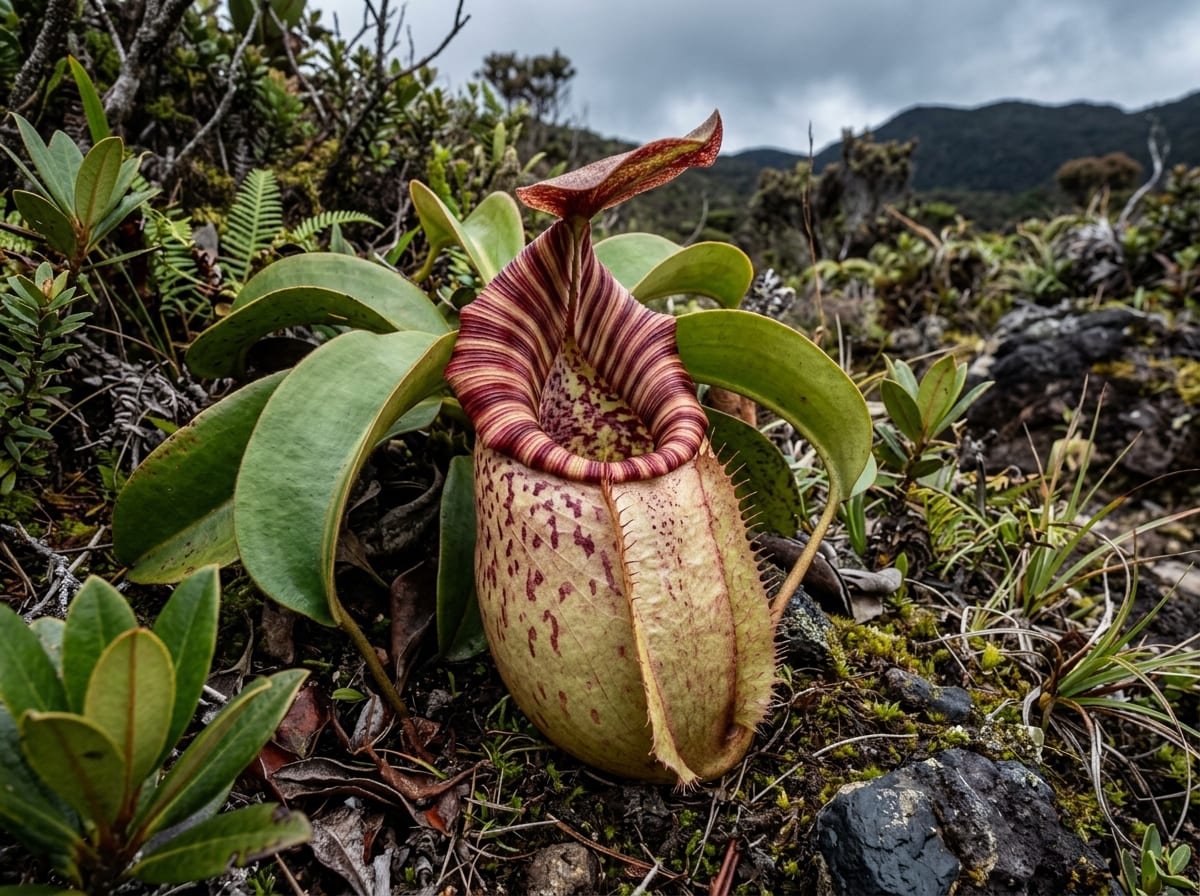
Nepenthes attenboroughii
Nepenthes attenboroughii is a striking pitcher plant found only on Mount Victoria on Palawan Island in the Philippines. Its bell-shaped pitchers can reach up to 30cm in height and 16cm across, with some recorded holding over 1.5 liters of fluid, an impressive scale even among carnivorous plants. Named after naturalist David Attenborough, it has long been a bucket-list species for pitcher plant enthusiasts. The plant grows as a perennial, upright to semi-sprawling shrub that can eventually reach about 1.5 meters tall. Because it takes some experience to grow well, it suits growers who already have some background with Nepenthes.
View Nepenthes attenboroughii encyclopedia →0% commission on your first sales!Register by September 30, 2026 and your first 2 plants are commission-free!
Grower Wanted!
List your plants on GrowerDirect and sell directly to customers nationwide!
6 Transparency Commitments from GrowerDirect
Every Grower listing discloses variety, origin, light requirements, and difficulty level for Carnivorous Plants. Complete transparency, guaranteed.
- Variety Disclosed
- Real Photos
- Color Information
- Origin Disclosed
- Light Requirements
- Difficulty Level
Browse all 145 varieties
Light Requirements
Difficulty Level
No listings match your filters
Adjust your filters, or get notified when new listings arrive.
Getting alerts is free with a member account. When new listings match your saved search, we'll notify you by email and in-app.
Browse other categories
Are you growing carnivorous plants?
Register as a grower and connect with buyers directly.
Apply as a growerNepenthes attenboroughii key facts
- Growing Difficulty
- Advanced
- Lifespan
- Perennial (upright to scrambling shrub)
- Size
- Lower pitchers up to 30 cm tall and 16 cm wide; plant about 1.5 m tall
- Watering
- Very dilute fertilizer at most (catches large insects)
- Temperature & Overwintering
- A highland species that needs cool nights to thrive long term; warm Japanese summer nights are the main challenge.
- Light & Placement
- Its summit habitat is open scrub, so it likes bright light.
- Watering
- Use rain water or water low in dissolved minerals and water before the mix dries out. Do not leave the pot standing in water; a free-draining mix keeps the roots healthy.
- Soil & Repotting
- It grows on rocky ultramafic soil; in cultivation use a free-draining mix and avoid soggy roots.
- Fertilizer
- If using chemical fertilizer, use it at very low strength; an occasional insect dropped into a pitcher is enough.
- Pests & Cautions
- Critically Endangered, with poaching a threat in the wild. Buy only seed-grown or tissue-cultured plants.
About Nepenthes attenboroughii
Nepenthes attenboroughii is a large pitcher plant found only on Mount Victoria, Palawan. Its bell-shaped pitchers reach up to 30cm, making it a striking pick for experienced growers.
7 things to know before growing Nepenthes attenboroughii
1Light and Placement
This species prefers bright, filtered light rather than harsh direct sun, such as a spot behind a sheer curtain or under shade cloth outdoors. Good air circulation also helps the plant form healthy pitchers, so avoid stuffy, stagnant corners.
2Watering
Use rainwater or other water low in dissolved salts, and water before the mix dries out completely. Don't leave water standing in the saucer; use a free-draining mix so the roots don't stay soggy.
3Potting Mix
Use a low-nutrient mix that drains well while still holding some moisture, such as pure sphagnum moss or sphagnum blended with pumice or perlite. Avoid rich garden soil or fertilized potting mix, and look for products labeled specifically for carnivorous plants.
4Temperature and Seasons
Because it comes from the cool highlands of Mount Victoria, this species can struggle in hot, humid summer conditions. Ensuring good airflow and, where possible, a nighttime temperature drop helps keep plants healthy through the warmer months. Managing this temperature swing is one reason the species is considered suited to experienced growers.
5Repotting
This is a large species that grows as an upright to ascending shrub up to about 1.5 meters tall. When it starts to feel root-bound, move it into a slightly larger pot with a free-draining mix. After repotting, keep it out of direct sun for a while until the roots settle.
6Choosing a Plant
Look for a plant with undamaged, unblemished pitchers and leaves and a healthy, actively growing stem tip. A firm base and well-established roots are also good signs of vigor. Because it is Critically Endangered on the IUCN Red List, choose plants propagated from seed or tissue culture.
7Humidity
Consistently high humidity around the plant is key to getting it to form pitchers reliably. A terrarium, greenhouse, or a growing space with a humidifier will encourage better pitcher production than an open, dry room. If you are keeping it in a drier indoor spot, regular misting can also help.
Frequently asked questions about Nepenthes attenboroughii
- Q.Is this a good species for beginners?
- A.Nepenthes attenboroughii is generally considered a plant for experienced growers. It calls for careful temperature management during hot, humid summers and consistently high humidity, so some background with carnivorous plants is helpful. It is best approached once you are comfortable with the basics of Nepenthes care.
- Q.How big does it grow?
- A.The lower pitchers can reach about 30cm tall and 16cm across, among the largest in the genus. The plant itself grows as an upright to ascending shrub up to roughly 1.5 meters tall.
- Q.How should I care for it in winter?
- A.The main goal is to avoid sudden temperature swings and cold drafts while keeping the surroundings warm and humid. If a windowsill gets too cold at night, moving the plant further into the room can help. Winter air also tends to be dry, so keep up with humidity management during the colder months.
- Q.Why is my plant not forming pitchers?
- A.Insufficient light is a likely cause. It grows on open, bright mountaintops in the wild, so give it plenty of light. As a highland species, it also needs cooler nights to thrive long term. It's normal for young plants to produce small pitchers, or few of them, for a while.
- Q.What environment mimics its natural habitat?
- A.This species grows naturally only on Mount Victoria on Palawan Island, a cool, humid highland environment. Recreating that at home means favoring good airflow over stifling heat and maintaining steady humidity around the plant. It also tends to do well with a slight temperature drop at night, similar to its mountain habitat.
Handy Growing Tools for Nepenthes attenboroughii
Learn more about Nepenthes attenboroughii in the encyclopedia
View Nepenthes attenboroughii encyclopedia entry →
Care difficulty, size, origin and light needs — all basics covered.
More in this category
Can't find the plant you're looking for?
Post your wishes for free and growers with matching plants will contact you with introductions.