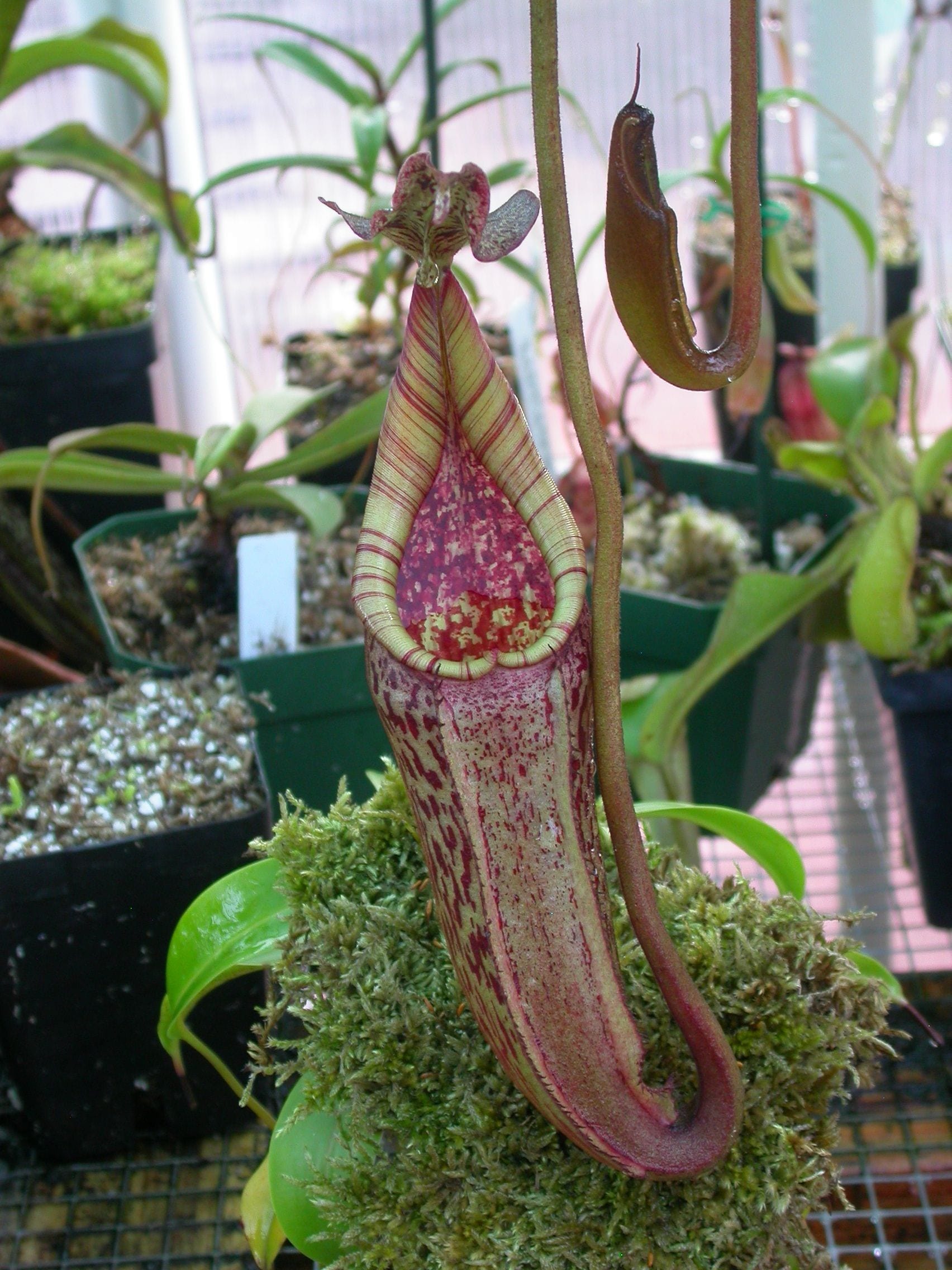
 © JeremiahsCPs (English Wikipedia) / CC BY-SA 3.0
Nepenthes eymae
Nepenthes eymae is a pitcher plant native to the mountains of Sulawesi, Indonesia. Its signature feature is the distinctive shape of its upper pitchers: they stay narrow and funnel-like for most of their length, then flare out abruptly near the mouth into a wine-glass silhouette that sets the species apart from the closely related Nepenthes maxima. The lower pitchers, by contrast, are egg-shaped and can reach 24cm tall and 16cm wide. A vining perennial, it sends out vines reaching around 8 meters. It's considered a plant for more experienced growers, but that extra effort is rewarded with a striking, one-of-a-kind form that has made it a favorite among carnivorous plant enthusiasts.
View Nepenthes eymae encyclopedia →0% commission on your first sales!Register by September 30, 2026 and your first 2 plants are commission-free!
Grower Wanted!
List your plants on GrowerDirect and sell directly to customers nationwide!
6 Transparency Commitments from GrowerDirect
Every Grower listing discloses variety, origin, light requirements, and difficulty level for Carnivorous Plants. Complete transparency, guaranteed.
- Variety Disclosed
- Real Photos
- Color Information
- Origin Disclosed
- Light Requirements
- Difficulty Level
Browse all 145 varieties
Light Requirements
Difficulty Level
No listings match your filters
Adjust your filters, or get notified when new listings arrive.
Getting alerts is free with a member account. When new listings match your saved search, we'll notify you by email and in-app.
Browse other categories
Are you growing carnivorous plants?
Register as a grower and connect with buyers directly.
Apply as a growerNepenthes eymae key facts
- Growing Difficulty
- Advanced
- Lifespan
- Perennial (climbing)
- Size
- Lower pitchers up to 24 cm tall and 16 cm wide; stems to about 8 m
- Watering
- Very dilute fertilizer at most (catches insects)
- Temperature & Overwintering
- A highland species that needs cool nights to thrive long term; warm Japanese summer nights are the main challenge.
- Light & Placement
- Likes bright light, but harsh midsummer sun can scorch it. Keep it in bright part shade where humidity can be kept up.
- Watering
- Use rain water or water low in dissolved minerals and water before the mix dries out. Do not leave the pot standing in water.
- Soil & Repotting
- Plant in a free-draining, airy mix; pure sphagnum or orchid mix with sphagnum or perlite are common choices.
- Fertilizer
- If using chemical fertilizer, use it at very low strength; an occasional insect dropped into a pitcher is enough.
- Pests & Cautions
- Most cultivated plants reportedly do not form the typical wine-glass upper pitchers; if the shape matters to you, choose a plant sold with photos of its upper pitchers.
About Nepenthes eymae
Nepenthes eymae is a Sulawesi-native pitcher plant known for its wine-glass-shaped lower pitchers, narrow below and flaring sharply above. An advanced-level vining perennial reaching about 8 m, with lower pitchers up to 24 cm tall.
7 things to know before growing Nepenthes eymae
1Bright, indirect light
Nepenthes eymae prefers bright, filtered light rather than intense direct sun, similar to light passing through a sheer curtain. As a highland species, avoid harsh midsummer sun and stuffy, humid conditions—keep it somewhere with good air circulation.
2Watering and Humidity
Use rainwater or other water low in dissolved salts, and water before the mix dries out completely. Don't leave water standing in the saucer, so the roots don't stay soggy. As a highland Nepenthes, it does best in bright partial shade where humidity can be kept up.
3Use a well-draining mix
Pure sphagnum moss, or a mix of sphagnum with perlite or pumice, works well by balancing drainage and moisture retention. Avoid rich, general-purpose potting soil, as it can lead to root rot.
4Repot without disturbing roots
Repot roughly once every one to two years, once the sphagnum starts to break down. The roots are delicate, so keep the root ball as intact as possible and move it into a slightly larger pot with fresh sphagnum.
5Watch summer heat and winter cold
Since it originates from the Sulawesi highlands, keep it out of direct afternoon sun and in a cooler spot during peak summer heat. It's also sensitive to cold, so bring it indoors to a bright spot in winter and shield it from cold winds.
6Upper and Lower Pitchers Differ
The signature wine-glass shape belongs to the upper pitchers; the lower pitchers are egg-shaped. Most cultivated plants, however, reportedly don't produce the typical wine-glass upper pitchers, so don't expect the shape from the name alone. If form matters to you, choose a plant sold with photos of its upper pitchers.
7Choosing a healthy plant
Look for a plant with firm, unblemished foliage and minimal discoloration. Since this is a variety for more experienced growers, choosing one that already has several established pitchers makes ongoing care easier to gauge.
Frequently asked questions about Nepenthes eymae
- Q.Is Nepenthes eymae suitable for beginners?
- A.Nepenthes eymae is generally considered a plant for more experienced growers, as it needs careful attention to temperature and humidity. It's a good idea to build experience with easier Nepenthes first, or make sure your growing setup is well established before trying it.
- Q.Why isn't my plant producing pitchers?
- A.Pitcher formation is influenced by bright light, high humidity, and a good day-night temperature swing. Check whether your plant's spot is too dark or too dry—adjusting those conditions often encourages more pitchers to form.
- Q.Why do the upper and lower pitchers look different?
- A.Nepenthes produce different pitchers near the base and higher up the vine. In eymae, the lower pitchers are egg-shaped, while the signature wine-glass shape appears on the upper pitchers. Most cultivated plants, however, reportedly don't produce the typical wine-glass upper pitchers.
- Q.How large does this plant get?
- A.It's a vining perennial with vines that can reach around 8 meters. The lower pitchers can grow up to about 24 cm tall and 16 cm wide.
- Q.Can it be grown indoors?
- A.It can be grown indoors as long as it gets plenty of light, such as near a bright window. Since it's a highland species, good air circulation and humidity are important—stuffy, poorly ventilated conditions can cause problems.
Handy Growing Tools for Nepenthes eymae
Learn more about Nepenthes eymae in the encyclopedia
View Nepenthes eymae encyclopedia entry →
Care difficulty, size, origin and light needs — all basics covered.
More in this category
Can't find the plant you're looking for?
Post your wishes for free and growers with matching plants will contact you with introductions.